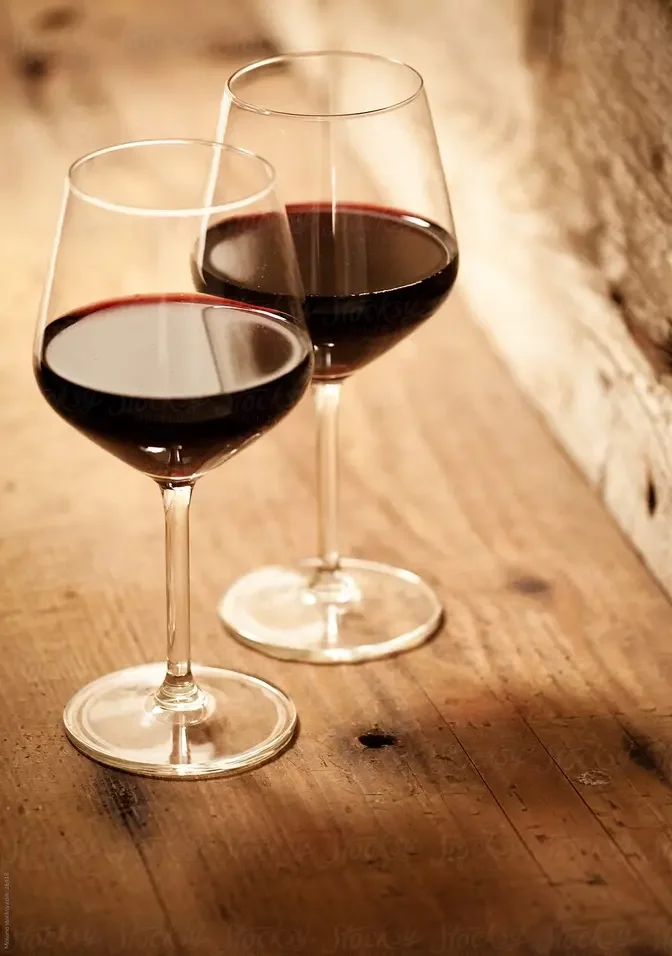
Join me and my son Sam in Colombia as we explore the tradition of birthday wines by opening my birth year 1973 Les Forts de Latour. Watch as we compare this aged Bordeaux with a 2012 reference wine and discover what happens when you open a wine from a notoriously bad vintage nearly 50 years later.
In this video: Introduction to birthday wines in Colombia What makes birth year wines special (and sometimes terrible) How weather affects vintage quality 1973: A uniquely challenging vintage Understanding "second wines" (Les Forts de Latour) Comparing vintage ratings across generations What to expect from aged wines How flavor profiles change with age Using the Durand corkscrew for old corks The delicate cork extraction process Visual comparison: color, transparency, and browning Aroma comparison: fruit vs. "old book" and tobacco Tasting technique for wine appreciation Flavor comparison: weight, fruit, and complexity The honest verdict on a 1973 wine Final thoughts on birth year wine traditions
Learn about: • The specialized technique for opening old bottles without cork disintegration • How to visually assess an aged wine vs. a younger one • The evolution of aromas from fruit to secondary characteristics • Why younger people often prefer younger wines • The proper way to taste and evaluate wines • The honest reality of many birth year wines (sometimes disappointing!) • Why wine lovers still pursue the experience despite the risks
Whether your birth year produced legendary wines or terrible ones (like my unfortunate 1973!), this father-son wine journey offers both education and entertainment for wine enthusiasts of all levels.
AI Generated·May contain errors
Welcome, welcome. I'm John. Today we are talking with my son, Sam, about birthday wines.
And so Sam and I are here in Columbia, and the great thing about Columbia is that we have
wonderful weather, wonderful view, and we have my only bottle of 1973 wine, which happens to be
my birthday wine. So we're going to celebrate today by opening that. We're going to compare
to another wine, and Columbia also has the advantage of a younger version. So we've
snuck down here to make a video. Before we start, okay, I want to talk to you a little bit about
what it is that makes collectors buy all sorts of birthday wines, right? So first of all,
do you know the difference between what a different year bottle of wine will taste like
versus a different one? I don't. So the first thing that's really important is weather,
right? And so if you could imagine a year in which it's raining too much, right,
or the sun never comes up, or there's hail, or it freezes, and or maybe there's a fire,
like several years ago in Napa, there was a terrible fire. And so that could totally destroy
that year's crop or make it kind of an unpalatable year. Does that make sense?
Yeah. Okay. Now you were born in 2007. Now you probably don't know much about the year that you
were born and what the weather was like, but I will tell you it wasn't perfect. So your brother,
for example, 2005 has a much better year for wine than you. Now that'll vary between regions,
of course, right? Because the weather in France is probably not exactly the same as the weather
in California, but global weather patterns influence wine and advances in winemaking
kind of skill also make a difference. So a couple things. One is that 1973 is a uniquely
terrible year for wine. It was not a great year for my parents either, but this will happen when
you have a newborn baby. But for my particular year, it was very, very bad. The wine that we
are going to be drinking this 1973 is called a La Forte de la Tour. And so one of the very,
very famous wines of France called Chateau La Tour, which is one of the first gross of very
famous. They basically take some of the younger vines and they make a second wine and this is
their second wine. So very famous producer, but it is kind of not as great grapes as the La Tour.
To give a little bit of kind of context, I could not find this particular wine. I couldn't find
what the rating was, but the one for the first one was in the seventies, which is terrible.
Although you think of a scale of one to a hundred, that is just horrid. For your year,
this particular one was an 89. According to Robert Parker and for your brother, it was 93.
So we are going to be tasting a terrible wine. Congratulations and thank you for doing this.
Awesome. Came all the way out here. Just for this experience. When we were talking earlier,
we were talking a little bit about what you could expect. What do you think that you would expect
from a older wine? How's it going to taste, do you think? Maybe a little less sharp, more fruit
flavor, maybe. More fruit flavor. From it ripening more over time. Okay. Maybe a little vinegary if
it gets older. Okay. So it is true that air begins to get into a wine bottle and so that will affect
a little bit of the taste, but also the chemistry of the liquid inside it will begin to change
as well. Air is like the best friend of the world to wine. It is also the worst enemy.
So if you look at the 2012 that we opened as kind of a reference wine,
that I'm giving a lot of air to. When we open this, if there is any fruit flavor left,
it will start to dissipate. What you're supposed to expect as wine ages is actually a different
flavor profile entirely. But if you think about like a nutty flavor, you think about a flavor
that might be less fruity, right? That's what you're going to taste. Okay. So what we're going
to do is we're going to open this up. We're going to kind of compare them and the way I'm going to
do that is I'm going to use this little device. Now normally we just use a corkscrew, right?
Right. This is called a Durand. It combines two pieces. It is specifically made for old corks
because as you can imagine with time, corks actually tend to start to disintegrate. So I'm
going to see if I can pull this out without disintegrating it and might speed this up a
little bit because, you know, nothing more boring than the speed at which you get to open a wine
bottle with a Durand. So to open this up, I am going to take the knife and I'm going to cut
what is called the capsule. Now this capsule, you kind of see even though it's really, really old,
right? Is in really good condition. That is one of two things. That is either that it was kept
safely in the cellars. Sometimes with first wines, they don't really do this with second wines,
they will actually recondition them. So if you have like a 1959 wine, you might have taken off
the cork and put a new capsule in, but only the Chateau is allowed to do that. Just normal people
cannot do that. Not allowed. One of the reasons is because often you'll have to put in a little
bit more wine because one thing you'll notice is see how the fill line is a little bit lower
than kind of a typical bottle of wine. That's because over time it will slowly, slowly,
slowly evaporate through the cork. So you can see right here what the cork looks like.
This cork in particular, it's going to be a little bit of a challenge, I think.
Let's see if we can get it open without disintegration. This is going to be the
toughest part, I promise. Kind of see how it's like mushy almost. If I'd done that with a normal
cork screw, I would have just disintegrated it. This little thing called an osso can be used
separately, but for really old bottle of wine, this is the best way to do it. Do I get like
any grade at all here? It's an A, I guess. I don't see any cork in there.
So the cork did make its way out pretty much entirely intact. So that's the good news.
All right, a couple things. With older wine, because of that quality that I told you about,
which is basically this fruit flavor that's disappearing, we're not going to quite swirl
this the same way you would a normal bottle of wine or normal taste. And so getting air
into a really old wine might kill the last bits of kind of smell and taste that it has.
Now you could definitely tell the difference by the wine itself, of course, but what I want you to
do is, we have different glasses just in case you lost your mind, is tell me a couple of the
differences. So what are the differences that you see in these? This 2012 and this 1973, by the way,
these are both roughly the same grade. This has a little bit of a different mix because it's from
France, but they're basically Cabernet. So what are the differences visually that you see?
The color, first of all, this one's like kind of a brownish, you know, it's still got some red in
it, but it's really a lot lighter. Also the transparency, this can barely see through it at
all. This is, you know, it's really see-through, especially this angle here, you can just see
straight through it. Yeah, and so when you tilt the glass, you can kind of see all the way, why don't
you use the other one first? You can see all the way to the rim, it maintains its color profile,
it's still pretty kind of dark garnet is the color that we say that this is. And then when you look at
the older wine, you're going to see not only is it clear, but it's much more brown, right? And this
browning is just the effect of aging wine as it ages in the bottle. All right, so what we're going
to do is we're going to swirl this other one. Remember, we had that in the decanter, so it's got
a little bit of air in it already, but you're going to smell it. Now, I get it, this is new to you, so
you're not going to know all the flavors, but would you say this smells like wine? Absolutely.
So Cabernet has this very distinct smell that we call black currant, but most people just call
wine smell because when's the last time you smelled black currant? Never. Now, wine like this is an
okay wine, like this is a good wine, it's going to have some other smells that you'll learn to
tell over time. And the more that you kind of work with it, and you put air into it, and you smell it,
you're going to smell all those different ones. In this particular case, I could smell some
violet, for example. There's a number of smells that come along with it.
All right, let's give this one a shot. You're not going to swirl it too much, but you're going to
give it a smell. Whoa. Okay, so whoa is a good descriptor. What is the first thing that you
think of when you smell that? I mean, honestly, almost like an old book that you just open up.
Yep, old book is good. I will tell you the one that is often used is tobacco or old cigar box.
So you open up a cigar box, and you get this very tobacco-y smell, and so that is also super typical
of older wines. All right, let's go to the first one again. You're going to smell it, right? Remember what
it smells like. You are going to sip it and just kind of pull in a little bit of air, and make sure
it just coats the entire inside of your mouth. And so the one reason why we do that, why we have
it coat the entire inside of our mouth, is because each part of your tongue and part of your mouth
are tasting different things. And so when we're tasting wine, we're trying to get all those
different flavors real. And so would you say that this tastes like wine? It tastes a lot like wine.
Okay, so this Cabernet is pretty typical, and so it has all these elements of a maturing wine.
This is a 2012, but it still has all the fruit, right? All these fruit characteristics. All right, let's
try the other one. Okay, so what are some descriptors that you'd use to describe the difference in taste?
It's a lot lighter, I would say. This kind of has a heavy wine taste all over your mouth.
Would you almost say like it's a weight, though? Where you could feel like a weight
in the first... You definitely can, yeah. Yeah, and that is a function a little bit of alcohol.
So there's gonna be a little bit higher alcohol content, because that's an American wine than
this one. So that weight itself is almost always alcohol. But you're also, I think, finding something
a little bit different, which is fruit, right? And fruit tends to fill your mouth in a different way.
Okay, the 1973 Birthday Wine. What do you think?
It honestly doesn't taste like wine, which is weird to say for wine, but it is more of like a
almost like a tree. Yeah. It's just very... What word am I looking for? Well, I don't know,
but I will tell you that the one thing that you get with an older wine is a lot less fruit,
right? And so you could really tell that here. This one in particular, not a very good wine
in the first place, right? There's actually a little bit left. Like you can kind of just taste
it, but it's kind of been passing. But when you say before vinegar, would you say it tastes like
vinegar? No. Yeah. If it is not damaged, so you have a good bottle of wine like this one was,
then it won't taste like vinegar. You'll start, though, to get more and more of this bricking
and more and more of this. And there are people all over the world who absolutely love old wine.
Like they think that this is like the best thing in the world, because it's kind of an adventure
back in time, but also because they really like the taste. And there are subtle changes and
differences that you get in old wine that in new wine sometimes you don't because the fruit's so
strong. That is going to be kind of your big difference. So if you had to make a choice
between the 2012 and the 1973, I would pick the 2012 kind of almost any day. So what's the answer?
Don't sit for too long. No. Just drink this stupid wine. It's too old. I guess on that,
I guess we'll do a cheers. You could pick your favorite. You don't have to pick the 1973. Cheers.