
Most Horrific Moments When Deadly Horns Crush Predators | Wild Animals
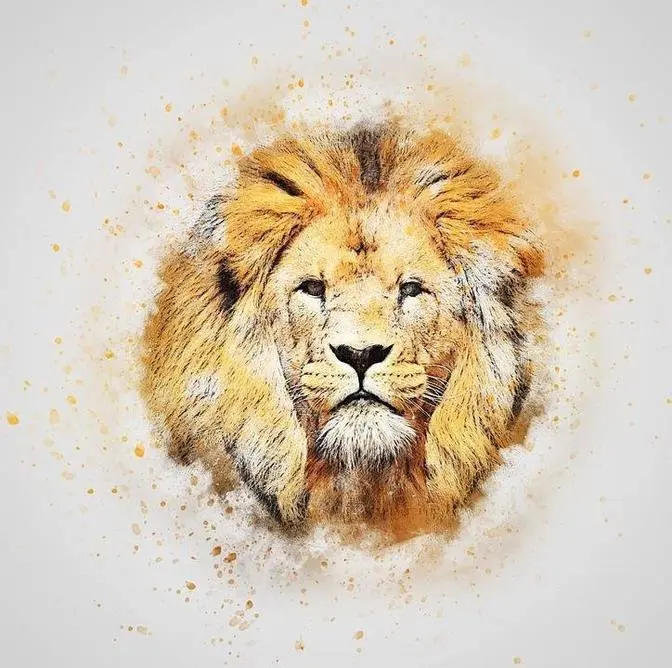
On vast grasslands and semi-deserts, sharp horns are not only a tool for defense,
but also a boundary for survival. As a predator approaches, every step forward carries the risk
of injury that could end an entire hunting season. Not every moment of dominance ends in victory,
and not every retreat is defeat. These are the most critical moments when the prey's
strength forces the predator to reconsider its strategy in a few decisive seconds.
On the open grasslands, African buffalo are always considered a formidable challenge for any lion.
Weighing between 1,800 and 2,200 pounds, with thick, curved horns and well-developed neck and
shoulder muscles, they possess a powerful counterattack capability when cornered. In this
encounter, the hunting attempt ended unsuccessfully when the buffalo turned around and regained the
initiative. A lioness approached alone from behind, taking advantage of the gap created by
the herd's movement. The initial close approach slowed the buffalo, but didn't cause it to lose
control completely. Realizing the danger, the adult buffalo turned around instead of fleeing.
A direct butt from the curved horns caused the lioness to lose her balance
and retreat out of danger. Immediately afterward, other members of the herd returned,
creating a numerical advantage and cutting off the escape route.
Collective pressure forced the predator to leave the area.
The encounter showed that buffalo hunting is not a tactic for a lone individual.
Success often requires close coordination among multiple lions to control the prey's movement
and airway. In nature, with large targets like buffalo,
collective strategy determines the outcome more than individual strength.
Amidst the dense movements of the savanna, wildebeest maintain close formations to minimize
risk from predators. An adult weighing between 400 and 600 pounds, with sharp curved horns and
strong shoulders, can quickly turn in tight spaces. When pressure increases and distance shortens,
the prey chooses not to retreat, but to engage in a direct confrontation.
The young lion approaches when the wildebeest herd slows down in the narrow terrain and limited
visibility. The initial charge creates significant pressure but is not enough to dislodge the
wildebeest. The distance narrows rapidly, and that's when the tide turns. Instead of fleeing,
the wildebeest turns decisively. Its horns lower and hook onto the lion's front legs,
forcing the predator to stumble and retreat to regain its balance.
The advantage shifts in just a few short seconds.
Counterattacks often occur when lions lack experience and misjudge safe distances.
Wildebeests, on the other hand, not only defend passively, but can also switch to
offense when cornered. In the wild, for young predators, a small miscalculation can ruin an
entire hunt. On the vast, dry plains, mother rhinos represent an almost unassailable line
of defense. With bodies that can exceed 4,000 pounds, thick hides, and sturdy horns, they
maintain a clear advantage when distance is maintained. Faced with this decisive protective
reaction, the lion quickly reassesses the risks of the hunt. A group of lions observes from a
distance, waiting for the cub to break away from its safe position. The initial approach causes
the rhino cub to recoil a few steps, but in an instant, the mother turns, precisely locating
the threat. Without engaging in a chaotic charge, the mother rhino lowers her head and advances with
powerful force from her shoulders. The lions avoid a direct collision, as a well-aimed blow
could cause serious injury. Distance is re-established, and the opportunity to attack vanishes.
Even when the calf is weak or has fallen, the mother rhino will often stay to protect it
instead of abandoning it. This is not a sign of weakness, but rather a calculated,
instinctive balance of risk. In nature, there are limits that predators understand
should not cross. Cheetahs are the fastest land cats, capable of reaching speeds of nearly 70
miles per hour over short distances. Their slender bodies, light bones, and deep ribcage
optimize acceleration. However, this structure prioritizes speed over the ability to withstand
a head-on collision. Once the chase begins, the distance is quickly closed thanks to superior
acceleration. But if the gazelle turns around in reaction, or the collision occurs at an unfavorable
angle, the cheetah is forced to release pressure immediately. An abdominal injury can lead to
serious infection and threaten survival. In nature, high speed does not equate to defensive
strength. Leopards rely on ambushes and explosive power over short distances to take down their prey.
Unlike lions that hunt in groups, they operate alone and need surprise to gain an advantage.
When they successfully approach at close range, the pounce is quick and decisive.
However, if the antelope resists effectively and maintains its balance, the leopard usually
doesn't prolong the chase. Its endurance isn't as high as that of lions or wild dogs. When the
first opportunity passes, the predator usually chooses to retreat to avoid unnecessary energy
expenditure and injury. In the arid, semi-desert regions, oryx are distinguished by their straight,
pointed horns, which can be nearly three feet long. Instead of panicking, they typically hold
their position and turn their heads when they sense a threat at close range. This calmness
forces young lions to hesitate when they realize the risk outweighs the benefit.
A pair of young lions approach from the front instead of flanking. The incomplete coordination
leaves the angle of attack exposed. As the distance narrows, the oryx doesn't accelerate
but stops, turning its head to keep the horns straight toward the predator.
A lion approaches too close in a direct line. The oryx thrusts its shoulders forward and lowers its
head, forcing the lion to lean away from the tip of its horns. A safe distance is re-established
in just a few steps backward. The confrontation ends when a safe distance is maintained again.
For young lions, the lesson lies in controlling the angle of approach and correctly reading the
opponent's defensive signals. In the wild, knowing when to stop before the dangerous limit
is a way to maintain a chance for the next hunt, not a defeat. Spotted hyenas are highly organized
predators, operating in a matriarchal pack structure with rapid coordination and clear
discipline. They possess a powerful bite, capable of handling even the hard bones of prey.
However, the hyena's greatest advantage lies not in individual animals but in their ability to
control space through sheer numbers. The lioness stands guard over her newly acquired meal.
The hyena pack doesn't rush forward but forms an arc, taking turns advancing and retreating,
forcing the lioness to constantly shift her position. Communication sounds fill the air
and the number of hyenas increases over time. The pressure builds from persistence and physical
exertion rather than a single close-range attack. As the safe distance narrows and the lioness's
breathing becomes more rapid, the balance begins to shift. However, the appearance of a mature male
lion causes the hyena pack to halt. With its large size and superior jaw strength,
it advanced into the center. Without a direct confrontation, the hyena pack gradually dispersed
and retreated to a safe distance. This development demonstrates the hyena's
effectiveness through attrition tactics and collective coordination. Meanwhile, the male
lion exerted its influence through a deterrent presence. In nature, order is sometimes established
not through confrontation but through the ability to cause the opponent to adjust their behavior.
Zebras maintain tight formations on the savanna, relying on keen eyesight and collective reflexes
to detect danger early. Adults have kicks powerful enough to inflict serious injury
if approached at the wrong angle. The hunt doesn't end when resistance alters the entire
initial calculation. The lion chooses to approach a cub at the edge of the herd.
The distance is quickly reduced, but as soon as pressure increases, the mother zebra turns back
instead of continuing to move with the herd. It positions its body between the cub and the
predator, moving sideways to maintain control. As the lion tries to maintain its position,
a kick from its hind legs forces it to adjust its approach. Injuries to the teeth or eyes
can render the lion incapable of hunting for an extended period. Realizing the danger outweighs
the benefit, the predator reduces pressure and withdraws from the danger zone. This encounter
shows that the mother zebra's turning back wasn't a spontaneous reaction, but rather a clearly
activated mechanism for protecting her offspring. For the lion, the decision to stop was a survival
calculation. In nature, not every opportunity is worth pursuing to the end. Through each encounter,
sharp horns and defensive reflexes repeatedly forced the predator to adjust its strategy.
Strength lies not only in the ability to close the distance, but also in understanding one's
own limitations. Every decision to retreat or advance is the result of weighing risks
against benefits. In the wild, long-term survival is more important than immediate victory.
In nature, big cats are considered the perfect predators, where strength, speed, and instinct
converge. But not every hunt ends in victory. There are rare moments when the prey itself
turns the tide. These are some of the most unbelievable failures of big cats,
where nature reminds us that nothing is absolute. Baboons are primates that live in tightly knit
groups with a clear social structure and high coordination. Females are responsible for
protecting their young, while males act as lookouts and react to threats. On the savannah,
a baboon troop is rarely alone. When the leopard suddenly charged into the troop, chaos ensued in
an instant. The female quickly shielded her young, retreating to the center of the group.
Warning cries rang out, alerting the entire troop to the approaching danger.
The male baboons immediately organized a counterattack. They quickly regrouped,
maintaining formation and advancing towards the predator. The alpha male charged directly,
displaying his strength and determination to defend his territory. Faced with a coordinated
response and increasing pressure, the leopard lost its advantage. It was forced to retreat,
leaving behind a failed hunt. In nature, collective strength and social organization
are sometimes enough to completely reverse the course of a hunt.
Warthogs are often considered slow, with their low stature and heavy gait. But hidden beneath
that exterior are quick reflexes and the ability to accelerate rapidly in a short time.
On the savannah, a moment of hesitation can make all the difference.
Two lionesses silently ambushed the warthog, waiting for it to enter an open space.
The attack was swift, but it didn't achieve the desired overwhelming force. As soon as it
sensed danger, the warthog didn't dodge, but instead charged straight ahead with all its might.
In a short distance, it could reach speeds of nearly 56 kilometers per hour.
This sudden acceleration disrupted the pursuit, leaving the lionesses no time to adjust and
forcing them to stop. In just a few seconds, the warthog was out of danger. The hunt ended quickly,
the lion failed, and the warthog escaped safely. In nature, acceleration and reflexes are sometimes
just as important as agility, because survival is often decided in the first few seconds.
Wildebeests are familiar with long migrations and treacherous river crossings.
Their bodies aren't massive, but they're built for endurance, balance, and quick reflexes.
When crossing a river, each step is taken with heightened vigilance.
At that moment, a young lion silently ambushed them at the water's edge.
It chose a time when the herd of wildebeest was dispersing, the current slowing their pace.
For a young predator, this was an opportunity to test its strength and assert its instincts.
The approach was cautious, but what happened next didn't follow the usual script. Instead
of panicking and fleeing, one wildebeest suddenly charged straight ahead, directly
confronting the threat. This reflex completely disrupted the attack. The young lion hesitated,
its inexperience prevented it from adjusting to the unexpected action. Instead of closing in,
it retreated, giving its prey space to escape the dangerous situation.
The hunt ended quickly. The antelope returned to the river and rejoined the herd,
while the young lion fled, carrying with it an early lesson in harsh reality.
In nature, predators don't always have the upper hand. Sometimes it is the counterattack reflex
that disrupts the inexperienced. Antelopes look slender on the savanna, but they always maintain
a high level of vigilance and reflexes. Even when standing still, their bodies are in a state of
Nearby, two male antelopes were engaged in a prolonged battle,
their stamina noticeably depleted. A leopard patiently waited, believing that fatigue would
create an opportunity. The ambush was perfectly timed, but the prey managed to escape. The leopard
charged again, but a safe distance had been established, and that attempt also failed.
The hunt ended quickly. Even a perfect ambush cannot guarantee absolute success.
African buffalos can weigh up to 1,500 pounds, with thick hides, strong muscles,
and curved horns formed through generations of natural collisions.
They are not built to run, but to endure, observe, and hold their ground. On the open savannas,
simply standing firm is sometimes a great advantage.
This time, a male buffalo stood slightly apart from the herd. It didn't rush away, but stopped,
concentrating on the bushes ahead, where there was an unusual sign.
The prolonged silence signaled an unfamiliar situation. Hidden in the low foliage was a lioness
showing signs of declining health, without the support of the pride.
With large prey like buffalo, lions typically need consistent physical strength,
the element of surprise and teamwork. Without these conditions, every decision becomes risky.
The situation unfolded quickly, but the balance soon shifted. The buffalo recognized the instability
in the predator's movements. Instead of panicking, it proactively advanced,
applying pressure with its weight and direction, forcing the lion to retreat to avoid danger.
The lion left the area safely, but its long-term survival became precarious.
Without a pride and insufficient strength, each subsequent day was a challenge. The hunt
ended not because of a lack of intent, but because the natural limitations had become apparent.
Impalas are slender antelopes, accustomed to light strides and agile changes of direction.
They move in herds, always maintaining a sufficient distance to observe each other.
On the savanna, the impala's vigilance often begins very early. Two lionesses silently
approached, patiently waiting for the impala herd to move into a favorable position.
The tension stretched for a few brief seconds, but that wait didn't last long enough.
One lioness attacked too early. The sudden movement shook the ground and shattered the
element of surprise. Almost immediately, the impala herd realized the danger and scattered
in many directions, tearing apart all initial calculations. In an attempt to adjust, the lioness
lunged but lost her balance and slipped into the nearby water channel. That moment was enough to
end the hunt. By the time the lions returned to shore, the impalas had vanished from sight.
There was no prolonged chase, no second chance. The hunt ended in silence. On the savanna,
sometimes failure doesn't come from weakness, but from acting just one beat too early.
Honey badgers are small animals, but are known for their thick skin,
supple bodies, and high pain tolerance. An adult weighs only a few dozen pounds,
but possesses ferocity far exceeding its size. On the savanna, honey badgers rely not on speed,
but on reflexes and aggression. In a moment of carelessness, a leopard lunged at a young badger.
The strike was quick and precise, seemingly enough to end the hunt.
But the next reaction came almost immediately. The mother badger emerged from the bushes and
charged forward fiercely. She didn't dodge, didn't hesitate, but directly approached,
displaying aggressive and threatening behavior. Faced with this fierce and
unpredictable resistance, the leopard panicked and was forced to retreat.
The hunt ended in a flash. The leopard failed, and the badger cub was safely protected.
In nature, ferocity and maternal instincts are sometimes strong enough to overpower
even larger predators. Hedgehogs are slow-moving animals, but they are protected by thousands of
stiff, sharp quills that spring out when attacked. These quills aren't meant to intimidate,
but rather a specialized defense mechanism capable of inflicting lasting damage.
On the savanna, hedgehogs don't need to run fast to survive.
A young leopard lunged forward, underestimating its opponent. The approach was quick,
but as soon as it got close, the hedgehog's quills sprang up and pierced the predator's face.
The pain forced the leopard to retreat immediately.
There was no further attack. The hedgehog slowly retreated to safety,
while the leopard fled to avoid more serious injury. The hunt ended in clear failure.
In nature, specially evolved defensive weapons are sometimes powerful enough
to inflict lasting damage on predators. These failures did not weaken the big cat.
They merely reminded it that no hunt is certain. Between hunter and prey,
the line is always thinner than imagined. And in the silence after each chase,
nature has delivered its judgment.