
Why the Canon 5d Mark ii In 2024 Lenses.
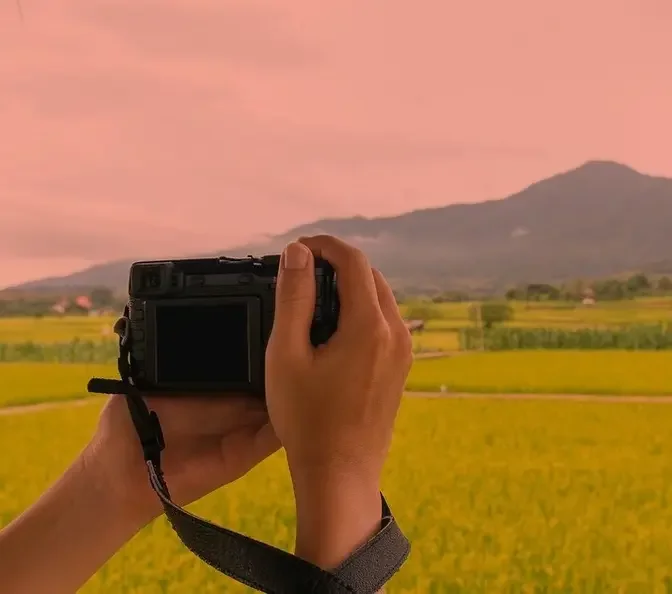
#PhotoCamera, #LandscapePhotography, #PhotographyExpert, #NatureShots, #ScenicViews, #OutdoorPhotography, #CameraGear, #LandscapeExpert, #TravelPhotography, #WideAngleShots, #PhotographySkills, #NaturalBeauty, #CameraTips, #PhotographyMastery, #LandscapeLovers
In this video I'm going to be talking to you about why I'm picking the Canon 5D Mark II
and the lenses that I'm picking to go with it for shooting my landscape photography over
the autumn and winter and a little bit into spring into 2025 as well.
This video will be more of a chat than sort of an in-depth informative video
but I'm hoping you'll pick up some ideas about this camera as well,
what I like about it, why I'm picking it and maybe how to deal with some of its
what would be seen now as quirks I suppose but are some of the reasons why I actually like it.
Now firstly if you're a regular of mine you'll be saying why isn't it the 6D Mark I?
Well my 6D Mark I has a couple of issues with it.
One is that it has a hole inside of it which isn't really great when you're going into like Wales,
Scotland and the Lake District and it's wet.
Holes in cameras don't usually do very well.
The shutter is wearing out on it.
I'm getting that thing where you press the shutter button and it feels like it's getting
delayed and that's usually the sign because I've worn through so many
shutters on cameras over the years that's usually the sign that the shutter is dying.
So I will continue to use this camera until it dies and then it will go on the shelf.
My shelf collection of cameras is cameras that I've killed not ones that I use.
I think that's an important distinction.
Right so let's talk about the 5D Mark II.
We'll talk about the camera body and then I'll get into my lens choices
and I will explain why all of them and not alternatives.
So first point the 5D Mark II has taken my favourite landscape photography images.
So the idea that you can sort of quantifiably choose a camera body
doesn't really work out that well in practice.
So what I mean by that is that you can look at one camera on paper
and another camera on paper and you can make a decision about which camera you're going to use
because you can say that one is objectively better than the other.
More dynamic range, better low light performance, those kind of things.
Then when you go and use those cameras in practice you come away liking one camera more than the
other and not just the actual camera body itself but the results that you get despite its limitations.
This is where things get tricky because as human beings we like to rationalise things
and we can say that this one thing here is better than something else because
x, y and z but it falls down and this happens in many areas in our lives when it comes to
the actual use case of using that thing.
So sometimes we find that the thing that is simpler produces the best results
even though we can make many logical arguments about why the more complicated thing should be
better.
I can't get around the fact that when I look at my images despite my 5D Mark II being on paper
one of the worst performing cameras I have, I have an overwhelmingly high number of my favourite
pictures taken on that camera and this is partly due to how the files look afterwards.
So the lenses obviously contribute to that, the camera bodies make a huge difference.
Now every time I post a video like this I get emails and comments as well saying yeah but if
you shoot raw it's all the same and my answer to that is no it's not, it's not the same.
The idea that you can match all of the pictures just because everything's raw,
the raw doesn't work like that.
It's like I can tell whether a photographer is experienced or not by whether they understand
that or not.
The colour production from these Canon cameras, when everyone says you know Canon colour science
and some people make fun of that term, that didn't come from nowhere.
It's almost becoming like a myth now that Canon colour science is better but in these
older cameras it is.
The professional world that I've been in, in my experience agrees with that.
I should probably make a different video on this because there's a lot of caveats to that
but let's say for photographing people in studio environments most people have agreed with that.
When you have an experience where the colours just fall into place where you want them to
very quickly and it feels easy and fluid and smooth and fast that gets addictive really
quickly and I found that in the studio with Canon and I found that in landscape photography
with Canon.
So if I'm doing landscape photography I can put the camera on a tripod right which means
I can take care of most of the low light situations.
I can stay at ISO 100 and just increase my shutter speed however much I need to in order
to get my exposures.
I think with the classic cameras you know the ones that I've rated as being sort of
classic sensors all suffer from not looking like they're going to be a particularly good
camera and then the files that you get back from it just being special, being really really
nice and everyone who's used them by and large says exactly the same thing.
So my first main reason I guess for picking the 5D Mark II is that it's just an excellent
file to work with in the editing afterwards.
So let's talk about some of those limitations, workarounds, how I feel about them and what
does that mean.
So if I'm picking the 5D Mark II I have some limitations that are imposed on me.
The first one that's the most noticeable for doing landscapes and probably the most
important one is the dynamic range of the camera.
It is limited on the 5D Mark II.
There's just no question about that it's limited.
For beginners dynamic range is how much information from the highlights and into the shadows you
can capture in a single exposure.
So what you can't turn around and say to someone is well if you expose properly you'll
get the picture because you can't do that.
It's like me saying to you there's that thing, there's that bus over there.
If you just picked it up you could move it.
If it's outside of your range you can't do it.
Now there are machines that can lift heavy stuff and there are machines that can't and
this is a machine that can't.
It doesn't have the ability in very high contrast scenes.
So again high contrast is when the brights are really bright and the dark areas are really
dark it can't capture the information in there.
So what you'll get is it will just look like it's bright white when another camera like
let's say a Nikon D800 will capture far more information in the highlights and the shadows
when exposed for that.
Because with those cameras you do have to underexpose them a bit to maximize that dynamic
range which seems counterintuitive.
But by car engines some of them perform better in the lower rev ranges.
That's how Nikon cameras are.
They're very good at it.
But the Canon 5D Mark II has none of that.
So it has limited dynamic range and you get around that by bracketing.
So you take exposures at different brightness values to make sure you take one for instance
one for the highlights one for the mid-tones one for the shadows make sure you've got all
of those all of that information all those exposures combine them together into one file
and then you make up the dynamic range and you get plenty of dynamic range.
And that's not particularly hard to do.
Not only that I often don't use a tripod for that.
I've been doing that for years and years just not using a tripod because once many years
ago I decided to try it handheld and that worked fine.
Let's talk about the focus system.
This is going to be really brief.
I often will manual focus.
I will just use the screen on the back on the camera like the 5D Mark II and I'll just
manual focus where I want it to be.
I can just zoom in focus it and take the picture like that.
Or if I'm doing it handheld I will just focus and recompose using the center focus point
because the center focus point is really accurate and the outside ones are rubbish.
Some of the outer focus points work better with certain lenses than others and the lenses
I'm picking the two main lenses I'm going to be picking for landscapes actually work
well with the outer focus points so in theory I could use those as well but I'll probably
just center focus focus and recompose because I'm probably going to be shooting at like
f4 to f8 or f11 it doesn't really matter.
So the focus system is not a limitation for what I want to use this camera for.
The screen on the back of the camera is actually good.
It's not particularly high resolution.
The 5D Mark II screen has a more even brightness across the screen.
I really like the screen on the back of it so it works well for composing your photos.
I suppose the next thing we should talk about is the weather sealing on it.
This again when you look up the 5D Mark II a lot of camera companies are really limited
in the way they discuss the weather sealing in their cameras and the 5D Mark II is definitely
no exception to that.
It's protected a bit against moisture and dust but one thing that we have with the 5D
Mark II that we don't have on some of the newer cameras is we have like more than a
decade's worth of hundreds of thousands of user experiences with this camera and we
know because that's like the best testing you could ever do that this is a really tough
camera body.
I remember the first time I held it I wasn't convinced on that.
I was like I'm not sure about this.
I'm not sure how strong this camera is.
It feels just kind of ordinary but it's proved itself.
It's proved itself in weddings.
It's proved itself in really cold environments, damp environments.
I've had this out in some pretty horrendous conditions many years ago and it's performed
really really well so I think that the weather sealing on it is really good.
Now one, it's not really a downside I suppose but you will need the CF cards for it which
are the larger ones.
It's not the new CF Express things.
You'll need these.
Sometimes people say that the connector pins get bent inside the camera or inside the card
reader.
If you get a new CF card I've never had problems with new ones.
You know they're not new now but I mean it's like the more modern ones that you can get
they must have changed something in the way the cards works because that never happened
to me again beyond a certain time point.
So before we move on to the lenses what I would sum up for you and say is that whilst
the camera has some obvious limitations it's clear to me that I know that I can work around
all of them as long as I've got a tripod.
And I'll explain a couple more things in a moment as we go into some of the lenses as
well.
Yeah so the tripod will take care of all of the issues.
So the lenses that I'm going to take, the first one I'm going to talk about briefly
is the 16-35mm f4 IS.
If you don't have the budget for that get the 17-40mm.
I used the 17-40mm for years.
The only reason I have the 16-35mm is because I want to be able to do bits of video with
it.
The 5D Mark II does actually pretty nice 1080p video but still fine for YouTube nowadays.
And I want to be able to do some wide shots, some panning shots sometimes and having the
stabilisation in the lens makes all the difference because obviously there's no stabilisation
in the camera body.
But optically it is better than the 17-40mm but really not by much and most of it's in
the corners.
So if you want to save yourself some money get the 17-40mm and I can tell you now that
if it weren't for doing those bits of videos I probably wouldn't have bothered buying this
lens.
There is one small other advantage to this lens and that is that it has image stabilisation
in it.
And that allows you to get away with longer handheld exposures before needing to go through
the performance of getting the tripod out.
And it also means that it's easier to do bracketed exposures without a tripod because the camera
is going to be more steady.
So if that matters to you then I think it is actually worth spending a bit more and
getting that lens.
But it's an excellent lens and it's one of the reasons as well that I think that Canon
actually makes a really good argument for being a landscape photography system.
Because when you look across the board at the competitors, like for instance the Nikon
16-35mm f4, that thing is at least, it must be twice the size and twice the weight of
this.
It is an absolute monster of a lens.
It's optically definitely nowhere near as good as this one.
And the Canon lens is just lighter, smaller and a far superior lens all around.
I think it's really good.
It's a very good option for people.
And that brings me on to the next lens which is the 16-35mm, it's the 17-200mm f4 IS.
Image stabilised is the original version of it.
It's not the newer one, but they upgraded some of the coatings and didn't really do
very much.
Isn't that, that's such a Canon thing to do, like that upgrade that they made on this
lens, you know, well the paint's a bit whiter and we put a coating on the front and basically
everything looks the same.
But you know, buy it, that's the most Canon thing in the world to do.
That's just sums up their strategy I think.
Anyway, this is optically an excellent lens.
I think it's one of the best lenses that has been made by a DSLR company.
You know, by the brand that makes the camera like Nikon, Sony, Canon, like that.
Because the bang for buck that you get with this is unsurpassed and optically this will
keep up with anything really.
It's that good and it still holds its own by today's standards easily.
It's superb.
On the used market, there's loads of these things around and they're cheap and look how
small and light this is.
I would say get the lens with the VR in it.
The optical quality of all the F4 lenses is pretty much identical.
It's not really going to make any real world difference for you when you buy them.
But the VR, the vibration reduction, the image stabilization in the lens is really worth
it.
And you may think to yourself, you're always going to be on a tripod.
But when you've got access to the VR in the lens, you probably won't be because I think
it is, it's limiting a little bit to be on the tripod all the time.
It's nice to be able to just handheld, especially when you're doing things that are sort of
more unusual angles.
You just want to grab the shot quickly.
It's worth spending that little bit extra for the VR.
There is a gap in this lineup between 35 and 70.
And that would normally be filled with a 24 to 70 or 24 to 105.
I should speak about the 24 to 105 as well.
I nearly thought just use the 24 to 105 and be done with that.
But I thought I want to do something a little bit different and I'm not going to bring anything
in the in-between gap apart from a prime lens.
And my reason for doing that is because it's just going to add on more extra weight.
Usually I can move that bit of difference.
The 24 to 105 would have been perfect as well as a standalone lens for this setup.
I just feel like I haven't gone with just this setup before.
I've often done the 24 to 105 thing.
So let's mix it up a bit and do something a bit different.
The other lens I'm going to be taking with me is this one, the 50 millimeter 1.8.
It's the STM version.
And the reason I'm bringing this is because it is pretty slap bang in the middle between
35 and 70.
So it does give me that.
If I'm finding there's a shot that really is right in the middle and I can get it right,
just right in camera, I will bring this out and use it.
But it's just such a small lens that it's almost kind of like a no brainer to take it.
So that's my fill the gap between the two lenses lens.
Don't even know if I'll use it at all.
Check out this video if you want to see a previous shoot of me using the 5D Mark II.