
Adam Sandler, Dwayne Johnson, Jacob Elordi, Michael B. Jordan & More at the THR Actor Roundtable
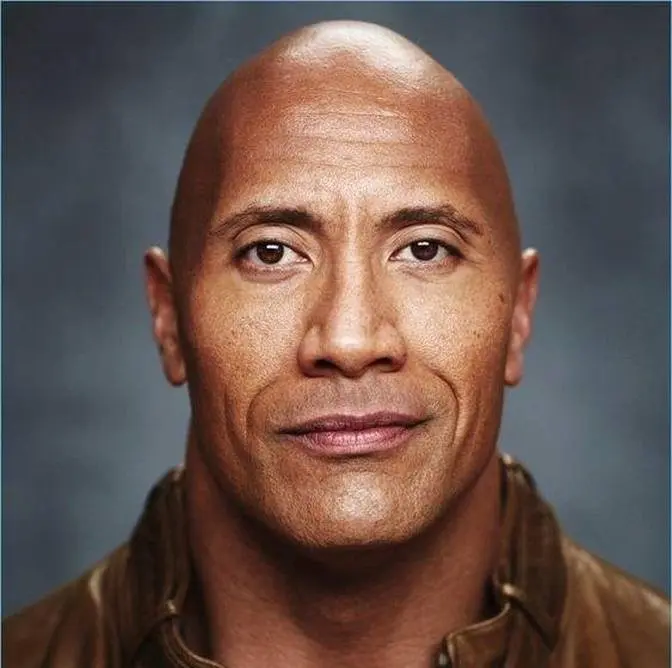
Adam Sandler ('Jay Kelly'), Dwayne Johnson ('The Smashing Machine'), Jacob Elordi ('Frankenstein'), Jeremy Allen White ('Springsteen: Deliver Me From Nowhere'), Mark Hamill ('The Life of Chuck'), Michael B. Jordan ('Sinners') and Wagner Moura ('The Secret Agent') join THR in our Actor Roundtable.
📍: The Sun Rose West Hollywood
#film #entertainment #Dwaynejohnson #actor
When you were making Star Wars, and you were on that set,
did you have a sense, like,
this ----, this could be pretty,
or were you like, what the ****?
I mean, what was interesting is,
I got the part without having read the whole script.
They only gave you a scene.
Okay.
And I'm thinking, who talks like this?
I mean, is this a send-up of Flash Gordon or whatever?
Yeah.
Harrison tested with me.
I said, you're an American graffiti.
I mean, is this like a very,
hey, whatever, let's just do it.
Hi, everyone, I'm Scott Feinberg,
and thank you for joining us for The Hollywood Reporter's
annual Actor Roundtable.
I am so thrilled and honored to be joined by
seven world-class actors who have given
outstanding performances in 2025 films.
To begin with, I thought, Dwayne,
maybe we could talk about the fact that
nobody before you had really made this jump
from wrestling to A-list movie stardom
in the way that you did.
One day you're in the ring at WWF, now WWE,
then you get a seven-minute cameo in The Mummy Returns,
and then the next year, you are the star of a spinoff.
And I guess I wondered,
was this all just kind of a happy accident,
or was this planned that you would
make this pivot towards acting?
Well, I think it was planned by
something more powerful than me, for sure.
Destiny, I believe in, the universe.
But I also, I wanted to grow,
and I wanted to challenge myself.
My first acting gig was The Mummy Returns
with Brendan Fraser.
We were shooting in Morocco in the Sahara Desert,
and I was so sick, because I went over there
and I probably ate something I shouldn't have eaten.
So I caught that thing, and it's 110 degrees,
I'm freezing, I'm wearing a blanket.
Stephen Sommers comes over, the director,
hey, you okay?
I'm like, yeah, I'm okay, let's do it.
He calls action, we have our scene,
and I had never acted before, but he calls action.
And when he says cut, we hear the,
oh, you got bit by the acting bug?
The thing that happens?
When he yelled cut, I went, this is what I want to do
for the rest of my life, in that moment.
Did you find that the things you had learned
in the ring were transferable to acting?
I think performatively, yes.
In wrestling, it's very big and over the top
as you're performing for everybody for a stadium.
But I think probably one of the main takeaways
from wrestling was it really forced me live,
and you guys know this in theater,
it's like it forces you, it's almost like a forcing
mechanism to listen and to really make sure
that you're really honing in on that skill set
of just really listening to the audience
and keeping you on your toes.
Michael, you started out as a child actor
in really terrific stuff like The Wire
and Friday Night Lights at a young age.
But when you were around 19 or 20, I believe,
when you came out to LA to try to break into the movies
and there was not much interest
from the agencies at that time.
I'm sure they regret it badly now.
But how did you not let that get to you
and how did you turn it around to build
what is now a great film career?
Man, at that age, you take rejection personally.
Yeah, I guess I did anyway.
And used it as a healthy chip on my shoulder
to motivate myself to continue to work hard
and kind of stay locked in.
But also, it kind of fortified this belief
of what's for me is for me.
You know what I'm saying?
Nobody can take my blessings away from me
and I can't take anything away from anybody else.
So there was this kind of firm belief
that I was walking this path and I had a purpose
and didn't know exactly where I was going to end up
or what exactly that might have been,
but that I was on the right path
and I needed to continue to work hard
to continue to do that.
As you're trying to figure out what type of actor
you want to be or what type of career you want to have,
you know, whether it's a supporting actor
or a lead or, you know, doing ensemble,
you know, television shows,
not really knowing where exactly you're going to end up.
You start to look at other actors that you admire,
you know, careers, movie choices,
and you try to craft your own path that way
and learning the power of no,
which is not a luxury that we have in the beginning often.
My path, kind of the choices that I was able to make
earlier on, roles in projects that, you know,
lasted in casting directors' minds
and the right producers and the right people
that ultimately opened up doors
and opportunities for me down the road.
So the power of no was very, very helpful
in doing what you got to do
until you could do what you want to do.
Yeah.
And then when I was at the point
where I could actually choose projects a bit better,
you know, making those right choices,
not chasing money, you know,
doing it for the right reasons,
you know, building the house and people will come.
That's kind of always been my bigger picture approach.
Mark, how, at the age of 17,
did you just kind of accidentally wind up in LA?
And then how, just eight years later,
did you wind up playing a gentleman
named Luke Skywalker in Star Wars?
I did a show at the Zephyr Theater.
It was called the Horseshoe Theater on Melrose.
And it was a musical written by Michael Franks.
And you talk about luck.
There was somebody whose daughter was in the show
who worked for Neil Diamond.
And after the show ran, he said,
I don't know if you're serious about this,
but I think you could have a chance if you're really...
I said, oh, I'm really serious.
So he introduced me.
I went and did scenes, a comedy scene.
I did a monologue from Your Good Man,
Charlie Brown is Snoopy.
And I had somebody come in and read with me.
And I did a scene from, the subject was roses,
the Martin Sheen part.
And so by the December of the first year
of the summer I got here,
I had an agent.
Now, the Vietnam War was raging.
So if you dropped out of school, off you went.
So it was frustrating for my agents
because I'd say, I can't go out on an audition
for fill in the blank,
because if you missed three classes,
they would drop you.
So it was frustrating for the first two years.
But once, I did work in the summer.
The second summer I was here, I did three TV shows.
But you look back and I talk to young people
and I say that, first of all,
if there's anything you like nearly as much, do that.
Because if you want to do it professionally,
you're in for a lifetime of rejection.
Not because you're not talented, you're too tall,
you're too this, too that.
Perseverance and tenacity is almost
as important as talent.
But if no one can talk you out of it,
you have a much better chance of succeeding
if they can talk you out of it.
Thank you.
Adam, you were at NYU and already starting in stand-up
and acting, I believe.
But I guess it was really SNL that led
to the beginning of movies for you, is that right?
Yeah, yeah, yeah.
Like all of us who got excited, wanted to be.
I think I used to, you know, I watched Ackroyd
and Bill Murray and Eddie Murphy
and Rodney Dangerfield, all those guys.
I used to just watch their movies over and over.
And I was like, oh man, that's something
I'd like to be a part of.
And did stand-up, got on SNL, lucked out.
They put me and a couple of my buddies on there.
And then I just kind of wanted to do with Eddie Murphy.
I just wanted to live that life.
You say Adam Sandler and people think of all the times
you've made them laugh and feel good,
and that's very well-deserved.
But Uncut Gems, Spanglish, Hustle, Rain Over Me,
and these two movies with Noah Baumbach,
Meyerowitz stories, and the one we're going to come to,
Jay Kelly, I guess Paul Thomas Anderson
was maybe the first person to see
that you had dramatic possibilities as well.
You know, in the back of my head, I was like,
yeah, it'd be fun to do a serious movie someday.
And, you know, my grandmother used to say,
you're the next James Caan.
And I'd be like, oh yeah, I'll do that.
And so then Paul wrote this movie
and he kind of invited me into this world.
And I've been lucky.
Wagner, in Brazil, you were well on your way
to success many years ago there.
Just one example, 2007, Elite Squad,
a film that won the Berlin Film Festival.
And along comes the project that would put you
on the map internationally.
This all depended on Americans finally being at a point
where we were ready to watch something with subtitles, right?
Oh, it was a big discussion back then.
We were like, this might work someplace,
but not in the US because they don't need subtitles.
But yeah, Narcos was a big thing.
Everywhere I would go,
every different parts of the world,
people would like, oh, Pablo Escobar.
It was the thing that I did
that really made people aware, I think, of me.
But then it's been this kind of decision
to do both these projects outside of Brazil,
like Civil War and things like that,
but also to go back and do something like The Secret Agent.
And I know it's been a few years
since you acted in your own language.
I never wanted to be, to come here
and to try Hollywood, to be in none of those things.
I always felt very Brazilian.
And I think that what makes me different
and maybe special for a film
is the fact that I'm not from here,
that I bring my culture and the things.
I never understood actors that would try
to lose their accents or try to murder.
I'm not, I'll never be like, Jeremy here.
It's like, I'm a Brazilian actor.
And I represent a bunch of people
that live here in this country and speak with accents.
And when we started coming here, people would ask,
would you be able to play this character
with a standard American accent?
And I was like, no.
First, because, no.
And second, because politically, I thought,
that's kind of wrong.
Jeremy, you were gonna be a dancer.
This was where you started out
very seriously pursuing that, right?
Yeah, yeah, yeah.
Can you just explain how you instead wound up acting generally,
but then specifically, before you were even 18,
on a show that would take up 11 seasons
and 134 episodes of your life?
And that is, of course, shameless.
Where did the shift happen?
Yeah, I was really interested in dance when I was young.
And there was a plan to go to the School of American Ballet.
And I grew up in New York.
And I had kind of transferred into a middle school
that specialized in performing arts.
And I joined the dance kind of program there
before exploring School of American Ballet.
And I didn't think that the teacher
was taking dance seriously enough.
So I joined the drama program.
And there was a wonderful teacher there, John McEnany.
And he took things very seriously.
I liked that.
As a 12-year-old, it felt so fun to commit myself
to something in such a serious way.
And I found a lot of confidence on stage and dance,
but then in acting.
And I think I had a very restless mind, as most kids do.
And there was something about acting
where I found a calm and a peace and a real presence
that I wasn't able to find.
And I'm still kind of chasing.
And that's what's really interesting about the thing.
And then, yeah, I continued to study.
I thought, yeah, my life was going to be more in New York
and kind of doing theater here and there
and a law and order every once in a while to pay the rent.
And I worked in a casting office for a long time as a reader.
And I got to be around great actors and great directors.
And I got to kind of find my taste in film
through that process as a teenager.
That's great, that's great.
Yeah, yeah.
It was so, so wonderful.
Susan Shotmaker, and she was so great and supportive.
And so anyway, I had plans to be in New York.
And then I auditioned for, yeah,
the show with Bill Macy for Showtime, a John Wells show.
And I moved to LA when I was 18,
kind of right out of high school.
I got really lucky.
I mean, I had this like 11-year kind of training camp
and schooling, and I got to work with great actors
and with great writing.
And I had consistency and continuity,
which especially for young actors is never promised.
And yeah, I found a lot of confidence there as well,
I think.
Right.
Jacob, I guess in a weird way, we
have a sports injury to thank for you going down this path.
Yeah, I suppose similar to what you're saying, Jeremy,
I had this from 13 or 14.
This is pre-sport.
I felt like monastic about performance,
like the idea that this is something
that you can take serious and fully dive into.
So I kind of had that bug in the back of my head
because I did a musical when I was 13
as like a way to sort of deal with rambunctious behavior,
I guess.
They put me into this thing, and then I
realized it was a place where you could channel something
and then try and find some kind of peace,
but without realizing that because I was 12.
And then where I grew up, where I grew up
in Australia, in Brisbane, it's sort of the schools
that I went to and the environment
that I was in is sort of sports-heavy, rugby-oriented.
You're not really a person unless you play sport.
So I played sport and enjoyed it enough.
But then I broke my back when I was 16.
Wow.
On the field?
Yeah, yeah.
Because we were lifting weights sort of too early,
and I was squatting wrong, I think.
And I'd started fracturing this bone,
and then I went into a tackle, and I just went.
Yeah, and I remember laying on the floor
and kind of laughing because at the same time, I was doing.
As one would laugh when you break your back, yeah.
No, because I had been doing rehearsals for a play
at school at the same time, and the rugby coach
couldn't comprehend that I couldn't make training.
I was kind of like Troy Bolton in high school music,
like it really was the same story.
And I remember thinking when I broke my back,
we just had a conversation about me needing
to choose one or the other.
And I thought it was hilarious that I wouldn't
be able to play sport anymore, and I'd
be able to do the thing that I knew I wanted to do,
but sort of you weren't allowed to really, really do it.
And from the moment that I broke my back,
I got taken out all my classes because I could only
lay on the ground in class.
So they let me just go to the library and watch movies.
So I spent every class, grade 11 and 12,
basically just watching movies.
And then I kind of became obsessive about it
and decided that I wanted to get to America,
and I wanted to try and make films there.
And then didn't get into any of the acting schools.
I got into a school where I was from,
and then I went there for about six months.
And then similar to you, I didn't think
they took it seriously enough.
And just as I was sort of contemplating leaving
and just sort of heading to America,
I booked The Kissing Booth, which is the first movie
that I made, which at the time was like,
I couldn't comprehend that I was going somewhere
and someone was going to pay to have
a camera that looks like this.
Then I got to South Africa and I saw the cameras
and it was amazing.
And then I went to LA and then I did,
I want to say, it felt like five years,
but it was probably six months to a year
of not really working.
And then I got euphoria and then sort of
had the opportunity to step into something like that.
As we talk now in this round about the specific project,
Wagner, you go 20 years ago exactly
to the Cannes Film Festival.
And you meet a film critic there.
And who could ever have imagined that this is going
to be the guy that's going to give you
the film role of a lifetime.
Can you explain how that happened?
I met Cláudio Mendoza Filho in Cannes.
I was there with a film called Lower City,
Brazilian film, and he was there as a critic.
And it was really rare back then to have either actors
or critics from the Northeast of Brazil.
Usually people from Sao Paulo and Rio de Janeiro
would go cover these things.
And we were like, just, we hit it off
and we were talking.
And then I went back to Brazil and I saw
that he was directing short films.
And I was like, oh, that critic can direct.
Those films were great.
But then in 2012, I saw a film called Neighboring Sounds.
I was like, this is one of the greatest Brazilian films ever.
And then I became obsessed to work.
I felt connected with him politically, artistically.
I have to work with this guy.
But it took a long time.
What really put us together was actually politics
because Brazil from 2018 to 2022 was under,
I always struggle how to put it.
It's like a very bad moment.
And whoever was vocal against what was going on there
suffered lots of consequences.
So I myself, I directed a film about a guy
who was the leader of the armed struggle in Brazil,
a film called Marighella.
Film premiered in Berlin in 2019 and was censored in Brazil.
Censorship.
Not censorship back during the dictatorship,
but the cynical censorship,
where they make your film impossible to be released.
And Kleber himself was also...
So we got together.
It was like, dude, how can we react?
How can we expose our perplexity about what's going on here?
And then The Secret Agent happened.
Did you develop it together?
Yeah, yeah.
One of the producers of the film would develop it together.
The only thing is that he would never show me the script.
It was like, I will only show you the script.
And the day that if you read the script and you don't like it,
you are an asshole.
And I was like, okay, cool.
So one day he gave me the script.
I'm like, I'm not an asshole.
And it was really an amazing script.
And you won best actor, the film won best film.
And he won best director at Cannes.
Best director at Cannes.
Not a bad way to start your run.
You would just chop it up and then he would go away.
And he would go away and work.
Jacob, you were off playing a prisoner of war in a limited series
and find out that in nine weeks there's going to be a movie
that you can be a part of with Guillermo del Toro
if you can get it together in that quick amount of time.
Yeah, I was in the middle of shooting these death camp sequences
because I was doing the show with Justin Kerzel,
this Australian filmmaker.
And we had done the portion of the show
that was pre-World War II death camps.
And we had taken seven weeks or so to cut the weight
and then go into the death camp portion.
So I was in the middle of that,
which was a pretty heady kind of experience in its own thing.
And then when Guillermo sends you something,
you need to respond to it immediately.
It's not something you can take the weekend on.
And I think I suggested that I take the weekend
so I could really absorb it and set the thing.
And it was like, you need to read it by 11 p.m.
You know, there's no absorbing.
And then there'll be a FaceTime at 5 a.m.
And it's not a question if you're going to like it or want to do it
because you would really do anything in this film
just to see how that guy makes movies.
And when it came through, it was Frankenstein.
And before I even opened, I called my agent and I was like,
is it to do the, you know?
And he was like, I think so.
I was like, what do you mean you think so?
And he goes, I think it is.
Because I didn't know at this point that Andrew had dropped out.
And then yeah, and then I read it.
And then I talked to him in the morning.
And then there was like six excruciating days
in which I had to keep shooting and not hear back from him.
And it was the first time I've actually felt,
because I like what you said,
what's yours is yours and what's not is not.
And it was the first time that I, after reading the screenplay,
I was like, no, this is, this has to be, this has to be mine.
I have to play this.
I never have that.
Like, I never really have that thing that's like,
I got to do this thing.
And yeah, and then it worked out.
Dwayne, you are the highest grossing actor in the world
in 2013, 2019, 2020, 2021, 2024.
Fifth highest grossing actor of all time.
The 40 films in which you've starred have collectively taken in
just under $14 billion worldwide,
or an average of $349 million.
And within the last year,
you had two movies open at number one
within a month of each other,
which nobody had done in 27 years.
You have said though,
that the thing that you were chasing
with The Smashing Machine
was something other than box office, primarily.
You knew that there was something
that you maybe wanted to do differently with your career.
You had more to offer.
Yeah, you know, stats.
I say sometimes, I don't know, just numbers.
Lunch is on me, boys.
I feel like I've had a lucky career
and I reached this point in my career,
maybe seven, eight years ago,
where around maybe 2017, 2018,
where I had this little voice behind my ribcage.
I think we all have it.
Sometimes it whispers to us
and sometimes it's really resounding
and it's pounding on us.
And that voice for me was,
well, what's more?
And I'm obsessed.
I feel like a lot of us,
probably all of us,
with a few things.
One of the things I'm obsessed with is trying.
And this idea of trying
and just taking a step
and what's yours is yours,
what's not yours is not yours.
But also I do believe in setting an intention
and taking a step towards the thing that you want.
And then the universe has this way,
I think, of meeting you halfway
and presenting things to you.
Correct.
Opportunities, people, et cetera.
So I have been chasing a few things
in terms of my career.
The big movies are fun to do.
They're hard work, as we all know.
And when they hit, great.
A lot of people around the world will like them.
If they flop, it's okay, we move on.
But I was, I had this obsession
to do something for me.
And as opposed to, I started asking myself,
am I living my dream?
Or mine plus a lot of other people
and entities around me.
So with The Smashing Machine,
Smashing Machine was just that opportunity
where I had met Mark Kerr,
who was the guy who I played.
I met him in the late 90s
as he was ascending,
becoming The Smashing Machine.
And I saw his documentary.
I thought the documentary was really moving
because at that time in the world of MMA
and professional wrestling,
there was still a lot of connective tissue
at that time
where we'd be in the same venues,
the same gyms.
A lot of those guys in MMA
tried professional wrestling
because they just wanted to make money.
And they could protect their injuries more
in pro wrestling,
where it's like if we were all wrestling together,
our goal is let's put on a great match.
Let's not get hurt.
Let's protect each other's injuries.
Let's go on to the next town.
So we knew a lot of those guys.
And there was an epidemic in MMA
as well as in pro wrestling.
With addiction at that time.
And I'd lost a lot of friends to addiction
who OD'd, didn't make it back,
who decided to check out.
So I was moved by Mark's story
because he had his addiction problems
and he dealt with his demons.
And the thing that really grabbed my attention
about this story,
which is why I wanted to make it
with Benny Safdie,
was I felt like none of us can relate to
the greatest fighter on the planet.
But what we can relate to
is this idea of pressure
and how we all deal with pressure.
And sometimes we do well with it
and sometimes it kicks us in the ass.
And in this case with Mark,
here's this guy who looks invincible
and in many ways he is,
but at the same time broken on the inside.
I'd let that be the guiding light creatively
and allowed me to tap into something,
an artistry that I was looking to do
for such a long time
and just looking for that opportunity to do
where I can really not only challenge myself,
but, oh, there's the cliff.
Let's ******* jump off this cliff.
We don't know what's on the other side.
It's okay.
So that all led to the Smash Machine and the cliff.
Yeah.
But we've all been on that cliff, right?
Oh yeah.
Jeremy Allen White,
Four Seasons, Into the Bear.
This is a show that puts you on the map
in a bigger way than ever before.
You hear from Scott Cooper and Bruce Springsteen,
who we should note had never cooperated
with a narrative project about his life before.
And they say,
we're going to take that leap
and we want you to take it with us.
Was that terrifying, exciting to you?
Yeah, no, I mean, that was the cliff for sure.
I mean, I had spoken to Scott.
We had gotten together to talk.
I've been a fan of his films
and a lot of the actors he's worked with.
And we spent the lunch really just talking about
the actors we like and movies we like and stuff.
And I left the meeting and just said,
I really hope something works.
But he didn't mention the film at all.
And then four months later,
he asked me to listen to the album,
Nebraska and the film,
the period in Bruce's life
is really about making this particular record.
It's such a powerful record.
It was an album I'd heard before,
but not for a long time.
And I wanted to explore that world.
I wanted to explore the creative process.
But I talked to Scott and Bruce
and I don't know about you guys.
I think there are some actors
who just feel like they can do whatever it is
and they'll show up and they'll figure it out.
And I just wanted to make sure I was the right guy.
And the odd scene stacked against me.
I mean, Scott wanted me to do all the singing
in it.
I had never sang before.
He wanted me to play the guitar for it.
I never played the guitar before.
We had about six months to prepare.
And I was just like,
I don't know if that can be done
the way that you want to do it, you know?
The way you want to show up.
Yeah. And the way that I want to show up.
Exactly. Yeah.
But then it was that thing.
It was, you know,
am I going to shy away from this challenge
or am I going to jump and see what happens?
And I trusted Scott
and I loved him as a filmmaker
and I love Bruce and I love this record
and I love the opportunity.
It was going to give in exploring
this great artist's creative process.
And so we jumped
and it was really a leap of faith.
And then it was really a matter of
kind of like willpower.
Just, you know,
I am capable of learning these new things.
You have six months.
You just need to commit time
and get the repetition down
and just change the way your life looks
for six months.
Jeremy, did you feel,
because I felt this on Smash Machine with Mark Kerr,
did you feel added pressure
inhabiting the skin of?
For sure.
You know, one of the greatest ever.
Yeah, one of the greatest ever.
And also somebody who,
and similarly,
like people bring so many ideas
to Bruce Springsteen.
They have their understanding
of Bruce Springsteen.
And I felt like,
well, I don't want to interrupt
that understanding.
You know, it's so pure and powerful
and he's adored and rightfully so.
And I just didn't want to mess with it,
I guess.
And that was nerve-wracking.
And you're not going to please everybody.
Right, which was the, yeah.
It's like, this is impossible.
Right.
But I think in the beginning,
that was my, you know,
in the first week,
I was like, how can I please everybody?
Is there any way to get approval from everybody?
And then, of course,
you realize that's impossible
and the effort you're putting into that,
it's useless.
The most important person
to impress or approve something to,
if to anybody,
would be Bruce.
Of course.
You know what I'm saying?
Yes.
Above everybody else.
Yeah.
Did you find it helpful
that you had the resource
directly at your disposal
to kind of pull from?
In the beginning, you know,
I spent a lot of time with Bruce,
who's very gracious
and very generous with his time.
And that all felt wonderful
and I felt like I had permission
to start this thing.
But then, he was on set almost every day.
Something that was not,
we did not speak about prior.
And I was just like, oh no.
I saw pictures of that and felt for you.
I was like, every single day
and also like,
I don't know about you guys,
but like every first week of a job,
I'm a little wobbly.
Like, you know,
you're still figuring it out.
And then to add that,
but then of course,
as time went on,
he was there to support.
He was there to try
and I think like,
give me confidence,
not take it away.
And so we found,
we found it.
Get vicarious flop sweat
just thinking about it.
It was something.
He was there every day.
Did you ever feel like
you could have an argument with him
and say, I don't think
you would do it that way?
We did have a conversation
like early in the,
like towards the end of the first week
where I was like, you know,
I was like, you know,
you made this record in Nebraska.
He made Nebraska by himself in a room
and he was not with the band for that.
And his process at the time,
he made it alone.
And I had this talk with him,
kind of like, you know,
you know, the way you made this record,
you know,
kind of had to be by yourself
off doing your own sort of thing.
You know, maybe you can understand
and you've like got it right away.
He clicked into it.
And that was like on a Thursday
and he didn't show up on Friday.
And I was like, all right,
I'm going to breathe a little bit.
I'm going to figure this out.
I got some space.
And then Monday morning, he was back.
And he was like, how was the weekend?
When he was there,
sometimes he brought friends, right?
Oh, yeah, yeah, yeah.
Well, he had John Land out there,
his manager who Jeremy Strong
plays really beautifully in the film.
And then there was a day
where I had to do a lot
of performing on stage,
which is what I was
probably most nervous about.
He brought a Steven Spielberg
to come spend time.
Well, with Michael, Adam and Mark,
these twenty twenty five projects
were reunions with filmmakers
you'd worked with before.
Michael, you've appeared in every one
of Ryan Coogler's features
going back to Fruitvale Station
through the Korean
and Black Panther films.
Now this, Adam, you previously worked
with Noah Baumbach on My Roots Stories.
And then Mark, you had worked
with Mike Flanagan
on The Fall of the House of Usher.
Maybe, Michael, you could start.
He's coming to you this time
asking you to play two parts.
That only goes so far
being comfortable with the guy, right?
Yeah, no, I mean, you know,
it's definitely a shorthand
that you develop and that
I think is extremely important
in any relationship,
but specifically this one
starting out with an independent film
where we had like, you know,
seven hundred thousand dollars
and some duct tape,
you know what I'm saying?
Shot a film in like 19 days,
you know, which was the core
the essence of filmmaking and acting,
you know, just showing up
and trying to do the best work you can.
And his career evolving
at the same time I was evolving,
you know, and going to do a spin
off of legendary franchise Rocky
to do Creed and knowing that
the odds are still stacked against us.
But having that familiarity
and that comfort to push one another
was definitely there
and definitely suited as well,
you know, throughout that.
So fast forward to, you know,
Sinners and this is the first movie
that I've done after
directing for the first time.
So I had a new set of eyes,
you know, on set trying to spot
anything that I could be helpful with
to help Ryan's job be a bit better
on this movie was definitely helpful.
But I guess the flip side of that,
not in a negative way,
but from his perspective,
you know, he's somebody who pushes me.
You know, he knows me very well
and knowing that this was going to be
outside of my comfort zone
a little bit, something that I needed.
And, you know, he knows me well.
And it was something that
I was looking for also.
So the fact that he,
you know, wanted me to play twins,
it was, it was, uh, you know,
that's a crazy cliff, man.
It is, you know, so good.
Thank you, man.
And it's that, you know,
that moment of imposter syndrome
or, you know, that that moment
of being exposed to a certain degree of,
all right, you know,
we've seen it done not so well before,
you know, where it doesn't quite
work out the way you want it to the,
you know, the twin gag,
same actor playing,
playing two different roles
and me trying to think through
and us trying to develop and find
how am I actually going
to pull this thing off?
So I think diving into like the trauma,
you know, our childhood trauma
and how they both manifest those things
and how they hold their physical bodies
that we were talking about earlier,
you know, smokes more,
you know, he internalizes his pain,
his trauma, you know, stacks.
He talks his way through it.
He smiles his way through it.
He kind of hides his pain
with his charisma and his charm
and his and whatnot.
And then us as, you know,
as actors, you know,
I think we all try to find those,
those little things that we can add
to our utility belt
that makes these characters
feel as real as possible for,
you know, for me,
it was wardrobe in certain ways
where I wore, you know,
shoes that were a little bit
too big for smoke
because he didn't move a lot.
He was planted.
He, I needed him to feel,
you know, grounded as much as possible.
And Stack, I wore a half size,
you know, too small
because he was always moving
and he was always on the one
to the next thing.
So those little things
were super helpful along with music.
You know, music plays such a huge,
huge, huge, you know,
role in this movie.
But that dynamic, that shorthand,
you know, and the comfortability
between me and Ryan
to be able to, you know,
talk through these things
and to push one another,
I think brought the best out of me.
Yeah.
Mark, I want to read you something
that Mike Flanagan said.
Again, having not worked with you twice
in three years
He's Luke Skywalker.
That tattooed itself on his life
and his identity to the point
that I think a lot of people don't know
what Mark is capable of.
I've worked with him twice now
and both times he has surprised
and delighted me with his performances.
He vanishes into a character completely
and his level of preparation
is second to none, close quote.
And I wonder if you can talk about
after the original trilogy,
you went and did four things on Broadway
in the eighties alone.
You became a preeminent voice actor.
You found people like Mike
to help you to be seen
as more than an iconic character,
which is not an easy thing.
I wonder if you can talk about
how you've strategized to get beyond that.
Well, when you do something well in Hollywood,
they want you to do that over and over again.
And I went to Broadway
because I knew that there were open auditions.
It wasn't like they were saying,
please come here and do theater.
But I auditioned for Sir Peter Hall
and wound up doing,
I wanted to do character parts.
So I got to do Elephant Man, Amadeus,
Harrigan and Hart, five other shows.
But when I really got into voiceover,
I thought, where has this been all my life?
Because they cast with their ears, not their eyes.
You're going to be able to play parts
you'd never get in a million years
if you were on camera.
I'm too short to play the Joker.
I had to sound like the Joker and that's it.
And I got really spoiled.
I got to the point where I thought,
I don't care if I ever do on camera again,
but I was a fan of Mike's before he contacted me
from Haunting of Hill House,
Haunting of Bly Manor and Midnight Mass.
And he was offering me a role,
but what was interesting was,
it's about the most evil family ever.
And he always writes something that's relatable
because it's supernatural.
So it's about a family that manufactures ligadone,
a drug that's highly addictive,
made them billions of dollars,
but kills millions of people.
So you go, oh, ushers, ligadone,
Sackler family, Oxycontin.
So the baseline is there of believability.
But I'm playing the lawyer,
this soulless, sociopathic enabler of evil.
I felt like he had a little soul.
He had a soul.
Yeah, he has a little more.
Although naturally they thought of me.
Okay.
No, but I was so impressed.
I'm so there because I love ensembles
where the weight of the picture's not on your shoulders.
I mean, he has these wonderful ensemble casts
and we just clicked.
Quite a testament to you though,
that after that character that you've just described,
he then comes back to you to play
a widowed Jewish grandfather who's passionate about math.
You can't go too much further in the other direction.
When he called me, he said,
well, I have something you might be interested in
is based on a Stephen King novella.
So based on his reputation and Stephen King,
I'm expecting the supernatural epic of all time.
And to show you the versatility of Stephen King,
it's so different than what you'd expect.
A life affirming, wonderful portrait of this young man
at four different stages of his life.
I mean, if it weren't for Mike,
I think I'd still just be doing voiceover
because the older you get, the less you care.
This is something you have to look forward to.
I shouldn't put it that way.
You do care, but you don't sweat the small stuff.
Stuff that would really bother you in your twenties.
That's the way it is.
Well, and then Adam, again, reuniting with Noah,
he's gotten to know you and he now writes a part for you.
He's spoken about why he wanted you to play
this particular part of the manager
who's taking care of the movie star,
who's a little bit oblivious to the way
his actions impact those around him.
Well, yes, I became very friendly with Noah.
We shot a movie together.
I loved him.
Funny as hell, very meticulous director,
very thoughtful, wants you to get it right,
gives you time to get it right.
It's exciting.
You show up to work, you say, all right.
He's not moving on until everyone's happy,
until he's happy and you trust him and he's a great man.
And then he told me he's writing another movie.
Out of nowhere, you get those phone calls where you hear
someone's thinking of you.
Oh, good, man, something's coming my way.
I don't know when, but at least I'll be working again.
And for some reason, I love him.
He thinks I'm a wonderful guy.
I'm like, I'll take it, man.
I can be, I can be a good guy.
But he doesn't see the sickness.
He ignores that.
He doesn't see it or he chooses to ignore it.
But anyways, he wrote this part that I love.
Like your manager in your movie loves you so much
and is blocking for him and making sure life.
That's for sure.
It was a beautiful performance.
Yeah, thank you.
And really the heart and soul,
because the toll it takes on your character is tragic.
Sure, sure, sure.
Because it just takes you for granted.
It really was uncomfortably close.
Yes, yes, yes, yes.
Looking back, are we doing this right or wrong?
I treated my people the way they should be treated.
I watched it with my, with my manager.
Oh, yeah.
We watched it, yeah, we're both crying.
And there's this one, there's this one thing you do
that's so gentle and it's just an action,
but you put his shoes in his bag for him.
Oh, right, yeah, yeah.
You come in trying to figure out like what's happened
with the black eye, but you say,
and then I saw you grab his sneakers and pack his bag.
And it's heartbreaking.
You still want to make him feel good.
Yeah, but it's just so natural.
I know you've said that with Hustle recently
and with this part of the appeal
is being asked to play a character
who cares so much about somebody else.
It feels good.
It feels good to care.
It feels good to be on the set and be that person.
And then even when you go home at night
and you play a person that's so giving
and so much about everyone else,
you do drive home going,
I got to be a little bit more like that.
Right.
That's the beauty of what we do, right?
Where you can hold up a mirror to what we do.
Yeah.
Makes us, forces us to look at ourselves.
Yeah.
That's also like the kind of method
that no one ever wants to do.
Everyone's always like,
yeah, I beat the ---- out of myself
and I broke this mirror.
But like, you play a nice guy and you go,
well, I was really kind to my wife.
I was like, damn, my kid's real good.
I was polite to people.
Nobody ever says that.
Only when you're playing a punk.
Yeah, only when you're being a piece of ----
can you do that, you know?
And that's what the audience is going to take away from it.
You know what I mean?
When they're driving home with their,
you know, the significant others,
they get back home at their house.
That performance, that movie,
those themes are going to be replaying through their head.
Yeah.
We have a number of people here
who went through a significant amount of time
and work in a makeup trailer.
And I'd love you to just lay out
what the kind of time and work entailed,
but also how that shapes the performance
when you get out and walk onto the set.
When I spoke to Guillermo the first time,
the only specific thing he said about
if I was going to do the film,
he said, this isn't a prosthetics process.
He said, it's going to be the sacrament.
It needs to be holy.
You know, it's Father, Son, Holy Spirit.
And then you step into the church.
The time that it takes is what you need
to sort of become this thing that's other.
I guess when I have clothes on in the film,
it's like five hours to do the sort of top part.
And then when he's sort of newborn
from head to toe is about 10 hours.
You couldn't do it every film,
but if you could, if you could have 10 hours
before every day to get ready for the day,
it would be the greatest blessing
that you could have.
There's no world in which
you don't know what's happening.
You know, the screenplay inside out,
and then you can put it down
and spend another three hours
sort of thinking about it
and then not thinking about it.
And then all of a sudden,
this sort of transformation happens
and you look up in the mirror and you're gone
and you have this freedom
to step out onto the set.
And I don't know if you notice this,
but when I would come out of the trailer,
there was this sort of feeling on the set.
And when you stepped in,
everyone responded to the makeup.
And it meant that it was time to go
because they'd already been shooting half a day
by the time I would sort of come in.
So everyone's kind of anticipating this creature.
Very similar to Jacob.
You know, you realize that
in the process and you transform.
I didn't have five or 10 hours.
We were roughly four hours every day
in the makeup chair.
Kazuhiro is one of the greatest ever.
Only four hours.
Just four hours.
But to Jacob's point,
it does allow for this absorption
of the role, of the screenplay,
of what's happening.
I would work, look up every 30 minutes
and something would be different, changed.
So by the time I walked out of the trailer,
I was Mark Kerr.
I was in his skin.
And very similar to Jacob,
the very first day I walked on set,
the air changed on set.
Like you felt it.
And I know what it's like.
You walk on set and everything gets quieter.
And there's this aura that happens.
I think when that kind of transition,
transformation happens,
there's the version of Mark Kerr
that could have been six hours,
seven hours,
where it's a complete transformation.
You don't see me at all.
Very similar to you.
Exactly like yours.
And the first test we did was about six hours.
And I was prepared to go that route.
And I had asked Benny,
what are you feeling?
He said, well, let me ask you a question.
He said, do you feel like you'll discover
something about yourself playing this role?
I said, I do.
We haven't even shot a frame of footage yet.
And I feel like I've already discovered
a lot about myself.
He goes, that's all I need to know.
If that's the case,
then I'm gonna make sure I see your eyes.
And that I could still see Dwayne in there somewhere,
where it's not a complete transformation.
And in this discovery of the stuff
that you're gonna discover about yourself,
I wanna feel it.
And that helped too, as well.
That works in a style of that movie too,
because you see you.
Like I see so much of you.
The character is, the soul of it is there.
But then I see yours as well,
which is, that's the ******* greatest part about it,
I think, is that it is this,
it's Mark Kerr,
but it's also,
it's an idea, you play the whole thing,
which is you as well, I assume.
I don't know you so well, but.
Because you're not Mark Kerr.
Yeah, right.
It's like, it's the way you see him.
Oh yeah, it's my interpretation.
So it has to have you, that was very well thought.
It has to be, you have to be there too.
Yes.
I wonder, what was the moment on your 2025 film
where you felt most in danger of failing?
Every great scene you obsess on,
holy ----, man, that scene is fantastic.
You better not blow this.
And when you see in the scripts
that you're crying out of control,
your character's going, you just go, ****, man.
I don't get excited for those.
In real life, I think I've cried once.
But I mean, I really, I mean,
I'm just not a guy who cries a lot.
When I see, and there were like three
or four of those in this movie,
I'd say the week before,
I would just go, that ******* Wednesday's gonna suck.
I'm gonna let everybody down.
How the **** am I gonna cry?
Especially when you're with other actors.
You just gotta, yeah, you just go,
man, I gotta get this right.
This person I'm working with wants to go home
and I gotta ******* do the best I can.
But those kinds of moments,
that's when I put the most pressure on me.
And then you feel good if a director says,
I wrote your crime, you don't have to.
Or something like that, you go.
They always do that for you.
They're like, I know I wrote it down,
but don't worry about that.
I don't think I ever feel totally certain
on any job necessarily,
but I think for this one in particular,
I'd never felt as if I was on real firm ground.
I get the one-liner
and I definitely mark my calendar a little bit.
I'm like, this day's coming.
And I probably should stop
because do you feel like the buildup to it sometimes,
it's actually more crippling than the thing itself?
Yeah, exactly.
We had this thing happen on Frankenstein
where the final scene is that scene,
which is just meant to be full melodrama,
operatic emotion, forgiving the father.
And I thought we would shoot it at the end of the film.
And I didn't know what the voice was yet
because I had this truncated time.
And then Guillermo said,
tomorrow we're going to do the forgiveness scene
because the set is ready,
which is the first time I'd acted with Oscar.
I didn't have a voice yet.
I didn't know what it was.
He goes, just remember with the voice,
just make it gravelly, just have some gravel.
And I like the whisper thing,
you just have some gravel.
So I had to figure out how I was going to,
I'd not figured out how he'd cry,
how to emote as this thing.
What I did was I was like,
if I think about this,
I'm not going to go to work tomorrow.
Like I'm going to be in the hospital
or something, I'm going to be,
I'm going to have a, I'm going to freak out.
So I just didn't think about it.
That's big.
And then we, and then just did it.
And it was.
Trust.
You didn't need to worry, you know,
or any time if I'd slaved over it
for the next eight weeks of filming,
it would have been a nightmare.
Then it frees you the rest of the movie.
Then you know where you're good,
you know, you did the thing,
you know, you can do it.
And you can back door into that.
Exactly.
It's great.
Go back to it as well.
It's interesting.
Sometimes I feel that we don't need
the amount of preparation
that we all think we need.
Just to make us feel better, really.
Sometimes you just show up.
You know, like we always think that,
oh my God, you have to really,
I think it's because it's not a thing.
It's an intangible thing,
whatever it is that you do.
So you have to kind of pretend
that there is a business structure to it.
Like, well, I did this,
and I did this from nine to three,
and then I did this.
So I must be good.
Like, I must be able to stand.
Right, because there's no right
or wrong way to get there.
There's no way to do it.
You can say craft,
you can say all these things,
but it's.
Do you believe that on that day?
Yeah.
How do you feel when you woke up
in the morning?
Is your, do you have a headache?
Like, you know, all these things
and kind of trick yourself
that you've done something important.
Well, one thing there's no getting around
having to prepare for
is a four page monologue,
which Mark, you were asked to give
about the subject of math,
but obviously about more than that.
How long did you work on
getting ready for that day?
Well, luckily I had about a month
with the script because,
I mean, the guy is sort of
not particularly interesting.
He drinks a little too much,
but he's devoted to his grandson
and his wife.
But he's an accountant.
He's, dare I say it, dull.
And what provokes him is
he's working with his grandson
on his homework.
And the grandson says to him,
math is boring.
Oh my God.
It's like he spit on the Pope.
I'm so offended by this.
I launch into this four page defense
of accountants.
And it goes just beyond parody
in the sense that, you know,
by the end of the monologue,
he's like, it's like,
if there weren't accountants,
the world could not exist.
It's one of the greatest professions
in all of mankind.
And he has facts to back it up.
But what tickled me was
this really defines who this man is.
That's the first thing
that really brings him to life.
The hard part was
trying to memorize it.
You know, I have this trick.
I don't know about you guys.
I'll put like little cartoon
drawings or puns in
because I couldn't do this jump from
it can make you popular.
You go out to a restaurant,
figure out how much it costs
for everyone to eat.
And it's good for your brain.
I couldn't make that jump.
So I finally thought, ah,
and I wrote zombie in the margin,
eat brains.
But it took me, I had a month
but I had a month to try
and memorize all this stuff.
If the, if a writer
just has the other actor
even interrupt with, uh-huh.
Mentally just go, okay,
good, I got a little break.
Really, really quickly.
I got to ask you,
I've always wanted to know this
because I told you back there,
I've always wanted to meet you.
When you were making Star Wars
and you were on that set,
did you have a sense like
this ----, this could be pretty?
Or were you like, what the ****?
Well, what was interesting is
I got the part without having
read the whole script.
They only gave you a scene.
And I'm thinking, who talks like this?
I mean, is this a send up
of Flash Gordon or whatever?
Yeah.
Harrison tested with me.
I said, you were in American graffiti.
I mean, is this like a very,
hey, whatever, let's just do it.
So he was no help at all.
I went to George,
said the same question goes,
ah, well, let's just do it.
We'll talk about it later.
Translation, let's just do it.
We'll never, ever.
So I was totally in the dark
about the tone or the style.
And the only choice I made
that in retrospect was the right one.
I said, OK, I'm not going to send this up.
I'll be as sincere as I can be.
But no, I thought when I read it,
when I finally got the part,
they're sending over the script.
I'll never forget reading that script
for the first time,
because even without John Williams music,
even without all the special effects,
it was so entertaining, funny, ironic.
I mean, effortless feminism.
He had a princess.
She was no damsel in distress.
You call this a rescue?
Give me that gun.
I mean, just fantastic.
Robots arguing over whose fault it is.
I mean, I was the straight man to these robots,
but I thought it was hilarious.
So I was really high on the movie
when I met the very first day
with Robert Watts, the production manager.
What do you think about what we're about to?
I said, I think we're on a winner.
I mean, I love science fiction and fantasy
and I have since I was a kid.
But this had all of that plus humor,
plus the irony.
It could be enjoyed on a lot of different levels.
So I said, this thing is going to make $30 million
if it makes a dime.
Because I said, my friend worked
at the LA Art Museum in the film department.
I said, look up all the grosses for fantasy films.
You don't have to go to the silent era
on Metropolis, but like, say, from King Kong on.
And my prediction was it's going to make
more than Planet of the Apes.
The Charlton Heston one.
But I had no idea it turned into what it did.
Oh, that's amazing.
Well, with our remaining few minutes here,
I'd love to do something called rapid fire.
Just the first thing that comes to your mind.
Which living actor who you've never worked with
would you most like to work with?
And we're going to stipulate,
it cannot be somebody at this table.
Well, in the sequel trilogy, it's Harrison Ford.
Because I only had two cameos.
In the middle one, I said,
aren't we going to have a moment
where all three of us get together,
raise the roof.
It'll only take 30 seconds.
And J.J. said, well, Mark, it's not Luke's story anymore.
I said, Star Wars wasn't Obi-Wan's story.
But Alec Guinness had a crucial, you know.
Anyway, nobody listens to me.
Jesse Plemmons.
Great.
Oh, yeah.
He's great.
Jesse Plemmons.
Yeah, what a...
Daniel Day-Lewis.
Oh, yeah, that's good.
That's a good one for me, though.
I'm going to go with that one.
I would have said these guys, by the way.
Yeah, no, I know.
That's why we had to take it on.
That was eliminated.
Meryl Streep.
Yeah, I think she's phenomenal.
I've been watching her forever.
She's great.
Adam.
I like the Daniel Day.
A great guy.
I love him.
I think Pacino.
I'd love to, yeah.
I've loved him for so long.
Met him once and like, I ruined it, you know.
You just meet someone you admire so much
and then it's just kind of like...
What are you supposed to do without Pacino?
Last one.
What would you be doing today
if you had not become an actor?
So lost.
I know, man.
I think something around hospitality.
Like being of service to people,
whether it's like cooking.
I love cooking.
Food is amazing.
But something around food, hospitality,
something like that.
Well, I was so discouraged by my family,
you know, in terms of having any chance of success.
When I was in college, I took up backup courses
to eventually become a teacher.
So I could become a drama teacher
and still direct and do the things I love.
I graduated as a journalist.
So I worked as a journalist for a while.
But you know what?
One thing that I find fascinating is the UN.
You know, the UN people that travel around.
And, you know, I think that that organization
is very interesting.
And unfortunately, not like I've had
a good moment right now.
But I'm getting my money's worth.
Yeah.
Maybe like a gardener.
Like a gardener at a school or at a park
or something like that.
Working for my dad, that was always his thing.
He'd like give me time limits
on me trying to become what we do.
He'd be like, all right, if you don't make it
by a certain age, you come work for me.
So I always had that in the back of my mind.
What did he do?
He was an electrical contractor.
Yeah, yeah.
And I was pretty clueless.
I didn't know.
I would never know how to be smooth at that.
But in the back of my mind, I always had that.
That like, all right, something.
I'll get to be with my dad and hang out with him.
And he'll teach me if this doesn't work out.
Well, guys, I can't thank you enough
for the great performances
and for taking the time to do this with us.
So thanks again.