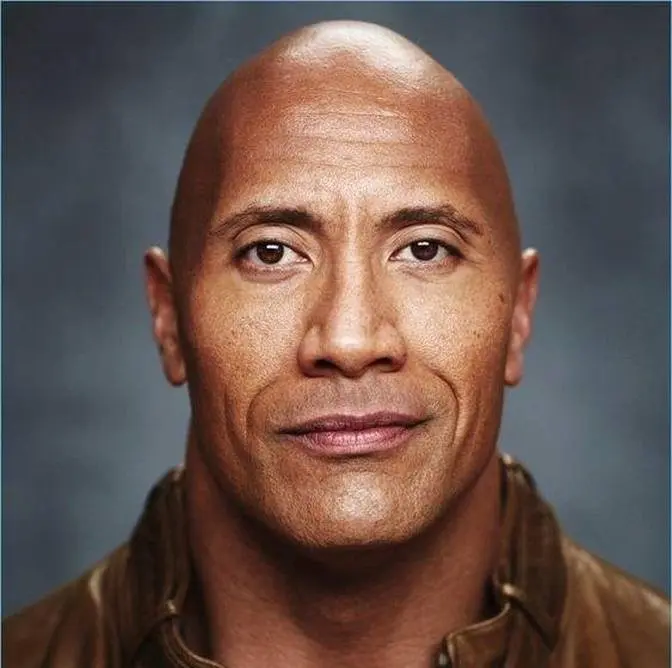
Dwayne “The Rock” Johnson and UFC legend Mark Kerr sit down for an exclusive Sports Illustrated feature where they re-watch iconic WWE and UFC moments from their careers and re-watch scenes from their new film The Smashing Machine. The Rock reflects on being booed as Rocky Maivia and how he reinvented himself as The Rock, his embarrassing first WWE match, and his legendary rivalry with Stone Cold Steve Austin. Kerr relives his craziest UFC fights, including brutal tournament wins, wild finishes, and the battles that earned him the nickname The Smashing Machine. Together, they connect their real-life triumphs and struggles to the way those stories are recreated on screen. Check out the full digital cover piece on SI.com.
Chapters: 00:00 The Rock & Mark Kerr react to some throwback WWE moments 00:20 Behind The Scenes footage from The Rock & Mark Kerr's Sports Illustrated Digital Cover 01:02 The Rock & Mark Kerr re-watch The Smashing Machine’s recreation of his comeback fight in Japan 02:25 Mark Kerr opens up about depression and losing joy for competition after his first loss 04:15 Mark Kerr speaks on fighting being more enjoyable once he got sober 04:55 The Rock on getting booed as Rocky Maivia at Wrestlemania 13 06:08 The Rock & Mark Kerr speak on the journey of self discovery 06:20 The Rock recalls his embarrassing first WWE match at Survivor Series 06:57 The Rock and Mark Kerr recall meeting each other for the first time 07:47 Dwyane Johnson speaks on rebranding himself as "The Rock," 08:00 Mark Kerr speaks on his UFC 14 debut 09:04 Mark Kerr explains the psychology and addictive nature of taking people's will 12:09 Mark Kerr speaks on fighting in Vale Tudo 13:40 The Rock asks Mark Kerr about putting his finger in a fighter's open wound during a fight 16:10 Mark Kerr describes how lonely you feel after a fight 17:07 The Rock watches his Survivor Series WWE debut at Madison Square Garden in 1996 18:30 The Rock on his Survivor Series debut at Madison Square Garden in 1996 21:38 The Rock & Mark Kerr's combat careers began within 2 months of each other 22:25 The Rock & Mark Kerr watch a Smashing Machine scene featuring Bas Rutten 22:43 The Rock on the honor of being part of Stone Cold’s final match at WrestleMania XIX 25:03 Mark Kerr and The Rock look back at footage of them both wrestling Kurt Angle 26:30 The Rock speaks on why he loves wrestling Brock Lesnar, Kurt Angle and Booker T 27:00 The Rock jokes about what would’ve happened if Mark Kerr had become a pro wrestler
Executive Producer: Alex Tzavalas Director/Producer: Greg Cally Producer: Jean Chery Director of Photography: Brianna Devons Cinematographer/Gaffer: Lamar Usher Sound: W. Stubblefield Editor/GFX/Colorist: Ori Galis Production Assistant: Jessie Nunoo
Clearly I didn't have any money for a good haircut.
When was that?
Wow, look how judgy you were with that.
Oh my god, when was that?
That picture, that was his very last wrestling match.
I rock-bottomed him three f***ing times by the way.
After the one, two, three, I leaned down in his ear and said,
I love you, man.
So, Mark, you know, this whole tour has been such a crazy tour already.
What a crazy experience for us.
You know, as we go around the world promoting Smashing Machines.
So, you know, I'm excited about this.
I know, I know you are.
Because about this moment, what we're doing here with Sports Illustrated
is taking some of our most, well, iconic, definitive moments of our career
that led to, well, us being here right now.
Yeah.
So I think the first one, we're going to see a scene from the film, Smashing Machines.
I've got to say, to see Mark, the thing he's been through is truly remarkable.
Mark, you ready?
It's your fight against Ensign when you came out of rehab.
Yeah.
And you were fighting in the Grand Prix, right, in Tokyo?
Yeah, it was Tokyo Dome.
It was the first fight back and it was like a trial.
It was like trying out again for the Japanese to see if I was up to the task.
Okay, so take me through this moment.
As you were kneeing Ensign, did you feel it in your body like, this is it?
Yeah.
Like you felt it?
You know, like a lot of that, when after the Volchanchin fight and all that stuff,
Ensign was my first fight back.
How many months prior was the Volchanchin loss?
Within the year?
Yeah, within the year.
Okay.
Oh, for sure.
Yeah.
And, you know, it ended up being like one of those.
Because a lot of that is like, once I start doubting myself, that's the first crack.
Yeah.
So I can't.
So after Volchanchin, it was like this doubt I had in myself.
And it was like, okay, I got to go through all of this stuff, through treatment,
through recovery, through rehab, and then I got to emerge on the other side of it
and be not just the same person, be better than I was before.
Right?
Was it the Volchanchin loss that then triggered the OD?
You know what?
Or was it ultimately?
It was that.
It was that whole.
It was like a cocktail of just crap that I was in.
And that was the straw that literally just set me over the top.
And everything from there.
After that loss, did you fall into depression?
I did.
It was just one of those things where, you know, in the one interview,
I can't even conceptualize losing.
I never thought of losing.
That's right.
Because you had never lost a fight.
I never thought.
Right.
And so the whole idea behind, like, you know, even though it was a no contest,
I lost the fight.
That's not why you did it.
No, it's not why I did it.
You don't do it for no contest.
No, I want a definitive, like, did I win or did I lose?
That's right.
And that's why you fight.
Because at that moment, you know.
When you came back and you beat Ensign there,
what kind of revelation was that for you?
It felt like I was on the right path again.
I felt like I was on the right path,
sober, clearheaded, had my training schedule dialed in,
had everything around me dialed in,
and it was like this singular focus again.
I was, you know, really like I was like in a groove.
You know, this was like, OK, this is like flow state.
I'm like things are coming and I'm moving towards what I want,
which is that, OK, now I want the grand prize.
You coming back, beating Ensign, it's a big comeback for you.
You overcame so much.
You were in the hospital.
Yeah.
The OD happened.
Yeah.
We talked about it.
You're lucky to be alive.
Yeah.
Grateful to be alive.
Coming into that fight and winning that fight against Ensign,
clearheaded now and clean,
was the high from winning a different kind of high than back in the day?
Oh, for sure.
For sure.
You know what?
It was a lot more enjoyable.
Oh, wow.
That was the part where I missed.
Yes.
I missed the joy it gave me to compete and train and focus
and get the outcome that I wanted.
So I completely missed the joy in the other wins I had.
Wow.
And it came back.
It came back.
For the Ensign fight.
Yeah.
That's amazing.
That's a miracle, really.
That's amazing, brother.
Well, we go from you in the Grand Prix to now me.
What year was this?
This is me at WrestleMania XIII in Chicago.
And the reason why this was very definitive for me was
I was in the company not even a year.
I was a rookie.
And Vince McMahon told me very early,
you're going to become the youngest Intercontinental Champion,
but you have to smile.
All the time when you go out, your music plays, you've got to smile.
As you come back, you've got to smile.
And I remember telling him, I was like, man, that doesn't feel real.
Authentic.
And he goes, yeah, but I want to make sure people know
that you're grateful to be here.
And I went, I thought, God, I wonder if there's another way.
But he's the boss, and you don't know what you don't know.
So what you're seeing there at WrestleMania XIII is
that's a culmination of months of being inauthentic,
not being real, smiling.
I mean, dude, I used to go out, my music would hit,
and fans would be like, you f***ing suck.
Oh, my God.
And I'd have to smile.
Yeah, yeah, yeah.
Thanks, man.
Yeah, that's awesome.
How crazy is that?
But that's to the point of all of this process
of being authentic to who you are.
You are great at what you do,
but to challenge yourself and have that authentic belief in yourself
that you can do way more.
Yes.
And this whole entire journey that we've been on
has been this self-discovery.
And it actually connects back to your story.
Benny Safdie said this about you, and I'm paraphrasing here,
but one of the greatest triumphs about our film
is the fact that you yourself, as a human being,
as a real man, Mark Kerr, found your own authenticity,
and finally, after all these years,
you are comfortable with who you are today.
And, by the way, that's the great life lessons, right?
You're in your fifth level of life, I'm in my fifth level of life.
Back then, I was in my 20s, dude, and getting booed.
Because that crowd, they know a phony when they see you.
They know if you're not being real.
Oh, my God, they know it.
And then finally, Vince McMahon, I had a meeting with him
the next night at Monday Night Raw, and he goes,
Hey, we're going to take the Intercontinental title off you.
And I don't know what happened, what we did wrong,
but we've got to try and figure it out.
And then I wound up tearing my PC out.
And I had to meet you in Venice.
And I met you, that's when I met you. It's crazy.
Because he sent you home.
He sent me home, man. He sent me home when I got hurt.
Yeah.
And then I went out there to Venice, and I was working out
at the Venice Golden Gym, and that's where I met you.
That's just so funny.
Because that, I'm just telling you, this stuff is kismet.
It's serendipity.
So kismet, man.
Not a lot of people know this, but you and I meet,
and at that time, you were already ascending.
Yeah.
And it was just crazy.
And I remember meeting you, meeting the guys,
Don Fry, Shamrock.
Shamrock, yeah.
Those guys, man, all your boys.
And I remember Vince McMahon called me back.
He goes, OK, I'm going to bring you back,
and I'm going to make you a heel.
And you're going to join a group called
The Nation of Domination.
Oh, my gosh.
And the rest is history.
The rest is history.
Please welcome Minnesota on debut.
Oh, my gosh.
This is the tournament.
This is UFC 14.
I was overcoming a lot of the stereotypes
that I grew up with, right?
Like if you're 6 foot 9, 400 pounds,
you're the toughest dude in the room.
If you're a 10 degree black belt,
you're the toughest guy in the room.
And so there are still some of that residual
that existed in me of like, oh, my god,
these guys are kung fu guys, and they're karate guys.
And so that first match was like, OK,
I need to just make this guy wrestle me.
Immediately, where you think, I'm going to take him down.
Oh, yeah.
I'm going to take him off his feet,
and I'm going to take him down to the ground.
And it's like any high level wrestler,
that's like paramount to their success
is being able to control where the fight happens.
Yes.
And so I didn't understand all this clearly until later
to look at it and go, oh, that's what I was thinking.
That's why I was doing what I was doing.
And so immediately, I get on him, and it's just like,
oh, now I'm going to maul you.
I was just going to say, so once you take him down,
in your mind, it's, I'm not around.
Oh, my gosh.
It's one of those things I was talking about.
Like, I didn't understand how addicting
it was to take somebody's will.
Talk a little bit about that.
Oh, my gosh.
It's, you know, I understand it a lot better now
than I did when I was competing.
But it was like, what, like, like Fabio Gajal
when I fought him, right?
He wouldn't give it to me.
Didn't matter how hard I hit him.
It didn't matter how much pressure I put on him.
He wouldn't give me his will to win.
He just wouldn't give it up.
You guys went a long time, didn't you?
Oh, my God, man.
It's like almost a 20-minute fight.
Yes.
Yeah.
I mean, it was this crazy, like, just give it to me.
And he wouldn't.
And it was, like, unsettling for me.
Unsettling.
Like, you know, the referees finally stop it.
I get awarded the win.
So in here, in these fights, it's
like, I'm putting enough pressure on you
where I want you to give it to me.
And I'll do anything to get it.
And you could feel that shift.
Oh, yeah.
Before even the stoppage comes.
Before knockout.
You could feel when you have taken somebody's soul.
Yep.
David Goggins calls it soul-stealing, right?
Yeah.
It's just because it's one of those things
where it's, like, it's so personal.
Like, I'm taking your will to win.
And it's just the same as taking your, like, will to live.
I mean, it's that powerful.
And you talk about, like, the addiction of the crowd.
That's another.
They amplify.
They feel it.
Oh, yeah.
Yeah.
Oh, yeah.
They can feel it coming.
Oh, for sure.
Especially with you.
Yeah.
When you have that reputation.
Like Mike Tyson.
Oh, yeah.
When he was undefeated.
Like you when you were undefeated.
Unbelievable.
Like, this guy's going to come in,
and he's going to the f***ing rack.
Oh, my gosh.
It's incredible.
Because looking back on it, going,
oh, that's what I was after.
Like, it's almost like now almost like a shame to admit it.
Because it almost seems like a dirty little secret.
Like, I'm going to take your will to win.
You know?
Do you think fighters feel that way today?
Oh, for sure.
So why do you think now, as you've matured,
that you're a little ashamed of that?
Because what I had to do to get it.
Because I had to literally inflict severe punishment
on another human being.
Right.
And that's the paradox, right?
That's the paradox of my heart, who I am.
I like to compete.
It is a paradox, man.
Yeah.
I always say you're this walking contradiction
of a beast of a human being.
Yeah.
And at one time, the greatest fighter on the planet.
But yet at the same time, you would wreck someone
and stay in the ring to make sure they're OK.
Yeah.
And you go check on them.
Yeah.
Or you go in the back and go check on them.
Yeah.
Did you feel that differently when you were down in Brazil,
Valletudo, no holds barred, no gloves, no mouthpiece,
no rules?
Was the soul-taking a little different
than as opposed to the regulations of UFC cage?
It was because there's no limit to what you can't do,
basically.
And so that, it was strange.
Because looking back on it, Paul Vargas, right?
Yes.
When I started punching in me and him and stuff like that.
Oh, yeah.
Like, I'm pausing.
I'm pausing.
Like, if you watch the original footage,
I'm pausing to give him a second to just give up.
Yes.
I just want him to just, hey, don't you get it?
Like, looking at him, feeling almost pity for him.
Like, just give up, dude.
You know, it's this crazy realization,
looking back on it, how, you know,
what I was going through.
Like, emotionally what I was going through.
And all these contrasts and paradoxes.
You know, with all the work that you and I did together.
Yeah.
You were so just amazing, helping me through,
helping me get up in here.
Cerebro.
Yes.
And also, you know, so when we shot that scene
with you and Barlins down there,
and it was, I remember mentally where I had to go
and emotionally where I had to go
because you fought multiple times.
Oh, yeah.
That night.
Not just you win and come back next week.
You win and you come back later that night.
Yeah.
And you fought multiple times that night.
And I got one question for you.
Yeah.
Because we show it in the smashing machine,
and I did it in the smashing machine.
And when I did it in the smashing machine for our scene,
I'd never been in a position like that before.
I was already living in your skin, I feel like.
So, to take my thumb.
Oh, yeah.
And to put it inside the cut.
Yeah.
That you slit his face open.
And just to open it up a little more.
Oh, yeah.
What was going through your mind at that point?
No.
Is this just a, I will continue to take your soul?
It's the level.
It's like looking back on it now,
I understand that it's like showing him
the level I'm willing to go to
to get you to give me your will to win.
I'll dig.
Because you're in there and it's like,
I just want to inflict the minimum amount of pain
for you to go, okay, I can't beat him.
I don't want to engage and beat you into a pulp.
If it's necessary, that's where I'll go.
You don't get anything out of that.
No.
If I'm pushed to do that, I will.
Yeah.
And it's just one of those things where in the moment,
it was like, I just need you to give me your will.
This is what I'm willing to do.
It's me being frustrated that he's not giving it up.
And just this like, ow.
I will do this.
Yeah.
Yes.
And if necessary, more.
Just to let you know.
Yeah.
Looking back, it's just crazy.
Because in my own head,
sometimes it's hard for me to resolve like,
wow, I'm a competitive, wow.
That's a completely different switch.
So for somebody who I know,
actually, you did not like to fight.
In terms of fighting.
Yeah.
Street fights and this.
It's not your thing.
No.
Not like, hey, I'm going to scrap this guy.
You know what I mean?
After work, and we're going to go outside in the back.
Not even close.
From the bars.
It's like, that's just not your nature.
No.
So that switch is just ******* crazy that you had.
It's like, I didn't know it existed.
This is a primal, primal,
like caveman survival switch of like,
whoa.
Did it surprise you sometimes?
It did because it's a place that was just unfamiliar.
Did it scare you when you went to those places?
A couple times it did.
Because it's just one more.
Like after the fight and you're alone
and you're coming down from the fight.
Oh, coming down would be the,
I mean, most people don't understand,
like after a fight,
it's the loneliest place in the world.
I mean, if they're being honest with themselves,
it's a lonely place to be.
Even if you win.
The reason why, if you win,
because you got nothing in front of you
and you feel like you have to do something.
Like you just did the thing.
Yeah.
And you gotta do another thing now.
Right.
But it's not there.
Yeah.
It's not like, hey, tomorrow I'm gonna do that same thing.
It's just crazy.
So what a high you come down from.
Oh gosh, yeah.
Yeah.
And then you have to fill that high sometimes.
Yep, have to do it again.
It's a crazy place to be.
This is all the stuff that, you know,
I was so lucky to get into your brain and your head.
And you share all these things.
It translates.
It moved, right?
It translated.
You did an amazing job.
Thank you, brother.
Now there's gonna be the man right there.
That's Blue Chipper right there.
You know what?
I have to agree with you, Jim Ross.
I don't like you, but I gotta agree with you.
Rocky Miami is good.
First third generation superstar ever.
Clearly I didn't have any money for a good haircut.
When was that?
Wow, look how judgy you were with that.
Oh my God.
When was that?
I was gonna throw...
Where's your fanny pack, bro?
Fanny pack's in the locker room, by the way.
So that was a crazy night.
That was my very first night.
So here's the crazy thing.
You have your very first fight down in Brazil,
Valley Tuto.
You never had a professional match, right?
No.
So you're throwing up in the locker room.
Oh yeah.
You can't keep anything down.
I think you tell your manager,
I can't do this.
Oh, can't.
No, he's just like, you can.
He's like, you can do this.
And it was like one of those things where it's like,
you can do this.
So it wasn't like, get the **** out there.
He was like, no, no, no.
No, he's like, you can't.
And part of it was like,
you don't know what you don't know.
He knows on the other side of it is that
these athletes that are coming out of wrestling,
they're just cut differently
than all this other stuff that exists in this fighting world.
And so he can see it clearly, right?
And so he's just like, you can.
And you need to trust me that you can.
And that was like one of those things where it was like,
deep breath in.
It's like, okay.
Yeah.
And then you went out there, obviously,
and you clicked and you worked in pro wrestling.
Our terminology for having a match is work.
So you have that night in Brazil, Valley Tudor.
You go on and you win the whole tournament.
You beat three or four guys.
Three guys that night, yeah.
Okay.
So here's the irony.
That was your first night ever as a pro.
What you just saw there
in that awful blue wrestling outfit.
That awful haircut.
My fanny pack is in the locker room at Madison Square Garden.
But that was my very first match.
At Madison Square Garden?
At Madison Square Garden.
Wow.
In front of 22,000 people.
And that was a pay-per-view Survivor Series.
I'd never had a professional match.
That was my first one too.
Wow.
And just like you down in Brazil, Valley Tudor,
head first into the fire.
And this was it.
My big debut.
Madison Square Garden.
Wow.
And it's a tournament-style Survivor Series.
So I had to beat two or three guys that night too as well.
Now when I say beat, they were nice enough to put me over.
Yeah, yeah.
And let me win.
I always like making sure that there's a difference
between Mark Kerr beating someone
and then The Rock beating someone.
And I'll never forget, man, just like you, backstage, nervous, 22,000.
Because especially just like in Brazil,
just like for me in New York City, Madison Square Garden.
Yeah.
If it doesn't go well, that's your debut.
If you don't win that tournament, okay,
well, maybe you're going to make something of yourself, maybe you won't.
If I don't perform there,
and that New York City crowd is hardcore,
they get a sense of,
****, you're done.
So luckily that night,
I give a lot of credit to my fellow wrestlers
who were like, hey, kid, this is a big opportunity for you.
Because, by the way, Vince told me,
he came to me earlier that afternoon,
and he goes, do you know what the finish of the match is?
I go, no.
He goes, you're going over.
That's what I said.
The whole thing?
He goes, the whole thing.
You're either going to sink or swim,
and this is going to be baptism by fire.
Oh, my God.
That's head first?
Head first.
24, 25 years old, man.
Wow.
I didn't know that.
And so, luckily, the other wrestlers put me over.
Jake the Snake Roberts, Jerry the King.
Oh, my gosh, man.
These guys are legends, man.
Those are legends, yeah.
Said they believe in you, etc.
They're going to put you over.
And then, you know what?
The best thing about that night was the crowd.
They felt something.
There was a nice connection there.
Yeah.
And the rest is history, man.
Yeah.
When, Vale Tuto, when was that for you?
Was it 97?
97, 97.
Wow.
97, yeah.
Do you remember what month approximately?
January.
Holy ----.
So, January of 97, November of 96,
just two months earlier,
is that moment for me.
That's awesome.
So, that parallel existence.
You were sticking your finger in the cuts of opponents
taking their wills.
Oh, my gosh.
And I was running around with a bad haircut
and an awful wrestling outfit
that people still **** with me about.
Now, you're going to **** with me
because I never should have showed you that.
Dude, I'm showing up in blue Speedos, man.
You don't know that yet.
Such a good guy.
Such a good guy, right?
Speaking of good guy,
this guy helped me so much, Mark.
He was on top of the world
and he saw just a little bit of potential in me
but also smart enough to know,
he's like, man, we got some chemistry, man.
Me and you.
Wow.
And I was not in a position to say,
hey, let's me and you work together.
Let's go headline WrestleMania.
He had to say it.
And he went on,
he went to Vince McMahon in 1999.
In January of 99, I think.
And he said,
I want to main event WrestleMania with The Rock.
And the rest is history.
And we went on
and I went on to have just the greatest rivalry with him.
Like, I bought some of those pay-per-views.
Thank you, man.
I did.
Because it's just one where,
like, just as a fan of that,
I mean, part of it,
you know, I love watching it
because it's live storytelling.
Like, I just remember some of that stuff,
just how awesome,
just, he had another gear,
another persona that was just incredible.
Like, he'd just come up with stuff
and sing with you.
Just, like, where did they come up with that line?
It was just, like, just,
it just is incredible.
That was a fun time back then.
Oh, I bet.
Before the company was a publicly traded company.
Yeah, yeah.
You know, we could fly under the radar.
And that, what you just saw, that picture,
that was his very last wrestling match.
I had the honor of wrestling him his final match.
That's historical.
As you leave the business,
it's the right thing to do
and the respectable thing to do
is to lose as you leave.
Yeah, yeah.
And put this guy over.
Let this guy who's gonna go on.
The next chapter.
Let him win.
Yeah.
And he didn't have to
because he was the biggest star in wrestling.
But he did.
He put me over.
And as I was pinning him,
rock bottomed him three f***ing times, by the way.
You know, he, like Kurt Angle,
he had a broken neck
in wrestling.
Broken neck, yeah.
And after the one, two, three,
I leaned down in his ear.
I said, I love you, man.
Oh, my gosh.
I was like, I love you, too.
We had that moment.
What a moment.
Beautiful moment.
What a moment, man.
Crazy, right?
Yeah.
I'm speaking.
Wow.
How much you weigh there, Mark?
200?
220.
220's the weight class.
That's Kurt.
Oh.
That's Kurt.
But that's you.
Yeah.
Wow.
Yeah.
So, there's Kurt again.
Yes.
Oh, my gosh.
He was so good at it.
Kurt was one of the most
incredible athletes, right?
Just a long time.
Unbelievable.
God, it was such a challenge.
He was way faster than me.
You know, he really was.
I mean, he was,
he wrestled at heavyweight in college
and then both him and I competed
at 100 kilos, 220 pounds,
and I just, you know,
I faced him,
I think our final records
against each other are four,
I won four times
and he won four times,
or four and four.
Wow.
You know, and it's just one of those
where he just won the four
in the years you needed to win them,
pre-Olympics and Olympic year.
Yes, yes.
So, you know, when we competed
against each other,
it was like all out.
Like, I knew like,
oh man, this is like
a different level,
a different gear
I'm going to get to, right?
Because there's just no other way
I'm going to beat him.
Yes.
No other way I'm going to beat him.
You know, I felt that
when you talk about his gears,
like there's guys
who I wrestled with who,
and this is why I always,
I loved wrestling guys
who were just insane athletes
who had a pedigree
at other things.
Yeah.
And that was always Kurt Angle,
insane athlete.
As you know,
pedigree in wrestling,
gold medal at the Olympics.
Yep, yep.
Wins the gold medal
with a broken neck.
I mean, it's just wild.
You know, Brock Lesnar
was the same.
Yep.
Just incredible pedigree athlete.
He could go anywhere
in the ring with him.
And you know who else
was an amazing athlete
was Booker T,
who I loved wrestling with.
Oh my God, yeah.
Amazing athlete.
Yeah.
Just these guys
were athletic guys,
which makes me think,
had you not become
who you became,
you as a pro wrestler,
you would have been
a great pro wrestler, man.
You would have had fun.
Oh my God.
You would have been insane, man.
And the way your motor is,
and the way your head is,
I believe,
like your promos
would have probably been
crazy.
Oh my God, thank you.
Yeah, yeah.
You would have been,
your promos, I think,
you'd be the,
Jake the Snake Robert's promos
were so soft-spoken
and he spoke down.
Yeah.
And here's the thing, right?
I feel like you'd be like
scary.
Scary like that.
Giving those kind of promos, man.
You know?
If you were to wrestle,
I'm just worried
the magic wand,
what would your wrestling
name be?
Ooh, The Professor.
The Professor?
Yeah.
Oh ----.
Yeah.
Okay.
The Professor.
And then what's
your finishing move?
It's going to be
The Lab Bomb.
I love that.
Because I'm going to
just bust all over you.
Wow.
You ain't making any money
with that ----.
Nope.
Nah, I die, man.
The Lab Bomb.
Not in time.
I might need some
refinement on that one.
You made the right choice.
You went on to become
the Smashing Machine.
That's it.
That's you.