
Ancient Mysteries Around Lake Titicaca
16 Video Views·Jan 17, 2026
Check out our upcoming major tours
https://hiddenincatours.com/tours/#major
AI GeneratedMay contain errors
Hi it's Brian Forster of Hidden Inca Tours and today we're exploring Lake Titicaca in Peru.
This location is called Santiago de Oje and you can see the size of these quite megalithic blocks.
The stone is not from the area and in fact nobody knows the location of the quarry. You can see
that here is the snake all coiled up. Why the site is so badly damaged? Was it cataclysm?
Zealot Christians? Who knows? But in order to get some proper insight of this area,
let's see what Gustavo Morales has to say. Okay here we are in Santiago de Oje and this is a very
interesting place that we had a chance to visit now. We were just mining around this beautiful
what we think is a Tiwanaku pieces and all of a sudden a couple of the locals came by and they
were talking with one of our friends here and they started giving us some very interesting
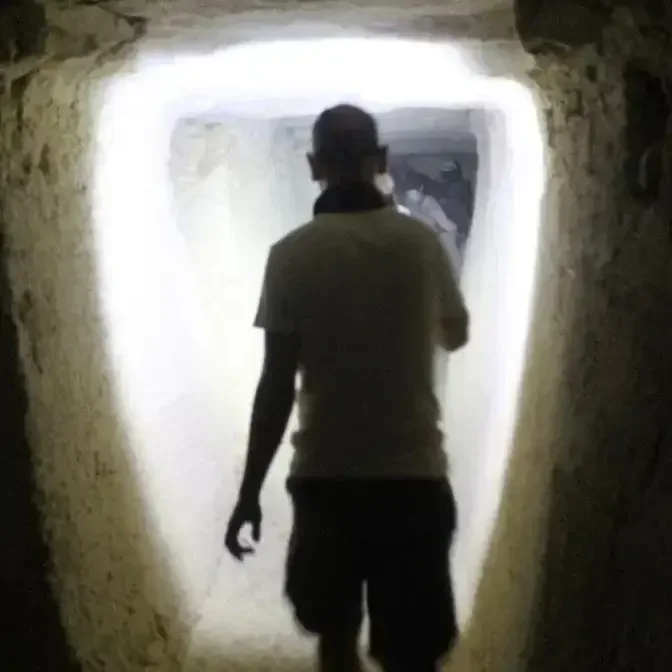
stories about this specific place. According to them there is the gate to this tunnel and the
tunnel goes to different directions. According to them it goes to the village right behind me,
face south all the way towards Tiwanaku and they go further. They think that it's another tunnel
that connects all the way to Cusco and they they're saying that it's an ancient type of
tunnel and they are very kind of superstitious. They don't want to give a little more information
but they were saying that at night there's the snake that comes out from this tunnel every night,
about eight meters length of snake and then the other guy is saying about or eight other
different snakes that they point all at the same direction. They all point in south. So it's really
impressive. It's very impressive. We have to understand that most of the local people here
are very conservative. So for someone to just come for no reason and try to share it's something that
we should appreciate and they try to keep things very low profile. They have a lot of respect to
Mother Earth or Pachamama. Every team that that will be disrespectful they try to avoid it because
at the end she's the one who decides if they have good production or not in agriculture.
So it was very impressive, very interesting testimony of what they think it happens here
every night especially about the snake. They're talking about eight different snakes. They go to
different corners but they all face to the same direction south where exactly Tiwanaku is. So the
snake sculpture is pointing to Tiwanaku. It's looking at Tiwanaku. It's correct. And what does
the snake represent in Inca tradition? Well the snake represents the protector of the goods of
Mother Earth or Pachamama. Part of the three layers. Above ground Alacapacha where the
condor is. Acapacha where the puma is represent the human being and Mancapacha below ground it's
the snake. So the snake protects the goods of Mother Earth. So very few people visit this
location. You can look it up on a on a map. Again it's called Santiago de Oje. It's well worth a
visit if you happen to be anywhere near Lake Titicaca. Next we're at the little town of Copacabana
which is actually in Bolivia just over the border and this is called the Orca del Inca
which means the gallows of the Inca but of course that's a Spanish interpretation
of an ancient megalithic site. No one knows in fact who created it but it is definitely some
kind of solar calendar probably for either the equinoxes and the solstices or maybe just the
equinoxes or just the solstices but likely all four. No one knows who actually made it. It could
be an Inca construction or it may actually be something far older than that. And there are many
different ancient sites in this area. There you see Lake Titicaca in the background and there
are definitely megalithic remains on the hill that you see in the background here. So as I said
in this area there are many megalithic sites that are not very frequently visited. It's information
that you have to actually get from local people. So these strange cutout shapes in the bedrock
are exactly the same as we see in the area of Cusco in Peru. Of course some people are going
to say that this is a quarry of some kind but the shapes of the blocks don't make sense in terms of
quarrying because they're all basically pie-shaped. Another theory is that there's some kind of throne
but they face in different directions so they're not focused on one specific area
and that's why again these places are so mysterious. So there are thousands of these cutout
shapes here around Lake Titicaca and also in the area of Cusco in Peru. Their function unknown.
The weathering shows that they are likely several thousand years old and this gives you another view
of some of these cutout shapes. Only the local people know about this site and so it's very
difficult to find places like this unless you do a lot of study beforehand. Now we're at
which again is near Lake Titicaca. Some people believe that this is a portal or a stargate of
some kind. The actual function original unknown, original builders unknown. Notice the central
space and here's someone who's that's our bus driver who just did some kind of worship or
ceremony and on the left and right sides of the central portal are these vertical grooves deep
in the sandstone. Again original function unknown. And then this place that took me five years to
find is called Canuani and again it's just located or is located just over the Peruvian border
from Bolivia. Some people think it was a stadium. It faces directly to the lake
and in fact faces Tiwanaku in Bolivia. The stone is not super hard. It's a compressed volcanic ash
but who made this, when it was made, and why it was made is completely unknown to this very day.
But you see these are very evenly shaped stairs in the stone itself. There's no specific
logical pattern to it. Very complex effort was involved in creating it but who actually made it
again unknown and that's the whole part of going on an adventure in the Lake Titicaca area especially
with us at HiddenIncaTours.com. And this is a small basalt megalithic construction
again located very close to Lake Titicaca near the city of Puno and you can see quite massive
blocks were employed and also they were shaped and fitted very tightly without the use of mortar.
Original builders unknown. It was likely utilized by the Inca culture possibly other cultures as
well and it's called the Temple of Fertility and the reasoning behind that you will see is pretty
obvious as we go inside. So these are shaped like mushrooms or phalluses. I think far more likely
that they're phallic shape and that's of course why it's called the Temple of Fertility. And now
we've moved on to Lake Titicaca itself. These are the floating islands of the Uros people,
a very ancient people who predate the Inca, predate the ancient Aymara, and this is our
brilliant local guide Stephanie who is an absolute expert on the ancient cultures and sites of Lake
Titicaca. We use her services whenever possible. So now we leave the Uros Islands and actually
we're back in Bolivia on the Bolivian side and this is a scale model I believe of Ra 2 and the
builders of the Ra ships were these people from the Lake Titicaca area and every time we visit
the lake we always go visit them. And now a very small but very elongated skull located in the
local museum next to where the reed boats are. This child would have been less than two years old
and this is very likely a natural elongated skull, not the result of cranial deformation.
So that's of course something that I'm studying a lot in the area and also on the coast of Peru.