
SEEDS IM SOWING IN JANUARY FOR THE ALLOTMENT GARDEN 2026
6 Video Views·Jan 14, 2026
My 2026 allotment planner! https://amzn.eu/d/82yP8fm
EMMA'S ALLOTMENT HANDBOOK: https://amzn.eu/d/ct54lQB
AD: COOLJOB Gloves:
https://onlinestore.cooljobsafety.com/collections/garden-gloves-cooljob-1
Discount code:emmaglove
LINK TO SEED CRAFT SEED SUBSCRIPTION BOXES: https://www.seedcraft.co.uk
Quote EMMASALLOTMENT for discount
You can also follow me along on:
BLOG: http://www.thepinkshed.co.uk
INSTAGRAM: http://www.instagram.com/emmasallotmentdiaries
FACEBOOK: https://www.facebook.com/emmasallotmentdiaries
Good morning guys. Welcome to my
greenhouse on my a lotment plot here in
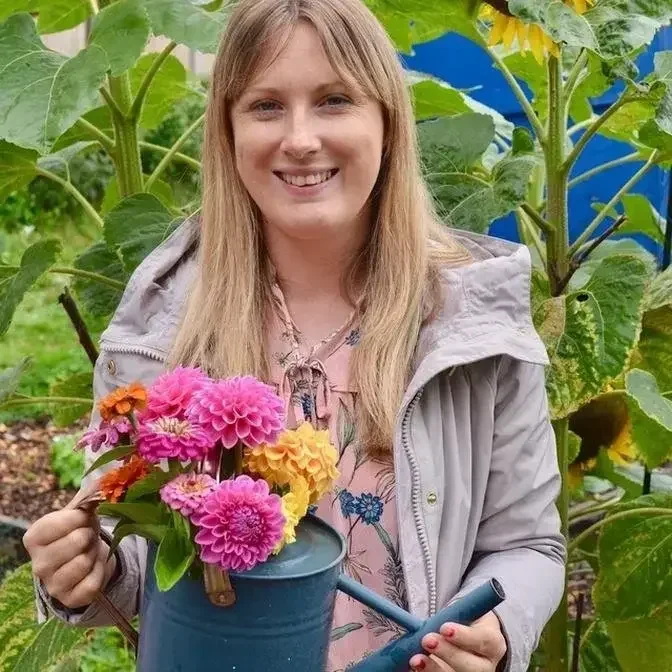
South London. My name is Emma and in
this video I'm going to be sharing all
the seeds that I'm going to be starting
in January. Now before we get started,
there is not that many seeds I'm going
to be sewing in January if I'm honest.
Now it really does depend on your
growing space and your growing
situation. For me personally, I have
this a lotment plot here in South
London. I have this quite small
polycarbonate greenhouse which is not
heated. I've got a very dark Victorian
terrace with some window space um which
does kind of point to the south. So I do
get a little bit of sun on those
windows, but there's very limited space
for me to grow. So I always have to be
very careful about what I start from a
seed. If you watch this channel
regularly, you might know that I do buy
a lot of my plants to to grow here as
plug plants. I don't think that's
cheating. I think it's space saving. I
think it's sensible. Um, but I do like
to grow some things from seed. And
mostly directly, I think anything that I
can sew directly in the ground is
amazing for an aotment plot because it
just means that it saves me time. I
don't have to find space and pots to pot
things on. I don't have to prick
everything out and pot it on and then
plant it out later. I can literally just
stick it in the ground where it's going
to go. Um, thin it out if it needs it.
Usually, I just leave it alone and it
grows away. And there we go. We've done
it. We have created crops to eat. So
seed sewing for me in the winter time is
a bit of a nightmare, but I do my best
to grow as much as I can from a seed
when I can be bothered.
There you go. That's a great
introduction to me. So the first thing I
have to say, if you have not yet started
your sweet peas, January and February is
a great time to start them in a
greenhouse or indoors at home on a
southacing window sill. I started mine
in autumn time and they have gone
absolutely wild. Um, I've got loads of
them. I've got some here and I've also
got some at home as well. So, I'm not
going to be starting any more sweet pea
flowers. But, if you haven't already
started them, you can start them now.
January is a g a great time to get a
head start on these flowers because they
are actually a lot more hardy than we
give them credit for. So for a long time
when I first got my a lotment plot about
6 years ago um I was told that sweet
peas needed to be planted in sort of
April May time because they're summer
flowering flowers and actually they can
stand being planted directly outside in
March sort of the beginning of March.
I've had sweet peas growing through
really quite a hard frost before and
they come back to life and they've done
great. So, by getting a head start on
the season now and sewing them in the
winter time, they should be stronger
plants and also they should give me an
earlier flower and that's why I've grown
them over the autumn time. It also gives
you a chance to chop their heads off and
when you sort of pinch them out is what
we sort of officially call it. You pinch
them down to a pair of leaves and then
they start throwing out side shoots and
it's on those side shoots that you get
all the flowers. So, it's really worth
pinching them out if you can. So, if you
start them earlier, like now, January,
February time, you've got a chance to um
pinch them out and encourage more side
shoots and ultimately get more flowers
from your crops. So,
sweet peas is my first one that I would
say to sew in January if you haven't
sewn any already, if you've got the
space. You see, I've just used these
modules here. Um, and then I won't pot
these on. These will go straight out
from the modules, so I don't have to
worry about finding a million pots for
them. They can just live in these little
squares until I'm ready to plant them
out and they'll just have to put up with
that, I'm afraid. A couple of other
things that I've got growing in here
already that are great to start in
January if you have a greenhouse, salad
crops, any wintering lettuce, uh things
like mazuna, rocket, uh spring onions,
radishes,
that's all going to do okay at this time
of year in a greenhouse. Um, as long as
your greenhouse doesn't get frost in it
and you don't leave all the windows open
like I did last night and some of my
salads wilted a little bit, but I tell
you what, it will come back to life.
It's quite hardy. Got some winter
lettuce here. Um, if you just go to the
garden center and look at the the
lettuce packs, find anything that says
it's sort of a wintering lettuce or that
can be planted at this time of year and
whack it in. But lettuce is a very very
good crop for over winter. It's very
happy to live in a greenhouse. And then
you can see next to them I've got some
spring onions here which are just
thriving, doing amazing. Radish would
also work, like I said. And um any other
pick and come again salads can go
straight in. The great thing about
lettucees and salad crops is that it
doesn't usually take that long um to
grow. So you could be sewing them and
within a couple of months have something
fresh to eat and pick. And um the more
you pick, the more it will grow back as
well. So it's kind of like a pick and
come again is what I like to call them.
I think that's what everyone calls them.
Even if you don't get the best crop out
of it, I think it's just nice to have
some greenery growing. And um
potentially a few leaves to eat, snack
crops, I call them. They're great for
snack crops when you're working away on
the a lotment in the winter. You know,
you just pick some and just have a
snack.
Fly in that one. It's great to grow your
own snacks on the a lotment. So, whack
in some salad crops if you can at this
time of year. You won't regret it.
There's quite limited seeds that I'm
growing um literally at home in trays
and stuff at this time of year, but
something I am growing is chilies and
peppers this year. It's not something
I've really ever grown before because
I've never had anywhere to grow them on
and look after them. Now, I've got this
greenhouse, it's going to be perfect to
have them in pots. I'm not an expert on
it. I don't really know what I'm doing.
And I'm very, very excited to try
peppers and chilies this year. It is
something I use a lot in my cooking. So,
I've got a couple of seed packs here.
Let me just find them. I'm so
unorganized. Right. I've got four here
from different seed companies. Let me
tell you the seed companies I've gone
for. I get all kinds of different seed
packs like from different companies. I'm
not really loyal to any particular
company. Um, so the first ones I got
from Sutton Seeds. Um, these are chili
pepper F1 Longhorn. They're a really
productive pepper apparently. So, they
just give you more and more. I mean, the
picture on the front is very, very
promising. They look fantastic. So,
these are to sew late January to April
and then harvest July to October. So,
the thing with peppers and chilies is
they need a really long growing season
and that's why we have to start them at
the beginning of the year. So, late
January, I'll probably start these at
the very, very end of January on my
window sill indoors and I'll let you
know how they go. This packet here, this
is from Premier Seeds. I get these from
Amazon, Amazon delivery. I've never had
a problem with them and they just do so
many different varieties. I love them.
So, this is the jalapeno M, which is a
hot pepper. Why not? So, I'm very
excited to try that one. And then the
other two seeds that I've got are from a
subscription seed company called Seed
Craft. Um I do work with them sometimes,
by the way. Um and they do send me a
free box. But you basically it's a
subscription service and you get a box
of seeds every month. But the good thing
about them is that these seeds that they
send you each month are seeds that can
actually be sewn that month. So they're
not just sending you sending you like a
random pack of seeds. Um you can
actually sew them all. So you don't even
have to think about what you're sewing.
you could just literally take the seeds
out the packs and sew them that month
every time you get the box. So, it just
kind of takes all the hard work out of
it. And I think they are fantastic.
Their seeds have always worked for me as
well. So, I've never had a problem. Um,
they have sent me the hot pepper padron
and sweet pepper tangerine dream. Again,
not a chili or a pepper grower. So, I
think all of these that I'm growing are
peppers, aren't they? Oh, no. I've got a
chili pepper as well. Just don't really
know what I'm doing with them. But I'm
incredibly excited this year to have the
opportunity to grow some peppers and
chilies. What I'm going to do is get
some pots in here. I think some big
terra cotta pots and have them grown
because I did see online that some of
these are perennial and you can just cut
them back and then repot them and they
kind of grow again. So without having to
sew from a seed every year. I don't know
if that's true for all of these
varieties, but I'm going to find out
guys. So I'm very excited. Let me know
if you're growing any peppers or chilies
and any tips you've got for me because I
really really love them and I really
want to make it work this year. The
other thing that I'm starting from a
seed in January that is going to grow in
here in my greenhouse is an oberine. I
have got the money maker variety.
Apparently this is really really good
easy sort of beginner oberine oberene to
grow if I don't throw them again from
premier seeds. Um never grown an oberene
before. I grew cucumber for the first
time last year and they worked really
well. But I won't be sewing my cucumber
seeds till much later. Oberene I think
needs a much longer growing time and I
want to get a head start on these. So
I'm going to sew these at home on my
sunny window sill and um hopefully have
some oergene growing this year. Oagene
is something I cook with quite a lot.
Um, I like to put them into curries
because when you slice them and put them
into a curry, they kind of absorb all
the sauces and things and they have a
really good flavor to them. They're kind
of like a sponge, a vegetable sponge.
They just soak up all the flavor of
everything and I love them. So, I'm
growing oagene this year for the first
time. Um, chilies, peppers, and oberine.
That's my sort of new things. Not new to
everybody, though. I don't think they're
that exciting. I think most people grow
this stuff, but I've just never have.
So, it's exciting to me. I do want to
grow peas this year. Um, Craft did send
me some peas this month, but I'm not
going to sew them in January. I'm going
to start my peas midFebruary. Um,
they're the meteor variety. However, you
can start these at the end of January if
you want to. Um, put them into modules
or plant them into um, an old drain pipe
and then transfer them outside without
disturbing the roots. That's never
worked for me, but apparently that's a
really good tip that a lot of people
give. Um, if you can get that working,
let me know how you've managed it
because every time I've tried that, it's
failed. I I probably just put them into
modules and then plant them out as
little plants just because the mice love
to dig up peas and eat them. So, it's
much easier to grow them in a module and
then plant them out after. And then
these next two seed packets, these will
very much depend on weather. Last year
was a little bit of a weird year, wasn't
it? because we had so much sun in the
springtime and it got so warm so quickly
that my entire plot just grew away like
no tomorrow. And I ended up putting in a
lot more seeds a lot earlier than I
anticipated that I would. I think we
just got a really great year for sun.
And when we get a good year for sun, you
can go crazy with the growing. So I'm
keeping an open mind this year. Um I
have some carrots. These are early ns
too. Again from Premier Seeds Direct.
Early Nance are what they say. You grow
them earlier in the year. They can stand
a bit cold. Nance really great, easy
beginner crop of carrot to grow. I have
tried growing many, many different types
of carrots and they usually fail. I
think I've grown like three successful
carrots in the last 5 years. So I'm
going back to basics. I'm going back to
ns um because they are supposed to be
the easiest seeds to grow. You also get
a lot of seeds in here. There's 850. And
the thing with my carrots is they fail
so many times I have to keep resoing
them. So, I think it's good to get a
great big packet of them. If the weather
cheers up and we get a ridiculous amount
of sun, I will stick these out somewhere
and fleece them over. I will just do it
and I'll let you know how they go.
Otherwise, I think these will be going
out sort of beginning of March time, but
apparently you can put them out in
January. So, we'll keep an open mind
this year. And then the other thing that
I know probably will work at this time
of year, leaks. This is the Bulgarian
giant. There's a thousand seeds in here.
Thousand seeds. Um, believe it or not,
I'll probably end up growing them all
because again, leaks are something that
I seem to put in the ground and they
disappear and then a year later all of a
sudden they start springing up out of
nowhere. something I've never really
been able to grow successfully to the
point where I'm pulling up a massive
leak. But maybe this is my year. Maybe
this is my year. I again, I don't know
if these will go out in January, but
potentially over the early spring. Um,
but I'm keeping an open mind and I am
just trying to show you some seeds that
can be sewn in January if you're
desperate to. If in doubt, whack them in
because you never really know what's
going to happen. So really not the
biggest selection of seeds at this time
of year. But like we said before, it's
very very early and unless you have, you
know, a lot of room for all of these
seeds and growing lights and, you know,
warmth for them and lots and lots of
light, you're really not going to be
able to to handle them. So just don't
overso. Oh, a couple of other things you
could put out if you haven't already.
Garlic. Garlic absolutely loves this
weather. It loves the cold. It really
needs a cold snap in order to grow the
bulb efficiently. So, if you're going to
put garlic sets out, do it now. And
onion as well. You can also still sew
your spring bulbs. You can sew tulips at
this time of year. A bit late for
daffodils, but tulips are very happy to
be planted out right up until the end of
Feb. And you will still get tulips this
year if you do that now. So, January,
February, you could put in your tulip
bulbs if you haven't already. I do have
a few things growing out there that I
want to quickly show you because there
are a couple of other things that you
can sew at this time of year. But let me
show you them and how they're doing
before you make your mind up.
These here are turnips. I actually can't
remember the variety, but I think
they're purple turnips. So, if you see a
seed packet and it's got purple looking
turnips, that's what these are. You can
see they're quite frozen over. These
were sewn out sort of over the autumn
time. Um, and they're doing okay.
They're still alive. They're still
green. I don't know how good a crop I'll
get from these, but turnips are
something that will sustain a little bit
of cold. They will put up with it. And,
uh, if your soil does sort of unfreeze,
obviously you couldn't sew anything in
this soil because it's frozen. Um, but
if it does unfreeze by the end of
January, you can put in a few turnip
seeds and see how they go. And then
these frozen plants here, these are
beetroot. These are the golden variety
of beetroot. I've also grown some other
beetroot somewhere else. Um, beetroot's
a great crop for the cold. You can see
that it's frozen over completely, but
it's alive and it's doing okay and it
will it will come back to life. They're
very hardy plants. Again, you can't sew
them in the soil when it's like rock
solid and frozen over like this. But if
your soil was to sort of unfreeze and we
had a bit of a sunny spell, why not
throw in some beetroot seeds? They're
very hardy and they might give you a
nice crop.
And then there's your bare root fruit
bushes and fruit trees. Now, January is
Oh, goodbye. January is the perfect time
to get any bare root fruit bushes and
fruit trees into the ground. as long as
the ground isn't completely frozen over.
Always a good idea, I think, to grow
fruit bushes and fruit trees as bare
root plants because it gives them a
longer time to sort of establish
themselves and ultimately it's going to
be a much healthier plant. It's also a
lot easier. I think it's much easier to
grow fruit bushes and fruit trees from
bare root. I think there's much less
chance of it dying as opposed to sort of
buying a great big apple tree or a great
big established fruit bush and you stick
it in the ground. there's a big chance
of it sort of giving up the ghost and
deciding no, I don't like it here and
just keing over and dying. They're also
a lot more expensive and you've wasted a
lot of money. So, if you get bare roots
and it basically looks like a stick with
some roots on the bottom and you think,
"How on earth is that going to grow?
What is this? What have I been sold
here? Have I been conned?" You haven't.
You haven't at all. Dig a big hole. Put
some goodness in it like some
multi-purpose compost. Stick it in. Bury
it. Dig it in. Um, push it in really
hard. so there's no air around it. Give
it a really good water. Even if it's
raining, give it a good water and it
should hopefully take off and become a
really strong established plant. And
it's great cuz you get fruit year after
year. It's a perennial. It's something
that you can come back to every single
year and keep getting a crop from. So, I
say it's definitely worth sticking some
of these in if you haven't already. This
is what my fruit bushes look like right
now in the winter time. They have had a
bit of a a prune as well. I've sort of
I've looked after them, you know. They
just look like dead sticks coming out
the ground. But I tell you what, come
the spring summertime, these will be
really, you know, bushy, lots of leaves
and loads of fruit. So, this is a this
is a black currant. I've got a blueberry
plant there and a red currant. If you
plant blueberries, make sure you put two
in cuz they like to cross-pollinate each
other. So, this one over here is looking
a bit sad cuz he doesn't have a friend.
He really needs a friend. Also, leave a
bit of room between them because they do
get quite big. and maybe consider
netting them in the second or third year
because otherwise the birds are getting
more before you do. But these are great
things to whack in in the winter time.
Absolutely just brilliant for an
aotment.
And then of course there's our friend,
the broad bean. Broad beans are one of
the most hardy sort of things I've ever
grown at the a lotment. These are
brilliant. You can put these in all
through the winter and into the
springtime as well and they will do
great. I think this variety is the
Aquadulce, which is a really good winter
variety and will put up with a lot of
frost. So, these look very sad at the
moment, but I promise you they will come
back to life and do amazing. One of the
good things about planting your broad
beans over the winter time is that
you're less likely to get pests on them.
I think with broad beans, it's blackfly,
isn't it? Black aphids, you're a lot
less likely to get an infestation of
those if you plant them over the winter
time as opposed to putting them in
directly in the spring. I think it's
just because there's less bugs around
and they just don't find it. Um, but if
you do get an infestation, just pinch
the top of the plant off and um, you
should reduce it massively and then you
can just run your thumb your thumb over
the leaves and get rid of the rest of
them. I wouldn't bother spraying the
plants. I've tried that a few times and
um, it just sort of burns and scorches
the leaves and stuff and I think it's
just much easier just to run your thumb
over and get rid of them um, and keep on
top of them that way. But broad beans
are a great crop and if you plant them
now in January, February, you will get
an earlier crop and you will continue to
get a crop throughout the spring summer.
All looking a little bit sad and frozen
over at this time of year. But I tell
you what, it will all take off later on.
And there's no rush. So if you don't
want to plant anything at all in
January, don't plant anything at all.
Just wait till later on. All the crops
that I said that I'm sewing in January
can be sewn over the springtime later on
and we'll all catch up and you'll get a
lovely harvest. It's just about getting
a head start on the season at this time
of year. So, don't panic too much if
you're not up to sewing at the moment or
you haven't got the space to do it. Hope
this has been helpful and I will share
an update of every seed that I'm sewing
each month this year. So, follow my
channel. Hope this has been really
helpful for you or just giving you a
little bit of inspiration of what you
could be sewing. Don't forget that I've
got an a lotment planner and in my a
lotment planner which is available now
on Amazon there is a seeds to sew each
month. I have given you in the planner
some ideas of seeds that you can sew
each month and whether they need to be
sewn indoors or can be sewn directly
outdoors. So if you're really stuck,
grab my planner um and each month you'll
be able to know what you can and can't
plant. might just give you an idea of
what you can and can't plant each month
and whether directly or indoors. And
hopefully that would be really helpful
for you as well. Um because sometimes
these things can be a bit tricky, but
ultimately if you want to plant it,
plant it. If you want to whack it in the
ground, whack it in the ground. I have
planted potatoes in November before.
Yes, they died, but maybe they wouldn't
have and then I could have gone, "Haha,
they worked." Just whack them in. You
never know. You never know what the
weather's going to do. You never know
how things will go. Thanks for watching,
guys. I'll be back on Friday with an a
lotment gardening vlog. See you then.
Thanks for watching. Bye.