
Giovanni Battista Pergolesi (1710-1736) - In hac die tam decora (c.1732)
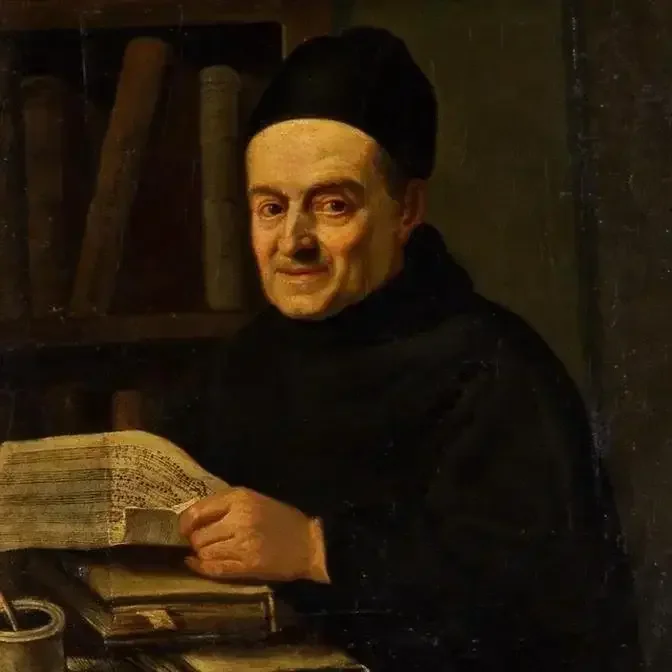
Buon compleanno Giovanni Battista Pergolesi! 🎭🙏🏼
Composer: Giovanni Battista Pergolesi (1710-1736)
Work: Mottetto 'In hac die tam decora' a Più voci (c.1732)
Performers: Rachel Rеdmont (soprano); Marta Fumаgаlli (contralto); Ghislіеri Choir & Consort; Giulio Prаndi (conductor)
In hac die tam decora (c.1732)
1. Coro 0:00
2. Recitativo 6:11
3. Aria 6:52
4. Recitativo 13:30
5. Aria 14:18
6. Recitativo 18:54
7. Aria 19:33
8. Recitativo 24:09
9. Duetto 24:47
10. Coro 32:52
Painting: Charles Antoine Coypel (1694-1752) - The Destruction of the Palace of Armida (1737)
HD image: https://flic.kr/p/2bFejCb
Painting: Domenico Antonio Vaccaro (1678-1745) - Ritratto di Giovan Battista Pergolesi
HD image: https://flic.kr/p/2koD9zG
Further info: https://rism.online/sources/852035563
Listen free: No available
---
Giovanni Battista (Giambattista) Pergolesi [Percolese, Bertolesi, Bergolese, Pere Golese et al.]
(Jesi, 4 January 1710 - Pozzuoli, 16 March 1736)
Italian composer and violinist. Following early training in Jesi under Francesco Santini, he enrolled in the Conservatorio dei Poveri di Gesù Cristo in Naples, where his teachers were Gaetano Greco and Francesco Feo. He began his compositional career composing oratorios, such as the 1731 'La conversion e morte di San Guglielmo'. His first opera, 'Salustia', written for Naples in 1732, was a limited success, but he was appointed as maestro di capella to Prince Ferdinando Colonna Stigliano. Other operatic successes followed, but the most important was his 1733 'Il prigionero superbo' with its two-act intermezzo 'La serva padrona'. This is considered a seminal work in the creation of the buffa. A second appointment at the court of the Duke of Maddaloni in 1734 led to further commissions, such as the opera 'L’Olimpiade', which premiered at the Teatro Tordinona in Rome in 1735. Although this work was initially not a success, Pergolesi’s career was meteoric. His health, however, deteriorated and in 1736 he was confined to the Capuchin monastery in Pozzuoli, where he died from tuberculosis. Although he was only 26, he completed 11 operas and oratorios, two Masses, five cantatas (including Orfeo in 1736), two Salve Reginas, one Magnificat, a set of Marian vespers, and his most famous work, the Stabat mater, which was commissioned by the Confraternità dei Cavalieri di San Luigi di Palazzo shortly before his death (although a later composer, Giovanni Paisiello, claimed it had actually been written around 1730). His instrumental works were few, including four violin sonatas and possibly a violin concerto. Following his untimely death, his reputation spread throughout Europe, and a number of works were falsely attributed to him, such as a set of six concerti grossi (now known to be by Uno van Wassenaer). His Stabat mater was performed widely (in various arrangements), and his Serva padrona was considered the epitome of the new Italian comic style, particularly in Paris, where it served as the center of the Querelle des bouffons. His style emphasizes diatonic melody and triadic harmony, often with good contrasting themes. He was a leading figure in the rise of Italian comic opera in the 18th century.