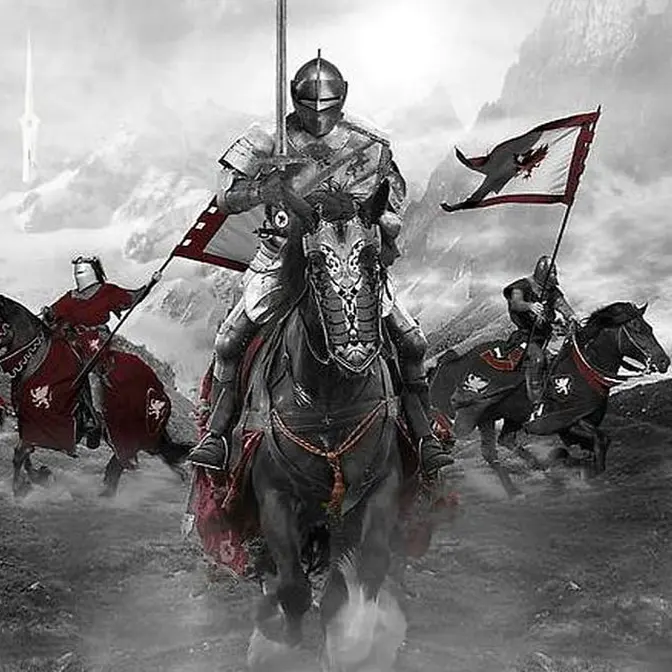
Japan, the country of the rising sun, is today known as one of the most prosperous and technologically advanced nations despite not having many natural resources. It is full of hardworking, ethical people that live with a mix of old-time traditions and new-age progressive lifestyles. It’s the land of famed and virtuous samurai warriors, for whom loyalty is everything, and of legendary and adept ninja assassins, capable of bypassing any obstacle.
They once ruled Japan with steel, silence, and ceremony. With sharp swords and a code so strict
it demanded death over dishonor, the samurai were more than warriors. They were a way of life.
For nearly 700 years, they shaped Japan's politics, culture, and soul. But then,
seemingly overnight, they vanished. No climactic battlefield. No last great war cry.
Just a quiet revolution of suits over armor, of railroads over horseback,
and a world rushing forward, leaving the old ways behind. How did it happen?
How did Japan go from the bowing elegance of the samurai to the blazing modernity of
Tokyo skyscrapers in just a few generations? Today, we walk the path from katana to constitution,
from warlords to westernization. This is the story of the samurai's rise,
their fall, and the country they left behind. From farmers to feudal lords, the rise of the
samurai. The samurai didn't begin as noble warriors. They began as farmers. Back in the
8th and 9th centuries, Japan was ruled by an imperial court in Kyoto, modeled after China's
centralized system. The emperor was divine, taxes were collected, and power flowed top-down,
in theory. In reality, distant provinces were hard to control. Bandits roamed freely,
peasant uprisings flared, and the imperial government, sitting in luxury, had no real
army of its own. So, what did the aristocrats do? They hired help. These hired fighters,
originally local men with military skills, began to protect landowners' estates in exchange for
rice, shelter, and sometimes social elevation. Over time, these enforcers started to form their
own clans, loyal more to their masters than the emperor. They were called sabara, those who serve,
which became samurai. By the 11th century, these warriors had organized into powerful families,
like the Taira and Minamoto clans. They weren't just fighters anymore. They were landowners,
influencers, players in the political game, and they were tired of taking orders from Kyoto.
In 1185, the samurai made their move. That year, the Minamoto defeated the Taira in the
an epic conflict featuring naval battles, samurai duels, and the rise of one of Japan's
most iconic warriors, Minamoto no Yoshitsune. Think of him as the Japanese Achilles, brilliant,
tragic, betrayed by his own brother. With their victory, the Minamoto clan established Japan's
first shogunate, a military government headquartered in Kamakura. The emperor remained,
but he was now a puppet. Real power belonged to the shogun,
the generalissimo of the samurai class. And thus, the samurai era began. For the next several
centuries, Japan became a feudal society. Lords, called daimyo, controlled territories and pledged
loyalty to the shogun. Beneath them were their loyal retainers, the samurai. These warriors
trained in swordsmanship, archery, horseback riding, and martial arts. They studied strategy,
philosophy, and calligraphy. They followed bushido, the way of the warrior, a code of honor
emphasizing loyalty, courage, and self-discipline. The sword, especially the katana, became not just
a weapon but a soul. Forged through repeated heating and folding, a true katana could take
months to create. It was razor-sharp, perfectly balanced, and often passed down through
generations. Samurai culture flourished. Art, poetry, Zen Buddhism, and even tea ceremonies
were embraced. The image of the refined killer emerged. One who could pen a death poem before
committing seppuku, ritual suicide, to preserve his honor. Yet this golden age was not peaceful.
Japan's history between the 14th and 16th centuries is a swirl of constant war. The
Ashikaga shogunate struggled to maintain control. Regional daimyos battled each other in the
infamous Sengoku period, the warring states era, where Japan was a chessboard soaked in blood.
Castles rose and fell. Armies of samurai clashed across rice paddies and mountain passes.
It was an age of legends. Odo Nobunaga, the ruthless tactician who first tried to unify Japan.
Toyotomi Hideyoshi, the peasant who rose to power through wit and warfare. And finally,
Tokugawa Ieyasu, the man who ended centuries of chaos by establishing peace. In 1603, Tokugawa
became shogun and founded the Tokugawa shogunate. He centralized power, crushed resistance, and
sealed Japan from foreign influence. The samurai, once warlords, now became bureaucrats. Their
swords still gleamed. Their kimonos were exquisite. But the wars were over. And peace, it turned out,
would be their undoing. The peace that broke the blade.
By the early 1600s, Japan was quiet. Too quiet for the samurai. Tokugawa Ieyasu had done what
no one thought possible. He united Japan and kept it that way. For over 250 years, the Tokugawa
shoguns ruled from Edo, modern-day Tokyo. And Japan experienced a long period of internal peace known
as the Edo period. There were no more national wars. No more rogue daimyo rebellions. Just a
carefully maintained social hierarchy where everyone knew their place. At the top sat the
Then came the daimyos, the samurai, the peasants, artisans, and merchants at the bottom.
That's right. The merchants, despite their growing wealth, were at the bottom. Why? Because they
didn't produce anything of value like rice or craftsmanship. But money is a funny thing. It
has a way of reshuffling power, even in rigid societies. Here's the problem. Without war,
the samurai had nothing to do. No battles to fight. No enemy lines to charge. Instead,
they were assigned roles as bureaucrats, tax collectors, and castle guards.
They still wore their two swords, the katana and the wakizashi, but they were more fashion than
function now. Some adapted, becoming scholars, poets, and teachers. Others became disillusioned.
They struggled with poverty, as their stipends from daimyos couldn't keep up with inflation.
Many borrowed from the very merchants they were supposed to look down on.
It was a slow erosion of purpose. Meanwhile, Japan had shut itself off from the outside world.
Under a policy known as Sokoku, foreign contact was banned except for limited Dutch and Chinese
trade through the port of Nagasaki. Christianity was outlawed. Foreign books were banned.
Japan turned inward. Refined, yes, but stagnant. But the world outside was changing. Europe was
colonizing, industrializing, and globalizing. America was rising. And in 1853, Japan's bubble
burst when four black ships, warships from the United States led by Commodore Matthew Perry,
steamed into Tokyo Bay. The samurai who saw them had never seen steamships, cannons that large,
or guns that loud. They realized in a heartbeat Japan was behind. The shogunate was forced to
control. Ports were opened. Foreigners were allowed in. The samurai watched, horrified,
as their insulated nation was forced to its knees without a single sword drawn.
The population blamed the shogun. For the first time in centuries, the samurai turned inward,
not against enemies from outside, but against the very system they once upheld.
And revolution stirred in the shadows. Revolution from within. The fall of the shogunate.
By the mid-1800s, the proud structure of samurai society was crumbling from the inside.
The Tokugawa shogunate, once the iron hand of Japanese order, was losing its grip. The
humiliating treaties with the West exposed its weakness. Foreigners were now walking the streets
of Yokohama and Nakasaki. Christian missionaries returned. Trade exploded, unevenly. And in the
eyes of many samurai, the shogunate had failed the sacred duty of protection. That sacred boshido
bond, lord and servant, emperor and warrior, was broken. Tensions exploded. In domains like
Saisuma and Choshu, far from the shogunate's seat of power, samurai leaders began organizing
resistance. They were younger, educated in Western military science, and disillusioned
with the old system. They believed that Japan could not survive unless it modernized.
But they also believed that modernization had to happen on their terms. Their rallying cry?
Sanojoi. Revere the emperor, expel the barbarians. But this wasn't about going
backward. It was about redirecting the course of power, away from the shogun and toward the
emperor. In truth, the emperor had been a ceremonial figurehead for centuries.
But now he became a symbol of national unity. The rebellion had a purpose.
And in 1868, it happened. The Meiji Restoration. A brief but decisive civil war, called the Boshin
War, erupted. Samurai from the imperial loyalist domains defeated the Tokugawa forces. Edo was
captured without a major battle. The shogun resigned. And at just 16 years old, Emperor
Meiji became the new sovereign of Japan. Not just symbolically, but truly. The old order was gone.
And what followed was a shockwave of change. The Meiji government launched an unprecedented
modernization campaign. Railroads, telegraphs, and modern education systems were introduced.
The military was restructured based on Western models, particularly Prussian and French systems.
A national draft was instituted. And here's where the samurai met their final reckoning.
In 1873, the government abolished the samurai's right to be the exclusive military class.
The conscription law meant any man – farmer, merchant, artisan – could become a soldier.
Suddenly, the sword was no longer the badge of the elite. A year later, the samurai stipends
were cut, then converted into bonds, then cancelled. In 1876, the final blow came. The
Hitori Edict, which prohibited the public wearing of swords. It was unthinkable. The katana, the
soul of the samurai, was outlawed. Tens of thousands of former warriors were cast adrift.
Some became police officers. Others became bureaucrats or businesspeople.
But many could not adjust. Their identities had been forged in blood, ritual, and rank.
Now they were just men, armed with nothing but memory.
And in 1877, the anger boiled over. The Satsuma Rebellion. Led by Saigo Takamori,
a man known as the Last Samurai, tens of thousands of former samurai rose in rebellion against the
Meiji government. Saigo was once a hero of the Meiji Restoration. Now he was its enemy.
Clad in traditional armor and wielding swords, the samurai faced a modern imperial army equipped
with rifles, artillery, and western tactics. It was not a fair fight.
After months of battle, the samurai were surrounded at Shirayama. In a final, symbolic act,
Saigo took a bullet to the hip, then reportedly committed seppuku as dawn broke. His death
marked the end of the samurai era, not just in body, but in spirit. The sword had fallen to the
rifle, and Japan had crossed a threshold it would never return from. The legacy of the sword,
how it shaped modern Japan. So the samurai were gone. But were they really?
Look closer at modern Japan, and you'll find their fingerprints everywhere.
Start with the military. Even though the Meiji government disbanded the samurai class,
it absorbed their spirit. The new imperial army adopted a code of conduct deeply influenced by
Bushido. Soldiers were taught to fight with honor, serve with loyalty, and die with dignity.
During Japan's military campaigns in the early 20th century,
echoes of samurai valor were everywhere, sometimes idealized, sometimes weaponized.
In World War II, kamikaze pilots were described as modern samurai, willing to sacrifice themselves
for emperor and country. Their final letters, like the death poems of old, were meant to reflect
clarity, honor, and calm in the face of death. The samurai weren't just a historical class,
they had become an ideal. In business too, samurai ethics persisted. Postwar
Japan saw the rise of kaisha culture, corporate loyalty, hierarchy, self-sacrifice, and dedication
to the company over self. The white-collar salaryman was, in many ways, a reincarnation
of the samurai bureaucrat, working not with a blade, but with a pen. In pop culture, samurai
are everywhere. Akira Kurosawa's Seven Samurai inspired the Magnificent Seven and Star Wars.
Manga and anime, from Maruni Kenshin to Samurai Champloo, continued to romanticize the lone
warrior wandering a modern world. Samurai games, films, novels—they're a bridge between past and
present. Even Japan's etiquette—the bowing, the precise movements, the obsession with discipline
and harmony—can trace roots back to samurai ritual. The way tea is poured, the way letters
are sealed—it's all echoes. And what about the sword? Though banned in 1876, the katana
was never forgotten. Today, master swordsmiths still forge them by hand, using the same ancient
techniques. They're considered national treasures. Owning one requires a license. Practicing
swordsmanship—kenjutsu—is now an art form. There are many dojos across Japan that still
teach classical sword arts. Tourists come from all over the world to hold the blade,
feel the weight, and hear the story. The samurai are gone, but their soul lives on.
Still, Japan is a different country today. It's a democracy, a tech titan, a culture of contrasts.
Shinto shrines next to skyscrapers, robots serving sushi while monks chant sutras.
It's modern, global, fast. But that evolution costs something. The samurai's fall marked the
end of a Japan rooted in feudal loyalty and rigid codes, and the beginning of a nation forced to
define itself on its own terms. The sword gave way to the train, the pen, and the silicon ship.
And in doing so, Japan stepped onto the world stage. That transition wasn't painless. It was
full of blood, betrayal, and beauty. But it was necessary, because no matter how noble the past,
time only moves forward, and the sword must sometimes be sheathed.
How would you like to get a deeper understanding of history, impress your friends,
and predict the future more accurately based on past events?
If this sounds like something you might be into, then check out the brand new Captivating History
Book Club by clicking the first link in the description. To learn more about the samurai
and Japan's ancient history, check out our book Ancient Japan, a captivating guide to the ancient
history of Japan, their ancient civilization, and Japanese culture, including stories of the samurai,
shoguns, and zen masters. It's available as an e-book, paperback, and audiobook.
If you found the video captivating, please hit the like button and subscribe for more videos like this.