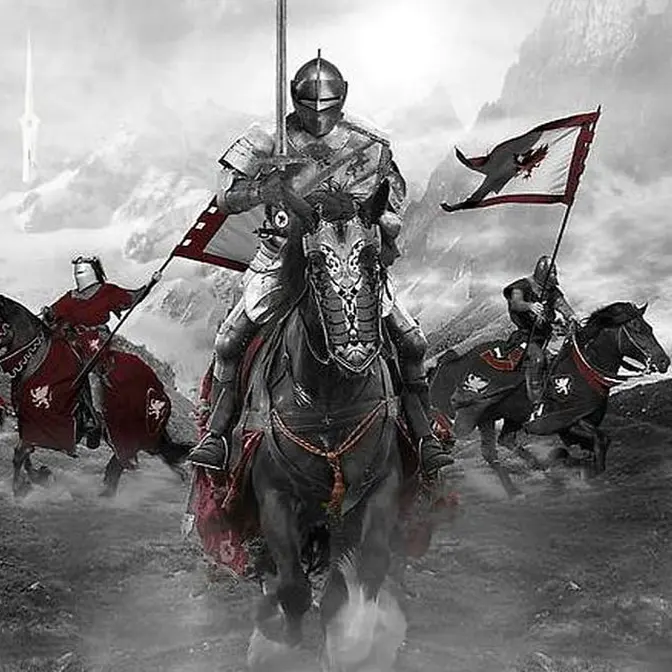
Immerse yourself in the incredible history of the Roman Empire, one of the most powerful and fascinating civilizations that ever existed. 🌍 In just 26 minutes, you'll journey through over 1,000 years of conquests, intrigues, emperors, and battles that shaped the Western world.
From the founding of Rome and the legendary story of Romulus and Remus, through the Republic, the rise of Julius Caesar, the reign of Augustus, the Pax Romana, to the fall of the Western Roman Empire.
This epic summary will show you how Rome went from being a small town on the Tiber to dominating the entire Mediterranean. ⚔️🏛️
🎬 Ideal for students, history buffs, or anyone curious to understand the legacy that still influences our culture, laws, and architecture.
🕰️ Timestamps 0:00 Introduction — Rome, from Mud to Myth 1:20 The Republic in Crisis: Civil Wars and Ambition 3:10 Julius Caesar and the Point of No Return 4:40 Octavian and the Birth of the Empire 6:10 Augustus and the Pax Romana 8:10 The Emperors of Madness: Tiberius, Caligula, Claudius, and Nero 10:40 The Year of the Four Emperors and the Flavian Dynasty 12:10 The Five Good Emperors: from Nerva to Marcus Aurelius 14:40 Marcus Aurelius, the Philosopher Emperor 15:40 Commodus and the Beginning of Chaos 16:40 The Crisis of the Third Century: Wars, Plague, and Collapse 18:40 Diocletian and the Tetrarchy 19:50 Constantine and the Edict of Milan 20:50 The Founding of Constantinople 21:40 The Division of the Empire: East and West 22:40 The Fall of Rome (476 AD) 23:40 The Eternal Legacy: Laws, Languages, and Culture 24:50 Rome Within Us — The Shadow of Eternity 25:40 Closing Remarks and Final Message
👑 Rome wasn't built in a day, but its history will change the way you see the world.
🔖 Additional Tags:
Rome, Roman Empire, history of Rome, Roman civilization, Roman emperors, world history, historical summary, Rome documentary, ancient Rome, Julius Caesar, Augustus, fall of the Roman Empire, world history, Roman culture, Roman legions, Pax Romana, Constantine, Byzantium, history in 22 minutes, Rome documentary, history summary, history to learn, complete history of Rome
Forget everything you think you know about empires, because this one was not born of gold
nor of grandeur. It was born of mud, of blood, and of a legend forged in the heat of the Italian sun.
A handful of humble huts huddled on seven hills like a wounded animal watched over by a treacherous
From these miserable origins, a beast emerged. A civilization that was not content to dominate,
but that rewrote the rules of the known world. It did so with the point of its sword. Yes,
with its legions of steel and relentless discipline. But it also did so with the code of
its laws, with the audacity of its engineering, and with the elegance of its language. It built
roads that became the arteries of a continent, aqueducts that brought life where there was only
desert and thirst, and a legal system that still today underpins our very idea of justice.
But all greatness holds the seed of its own destruction. Rome was no exception.
It became a victim of its own colossal weight, of the unbridled ambition that fed it,
and of the savage forces that battered its gates. A constant reminder that strength can turn into
This is the journey to the heart of Rome's darkness and light. The chronicle of an idea
that defied time. From the cunning man who turned a dying republic into the most powerful machine
in the world, to the last breath of its capital in the west. Millennia of blood, glory, betrayal,
and a legacy that bleeds into our own civilization. Hold on, let us travel to the
eternal city. To the shadow that defines and terrifies us. It all begins with an end. The slow,
tortuous end of a dream. The Roman Republic. For an entire century, Rome tore itself apart
in one civil war after another. The blood of its own sons soaked the sacred ground of the senate.
Men like Marius and Sulla used their armies as personal tools to seize the city,
breaking the fragile republican tradition that had sustained Rome for centuries. Mass slavery
had provoked brutal revolts, like that of the gladiator Spartacus, which brought Rome to its
knees. And finally, the insatiable ambition of one man, Julius Caesar, crossed a stream,
the Rubicon. And in that moment, there was no turning back. His assassination on the steps of
the senate was not the solution. It was the prologue to the final carnage, the point of no
return. From the ashes of that war, a predator emerged, Caesar's great nephew Octavian, a slender
young man with a mind as sharp as any Roman steel and the patience of a predator. He confronted his
uncle's assassins in a brutal campaign of vengeance. And then the most powerful man in
Rome, Marc Antony. They formed the Second Triumvirate, an alliance of convenience sealed
with blood and prescriptions, lists of enemies to be killed whose property was confiscated to enrich
the triumvirs. Lepidus was marginalized, and the Roman world was divided in two. Octavian in the
cultured and rich west, and Marc Antony in the exotic and opulent east, alongside the queen of
Egypt, Cleopatra, Octavian's propaganda was his most lethal weapon. He portrayed Antony as a
corrupted Roman, a man who had lost his identity and his virtue to a foreign queen, a sorceress who
had emasculated him. The clash was inevitable. In the waters of Actium, two worlds collided.
And when the dust and smoke dissipated, the fleet of Antony and Cleopatra was in flames,
and their fate was sealed. Their suicide the following year left Octavian as the absolute
master of all without a rival. But he was a genius of perception. He knew that the word
king was a death sentence in Rome. So in 27 BC, Octavian executed the most brilliant masterstroke
of theater in history. Before the Senate, he resigned. He returned the power. But it was a
masterful farce, a work of political magic. Because in the shadows, he clung to the only thing that
mattered. The control of the legions, the government of the rich provinces like Egypt,
the control of the treasury. He was not a king. He was something new, something more dangerous.
He was the first emperor. He was Augustus. With him, the Pax Romana was born, the Roman peace,
200 years of an almost supernatural stability in a world accustomed to war.
I found Rome, a city of bricks, and left it a city of marble, he said. And he wasn't lying.
He rebuilt the city, building new forums, temples, and the first pantheon. He created a fire brigade,
a knight police force, and reformed the tax system. He became the patron of poets like Virgil,
Horace, and Ovid, who created the very founding mythology of the empire.
But this peace was built on a razor's edge. It depended on one man, and men are fragile,
corruptible, and mortal. Those who followed him demonstrated that fragility in the most
spectacular way. Tiberius, Augustus's successor, was a capable administrator, but a paranoid and
cruel ruler who ended his days in a dark and luxurious retreat on the island of Capri,
given over to depravity. Then came Caligula, whose name means Little Boots, a nickname given to him
by the soldiers who adored his father Germanicus. His reign began with promises of liberty,
but descended into what ancient sources describe as a mix of extravagance, madness,
and cruelty. He demanded to be worshipped as a living god, and according to legend,
appointed his favorite horse, Incitatus, as consul. He was assassinated by his own Praetorian guard.
Then came the unexpected emperor, Claudius, considered a fool by his family due to his
physical ailments, but who proved to be a surprisingly capable administrator,
conquering Britain and reforming the imperial bureaucracy. Finally, there was Nero, the last
of his line, who began as a promising ruler guided by the philosopher Seneca, but whose legacy is
forever stained by the great fire of Rome and his subsequent persecution of the Christians,
whom he blamed for the disaster and used as human torches to illuminate his gardens.
A tyrant who, according to legend, played his lyre while the city burned, and who was finally
declared a public enemy by the Senate and forced to take his own life. It is a succession of stories
as fascinating as they are terrible, and a clear reminder that absolute power corrupts absolutely.
A cycle of madness that almost destroyed everything Augustus had built. This piece was fragile and
depended entirely on the quality of the man who occupied the throne. The year of the four emperors,
69 AD, demonstrated this in the bloodiest way. After the suicide of Nero, four generals fought
for power in a civil war that swept the empire from one end to the other. The victor was Vespasian,
a rough, practical man of humble origins who founded the Flavian dynasty. He and his sons,
Titus and Domitian, restored stability, built the Colosseum with the spoils of the Jewish war,
and consolidated the frontiers. The empire settled, organized, and became an unstoppable machine.
But the seed of tyranny was always present, latent beneath the surface of peace. And if
this journey to the origins of imperial power, to the madness and glory of the first Caesars,
is fascinating you, make sure to subscribe to the channel. Because what comes next is the golden
age of Rome, a century of splendor we would think impossible after so much chaos. Don't miss it.
And so, when the empire was on the brink of collapse, Rome had a miracle. After the
assassination of the tyrannical Domitian, the Senate chose an elderly and respected senator,
Nerva, to succeed him. Nerva initiated a tradition that would save Rome for nearly a century.
Adoption. Instead of passing power to a son, often an inept one, each emperor would adopt and
prepare the best man to succeed him, not his biological heir. Thus began the dynasty of the
five good emperors, a golden age guided by marriage. The first of this adopted line was Trajan,
a soldier of Hispanic origin, the first emperor born outside Italy. Under his rule, the empire
reached its greatest territorial extent. He was a warrior emperor who led victorious campaigns
against the Dacians in what is now Romania, a brutal war that showcased the ferocity and
discipline of the Roman legions. The conquest of Dacia brought immense wealth to Rome.
The region's gold mines financed a massive program of social works and buildings in Rome.
He also expanded the empire to the east, annexing Armenia and Mesopotamia,
although these provinces would be difficult to hold. Trajan was beloved by the people and the
army, and the Senate granted him the title of Optimus Principus, the best ruler. His adoptive
successor was Hadrian, an emperor with a completely different vision. Hadrian was an intellectual,
a traveler, and a defensive strategist. He understood that the empire had overextended
itself, that its borders were too long to defend. Instead of expanding further,
he dedicated himself to consolidating and fortifying. He spent most of his reign traveling
to every province, inspecting the legions, and overseeing the administration personally.
His most famous legacy is Hadrian's Wall, a formidable 117-kilometer fortification
that marked the northern limit of Britannia, defending the empire from the Pictish tribes.
He also reorganized the army and fostered a culture of unity and Roman-ness throughout
the empire. He was followed by Antoninus Pius, whose reign was the personification of the Pax
Romana. It was a period of almost uninterrupted peace and prosperity, without major wars or
rebellions. A calm and stable reign that set the stage for the next emperor, the last of the Five
Good Ones, Marcus Aurelius. Marcus Aurelius was the philosopher-emperor, a man of deep introspection,
author of the Meditations, a diary of stoicism and duty written on the cold nights of military
campaigns. But his reign was not peaceful. The Danubian frontiers were pressed by Germanic tribes,
the Marcomanni, in what became known as the Marcomannic Wars, an existential threat that
almost broke the empire. Furthermore, the empire was devastated by the Antonine Plague,
a disease, likely smallpox, that killed millions of people, including perhaps Marcus Aurelius
himself. He ruled with an unbreakable sense of duty. But the weight of the world was on his
shoulders. Seeing such a virtuous man deal with so much misfortune gives us a timeless lesson
in leadership and resilience. And this is where it all breaks. Exhausted by wars and disease,
Marcus Aurelius broke the Golden Rule and named his biological son as his successor,
his name, Commodus. And that was the fatal mistake. Commodus was not a philosopher. He was an
incompetent, narcissistic, and cruel tyrant. More interested in competing in the arena as a gladiator,
humiliating the prestige of the imperial office, than in governing. His assassination in 192 AD,
at the hands of a concubine, did not bring peace, but unleashed the most absolute chaos.
The crisis of the third century begins. Fifty years of pure nightmare. The imperial throne
became a prize for the most brutal general. More than 20 emperors, most of them called
barracks emperors, were proclaimed by their troops and assassinated shortly after,
often by the very soldiers who had elevated them. There were constant civil wars, not just for
control of Rome, but for control of pieces of the empire. The empire tore itself apart. The crisis
was not just political, it was economic. To pay for ever larger armies loyal only to their generals,
the government began to devalue the currency, mixing less and less silver into the coins.
This caused runaway inflation that devoured people's savings and shattered trade. It was social.
A devastating plague, the Plague of Cyprian, once again decimated the population, and it was external.
The frontiers, which had been secure under Hadrian, were now crumbling. In the east,
a new and aggressive Persian dynasty, the Sassanids, attacked Syria. In the north,
Germanic tribes like the Goths, Franks, and Alemanni crossed the Rhine and Danube,
sacking cities. The empire was crumbling from the inside out. It was such a dark time that many
believed it was the end of the world, the end of Rome's promise. Understanding the depth of this
fall is key to appreciating the incredible story of recovery that comes next. The empire is in flames.
The chaos is total. It seems like the end, but the story of Rome is a story of resilience,
of rebirth against all odds. To see how this dying beast rises from its ashes and reinvents itself,
you have to be here. Click subscribe and turn on notifications. Work
because you won't want to miss the next chapter. When all seemed lost, when the empire was a
A strong man emerged from the ranks of the army, Diocletian, a general of humble origin from
Dalmatia, who, like Augustus, understood that a radical reform was needed, not just a military
victory. He brought order with an iron fist, but his true genius was not in battle, but in
He realized an obvious truth. The empire was too big with too many frontiers and too many problems
for one man. So in a bold reform, he divided it into four. He created the Tetrarchy, the rule of
four. There would be two senior emperors, the Augusti, one in the east and one in the west,
and each would have a junior emperor, a Caesar, to help him govern and who would be his successor.
Diocletian named himself Augustus of the East, the richer part, and named Maximian as Augustus
of the West. It was a bureaucratic and military solution that worked to stop the bleeding.
The frontiers stabilized, the economy was reorganized and the succession seemed assured,
but the Tetrarchy had a fatal flaw. It was based on the will of men and ambition
ultimately destroyed it. After Diocletian's abdication, a new civil war erupted to decide
who would be the sole ruler. The next crucial step was taken by a man who emerged from this chaos,
Constantine. The son of one of the Tetrarchs, Constantine fought for control of the Western
Empire. In a vision before a key battle, the Battle of the Milvian Bridge in 312 AD,
he claimed to have seen a cross in the sky and the words in Greek, Entutonica,
in this sign, you will conquer. He ordered his soldiers to paint the symbol of Christ on their
shields and won a decisive victory that made him the sole ruler of the West. In 313 AD, along with
his co-emperor in the East, Licinius, he issued the Edict of Milan. This edict did not make
Christianity the religion of the Empire, but it was an absolute cultural shift. It granted legal
tolerance to all religions, putting an end to centuries of persecution against Christians.
From this moment on, Christianity could come out of the catacombs and build churches publicly.
In less than a century, it would go from a persecuted faith to the dominant faith. But his
most lasting decision was to found a new capital in the East. In 330 AD, he consecrated Constantinople,
the city of Constantine, on the site of the ancient Greek city of Byzantium.
It was a perfect location, strategic, easily defensible by land and sea, and at the crossroads
of trade routes between Europe and Asia. It was a new Rome, a Christian city from its foundations.
The center of gravity of the Empire was shifting irrevocably to the East. Upon the death of
the last emperor to rule a united Empire in 395 AD, the Empire was definitively divided in two.
The Western Roman Empire, with its capital in Ravenna, and the Eastern Roman Empire, with its
capital in Constantinople. And this time, the division would be permanent. The one in the East,
which we will come to know as the Byzantine Empire, was rich, urbanized, and had a strong,
centralized government. It would prosper for another thousand years. But the one in the West
was doomed. It was rural, poor, with a ruined infrastructure and a weakened government, pressured
by Germanic tribes now moving en masse across its borders. Visigoths, Vandals, Swabians, Alans,
and later the Ostrogoths. With a collapsing economy and an army increasingly made up of
mercenaries from the very tribes that threatened the Empire, the Western Empire disintegrated.
The psychological death blow came in 410 AD, when the Visigoths, led by their king Alaric,
sacked the city of Rome itself. It was the first time in 800 years that the city had been taken
by a foreign enemy, a shock that resonated throughout the ancient world. The disaster
was repeated in 455, when the Vandals crossed from Africa and sacked the city once again,
The symbolic date of the fall is September 4th, 476 AD. The last emperor of the West,
a young man named Romulus Augustulus, an ironic name combining the founder of Rome
and its first emperor, was deposed by the Germanic chieftain Odoacer. Odoacer did not
proclaim himself emperor, but instead sent the imperial insignia to Constantinople,
declaring that an emperor was no longer needed in the West. There was no great battle,
no cataclysm, just a final sign, an administrative act. The Western Roman Empire had ceased to exist.
Rome fell, but its spirit never died. The Empire disintegrated, but its essence seeped into the
What did this 1,000-year empire leave us? It left us Roman law. Concepts we take for granted,
like the presumption of innocence, the burden of proof, or the idea that laws must be written
and applied equally, were born in the Roman forums. The Code of Justinian, compiled in the
legal systems of all Europe. It left us its languages. Latin, the language of soldiers
and administrators, evolved in the provinces, mixing with local languages to become Spanish,
French, Italian, Portuguese, and Romanian. Latin remained the language of scholarship,
science, and religion for another thousand years. It left us its engineering, bridges, aqueducts,
and the revolutionary use of concrete and the arch. Its construction techniques allowed for
the creation of buildings of a scale and durability that would not be seen again until the modern era.
The Pantheon in Rome, with its unreinforced concrete dome, remains an architectural marvel.
It gave us the concept of a republic and a senate. The idea that power resides in the people and is
exercised by elected representatives, even though Rome itself abandoned it, became the ideal for
which future generations would fight, and through Constantine, it catapulted Christianity into
becoming a global faith. The Catholic Church inherited Rome's administrative structure.
Its dioceses were the old provinces, and its language was Latin. Rome gave Christianity the
empire, and Christianity gave Rome a new life. Thank you for joining us on this journey through
time. If this deep dive into the soul of Rome has thrilled you as much as it has us to tell it,
the best way to support the channel and ensure you don't miss our future historical expeditions
is to subscribe right now. There are many more stories like this waiting to be unearthed.
The secrets of Egypt, the fury of the Vikings, the ingenuity of the Greeks. Join us, and now,
we'd love to hear your opinion. What part of Rome's legacy do you think is most powerful today?
Its laws, its languages, or its engineering? Leave your thoughts in the comments. See you soon!