
How Wine Is Made
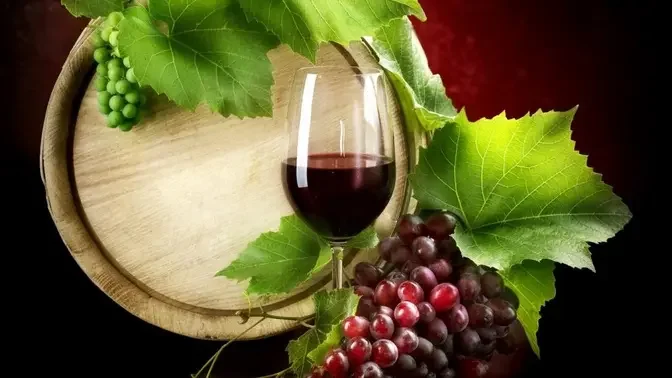
#wine #winetasting
Check out our 3 minute animation of how wine is made! Please like and subscribe if you like the video!
Special thanks to Pritika for her great animation! You can check her out at: https://www.upwork.com/fl/pritikakalani2
What's up guys, welcome back to another Drinking and Life video.
Today we're going over just how wine is made, and I'd like to give a special shout out to
my friend Pritika, as she's the one that put together this beautiful animation for you.
So, go grab some popcorn, a glass of wine, and let's get right into it.
The winemaking process starts in the vineyards.
Wine grapes are harvested at different times in different places across the world.
The key to a great harvest is to harvest the grapes when they have the right sugar content,
acidity, and ripeness.
After the grapes are harvested, they are brought into our winery, where we let them rest and
cool down overnight.
The following morning, we begin by running the grapes through a crusher destemmer.
This machine takes the grapes and pulls them off of the stem, and creates this must of
skin, seeds, and juice.
For white wines, this must is pumped straight into a bladder press.
This bladder press fills with water and presses out as much juice as possible from those berries.
This process takes just about one hour.
From here, the wine is pumped into a tank where it will begin the fermentation process.
However, for red wines, you must first pump the must straight into the tank, and for 7-14
days, let it sit on those skins and seeds.
From there, you would pump back into the bladder press.
After the wine has sat for 7-14 days, it is racked, and we begin the fermentation process.
Fermentation begins by adding yeast to the grape juice.
This yeast will eat the sugars in the wine to create alcohol, CO2, heat, and other flavors
and aromas.
This process will take anywhere from 4-60 days, depending on the variety of grape and
particular winemaker choices.
This is when we begin the clarification process.
We begin by adding a clay-like substance that is a clarifying substance.
This pulls all of the floating particulates to the bottom of the tank.
We then rack the wine from one tank to another, and use a simple filter in between.
We have to be careful with how powerful of a filter we use, as it can also pull flavors
and aromas out of the wine.
By racking the wine from one tank to another, we leave all that sediment at the bottom of
one tank, and we have a much clearer wine in the new tank.
We then leave the wine to age in the tank, or most commonly, and especially for red wines,
we will move the wine into an oak barrel.
Wines are commonly left in oak barrels for 12-18 months, but are occasionally left in
them for much, much longer.
The last step is bottling.
Bottling the wines begins with pumping the aged wine into our filling machine.
After the bottle is filled, we place it in the corking machine, and then in the capping
machine, and lastly, through the labeler.
From there, the wine is ready to be enjoyed.