
Polynesia’s Paradise: Discovering Bora Bora | SLICE TRAVEL | FULL DOC
#BoraBora #PearlofthePacific #wide #fulldocumentary
Travel through Polynesia from the Windward to the Leeward Islands and discover Bora Bora, the legendary “Pearl of the Pacific.” With Mount Otemanu rising above its turquoise lagoon, this island has become the very symbol of paradise. A journey through nature, culture, and timeless beauty.
----------
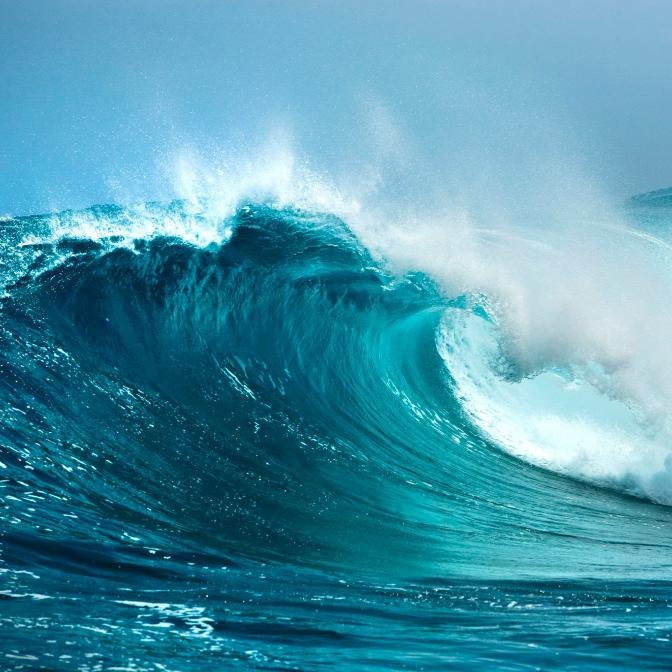
The swell rolls in from the open sea and breaks on the coral barrier near the island of Maria,
opposite Tahiti. Away from the reef, two sailors watch the pounding sea.
Impassive. Weary, or maybe blasé, these two men from sailing from island to island.
And the road ahead is long. Today the course is to the west,
heading Bora Bora, a long voyage in the society archipelago.
Leaving from the windward islands, we're going to the leeward islands.
At the end of the afternoon, an endless succession of motus forces us to slow down.
Then our gaze lingers on the reef, now calm off the island of Taha.
It's like seeing a giant flower and you very quickly focus on a double heart.
Could the fishermen of the windward islands be great romantics?
Maybe. In any case, once a fish enters this trap, it can never get out.
To the north of the island of Taha, where the sea sweeps back and forth between the
islands known as motus, there are many traps for fish, some ancient and some modern.
Over there, in the evening, when Sir asks, what are we eating?
Madam replies, go and fetch me a fish. And with a little boat trip, Sir obeys.
Once past the extreme sweetness of Taha, it was time to resume our journey to Bora Bora.
There it is, the famous pearl of the Pacific, in the middle of the lagoon,
with the silhouette of Mount Atimanu and its 727 metres of hills that the rains make greener than
green. The first time is always a little frightening, always a little exciting.
There, the first impressions of Bora Bora, and the fear of being disappointed,
such is one's imagination tittled by the name of this island.
We're in luck. It's fine. The light is golden. We let ourselves be carried along.
The sun's beams guide us towards Vae Tape, the principal commune on the island,
which today numbers nearly 7,000 inhabitants. What makes a moment of eternity?
Six o'clock. Happy hour.
Next morning, back to reality. One question. A myth? What exactly makes a myth?
An attempt to explain, normally when arrives on Bora Bora in a plane on an airstrip,
which has played a bigger role than you might think in the island's destiny.
It was built by American soldiers during the Second World War,
the war that thrust the island brutally into contact with the rest of the world.
Overgrown by vegetation, eaten away by rust, the guns are a reminder that in 1942,
there were 5,000 American soldiers here.
A military base that survived for four years to fight a Japanese enemy who never came.
What remains from the period is a generation of mixed-race children,
and perhaps a more pronounced taste for money in an economy that was hitherto used to barter.
Since 1961 and the building of the first hotel, everything has changed on Bora Bora.
For several thousand euros per night, the chicest hotels offer the neck blues ultra
at the end of a row of bungalows. A private pool over the lagoon. It's true, how horrible,
seawater is so salty. In this flawless decor, the presence of a barge in the heart of the lagoon
is a surprise. This craft is dredging sand for construction companies, and to supply even more
new hotels all over the island. However, the majority of these establishments don't need
beaches. They build directly onto the lagoon. So to hell with environmental issues, as long as
diving remains a rare delight here, because the marine life is so prolific. As you wait on the
lagoon, you meet all sorts of craft. The sense of detail, four-star hotel style, demands that
there's always somebody in the group in charge of the icebox. For the refreshments, of course.
We leave the more frequented side of the lagoon to say hello to a man who's spending the end of
his exciting life on one of these little islands, Motutani. After innumerable polar adventures in
the Arctic and Antarctic, Paul Emil Victor sat down here on Bora Bora and said, nowhere else.
Today, in order to find this ideal life that led PEV to spend his last days in Polynesia,
you must try your luck on a neighboring island, even further to the west. A lot more than 40
kilometers separate Bora Bora from the island of Maupiti, where there was no American naval base
during the Second World War. Also of volcanic origin, Maupiti is Bora Bora on a smaller scale,
wilder, more preserved. It's one of the last high islands of the society archipelago to remain,
shall we say, intact. Maupiti's treasure is its lagoon in the south, constantly washed by the
waters of the open sea. Fed by the ocean waves that break and pass over the reef,
the coral reproduces in spectacular fashion, attracting all of marine life.
Ray, shark, barracuda, a wide variety of species live under the coral reef flat.
A thousand inhabitants, a few dogs fishing, Maupiti is a tiny island of the immensity of the Pacific.
Here, wherever you are, even in the trees, you hear the sound of the sea, threatening.
The waves crashing against the reef, a permanent undertow. Even more than its lagoon,
the original feature of this island is its channel, the most dangerous in all Polynesia.
Today, aboard their Potimarara, the fishermen surf the waves, steering their boats with a joystick,
just like in an airplane. The hardest part is over.
The channel is behind the wake. The boats speed into the full immensity of the Pacific.
It's midday. The Potimarara go far out to fish for mahi-mahi, far from the lagoon,
and on the horizon, like an unavoidable figure in the windward islands, is Bora Bora,
the island that is never so much desired as when seen from afar.