
Chinese Farmers Raise Hundreds Of Millions Of Lion Head Goose - Farming Documentary
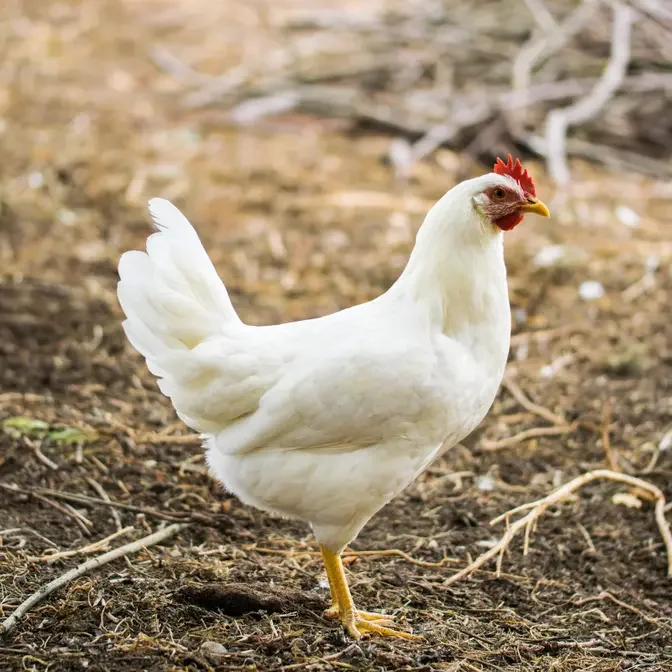
Hello my friends. When you think of geese, what is the first thing that comes to your mind?
A type of noisy poultry? For grass with its unique fatty flavour or this fragrant roast goose?
But have you ever thought of a goose as a lawn mowing tool?
You heard right, that's how Chinese farmers think about lion-headed geese.
In today's video, we will explore how Chinese farmers raise hundreds of millions of lion-headed
geese. Lion-headed goose farms in China are often located in rural areas with access to
large bodies of water because geese need ample space to swim. These farms are often managed by
small traditional livestock farmers. Many people will never forget the feeling of seeing a goose
with a lion head for the first time. Because this goose's head is very large, on its face
there is a tumour like a lion's head. The special point is that the size of this tumour will be
proportional to the age of the goose. Lion-headed goose, native to Guangdong province, China.
This is one of the largest geese species in the world and weighs three times more than normal
geese. Related statistics show that the average weight of lion-headed geese is 35ib to 47ib.
The highest can reach 65ib. Not only that, lion-headed geese scare other geese because
of their strong attacking attributes. They are considered the king of geese and have outstanding
advantages that normal geese cannot match. Compared to regular geese, the superiority of
lion-headed geese is not only reflected in weight and price. The meat quality of the lion-headed
goose is also very delicious and very popular locally. Normally, goose meat has a slightly
fishy taste. However, lion-head goose meat does not have this drawback. It is moderately soft
and chewy. In addition to being rich in protein and low in fat, it is also rich in nutrients
and has many types of amino acids that are good for the body. Because lion-headed geese also have
good medicinal value, they are a leading product in the dietary therapy of traditional Chinese
medicine. In addition, lion-head goose feathers are also a high-quality material to make down jackets
which have an extremely good warming effect. Farmers with many years of experience say that
the growth rate of geese is influenced by genetic factors. So choosing healthy parents
and good breeding procedures can improve the growth rate and meat quality of geese.
Farmers often go to seed farms to see their quality and their living environment before
deciding to buy. After many years of observing their growth process, farmers realized that
lion-headed geese have breeding activities that occur in the fall and winter for short periods
of time. In contrast, reproductive activity occurring in spring and summer will have a
longer period. Due to seasonal breeding, the lion-headed goose breed has low egg productivity,
an average of 25-30 eggs per year, and such low fertility seriously hinders the development of
local industry. Until now, the lion-headed goose is the best goose breed raised by the Chinese.
However, the number of farmers willing to raise this type of geese is very limited.
Why do you think people are afraid to raise lion-headed geese that bring high economic
benefits? Because input and output are not proportional, besides the profit level is not
attractive or safe. Farmers actually discovered the price advantage of lion-headed geese,
but the difficulties encountered in the breeding process completely overwhelmed its advantages.
The growth cycle of lion-headed geese usually lasts from 3 to 4 months. During this time,
the geese will grow from goslings to adults suitable for slaughter.
Compared to other poultry species, although the lion-headed goose grows very quickly,
its growth cycle is very long. During their entire growth cycle, they will consume a lot of food
every day. However, the problem lies in finding food. Compared to normal geese,
the foraging ability of lion-headed geese is very poor. Therefore, they basically rely
entirely on food provided by humans. If raised in small quantities, farmers feel it is not cost
effective. Although there are very few people raising lion-headed geese, the overall market
for lion-headed geese in China is still very good. According to data provided by the China
Livestock Association and the Food and Agriculture Organization of the World,
China is the country with the largest production of lion-headed geese. The volume of slaughter
and livestock production accounts for 93.3% of the world's total output. Here, lion-headed geese
are often raised on a large scale and can create great economic benefits.
Some farmers believe that raising lion geese is a risky way to get rich but worth a try.
These are the new members of the farm. They are three to five-day-old goslings.
They are learning to adapt to everything before starting their grazing life.
Because lion-headed geese have high requirements for habitat, especially in this weak early stage,
the environment is suitable for them to survive in places with high temperatures.
Temperatures that are too low will slow their growth or develop other diseases. Farmers also
encounter many problems when raising lion-headed geese, including their aggressive nature.
Lion-headed geese are species with a strong sense of territory. When outside creatures
enter their territory, geese will be alert and quickly counter-attack when danger strikes.
Because of this characteristic, farmers are sometimes attacked by them during contact.
The purpose of people raising lion-headed geese is not to lay eggs. Because the lion-headed
goose's egg-laying period is very short, at most two to four years, and it loses its ability to
reproduce after the fifth year. However, they still rely on those eggs to supplement their
breeding stock because the cost of buying breeding geese is quite high. Before entering the incubation
stage, the important step is to choose the egg's size, uniform shape, and without any signs of
damage. Farmers will gently wipe the eggs to remove any dirt or contaminants that could affect
their development. The process of incubating eggs with an incubator is strictly controlled
with temperature and humidity, creating a warm environment for eggs to develop. The stable
temperature is usually around 99 to 100 degrees F. Farmers often use high-intensity light to observe
the internal development of eggs. This way they can detect any abnormalities or health problems
in them early. After about a month, the eggs will hatch into goslings like this.
Similar to purchased breeds, they continue to be warmed by lamps in the barn until the
goslings adapt to the natural environment. Now we will come to the problem I mentioned
at the beginning of the video. These geese are likened to a grass-cutting machine
because they can eat the roots of plants, including the roots as a natural green food
source for them. Taking advantage of this feature, farmers often graze geese in orchard areas
so that lion-headed geese help farmers clear weeds. You can see the area where the lion
geese pass through has almost been cleared of grass. This not only maximizes economic efficiency
on the same land area, but the tree canopy also helps the lion-headed geese have a place to hide
from the sun. Geese are species that have the ability to gain weight very quickly. After only
10 to 11 weeks of rearing, the body mass has increased about 45 times compared to the body
weight at hatching. Farmers said that using normal food, geese still grow well. However,
if geese are raised with mixed food, the growth rate of geese will be much faster. That's why
they created this mixed feed, which is a blend of greens, corn and bran. In fact, farmers do not
need to prepare mixed food that is too smooth puree. This group of lion-headed geese can
completely eat all this food in one morning. In addition to eating and drinking, swimming
is also considered an important part of the natural life of lion-headed geese, with many
benefits that help them clean their feathers, regulate body temperature and maintain muscles.
Farmers let them swim to relieve stress and search for different natural food sources.
Geese can simultaneously search for different natural food sources. They found that compared
to geese raised in cages, geese raised in this natural way had better results. This
behavior helps them maintain a balanced diet, providing water and fiber. At the same time,
they express their natural instincts and comfort in their living environment. On this farm,
the lion-headed geese have reached maturity and are ready for slaughter. After checking the weight
and health status, the geese are loaded onto the truck by the farmer. Adult lion-headed geese will
be sold at markets or restaurants in the area. The lion-headed goose is the star of this restaurant,
because its meat texture and flavor can please everyone, including picky guests.
From tiny geese like these, under the care of farmers, they gradually grow. Until they grow
like this, this is really a long journey. This development is also the result of the efforts
of farmers. At the end of our journey to discover how Chinese farmers raise millions of lion-headed
geese, we see that farmers not only choose to raise lion-headed geese not only for profit,
but also to create an appearance new for the traditional livestock industry.
The sun peeks out from behind the trees. Ducks roam the fields. This is a familiar scene in
duck-raising countries in Asia. But how do ducks in the field like this appear on your plate?
In today's video, we follow the farmers to find the answer. At the same time, learn how farmers
raise millions of ducks. While in developed countries like Russia, France and Canada,
ducks are raised in closed cage systems. Most ducks in developing countries are raised in the
traditional way. Compared to chickens, ducks are more difficult to keep in cages because they are
dirtier than chickens and need access to water. The ideal life for ducks is to graze in fields.
They will have plenty of space to roam, explore new fields and spacious water areas.
So the duck's body also has features adapted to living in and near water,
with webbed feet, a waterproof plumage and down to keep warm in winter.
Ducks have several advantages over other poultry species, especially their resistance to disease.
They are hardy, excellent foragers and easy to raise, especially in wetlands,
where they tend to congregate in herds. You can see that the warehouse holds quite a few
bags of food, all to meet the huge consumption needs of the ducks.
Every day, he needs to bring about three to five bags of food to the fields for them like this.
One disadvantage of ducks when raised and fed a balanced diet is the high amount of food wasted
because their beak is shaped like a shovel. This leads to less efficient use of their food
because they have no way to eat all of the food provided.
This explains why their meat and eggs are more expensive than chicken. However,
ducks have an advantage in that they can have very satisfactory yields,
even when the food quality is not the best. Therefore, besides animal feed,
ducks will be taken to the fields in the morning to get food during the harvest season
and return home in the afternoon. After about 29 days, these eggs will hatch.
At this time, the facility owner will select healthy breeds for the breeder.
At this farm, one day old ducks are delivered weekly and they are kept warm for up to 14 days
with heat lamps, fed with food. Besides, they are vaccinated to prevent poultry diseases.
After careful raising and care in the barn, healthy ducklings begin to get used to new foods.
Here they will get used to the environment with water and solar temperature. Finally,
the ducklings will be transported by farmers to the fields to begin the process of grazing
and foraging in the natural environment. In Southeast Asian countries,
native ducks have been commonly raised for centuries for meat or eggs.
In Indonesia and the Philippines alone, ducks are mainly raised for eggs, not for meat.
Duck meat is consumed mainly by the Chinese, Hong Kong, Japanese and Korean communities,
and most of it is imported from Asia. About 40% of duck meat imports go to these three countries.
Meanwhile, Singapore is the largest importer of live ducks for processing,
about 30 million USD per year. Another important by-product is fertilizer,
which has high economic value, whether sold by farmers or applied directly to crops.
Feathers can also be sold. In mixed livestock systems,
other products such as eggshells can be used as feed for other farm animals.
Duck farming is an important sector of the poultry industry in Indonesia, Thailand and Vietnam.
This is a form of permanent duck farming. They are allowed to graze around the village
and are protected at night near the villagers' house in the village.
Meanwhile, with mobile farming like this, ducks will be moved between areas where rice has just
been harvested. They can stay there for one to two days looking for food.
In rice-growing countries, synergies between duck and rice production can be seen.
Widely grazed ducks act as natural predators against insects and snails.
The role of ducks as predators and producers of natural fertilizers contributes to higher yields.
Integrating ducks into rice farming has also helped farmers cope with the impacts of climate change,
while also limiting the use of pesticides. Therefore, most farmers have chosen this
technique so that the rice produced can be sold at a higher price.
In addition, farmers often combine duck farming with fish farming to bring sustainable development
to small farmers. Some farmers say ducklings can destroy young crops. Not only that, when the crops
begin to bear fruit, it is also time to chase ducks away to avoid them from destroying them.
Although no duck will lay eggs every day, most ducks will lay all winter long without needing
any supplemental lighting. You can expect about 250 to 325 eggs per year from these ducks.
Farmers also closely monitor them during the breeding process to avoid egg loss. Because they
can lay eggs here or right in the field, there is no specific schedule or location. Farmers can only
observe, search and try to harvest the entire crop. After harvesting, the eggs will be sold to traders
and production facility owners right in the field like this. Dogs will be companions to farmers
during the grazing process. Regardless of the terrain, it tries to stay close to the ducks
to protect them. At the end of the day, before putting the ducks back on the truck,
farmers will check the number again in case the ducks get stuck like this in the rice fields.
A normal organic rice farm will require a lot of labor to kill weeds and maintain soil health. But
the natural movement of ducks will help aerate and strengthen the soil. The reduction in human
effort facilitated by this process allows farmers to diversify their production base
and potentially generate price premiums from attractive food markets. In Thailand, some
farmers have chosen to switch to the Barbary duck breed introduced by the royal family due to its
Besides, the year-round availability of Barbary duck products is the key to convincing customers.
Each Barbary duck can weigh up to 8 ebb so it takes about 65 to 85 days to grow,
while other duck breeds need about 45 days. This means fewer production cycles. However,
the price of Barbary duck is higher at 3.201 USDKG.
A farmer's day on a duck farm in northern Mexico often starts very early. The first job of the day
is to check if the ducks are healthy, check all the feeders and cover them with straw. Besides,
he also adjusts the temperature so that the ducks feel comfortable when the outside temperature
increases. The end of the day is cleaning up to ensure hygiene is maintained at a standard level
on the farm. At 6 or 7 weeks old, ducks raised for meat can be sent to the slaughterhouse.
Here, ducks are cleaned, preserved and sold as packaged products. They are consumed in the
domestic market through retailers and restaurants. About 68% of nomads raise only one flock per year,
18% raise two flocks in a year depending on the breed and purpose of raising ducks.
The number of workers involved ranges from 1 to 7 depending on the herd size. Breeders often
live in tents with their families to cook and store additional food for the ducks.
You see, not only is it hard to care for, duck farmers have to bear many health risks.
Due to long-term exposure to ammonia and dust from manure,
feed, feathers and other particles, farmers are likely to suffer from chronic bronchitis,
asthma, runny nose and eye irritation.