
Franz Joseph Haydn (1732-1809) - Te Deum laudamus a 4tro voci (1800)
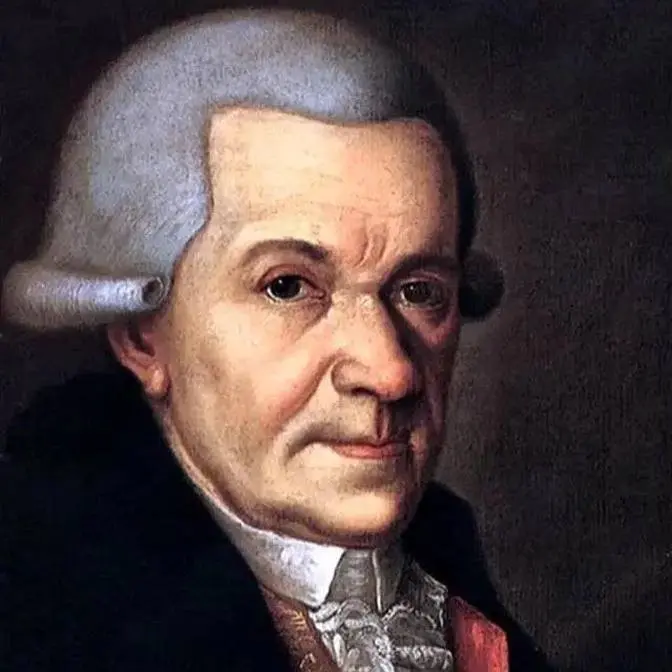
⭐ Family, friends, and contemporaries of Johann Michael Haydn ⭐
Composer: Franz Joseph Haydn (1732-1809)
Work: Te Deum laudamus in C a 4tro voci, due violini, Alto viola, flauti, 2 oboi, Fagotto, 2 corni, 3 clarini, Tympani con organo, violone e violoncello (1800), Hob XXIIIc:2
Performers: RIAS Kammerchor Bеrlin; Frеiburger Barockorchester; Justin Dοyle (conductor)
Painting: Bernardo Bellotto (1722-1780) - The Freyung in Vienna, from the North-West
HD image: https://flic.kr/p/2rr5cg3
Painting: John Hoppner (1758-1810) - Franz Joseph Haydn (c.1792)
HD image: https://flic.kr/p/2rr5HkU
Further info: https://rism.online/sources/530000987
Listen free: No available
---
Franz (Frans, Franc) Joseph (Josef, Giuseppe) Haydn [Haiden, Haidn, Hayden, Gaiden, Heyden et al.]
(Rohrau, 31 March 1732 - Wien, 31 May 1809)
Austrian composer. The son of a wheelwright, he displayed a talent for music at an early age. By 1739 he had been accepted as a chorister at St. Stephen’s Cathedral in Vienna, where he studied under various teachers, including Georg Reutter Jr. After about 10 years, his voice changed, and he was dismissed, lodging with a friend, Michael Spangler. His earliest works date from this period. By 1753, however, he had met Nicola Porpora through various connections at court thanks to a number of small church and ensemble work, including his first opera, 'Der krumme Teufel' (1751). Around 1756 he was employed by Baron Carl Joseph Fürnberg, who recommended him a year or two later as Kapellmeister for Count Karl Joseph Morzin at the court in Lukavec, Bohemia. When Morzin’s Kapelle was dissolved, Haydn was recommended to Prince Paul Anton Esterházy as vice Kapellmeister to replace the aging Gregor Joseph Werner. Upon Werner’s death in 1766, Haydn was appointed as Kapellmeister under the new prince, Nicholas Esterházy, who he served for almost three decades until 1790. He worked in Vienna, Eisenstadt, and Esterháza with a court Kapelle of around 24 members. In 1776 he also functioned as an opera impresario. After his nominal retirement in 1790 he was made an offer to travel to London by Johann Peter Salomon for the 1791 season, the first of two visits, with the second in 1794. Around this time he became Ludwig van Beethoven’s teacher, although their relationship proved to be rocky. By 1792 he had renewed his position with Prince Nicholas II, but his duties were much less onerous as Kapellmeister, allowing him to collaborate on significant compositional projects with Baron Gottfried van Swieten, such as the 1798 'Die Schöpfung' and the 1801 'Die Jahreszeiten'. His last public function occurred in 1805, save for one, and he died during the occupation of Vienna by French troops. Joseph Haydn can be considered perhaps the best-known composer of his time, whose music was performed and imitated by composers throughout the world. Performances of his works, particularly his symphonies, sonatas, and string quartets, occurred during his lifetime in places as far-flung as Chile, Philadelphia, the Cape of Good Hope, as well as throughout Europe. In this sense he was a unique composer of his time. His musical style varied from the galant to early Romanticism in the final quartet movements, and his position as one of the longest-serving Kapellmeisters of the time offered him the opportunity to become “original,” as he once stated. He described his own compositional activity this way: “I was never a hasty writer, and always composed with deliberation and diligence.” Although he achieved considerable fame for his instrumental music, his vocal works, particularly his Masses and oratorios, are equally iconic in the modern repertory. His music includes considerable intricate counterpoint, monothematic development, surprising harmonic (and other) twists, and an often dramatic orchestration. A prolific composer, he wrote hundreds of works, among them, 24 operas, 15 Masses, six oratorios/ large cantatas, 398 folk song arrangements, 51 Lieder as well as 108 symphonies, 39 concertos, 70 string quartets, 126 trios that include the baryton, and 47 keyboard sonatas. His brother, the well-known composer Johann Michael Haydn (1737-1806), was a prolific composer, mainly praised by his sacred music.