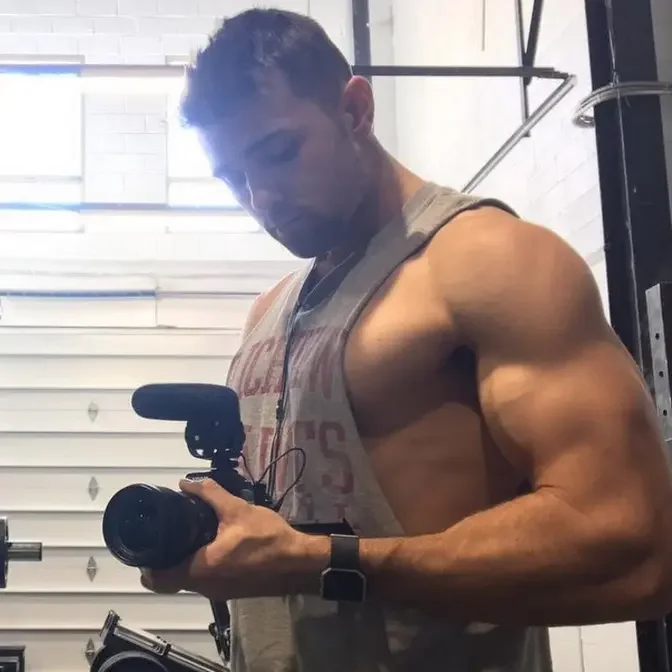
In this video, I break down how to do the box squat with proper form, perfect for beginners or anyone looking to improve their lower body strength. The box squat is a powerful squat variation that targets your glutes, hamstrings, and quads while reinforcing proper squat technique and depth control.
I’ll guide you through: ✅ Step-by-step box squat technique ✅ Benefits of the box squat for strength training ✅ How to use a box or bench for squats ✅ 3 most common box squat mistakes (and how to fix them!)
Whether you're training for powerlifting, muscle growth, or just want better form at the gym, this video will help you avoid injury and get better results.
What's up, guys? Josh from Colossus
Fitness, your online coach with over
5,000 transformations. Today, I'm going
to be teaching you how to do the box
squat for power and strength in those
legs. Let's jump right into it with
setup. There are two ways you can go
about the box squat. You can either use
a bench like we're doing today or a box.
The big thing here is you want to make
sure it's at the height you're looking
to achieve. It's going to be a great way
to really cue hitting parallel by using
a box that's actually at parallel or a
little bit below. You don't want to go
crazy low where it's an unnatural squat.
And if you're too high, you're just
going to be half squatting. So, this is
where the setup is super important. You
just want to position the bench just to
where you can nicely walk out and easily
reack. So, my bench all set up. We're
going to follow normal squat best
practices. So, we're going to get nice
and tight under this bar just like we
would for any other squat. Nice and
tight, tight core. Now, when you step
back, you don't want to be too tight
here. I'm going to fall back and miss
the bench. If I'm too far forward, I'm
going to miss the bench entirely. So,
just do a double check. Be a couple
inches away from that bench. Get in your
squat stance. We're going to squat low
with control.
Power up. You'll notice I'm not coming
back and losing tension. This is not the
objective. My toes are coming up. I have
no tension. I'm just sitting here with a
weight on my back like a bit of an
idiot. Instead, you want to keep
control,
tight abs. So, I come down. I keep
tension. I touch that bench. Boom. Power
up. Big breath in. Tight core.
This is a movement to build power and
strength. Getting in control. We're
getting to that depth.
Powering up. So, now you know what to
do. But I'm going to show you three
common mistakes you're probably making
and how to avoid them. Before we jump
into that, I'm an online fitness coach
with over 5,000 transformations. You
want to reach your goals faster, more
intelligently, and have roadmap and
accountability to get there. Check out
my website to learn how to apply for
coaching. I'd love to work with you
oneon-one, give you the results you need
to get you your results. Now, into the
first common mistake. Mistake number
one, as you can see me doing here, is
shifting back tension. Common mistake
people make is they think they're
getting on the toilet, they sit back,
they relax, they get comfortable, they
lose all that tension. And when we're
building muscle and strength, we want to
keep tension. We want to load our
spring. Think of a literal spring
tightening up, getting ready to explode.
This is your opportunity from a pause at
a good depth to practice building power
out of your squat with good foot
positioning and good strength. So, as
you can see me doing here, I'm avoiding
sitting back. I'm powering up in a nice
straight line. My bar path is exactly
straight as you can see as I maintain
tension, keep muscle tension with that
weight and really groove. I'm not
looking to pause any longer than a
second or so. Nothing crazy here. This
is a big one. Second mistake is losing
tightness. So, the goal here is you're
practicing through a pause. We've
established that we're getting nice and
tight. Core needs to maintain tight as
well. So, we don't want to droop forward
and let that bar crush our back. So,
we're going to end up just actually
lifting with our back. That's dangerous.
That's not what we're looking to
achieve. Instead, we're looking to
springload those legs. Keep tension on
those feet. Here, you'll notice when I
do the first mistake and I sit back, my
toes actually lift. I'm losing tension
in my feet. Good stability on the
ground. When you're squatting, you
should have a good base. You can see I'm
wearing squat shoes. This allows me to
do this. It's a very natural position.
So you can really practice when you're
sitting down, pushing those feet in the
ground, keeping your toes spread, and
really having a good ability to stand up
through that squat. So this is mistake
number two, staying tight and staying
smart. Third mistake, it's kind of an
obvious one. Using way too much weight,
being a hero, going to a bench like this
and doing this and I'm working my knees.
So you can see I'm doing nothing here.
Just the same, we don't want to sink to
where it's so far back that I'm going to
fall back with that weight. Instead, you
want to be at parallel or just below.
Easy way to know that is your hip crease
should be in line with your toe or just
beneath it. So, find a bench that's an
adequate height. If this is too low for
you, add something on top. Find a box.
Play with different things in the gym.
You can stack plates. There's a lot of
different abilities to do this. But now
you know how to do the box squat. I sure
hope I helped you. If you're still
unsure, go back, watch that video again.
But thanks for watching. And peace out.