✅ Improve your sales strategy and boost your profits with Fearless Business Coaching! 📞 Learn How To Charge More With Our FREE 1-to-1 Coaching Session: https://robinwaite.com/
I Thought Hard Work In My 20s Would Make Me Rich (I Was Wrong)
If you’re in your 20s, this video is a must-watch.
I’m 43 now, and I’ve learned some hard lessons the tough way – from burning out chasing hustle culture to blowing a small fortune on fast cars and champagne in my 20s.
Whether you’re an aspiring entrepreneur or just starting your career, these 10 tips could save you years of struggle.
Don’t make the same mistakes I did. Watch now and start winning in life faster!
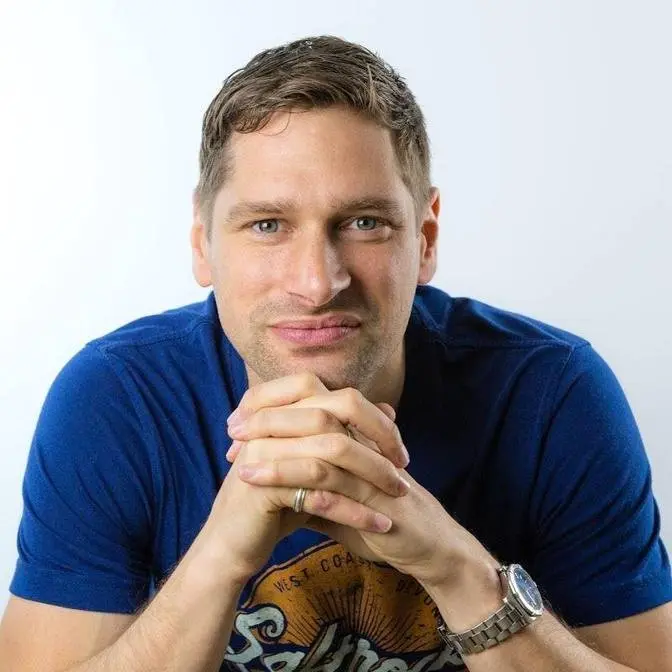
Hi! I'm Robin Waite, a business coach, mentor, and founder of Fearless Business, and I am the author of the bestselling books Online Business Startup and Take Your Shot.
My channel is designed for Coaches, Consultants and Freelancers who are looking to startup and grow their businesses on a budget. At Fearless Business we help our clients to refine their offer, articulate their value and most of all...
Stop rushing around like a busy fool. Slow down! Create some space for yourself and charge your worth!
I'm 43 now, and if I could go back and
speak to my younger 20-year-old self and
maybe give him some advice, here's 10
things that I would say to him. Well,
was wondering who I'm talking to. I'm
talking to the little fluffy thing.
Yeah, you smell that. Good boy. Number
one, stop working so hard. I've grown up
with parents who worked incredibly hard
throughout most of their lives and quite
frankly struggled. And I guess for me,
it's become a learned behavior
throughout my life. And in my 20ies when
I first started working and running
businesses, I assumed that I would just
have to follow in their footsteps and
work hard and that would give me some
kind of success. However, all it's ended
up doing several times in my life is
resulting in some kind of burnout. And
what I've come to realize is that hard
work does not equal success. Um
ultimately if hard work meant financial
success especially but just success in
life then every police officer, nurse
and doctor out there would be enormously
successful and have absolutely
everything which they ever wanted. So I
wish it hadn't taken me quite so long to
learn this but as a little tip um one of
the things which I've discovered is the
parto principle 80/20. So there are 20%
of inputs which you can do which
attribute towards or contribute towards
80% of the outputs. And ultimately the
quest in life that I've discovered is to
identify what the 20% is. What are the
things the small number of things which
contribute towards the greatest impact
in your life. You could take that a step
further and um there's something called
the 4% rule which is where you find the
20% of the 20%. And if you can find the
4% of things that contribute towards 96%
of the outputs and your future success,
well then quite frankly, you're going to
be winning in life. And so what I've
learned is that as I've come towards my
43rd year on this little piece of rock
floating around in space that actually
what you need to do with the 4% rule is
just find a couple of a few things and
take some calculated risks. And
generally speaking, the outcomes from
those are astronomically
um outweigh that. the hard the approach
to hard work. Sometimes you do have to
brute force your way through life.
Especially when it comes to business,
it's just not worth it because the goal
of business is to stay in in life really
is to stay alive and in business for as
long as you possibly can do. It's not to
be success is not derived from
short-term wins and losses. And so, you
know, Usain Bolt couldn't run, you know,
even an 800 meter race at the same pace
he runs his 100 meter sprints at. And
it's the same with life. You've just got
to figure out what you can do in a
sustainable format. And that means doing
little and often but small things which
have a large impact and taking a few
calculated risks that create massive
impact and make massive changes to your
life. Number two, and this one's really
not very glamorous, not very sexy at
all, but essentially I would uh spend a
little bit more time thinking about my
financial future. When I was in my
20ies, I had a couple of very successful
side hustles and businesses. And one of
them in particular, I used to buy and
sell grade two listed laptops. And then
I would buy them in for about £500 and
shift them on for 3 4 5k in some
instances. And this lasted about 9
months before the bottom dropped out the
market. But I ended up with a ton of
cash during those nine months. And I did
what any very nonsensible 20-year-old
would do when you come into a
significant sort of five figure sum of
cash. You'd uh buy a couple of cars and
go on loads of fancy holidays and blow
your money on champagne down at the pub
trying to impress your friends and
things like that. And I look back on
that and it was good times. I wouldn't
say that I didn't enjoy it necessarily.
Obviously got lots of fruits out of that
labor, but I'm here at 43 now and
recently I I looked at my pension pot
and it was barely like 12k thinking criy
well what if I want to retire in 15
years time or 20 years time or something
like that. That money is not really
going to go very far at all. I wish
actually now looking back in my 20ies
when I had that lump of cash if id just
taken even a small portion of that and
dropped it into a pension fund what the
potential or what potentially it could
be worth now obviously I'd have
significantly more in my pension pot
than I've currently got at the moment.
So going back to my 20s if I could tell
my 20-year-old self something and give
him some very boring advice but
hopefully very sensible advice I would
suggest to him to start putting aside
£200 a month into a a pension pot. At
the end of the day, we don't know what
life holds in our future. And there is a
part of me and many people know about my
recent history where I've been diagnosed
with a tumor growth on my brain stem um
which kind of brings your life very
sharply into focus. And um yeah, I would
tell him to start putting some money
aside for a rainy day. Pension being the
first thing, making sure that there's
no, you know, pay off your debt as soon
as you could. I've literally only just
finished paying down my student loan
this year. um which I'm very proud of.
But equally, I wish I'd start not
started out my life with debt. I think
um it's a whole thing for another video
potentially, but starting life off in
your 20s, coming out of university with
debt and then having to struggle through
life in order to kind of move forward um
it's just not a great way to live. So, I
would encourage my former self to and
you to um start paying some money into a
pension pot. And I would even recommend
as well like setting some money aside in
a rainy day fund. Even if it's starting
with £10 a week or £50 a month or £100 a
month, accumulate some money in a
savings kitty just so that when life
comes around and life will show up and
beat you on the uh around the back of
the head sometimes that you have some
money that you can actually fall back on
and so life doesn't feel like it's a
constant struggle when you're trying to
play catchup. If you're earning £2,000 a
month, say in a job or £3,000 a month in
a job, setting aside £100 or £200 a
month is really not that much out of
whatever money it is that you're
earning. And if you have any windfalls,
take those windfalls and put them to one
side. Yeah, there are things which you
need to buy in life, cars to get around,
phones to communicate, insurance just in
case anything happens to you, maybe
paying a rent or mortgage. There's these
things which you do need to pay for. But
if you're earning 3K a month and you set
can set aside £100 a month and learn to
live off the
£2,900, I know for me personally, I'd
have been far better off and far more
financially savvy as a result of just
making that small sacrifice way back
then. So yeah, number two, put some
money into a rainy day fund and
definitely pay into a pension because
that money over the course of a 30 40
year career as an adult will accumulate
quite significantly. and I wish I'd
started paying paying into my my pension
pot sooner. Number three, I wish I'd
traveled more in my 20ies. I'm very
fortunate now that I'm 43 and my wife
and I, we get to go to lots of different
countries, take our kids on these most
wonderful holidays, um, and explore the
world a little bit. Um, we've flown
quite a bit over the last few years and
it's been one of my greatest pleasures.
But it's also reminded me that I didn't
do enough of that in my 20ies. I was
very much head down focused on work,
work hard. You know, I made some money,
but then I also spent all of that money.
And I didn't spend it on things like
creating experiences for myself. You
know, a lot of the time it was spent on
fun uh things, but actually I've learned
that kind of exploring the world and
seeing different cultures and seeing the
amazing places that are outside of this
little triangle triangularshaped island
that I live on called the United
Kingdom. What's interesting is that
growing up um my parents never took us
on an airplane. We never went on a
family holiday abroad. We did I remember
like one holiday where we all went down
to Bournemouth together sort of as
teenagers. And I think my parents had
they realized that me and my brother
were very quickly growing up. So we
weren't young at the time. And um you
know prior to that a lot of our holidays
involved my dad you know shipping me and
my brother off down to my grandmother's
down in Devon you know which was
incredible. It was lovely. You know I
got to spend time with my grandparents.
But some of the memories I think of the
four of us, you know, if we'd had the
opportunity, the four of us, uh, to be
able to go and explore the world
together, jump on a plane and have that
those adventures, I think would have set
me up far better in my 20ies. And I I
found out too late in terms of, you
know, um, no, no, that's wrong.
Actually, it's never too late. Um, you
know, I've been able to now we can go on
wonderful holidays. we can afford to do
it because my wife and I work incredibly
hard still, but earn good money and it
means we get the opportunity to to now
pass this on to our two daughters. But I
had some news in in August last year
around my health. And it brought life
incredibly sharply into focus cuz my
wife's been one of those people who's
always said, you know, when we retire or
when the girls grow up, you know, we can
go and travel the world and kind of have
these dreams and ambitions and things
like that. And what I found out in
August, there is a small possibility now
that that might not actually happen. And
so now I'm grasping the bull by the
horns and we are getting out and about
and we're traveling, you know, more than
more than I ever have. And it's it's so
amazing. But I wish id found this out in
my 20ies and been able to get out there
and explore some of the world at a time
when I probably was more adventurous. I
was after more experiences and things
like that. I just didn't have somebody
telling me to get on that plane and go
and explore the world and see some of
just the amazing places that are out
there. So go and travel. Like if there's
a place that you want to go and explore
and visit and you're in your 20s or 30s
like and you have no responsibilities,
now is the time, the ultimate time to be
able to go and do that because when you
get married and kids come along,
longhaul flights are a completely
different thing altogether. So travel
whilst you can is what I'm saying. And
we'll have opportunities and I know
maybe I'm making excuses and making life
difficult for myself, but and hindsight
is always a wonderful thing, but um
yeah, I wish I traveled a lot more in my
20ies. So number four is really simple.
Don't drink alcohol. Um, it's as basic
as that. I wasted goodness knows how
many hours and days um with hangovers
and things like that. And especially
when it became to having children and
and there is nothing worse than waking
up on a Saturday or Sunday morning with
a massive hangover and then having to
look after the kids. So, I stopped
drinking 2 years ago and it was one of
the best decisions I ever made. In fact,
actually at university, I didn't drink
for 2 years whilst I was at university
as well and got just more done with my
businesses and my life than I ever got
at any other period um in my life. So, I
would 100% recommend if you can try and
avoid alcohol. There are so many good
choices now around um alcohol-f free
beers and ciders that you can still make
it look like to your friends that you're
drinking alcohol when actually you can
just choose one of the alcohol-free
equivalents. And there's not that much
difference in terms of kind of the taste
and things like that and it still feels
like you've got a beer in your hand. And
part of the reason is as well because I
I um went out with the school dads um
just shortly after getting stopping
drinking and they got so riotously drunk
and I realized oh my goodness it was
almost like on the point of
embarrassment good fun but also slightly
embarrassing and um it made me realize
that goodness if they're kind of
slightly embarrassing then when I was
drunk I was probably a little bit
embarrassing as well. So I wish I could
take back uh in my 20ies the amount of
alcohol which I did end up drinking lots
of night out with the sports clubs I
played with and my friends and things
like that. Um that bottle of wine or you
know glass of wine that turned into a
bottle of wine on kind of most evenings
throughout my 20s and even into my 30s
and the hours I wish I could get back
from that time from just feeling utterly
awful and the damage that potentially
it's done to my body. And yeah, it's
going to take time but now I can start
that road to recovery. that you have a
choice in your 20ies and I know that
things like peer pressure and I've got
the benefit of hindsight now knowing
kind of how I felt back then compared to
now having stopped drinking but it
definitely is one of the best decisions
I ever made. Um I've realized that
alcohol was masking who I really was and
who I wanted to be not just for me
knowing that as part of my identity but
also how I was perceived by others out
there as well. And um there were times
when I used to go out to business events
and kind of because I was a little bit
nervous and anxious, I would drink a
little bit more than usual and probably
made a bit of a fool out of myself,
which didn't look particularly
professional. Um I would imagine so
there you go. Um if you've got the
opportunity, just it you don't have to
stop drinking, but at least go for the
zero alcohol options and start to cut
back. And even things like at home, you
know, where nobody is going to see you,
having zero alcohol options in your
fridge is a really wise decision. Number
five goes handinhand with stopping
drinking and that's making your health
generally a priority. Over the years
there have been times when I have put my
health first. Going to the gym, going
swimming regularly. Um I love my
cycling. I've played plenty of sports,
rugby and hockey. And I used to do it
more for the social and for the fun side
of things. And then recently this last
year I got a diagnosis which I mentioned
earlier on which has meant that my
health has kind of taken a bit of a
backseat. But the the reality is one of
the things which I have done
consistently over the last 20 years of
my life 23 years of my life since I was
from my in my 20ies was you know make
health priority do sports not least from
the keeping fit and healthy perspective
but primarily also from a social
perspective. I've always been a part of
various other teams and clubs and things
like that and got heavily involved in it
and I've made some lifelong friends
through it. So health doesn't have to be
a grind and like beasting yourself down
the gym and things like that. It can
also be just fun, something to do. And
not least because at the end of doing a
good workout session, you feel good
about yourself. So, I would prioritize
my health far more than I did in my
20ies. I did put it, you know, fairly
high up there, but there's still more
that I could have done. Gradually, as
I've shifted towards being in my 40s
now, that decline has been slow and
steady about the consistency that I've
been able to kind of do workouts and
stuff like that. I could make excuses
like, you know, busy family life and
various things like that. And I suppose
taking the dog for a walk does consist
of exercise to some extent. You know,
taking the kids out on bikes and things
like that definitely consists of doing
some exercise, but it's a different it's
a different form of looking after your
health. And health isn't just about
exercise either. It's all about healthy
eating and and making just sensible
choices with your body. You only get one
body and one life at the end of the day.
So, you want to look after it. So, I've
done a lot of work with um watching my
weight, keeping, you know, making sure
that I'm eating relatively healthily,
watching the calorie intake and things
like that. I've done a couple of diets
over the years in terms of like the keto
diet and things like that. And
generally, I would say that keeping my
body leanish, probably possibly got a
few extra pounds these days, but keeping
my body lean has actually kept it kept
it in relatively sort of healthy order.
And most of that comes down to diet and
healthy eating, just living as healthy a
lifestyle as you possibly can do. you
can get away with a heck of a lot more
in your 20s, but let's not make that an
excuse. I think it's just about forming
good habits in your 20s around health
and exercise and various things like
that. And um it stands you up well it
gives you the best possible
opportunities when you get into your 30s
and 40s and your body starts to slow
down a little bit. Just give yourself
that head start. So thing number six um
essentially is that I wished in my 20ies
that I had read more books. I don't know
why, but when I finished my university
degree, I thought that was a license to
stop learning and I didn't have to pick
up any more books and learn anything
else or read ever again. And it wasn't
until about six or seven years into my
agency when I realized that I wasn't the
smartest person in the room. And there
were people there who had all of this
immense business knowledge and I was
wondering where they were getting it
from. And essentially, they were just
picking up books from other experts,
learning the principles within those
books, and then practicing and
implementing them within their business.
So it was a sign for me that I needed to
go back to the um the drawing board and
start learning all over again. Um
because whilst I did a business
management degree, it's very
theoretical. It wasn't necessarily
practical tactical business skills that
I was learning when I was doing that
degree. So what I did is I downloaded
audible and I aggressively started
listening to audiobooks and made a a
pact with myself that from that point
onwards I would listen to an audio book
at least one a month from that point
forwards. I think my library is now up
to something like 260 books that I've
downloaded and listened to and it was
the best thing that I ever did. One of
the first books which I downloaded into
my Audible library was a book called
Built to Sell by John Wallow which was
all about how an agency owner who was
full service essentially a jackof
alltrades master at none went to sellers
agency and it was worthless and so I was
going through a similar journey myself
with my agency. So it was really easy
for me to get into and I applied the
principles in that that book and they
were very simple. Essentially, it was
the principle of subtraction. Remove as
many of the complexities from your
business as you possibly could do, which
we did. We productized. Um, next thing
you know, the following year, our
revenue doubles. So, there's the value
in picking up books or downloading a
audio books and uh getting back to
reading and learning and things like
that and then applying those principles,
it will make a massive difference to
your business. And I know if id done
that sooner when I was 20 and read
practical tactical business books
instead of whatever it was that I was
doing at the time. Um I know that oh
well I don't know that for sure. But I
think I'd be a heck of a lot further
along than I am now. You could argue
that actually going to university set me
back by 4 years because I wasn't running
my business at that time. But equally I
had a couple of side hustles and things
like that going on. But that's something
for maybe a whole other video. So the
next thing I've got for you is to
believe in yourself. When I went back to
my early 20s and I started my first
business, I felt incredibly awkward
going to things like networking meetings
and whatnot. And I used to dress in a
way that uh I thought I should be
dressing to go to these really important
local business networking meetings. And
I wore the button-down shirts. I wore
the smart chinos. I put those pointy
shiny shoes on because I thought that
that's how business people showed up.
And I'll be very honest, I felt very
anxious. I felt incredibly uncomfortable
wearing those clothes. And as you can
see, I'm traditionally the t-shirt and
jeans guy. I've got my fearless t-shirts
on, you know, I'm not a suit and booted
guy. I'm the guy who goes out surfing
pretty badly, but I go surfing. I go
downhill at 52 and a half miles on my
push bike. I've never been the uh
button-down shirt kind of guy. And I
think what happens is when you step into
an environment which is a bit out of the
ordinary anyway and then you're dressed
in a way that you think you should be
sort of dressing yourself and showing up
in a way that you think you should be
showing up. Is it any wonder that I
think in my early 20s when I started my
businesses that we really struggled to
kind of get them off the ground because
what people saw was it I mean there was
nothing that was um particularly sort of
I don't know how to describe it weird
about that but it was just I felt
uncomfortable and therefore you know if
you feel uncomfortable generally
speaking you then project that uh to
other people. So, what I um decided to
do eventually was start to just be
myself. And sort of my mid to late 20s
and wear what I wanted to wear and not
really think about what other people
thought of me. And lo and behold, that's
where some of my successes started to
take off. My invitation to you is um
first of all, be authentic. Be true to
yourself. Hey, Twigs, come and say hello
to the camera. This is Twiggy,
everybody. I don't know if you can see
her or not. Be authentic. Like, be
genuinely you. Don't show up in a way
that you know you feel you should be
showing up for other people. But the
really real in-depth thing to remember
is that like you do deserve a seat in
the room. And I think a lot of people
don't realize this that they always
think that there are people out there
who are smarter than themselves that are
more successful than themselves that are
what are more charismatic than than they
are. And so they don't put themselves in
those situations which are going to
create success for themselves. And I
think even if you're not the smartest
person in the room, it doesn't matter.
You deserve a seat at the table. It's
one of the reasons why now in my 40s I'm
able to have, you know, conversations
with really influential people like Ali
Abdull and Simon Squib and Chris Doe and
the guys at Atomic, Andrew and Pete and
Daniel Priestley and all of these
amazing like influential uh
entrepreneurs and business people. But
it's because finally I realized that
actually they started somewhere and
they've had people who've helped them uh
on with their careers and they maybe
felt that they didn't deserve that seat
at the table. They felt a bit of that
imposter syndrome at some point in the
past and so they had to get over it and
so I've got to get over it now. I'm
obviously a late bloomer. It's taken me
until I'm in my 40s to realize this, but
gosh, I wish I could go back to my 20ies
now and tell my 20-year-old version of
myself like you do deserve to be in the
room. Be yourself. Make sure you're
adding value and being helpful. Like,
don't just get go in there and take, you
know, without giving. In fact, don't
take at all. Give without take, as Simon
Squib puts it. And you will create
remarkable opportunities for yourself.
And I think if you're watching this in
your 20ies like and and you feel like
you're showing up inauthentically, maybe
now is the time to change that. And
well, welcome back uh to the studio. Um
I'm going to carry on with thing
number eight, which is to charge your
worth. I think this is something which a
lot of business owners forget about. And
in fact, somebody just tagged me onto
something in LinkedIn where uh one of
the people on there was having issues
around cash flow. What I always say is
um most businesses don't have a cash
flow problem because the money freely
flows in and it flows straight back out
again. What they have is actually two
other problems. So problem number one is
making more money problem and problem
number two is keeping that cash problem.
So if you can learn to make more money
and then learn how to keep that money. I
wish I'd known that way back when when I
first registered my business in my
20ies. And really what it comes down to
is having the ability rather than
creating these challenges for ourselves,
charging what we think other people
think we should be charging or maybe not
charging enough. Back then we kind of
fell into that trap of just charging
what we thought other people could
afford to pay. And unfortunately what
that did mean was we were competing.
It's like a race to the bottom
essentially when you're competing based
on price. I think in my first year in
business I think me and my business
partner made a grand sum of £8,000 each.
So we turned over like 20k or £16,000 or
something. And back then I thought,
"Wow, it was amazing." But with
hindsight, what it meant when we weren't
charging enough is it kind of sets you
back. There's this compound negative
compounding effect which has then
happened through my late 20s, 30s and
now growing my businesses now. Good news
is in my coaching practice now, I don't
have that issue because I knew about all
of this when I started that business 9
years ago or this business 9 years ago.
But way back when, I'd have told myself
to make sure that you know you're
charging in the top 10% of what
everybody in your industry is charging
at least. If not, try and be the most
expensive in the market because that is
how you build firstly positive cash flow
cycles in your business. And second of
all, it also means that those big chunks
of money, if you don't need that money,
if you can learn to live within your
means, i.e. a keeping thing. You can
start to build up a a rainy day fund, a
pot of cash, so that then you're not
quite so desperate to bring in more
clients each and every day, week, month
that you're running your business. You
can be a bit more selective about the
types of clients you were bringing in.
And again, back in my 20ies, I'll be
very honest, because we needed every
client that we could get back then cuz
we were a bit desperate for cash, it
actually meant that we were bringing in
clients who weren't the perfect clients
for our business. Lo and behold, a few
weeks or months down the line, those
clients were coming to us with problems
and quite frankly being a bit of a pain
in the ass some of them. And we were
regretting our life choices of a
starting up a business and bringing
those clients on in the first place. But
it wasn't the starting up the business
that was the problem. It was the fact
that we just weren't charging enough,
which meant we had to take on every
client. So, we weren't being selective
enough with the clients we were bringing
in. So, when you niche and you're
selective and you qualify your clients,
you get better quality clients. And it
creates this virtuous cycle as well
because those good quality clients who
pay more upfront generally then you get
better quality results and outcomes for
those clients and then they spend more
money on the back end. So again it
creates this really positive cash flow
cycle within your business which then
leads me on to thing number nine which
is around building recurring passive
forms of income. Now they always say
that the most successful entrepreneurs
wealthwise have multiple streams of
income in. So you can start to build
multiple streams of income within your
business. Now, when we first started
out, we were just selling website
packages and the odd logo design. So,
these were very much like one-off
projects that we would deliver and then
we would get no recurring revenue from.
So, we were constantly having to like
filter and bring in more and more and
more clients all of the time. And I know
I'm talking a lot about business. There
are some life lessons within this as
well, which I learned a bit later on
around passive income on my personal
financial side of things. So then I'm
even less dependent on my business
bringing in money regularly, you know,
um, as much as we used to back in my
20ies. So eventually we did learn that
what we needed was not just this
front-end product with like selling a
pack a website or a logo. We needed some
kind of support or care plan that then
they would subscribe to on a regular
basis. And actually, one of the reasons
why I was able to sell my agency 12
years into running that business was
because eventually we built up a a list
of 150 clients that were paying a
minimum of 50, anything up to £500 a
month for their support and care plan.
So, we had this regular sustainable
recurring revenue coming into our
business. And quite often as well,
because we were good at what we did in
terms of the websites we built, they
leaned very little support. So many of
those clients we wouldn't hear from from
one year to the next but they still felt
they were getting um value for money
because they could get in touch with us
any time and so to a certain extent I
mean the vast majority of those care
plans that we sold were kind of very
passive they didn't require a huge
amount of upkeep and work on our part
latally then coming into my um coaching
practice I've then been able to build up
a rainy day fund and then I get interest
on those savings and I've got other
streams of income so I have you know not
just um I got money from my books I've
got money from speaking. I've got money
from events which I run. I've got money
from my group clients, my one-to-one
clients. I've got some associate
coaching roles. And there's also a
spin-off business which we've got now
around content partnerships and
sponsorships. So, I've got, you know,
close to 8 to 10 different sources of
revenue coming into my business. So, if
one dips a little bit, you've always got
the others to fall back on and generally
they lift the business back up. So, it's
more likely you're going to be able to
have regular consistent months if you've
got this some form of passive recurring
revenue coming in. And it was probably a
good like seven or eight years before we
realized the power of this within my
businesses. And I wish I'd known this
when I was 20. If somebody had told me
to focus on recurring revenue again,
things might be quite different now. Who
knows? There might have been other
challenges which pulled the rug from
under us or you know 12 years down the
line when I come came to sell that
agency. But build recur build multiple
streams of income. Make sure some of
them are upfront cash. Make sure some of
them are recurring. Make sure some of
them are passive. and then you're not
scrabbling and scratching around every
single day trying to find more clients
and earn more money and things like
that. The very final thing I've got for
you is that life and business will throw
dips at you. You will just have natural
dips whether it be through energy
levels, through your health, through
your motivation, through success,
through the volume of work which you're
able to do for any number of different
reasons both your life and business will
hit dips. And um speaking more so around
and I didn't know this so way back when
in my 20s I thought oh yay
entrepreneurship business it's going to
be super exciting. I have the explosive
growth and make tons of money and there
won't be any problems. And then lo and
behold when the first dip arrived it was
catastrophic. It felt like the worst
thing that ever happened to me. You know
we ran out of money having a few
problems with clients fell out with my
business partner. One of our team you
know messes around. You got all of these
things going wrong in your business and
in your life and you're thinking is it
me? What am I doing wrong here? How why
did I why me? Why did I did I deserve
this? And so and then there's this
horrible like undulating pathway to then
recover and get back again. And one of
the things which I've come to realize is
that these dips are actually cyclical.
They are almost designed into your life,
designed into your business that they I
can guarantee that you're going to go
through a dip at some point and probably
more likely in in as little as the next
two to three years max. Cuz I know that
over the last 20 years in business, I've
been through five dips. I've been
through five stages of that the business
life cycle and dipped five times. First
time catastrophic. It felt awful. Second
time, oh, here we go again, but it still
didn't feel very comfortable. By the
time you get round to your fifth dip and
you're a pro like I am, well, first and
foremost, when you know that you're
heading towards a dip, I break my
business. I force myself to go into that
dip because I know that what going into
a dip means is that it encourages you to
creatively solve problems to get
yourself out of that dip. And in doing
so, you have massive breakthroughs. Some
of my biggest growths in myself and in
my business have happened coming out the
other side of one of those dips. So now
when I can see and predict that it's
starting to slide off down that cliff
edge, I purposefully break my business.
I purposely switch off and focus on
different areas of my life. And my
challenge then is essentially I force
myself to go into the dip. And then my
goal is simple. get through the dip as
quickly as humanly possible and as
painlessly as possible and then you have
a breakthrough. You pop out the other
side. Inevitably when you pop out the
other side actually you consolidate at a
much higher place than where you were
previously. So in I did three dips in my
agency. I've done had two dips in my
coaching business and each time I've
increased my revenue dramatically as
I've gone in and come out the dips on
the other side because you have to
innovate, you have to be creative and
you have to solve problems. So there you
go. So, there's my 10 things that I
would go back and tell my 20-year-old
self. I'm curious if you had to go back
and tell yourself something when you
were in your 20s or 30s. What piece of
advice would you give to yourself? Maybe
think about dropping it in the comments
below. I'd love to read some of those
and maybe we can create a compendium of
all of the things that our 20-year-old
selves should know, and maybe we write a
book about it and then gift it to our
our kids when they become, you know,
turn 18. Here's our uh diaspora of
everything that you should know right
now. um heading into your 20s and
setting yourself up for success.