
Fiji's Traditional Crafts: From Masi Art to Wood Carving
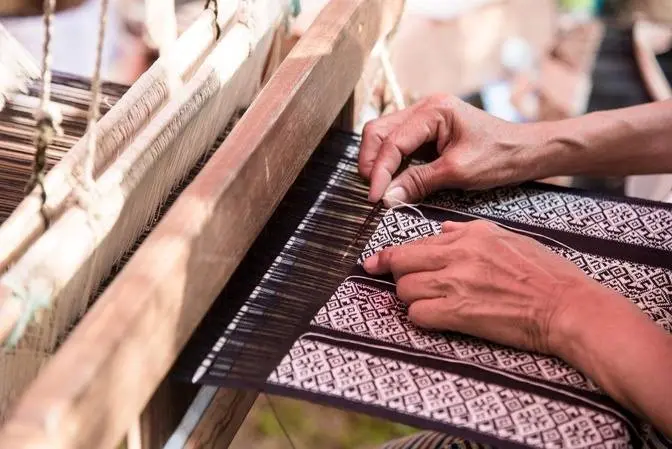
Fiji's traditional crafts are a vibrant tapestry of skills and cultural expressions
that have been passed down through generations.
From the intricate patterns of Masi art to the detailed work of wood carving,
these crafts are not just aesthetic creations, but also hold significant cultural value.
Let's delve into the essence of these crafts, exploring their historical roots,
techniques, and the role they play in contemporary Fijian society.
Masi, also known as tapa cloth, is more than just a material.
It is a canvas that narrates the rich tapestry of Fijian culture.
It serves as a testament to their creativity,
spirituality, and profound connection to the environment.
Masi is used in various ceremonies, including weddings, funerals, and chiefly installations.
The motifs and designs found on Masi are symbolic,
often representing elements of nature, mythology, and ancestral tales.
The creation of Masi is a meticulous process that involves several stages,
each requiring skill and patience.
The bark of the paper mulberry tree is harvested, soaked, stripped, and beaten into thin sheets.
Artists then apply designs using natural dyes,
often reflecting social status or regional patterns.
The decorated Masi is left to dry, solidifying the intricate designs.
Contemporary Masi artists are innovating while respecting traditional methods,
ensuring the craft's survival in modern times.
In the realm of contemporary Masi art, a new wave of artists is emerging,
blending traditional techniques with modern expressions.
Susan Point has collaborated with Masi Wines to design wine bottle labels,
marrying the artistry of Masi with the world of fine wine.
Maynard Johnny Jr.'s artistry has been recognized
for its unique blend of traditional and contemporary styles.
The evolution of Masi art through these contemporary artists
showcases a vibrant and evolving narrative,
one that honors the past while boldly stepping into the future.
The tradition of woodcarving in Fiji is deeply rooted in the island's history,
serving as a testament to the skill and creativity of its people.
Artisans would create objects that were both functional and symbolic,
often imbued with significant cultural meanings.
The knowledge of woodcarving was passed down through generations,
with each piece reflecting the rich tapestry of Fijian heritage.
Fijian woodcarving utilizes both time-honored techniques
and a variety of natural materials.
The materials used in Fijian woodcarving are as diverse as the islands themselves,
ranging from indigenous hardwoods to softer, more pliable woods.
Artisans often employ tools that have been passed down through generations,
alongside modern implements, to achieve intricate designs and patterns.
Fijian woodcarving has given rise to a multitude of iconic objects,
each with its own story and purpose within the culture.
Bowls and canoes, often intricately carved with traditional motifs,
are not just utilitarian items, but also hold ceremonial significance.
Drums with their resonant beats are central to Fijian music and dance.
When shopping for souvenirs in Fiji,
it is important for visitors to recognize the value of authentic craftsmanship
and to contribute positively to the sustainability of these practices.
Fijian pottery, known locally as earthenware,
is a craft steeped in tradition and practicality.
The creation of pottery is a skill passed down through generations,
often seen as a blend of art and utility.
The earthenware items range from cooking pots to water containers,
each with its unique purpose and beauty.
The materials used in Fijian pottery are sourced directly from the land,
with clay being the primary component.
The creation of Fijian pottery is a meticulous process
that begins with the careful selection of clay.
Artisans harvest the raw material,
often from communal clay pits that have been used for generations.
The clay is then purified and kneaded to the right consistency,
shaped by hand or on a potter's wheel,
dried, and finally fired in a kiln.
Each step is an art in itself,
demanding precision and care to produce pottery
that is not only utilitarian, but also a work of art.
In Fijian society, pottery is not merely a functional craft,
but a symbol of cultural identity and communal ties.
Pottery serves as a testament to the Fijian way of life,
reflecting the harmony between the people and their natural environment.
Traditional pottery.
Book with a Fiji specialist at Far and Away Adventures.