
Johann Kaspar Aiblinger (1779-1867) - Missa Advocata nostra (c.1830)
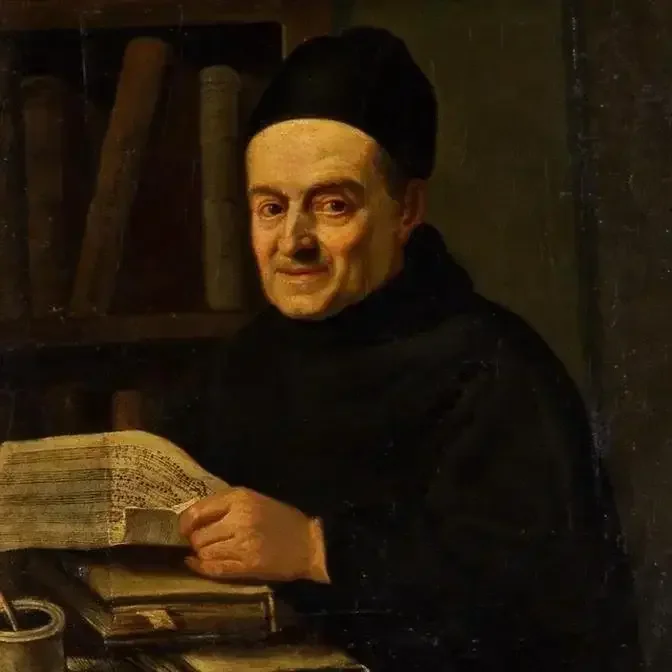
Alles Gute zum Geburtstag Johann Kaspar Aiblinger! 🙏🏼🍷
Composer: Johann Kaspar Aiblinger (1779-1867)
Work: Missa Advocata nostra (Es-Dur) für 2 Sopran, Alt, Arpa, Oragno, Cello e Basso (c.1830)
Performers: Erika Rüggеbеrg (soprano); Julia Fаlk (mezzosoprano); Renate Frеyеr (alto); Vokalensemble Musica Bаvаrica;
Ingeborg Frеytag (harp); Richard Saylеr (cello); Klaus Kuchеlmеister (double-bass); Karl Maurееn (organ); Alois Kirchbеrgеr (conductor)
Missa Advocata nostra (c.1830)
1. Kyrie 0:00
2. Gloria 5:21
3. Credo 9:50
4. Sanctus 16:12
5. Benedictus 18:43
6. Agnus Dei 22:00
Painting: Unknown artist (19th Century) - Munich, a view from the Northwest on the Theatinerkirche and the Tower of the Salvatorkirche (c.1825)
HD image: https://flic.kr/p/2jrDs8c
Further info: https://www.jpc.de/jpcng/classic/detail/-/art/Johann-Kaspar-Aiblinger-1779-1867-Missa-Advocata-nostra/hnum/3158317
Listen free: No available
---
Johann Kaspar (Caspar) Aiblinger [Ayblinger, Eiblinger, Haiblinger]
(Wasserburg am Inn, 23 February 1779 - Munich, 6 May 1867)
German organist and composer. In 1795 he moved to the Jesuit Gymnasium in Munich where he was a student of Joseph Schlett. From 1801 he studied theology at the university of Landshut and one year later he settled in Italy to study with Giovanni Simone Mayr in Bergamo. After further training in Vicenza (1803-11), Venice, and Milan, he served as second 'maestro di cappella' to the viceroy of Milan. Upon his return to Munich, he was made 'maestro al cembalo' of the Italian Opera in 1819. In 1823 he became assistant of the Kapellmeister at the Royal National Theater, and in 1826 Bavarian court Kapellmeister. In 1833 he was sent by the Crown Prince Maximilian to Italy to collect old church music. Together with Michael Hauber, the prebend of St Kajetan, and Caspar Ett, he was influential in the revival of church music. He retired in 1864. As a composer, he was very prolific. His output include two operas, including 'Rodrigo und Chimene' (1821), 3 ballets, 43 Latin masses, 8 German masses, 8 Requiems, 130 secular songs, and over than 300 small sacred pieces. He also left few instrumental works. Aiblinger’s early large-scale masses with instrumental accompaniment show the influence of Italian opera. From 1825 to 1833 he developed a transitional style with frequent a cappella sections and more colla parte instrumentation. From 1830 he composed more smaller-scale works and the orchestral masses were replaced by Landmessen.