
Why Christopher Nolan’s Films Break ALL the Rule
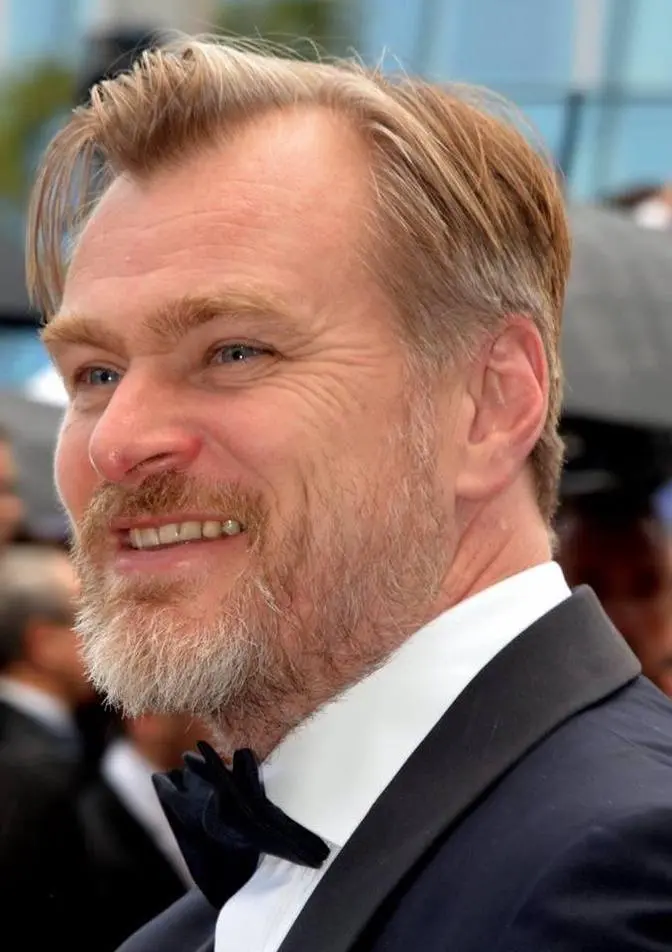
#ChristopherNolan, the iconic filmmaker who revolutionized Hollywood, never went to film school. Starting with the $6,000 no-budget Following, Nolan proved creativity can triumph over resources. This video explores How Christopher Nolan MASTERED no-budget filmmaking and transformed cinema. We’ll dive into Christopher Nolan's Turning Point, the moment that reshaped his storytelling, and why Christopher Nolan Changed Movies Forever with his unique approach to time, memory, and structure.
You didn't go to film school, this isn't what you did.
No, I couldn't get in.
My first feature was a no-budget film.
We spent about $6,000 on the entire movie.
We just have this story.
Dreams, they feel real while we're in them, right?
It's only when we wake up that we realize something was actually strange.
One of the year's most highly anticipated films arrives in theaters this week.
Oppenheimer from acclaimed writer-director Christopher Nolan.
The Barbenheimer phenomenon.
Barbie and Oppenheimer films are smashing box office records.
When they pushed that button,
it would set fire to the atmosphere of the Earth and destroy the entire planet.
The movie has already raked in more than $900 million globally,
and it's now the highest grossing biopic ever.
Oppenheimer, it's being called, well, his most impressive yet.
There's a chance we destroy the world.
Oppenheimer managed to get into the top 10 all-time box office R-rated films.
I think making films on a grand scale is what I got into movies for.
I really enjoy sitting there, having the experience I had when I was a kid,
of just seeing something that's larger than life, that takes you into a whole different world.
I didn't go to film school because I couldn't get into film school.
I've always watched movies. I mean, I've always been a student of films.
I think it was Stanley Kubrick who said,
if you want to learn how to make a film, just make a film.
Here's Johnny!
And that was sort of my approach.
I started making films when I was seven years old.
I never really stopped.
And over the years, they got bigger, better.
When I was trying to decide what to do at university,
my father, he said, go and, as he referred to, get a real degree.
Maybe you should start investigating yourself.
Then you could go to film school afterwards.
As a storyteller, you're looking for a gap in the cultural record.
You're looking for a film that should have been made that hasn't been made.
I studied English.
It greatly informed my filmmaking process, my writing process.
I think I was better suited to just making films and learning from that
than I would have been to learning in a more formal structure.
You didn't go to film school.
No, I couldn't get in.
Couldn't get in.
They looked at your early work and said, this guy has no future.
I started making films when I was a kid.
When I was, I think, seven years old.
Making films using my dad's Super 8 camera.
And I just carried on making films as I grew up.
My first feature, Following.
You followed women.
I followed anybody.
It was a no-budget film.
I just wanted to see where they went, what they did.
We spent about $6,000 on the entire movie.
You'd never follow the same person twice.
It was all myself and Emma and a group of our friends.
That was the most important role.
Getting together each Saturday to shoot about 15 minutes worth of footage.
That was the one that I broke first.
That's when the trouble started.
We did that for about a year and put the thing together that way.
I got burgled yesterday.
There were several limitations.
Shooting in black and white was embraced as a limitation.
And when you can't afford lights and you want to let the actors have a bit of freedom,
the best way to do that is to have a couple of big windows and get them to stand next to the windows.
So there's a lot of people standing by windows in the film.
The only thing we spent any money on at all was buying the film stock and processing it.
With no-budget films, guns don't work very well.
So we used a hammer instead of a gun because we could do a hammer cheaply
and make a rubber hammer that we could smash the guy's fingers with.
I think what following represents is the peak of what I was able to do on my own or just with friends.
What's it feel like being broken into?
While we were finishing up the cut on it,
in that time I was putting together the script for Memento.
It's amazing what a little brain damage will do for your credibility.
You know the truth about my condition, officer?
You don't know anything.
You've gone from making a movie on weekends with your friends
to having name actors spending millions of dollars of somebody else's money.
Memento is a psychological thriller.
I can't make new memories. Everything just fades.
Based around the concept of a character who's afflicted by a very unusual condition.
I guess I've already told you about my condition.
Funny every time I see you.
Which is a form of memory problem.
What's the last thing you do remember?
My wife.
That's sweet.
Dying.
Chris Nolan didn't want me for this, I think,
because he believed that they would immediately think that I was the bad guy.
Teddy.
Don't believe his lies.
My brother told me the story verbally before he'd finished writing it.
He is the one.
Kill him.
The first thing I said to him was,
if you could find a way of writing that short story from the first person.
You're gonna pay for what you did.
Somebody who couldn't make new memories,
who was suffering from this kind of trouble,
that would be amazing.
It's a movie about an investigator who doesn't know anything.
That's a pretty interesting idea.
Well, I thought so when my brother told it to me.
People say to me,
L.A. Confidential was the last film of its kind,
and Memento was the first film of its kind.
I've been interested in non-chronological narrative structures for quite a long time.
Memento first came around when I was almost finished with following my first film.
When I came to write Memento,
she certainly found it to be extreme
in the demands it was gonna place on the audience.
Oh, I know, I remember that very clearly.
Pages going back, and then...
Yes, and I give feedback.
Also known as a bucket of cold water.
That's the way it works.
I spent a lot of time with the script,
really trying to make the ending clear.
What he was worried about happening,
actually, it serviced the part even more so.
Beg my wife's forgiveness before I blow your brains out.
My solution to telling the story subjectively
was to deny the audience the same information
that the protagonist is denied.
You don't know what's going on?
You don't even know my name.
That's basically the end of the movie.
Teddy.
That's because you read it off a ******* picture.
This stuff is the black and white stuff.
Why are you asking me?
I can't remember what I've done.
You wouldn't believe me anyway.
This is color.
Who the **** are you?
Teddy, your buddy?
And this is running backwards as a series of jumps.
Because of my condition,
you don't believe someone with this condition.
And what we do is we cut between the two.
On the house.
Thanks.
So we alternate scene here, scene there.
With my condition, it's really tough.
I can't keep it all in mind at once.
What's the last thing that you do remember?
And they meet towards the end of the film.
You don't know who you are.
I'm Leonard Shelby.
I'm from San Francisco.
There's no question that Memento was by far
the biggest leap I ever had to take.
And the spirit of war is to...
And the war goes to...
When you find this guy, what are you going to do?
I'm going to kill him.
Christopher Nolan for Memento.
Are you ready to begin?
Let's talk about Batman
because you produced three Batman movies,
grossed $2.5 billion.
What are your earliest memories of Batman?
The television show.
Your first action film?
Batman.
Warners is looking to make another Batman film.
Huge movie.
Chris wanted his legs to be more supple.
Good budget.
I don't think there's any world
in which Chris would be interested in that.
A lot of pressure.
My interest was in taking on a superhero story
but treating it in a realistic fashion.
Was this always set to be a trilogy?
The whole idea of rebooting a franchise...
Your parents' death was not your fault.
...was kind of unheard of.
If you make yourself more than just a man...
Chris came in.
If you devote yourself to an ideal...
And said, look, this is what I want to do with the movie.
...you become something else entirely.
I first became interested in taking on Batman
when I heard that Warner Bros. was looking to
renew and reinvent the franchise.
Chris, at that point,
had only really made three feature films.
I'd made my last film at Warner Bros.
So I was able to go to them and explain to them
the way I saw the Batman franchise
being interestingly reinvented.
You are in hell, leecher man.
A little pressure.
A little bit of nerves happening going in
when you first started.
And I am the devil.
Yes, but the truth is,
it's such a long process before you even get onto the floor.
You're not the devil.
By the time we got to the biggest sets
and the most complex action...
Your practice.
...it had become like any other film, really.
What's the time?
Was this always set to be a trilogy?
You see, this is how crazy Batman's made Gotham.
It's a complicated answer.
Why so serious?
Some men aren't looking for anything logical.
Who are you?
They can't be bought.
It doesn't matter who we are.
Bullied.
You want order in Gotham.
What matters is our plan.
Reasoned.
Batman must take off his mask.
We'll negotiate it with him.
And turn himself in.
Some men, every day he doesn't just want to watch the world burn.
People will die, starting tonight.
You merely adopted the dark.
I'm a man of my word.
I grew up in a household of girls.
There were very few Batman comic books lying around.
What was Heath Ledger like to work with?
Where can you go from here?
I mean, only up, right?
The only time that I'm alive and living is...
No, you can go down.
You know, I would have actually played the Joker if it was a...
Tonight's entertainment.
If the budget for Dark Knight was $100,000.
He pretty well locked himself up in a hotel in his apartment for a month.
I locked myself away for six weeks in a room and I kind of came up with this creep.
What was Heath Ledger like to work with?
It was terrific working with Heath.
Questions this morning surrounding the death of actor Heath Ledger.
Heath Ledger.
Heath Ledger has been found dead.
Did this role have anything to do with this?
Here's my card.
For his maniacal Joker in the Dark Knight.
And the Oscar goes to Heath Ledger in the Dark Knight.
Heath Ledger won an Oscar, a posthumous Oscar.
His dad gave the acceptance speech.
This award tonight would have humbly validated Heath's quiet determination to be truly accepted by you all here.
The other fascinating thing about you is that you work with your lovely wife, Emma.
This is your fifth time working with Christopher Nolan.
The way I work with Christopher Nolan, we have this weird way of working.
This is my third film with Chris Nolan.
Who's the most heroic person in your life and why?
You all have been together for 14 years.
I think I'd probably have to point to my wife who produces the films for me.
What is it like working with him?
We've known each other a very long time.
Masterful.
It's wonderful working with people who will completely tell you the truth.
His vision is so clear and so strong, you feel very confident.
He said to me, this is going to be a short movie, it's going to be 90 minutes long.
He would never tell me what the movie was about, but I'd give him a day and just write whatever came to me.
I want to kind of hear where his imagination would go.
I basically demoed up a 100-minute piece, which sort of became like a grid of tension.
What's the Shepard tone do for you?
The structure I settled on is based on a musical structure called the Shepard tone,
which is a musical illusion whereby you can keep climbing up the scale,
but you never seem to go out of reach, if you like.
I've worked with Hans on several different movies, and our process has developed over the years.
Chris has talked about the Shepard tone.
I understand you've structured some of your scripts based on the musical auditory illusion of the Shepard tone.
It sounds like it's infinitely ascending.
Yeah.
Did it ever feel like this is going to be complicated for the audience?
My life is like a Christopher Nolan movie. I don't really understand what's going on.
A wormhole then spaced like this.
Christopher Nolan's letters are as confusing as some of his films.
So you can take a shortcut through a higher dimension.
Some critics said this about you, that it's the most confusing and least confusing of Christopher Nolan pictures.
To show that, they've turned three-dimensional space into two dimensions.
Do you think that that's true?
Did it ever feel like this is going to be complicated for the audience?
Which turns a wormhole into two dimensions.
A circle.
Well, it's like, you know, I mean...
You don't want to understand the entire story right from the beginning.
Otherwise, there's nothing to unfold.
I'd say don't try to understand it, just feel it.
I encourage people to just come to the movie as an entertainment, as a ride.
Has Christopher Nolan fixed his dialogue sound issues?
Dialogue sound issues.
The dialogue's so difficult to understand.
Why don't we better put it out the hole before the boom goes off, eh?
The structure of both is based on the headlock.
It's both a separate structure within the other.
That's shocking.
More of an intelligence issue.
The humour settings.
We'd fit in better with this unit.
Christopher Nolan said,
We made carefully considered creative decisions.
There are particular moments in this film where I decided to use dialogue as a sound effect.
So, sometimes it's mixed slightly underneath the sound effects or in the other sound effects
to emphasise how loud the surrounding noise is.
What I've found with all of my films,
people approach it like it's a crossword puzzle, so they get frustrated.
So, really for me, it's about saying to people,
No, come and be entertained and come and go on this journey with these characters.
Dreams, they feel real while we're in them, right?
It's only when we wake up that we realise something is actually strange.
There's one thing you should know about me.
I specialise in a very specific type of security.
Inception deals with dreams.
What's the most resilient parasite?
An idea.
The idea that has always fascinated me about dreams
is everything within that dream is created by your own mind.
A single idea from the human mind can build cities.
The cafe explosion sequence was actually challenging on two aspects.
An idea can transform the world.
About a week before we went to Canada, there was no snow.
Which is why I have to steal it.
He's gone back to how movies, I think, really should be made.
We can train your subconscious to defend itself from even the most skilled extractor.
Chris wanted this whole explosion sequence to take place in the middle of Paris.
That was really the challenge in making Inception.
And the prisons are not too friendly towards explosions in the middle of Paris.
Never recreate from your memory, always imagine new places.
When we started talking to him about what we were going to do,
the faces were pretty grim, so that was the first issue.
About a week before we went to Canada, there was no snow.
The whole thing was built around snow.
The Dark Knight is science fiction from a sociological standpoint.
And so we were very, very tense.
Interstellar, obviously, is.
About two or three days before we all flew up there, we had an enormous dump of snow.
Inception, obviously, is. They're using a machine to go into a dream.
Chris Corbell came up with this way of creating an explosion using air cannon.
If there was no machine, you could argue...
It'd be metaphysical.
Exactly, it would be a metaphysical story.
And we did tests with people sitting in front.
And we showed them to Leo and showed it to Alan and said,
this is what it's going to be.
I would have made a lot less money.
Oscar goes to Wally Pfister for Inception.
None of what I did would have been possible without the incredible vision of my master, Christopher Nolan.
And now his highly anticipated new movie, Interstellar, is set in the near future.
A team of explorers travels beyond our galaxy for mankind's most important mission,
to learn if humans can live in outer space.
Neither wormholes nor black holes have been depicted in any Hollywood movie.
How theoretically possible is what we see in Interstellar?
And I saw it and I loved it, but then I went home to my dad and I wept for an hour.
What did you want to accomplish with this movie?
Kip Thorne's an executive producer on the project and he's one of the great theoretical physicists.
This is the first time the depiction began with Einstein's general relativity equations.
The visual effects department took Kip's mathematical data
and they created real visual representations of what a black hole is meant to look like.
One of the main challenges is we didn't want to use a green screen.
No green screen.
Yeah, Christopher Nolan, the director and writer, he builds all the sets.
So, as an actor, you don't have to play pretend as much.
What did you want to accomplish with this movie?
I mean, any time you call a film Interstellar and you're taking on the idea of getting out there into the cosmos,
the idea of mankind possibly having to leave the Earth one day and find a new home out in the universe,
you're making a pretty big promise to the audience to really get out there and explore, I guess, what it means to be human.
We wanted to build sets that were completely contained,
that felt like you really were in the cockpit of a spaceship.
And I wanted the actors to be able to look out the windows and see what they would really see out there.
And that turned out to be a very large challenge.
It's a very simple story in a lot of ways.
I figured out the message.
It's really about a father and his relationship with his children.
One word. You know what it is?
It's to leave his children behind and go off and save humanity.
Stay. It says stay, Dad.
I've never really forgotten that feeling.
Look at the books. Look at this. It says stay.
Being in the cinema was a larger than life imagery.
Why? You're not listening. It says stay.
Taking you somewhere that you never could have even imagined.
No, no, no, no, no, no, no, no.
No, no.
No!
Interstellar is very much my attempt to try and give audiences of today that type of experience.
And the Oscar goes to...
Interstellar.
For you, does it feel like one of the films that you've maybe had the most pressure on?
He completely subverted the genre.
We will fight in France.
This is a real story.
We shall fight on the seas and oceans.
There are 400,000 men trapped on a beach.
We shall fight with growing confidence and growing strength in the air.
Chris had an extremely clear idea of how he wanted to achieve the telling of this story.
We shall fight on the beaches.
The backs of the sea, there are still people alive today who were there.
The enemy closing in on them.
The new world with all its power and might.
Chris could have made a completely conventional version of this film.
And it's just a matter of time before they face surrender or annihilation.
Chris is a master of making like a completely chess-moved script.
The fact that this story does not end in either surrender or annihilation.
But Chris did something truly revolutionary with it.
Well, structure to me is a really fundamental part of storytelling.
It's what makes it one of the greatest stories in human history.
The film is based on the evacuation of Dunkirk
where the British army was stranded on the beach of Dunkirk.
The enemy tanks have stopped.
Why have they stopped?
Why waste precious tanks when they can pick us off from the air like fish in a barrel?
Did you set out to do a film about time?
Very early on I realised I didn't want to tell a conventional historical epic.
And that meant that it had to deal with people's sense of time.
The storylines run at a different pace.
So you've got a week of these guys on the beach.
And then you've got that contrasting with a Spitfire pilot
who's in the cockpit of a plane up above the events.
He's got about an hour of flying time that's extremely intense.
He's on me.
I'm on him.
For you, what was the most challenging?
Well, I mean the whole film was shot large format which was very challenging.
It hasn't really been done before.
Putting those cameras into airplanes, into real dogfights.
You know, having real Spitfires.
That was a huge challenge.
Doing as much in camera as we possibly could.
Particularly in IMAX, audiences feel what it's like to be in that situation.
He believes that the audience reacts to something in a more truthful way if it happens in camera.
The huge challenge of the IMAX form is the size and weight of the cameras.
They're very loud cameras and so it was very difficult to use them for big dialogue scenes.
They're very large, you know, and heavy and he's got to do it, you know, in the water
with stuff going on around him, with wind, with whatever the situation is.
It's physically challenging for the cinematographer to be able to do that.
We made it work, you know, and we made it work because we just had the feeling
we owe it to the subject to just put the best format to the story.
All I have for you is a word.
Tell it.
You want to crash a plane.
But not from the air.
Hoyter and his team were able to get the camera absolutely everywhere that I could conceive of.
IMAX camera will make you commit.
We wanted the IMAX cameras to run backwards.
We had such fun with them, we were just using them as if they were any old camera.
They get excited about what they can create, what we can find.
Every production has more and more sequences in it that we chose to shoot on IMAX.
Audiences have never seen anything like this before.
It's a really extraordinary format.
They're like kids.
They're like, we're just, oh, actually we can set up here.
We used more cameras and shot more film than I think any project's ever shot.
How big do you want the plane?
I think we did a lot of things that you haven't really seen done before.
Well, how big a plane?
That part is a little dramatic.
Tenet is an espionage story.
It's a classic spy story.
I sort of felt like for me to really engage with it, I wanted it to have bigger possibilities.
Time travel.
No.
Inversion.
The film deals with this concept of inversion, which is the idea that the entropy of an object or a person could be reversed.
It's a swift kind of action-packed adventure movie.
The training was paramount.
Nobody's ever thrown an inverted punch before, so how do you make that real life, you know?
Chris is really great in that he wants it for real.
He wants it in camera, he doesn't want to do CG.
How are we going to do this?
Because he's going to want to do this for real.
Our method of visual effects is try and do everything without them.
I haven't seen a green screen anywhere.
We're doing everything in camera.
One of the first things I asked Chris was, you know, how big do you want the plane?
I said, I think I'd get you a real plane.
Right from the plane crash, I knew I wanted to try and do it in some ways in camera.
Yeah, we go to 747.
We're crashing into a building.
That's how we're achieving the 747 crashing into a building.
Red on the page is the most exciting sequence.
And I definitely was scratching my head about how we were going to achieve it.
Oh wait, they're going to crash this thing into that building.
It feels very, very real, essentially because it is real.
Few people laughed.
Few people cried.
Most people were silent.
Now I am become death.
The destroyer of worlds.
Remember this day.
And the Oscar goes to...
Oppenheimer.
Christopher Nolan Oppenheimer.
Cillian Murphy.
Robert Downey Jr.
Oppenheimer came in as a heavy favorite.
It's that idea.
Did not disappoint.
That screenplay.
Taking home seven Oscars.
Dedicate this to the peacemaker.
That's what's going to distinguish you.
Best supporting actor.
If you can do it successfully.
Best director.
And best picture.
Every film, it's the same process.
You work on something for years of your life.
You put everything you can into it.
It's very frightening to put it out into the world.
I didn't go to film school.
So, for me, it was a much more raw process of enjoying films and experiencing narratives.
When you're starting out, you have to play to your strength.
You have to do something that really excites you.
It's the things that you can bring to what you're doing or bring to the filmmaking craft that maybe not everybody else is doing.
Maybe not everybody else can do or is thought to do.
The larger the films have become, I think the more I've been able to appreciate the learning that I did by doing.
Really, everything you do, you learn from.
In terms of any time you're shooting something, a short film, you're always learning about your craft.
How do you cope with knowing you'll be following up Oppenheimer and maybe looking to do even better?
I think you can't worry too much about the relationship of one film and on to the next.
I get bored very quickly.
I like to keep working.
So, it's exciting to think about.