
一年變成二十一年|台灣待客之道的驚人見解:個人經歷 | 很難調適在台灣的生活|外國人在台灣 |外國人眼中的台灣 | foreigners in Taiwan
1.5K Video Views·Feb 8, 2025
加拿大人在台灣,開墨西哥餐廳,聽聽他對台灣的感覺。
如果你有任何問題想詢問外國朋友,歡迎在下面提問
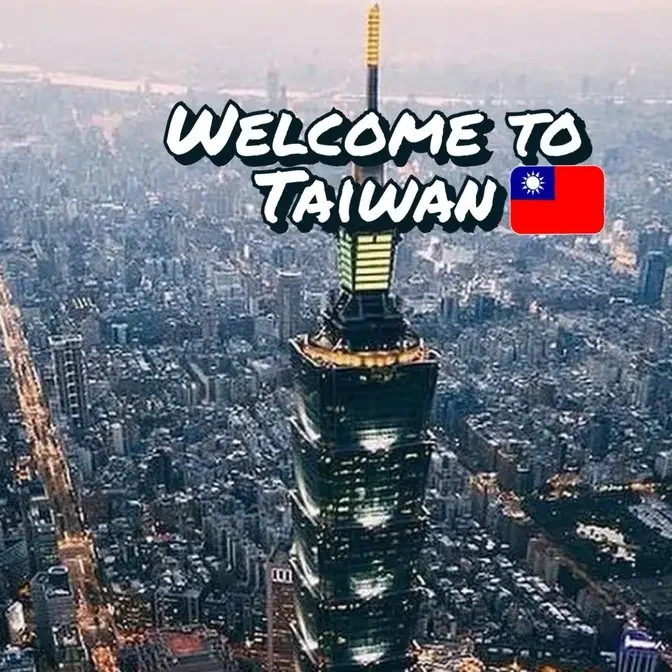
歡迎來台灣(Welcome to Taiwan )的IG :
https://www.instagram.com/welcome_taiwan?igshid=NGVhN2U2NjQ0Yg%3D%3D&utm_source=qr
瘋狂台樂事:
https://youtube.com/playlist?list=PLxF5w6mLYVpKUM_NLQwgAjEPooLhCpaf3&si=ECrDUSoaA02o0idb
Which is great, that's fantastic.
But the way they're doing it is just so strange
and it just seems so counterintuitive.
Don't be scared.
In Canada, there was a recession at that time,
and so I couldn't get a good job.
I was working in call centers, and it was terrible.
That was 21 years ago.
I thought I was gonna maybe stay one or two years.
Took me a while to feel comfortable here.
Like, I try to speak Chinese,
and then people, you know, they don't either,
they don't understand what I'm saying,
or they don't bother to try to understand what I'm saying,
or they reply to me in English.
So, I kind of gave up speaking Chinese.
And it's not as expensive as Japan.
Apparently, Taiwan's supposed to be the best place.
My neighbors that live above me
and my neighbors that live below me,
and they looked at me like I was crazy or something.
People always say that Taiwanese are friendly,
but I think Taiwanese are friendly
when they want something from you.
Hi.
My name is Brent Frattini.
I'm from Canada, and I teach English.
I used to run an open mic for comedy,
and that was getting a lot of people,
and then COVID shut that down, which was kind of sad.
How long have you been in Taiwan?
I've been here over 21 years now.
Why do you choose to come to Taiwan?
Well, I had friends here.
They were teaching English here already,
so they told me to come here and teach English.
At that time, in Canada, there was a recession at that time,
and so I couldn't get a good job.
I was working in call centers, and it was terrible.
I hated it, so I had friends here.
They told me to come here to try to teach English.
That was 21 years ago.
I thought I was gonna maybe stay one or two years.
But if they were in another country,
like, say, Japan or Korea, I probably would've went there.
It's just beneficial to go somewhere
where you know somebody that can show you around,
tell you how things work.
So that's why I came to Kaohsiung
as opposed to anywhere else.
I didn't know too much.
It was just kind of a spur-of-the-moment thing.
I had to learn everything when I got here.
I didn't intend to stay too long,
so that's why I didn't really bother
to do too much research.
Could you take us things that you've gone through
from the moment you arrived in Taiwan
to the point where you found your feet?
Like, when I first got here, I had an agent to get me work,
and that's, I don't think that's really a thing anymore.
The agent would get a part of my salary,
and they would find me jobs.
They would find me classes, schools to teach at and whatnot.
But, you know, it took me a while to feel comfortable here.
Like, after I'd been here a while, so I had friends here,
so they introduced me to other people and made friends
and got to know the city.
After that, you get to feel at home,
you get to feel more comfortable.
You've mentioned it took you some years
before you get comfortable here.
What are some of the things that you've struggled with?
Definitely the language.
Took Chinese lessons.
It helped me a little bit.
Like, I definitely understand a lot more than I can say.
Like, I try to speak Chinese,
and then people, you know, they don't understand
what I'm saying, or they don't bother
to try to understand what I'm saying,
or they reply to me in English.
So, I kind of gave up speaking Chinese.
I'll use it if I have to.
I can do things like ordering food,
saying what I want, what I don't want.
But, like, as far as having a meaningful conversation,
that's not, I can't really do that.
But, you know, hopefully I'll go back
to the classroom one day.
Well, the driving's actually really improved
since I got here.
When I first came, you know, 21 years ago,
like, I'd been driving, you know, everywhere all my life.
Before I got here, just had to take a few days
to kind of figure out how it works,
because the driving was just so crazy.
When I first got here, people would just blow
through red lights.
It would be scary to walk down the street.
It's definitely not the best thing.
Like, it's definitely better to walk in other countries,
but, like I said, it's definitely improved.
Not being so courteous on the road,
like, that's definitely not a thing
that we have in Canada.
So, it's a little unnerving.
Like, you can, in Canada, you can walk freely
on the sidewalk.
The lack of sidewalks here.
Like, the bigger streets, sure, they got a sidewalk,
but, like, you know, to walk to my house from here,
there's very minimal sidewalks.
So, it's a little unnerving.
Another thing, too, is the threat of China.
China attacking Taiwan.
That's, you know, not a good thing.
It's a little scary.
Like, I hope they don't attack.
Like, one good thing is, you know,
I could always run away, run to Canada
with my wife and my dog, but it's just,
it's a little scary, because, like,
there's probably so many people that have nowhere to go.
Yeah, hopefully, we'll get there, hopefully.
Everybody complains, well, not everybody,
but some people complain about the food.
There's definitely good food here.
There's definitely bad food, too.
Like, it's just like any other country.
It's not the same as, you know, European style,
North American style.
But you gotta look for what you like,
and, you know, kinda stick with that.
How is it like living in Taiwan 21 years ago
as a foreigner, compared to now?
The city's much more cleaner.
Like, the former mayor, she did a lot.
Like, it's kind of impressive to see what she did.
Like, she put in the MRT.
She made Central Park Harborfront.
Like, that's really changed.
So, it's definitely a lot prettier, a lot cleaner.
Like, there's a lot more garbage on the streets
and things like that.
And like I said, the driving,
like, it's not the best still today,
but it's definitely improved from 21 years ago.
What advice would you give to anyone
who wishes to come to Taiwan?
I'd say do it.
I used to tell people, like, if you graduate university,
because you need a university degree.
So, you graduate university, you don't know what to do,
which is very common.
Come to Taiwan, come teach English in Asia.
Good way to see the world.
Taiwan is a very good hub for travel.
Like, you can go to China, you can go to Japan,
you can go to Philippines.
There's lots of countries you can go around Taiwan.
And it's not as expensive as Japan.
Apparently, Taiwan's supposed to be the best place
for teaching English.
So, like, that's what my friends have said,
people who have taught in Korea or in Japan.
Southeast Asia is very cheap, it's very beautiful.
Like, the food is good, too.
Like, good experience.
And you could always go back, you could always leave,
or you might, you know, fall in love with it
and stay forever, like me.
Me too.
If you had to introduce any Canadian culture to Taiwanese,
what Canadian culture would you like to introduce?
I'd say Canadians are much more friendly.
I remember one time when I moved into my new apartment,
I made a big pot of soup.
And so, like, in Canada, like, you know,
I would give my neighbors a container full of soup.
And I did that here in Taiwan.
My neighbors that live above me
and the neighbors that live below me,
and they looked at me like I was crazy or something.
So, like, there's not, so,
like, people always say that Taiwanese are friendly,
but, I don't know, Canadians are more friendly.
So I would say that.
But I think Taiwanese are friendly
when they want something from you,
whereas Canadians are always friendly.
But, you know, not to say that Taiwanese are bad people,
but it's just, you know,
what I've noticed living here and living in Canada.
How is it like being with someone of different culture?
We've been together a long time,
so you have to accept, like, the differences.
It's part of traveling, it's part of meeting new people.
Like, there's definitely gonna be differences.
What's good about my wife is that we get along very well.
She might have something different that she does,
and then I'll try to figure out why.
Why is she doing it this way?
Why is this happening?
You know, you learn from that,
and then, you know, you gotta maybe let some things go.
Just let it slide.
Maybe try to talk about it later, something like that.
If you had to change anything
in the teaching English culture here
or the learning English culture here,
what would you change?
Oh, so much.
The government is planning to be fully bilingual by 2030.
So, which is great, that's fantastic.
But the way they're doing it is just so strange,
and it just seems so counterintuitive.
Like, I used to work at a high school
where I was doing a home-ec class,
so like cooking and things like that, which is great.
Like, I really like to cook.
I can teach the kids to cook.
However, like, I'd say, like, maybe 80% of them
had no idea, like, how to speak English or anything.
So, when one of the directors came to see my class,
and they said, like, when I was teaching,
it was more like I was, she said I was lecturing them.
And I was like, yes, you're 100% correct,
because they don't understand what I'm saying.
Like, what I suggested was, like,
let me have the 20% of students that do speak English,
and we can talk, and we can have a conversation.
They could learn English, like, through cooking and whatnot.
And, you know, they said,
well, that's probably not gonna happen.
So, like, it's just the way they're doing this
about trying to incorporate English
into the school system is not a good way.
Like, they should definitely be teaching from a young age,
which I think they do, and then you wanna, you know,
get them talking, get them asking questions.
They don't do that.
There's a big emphasis on grammar, which is fine.
I understand that.
But, like, they should have a separate conversation class
with foreigners where we actually talk,
where they can use their English.
Because, like, there's so many of my students,
I teach mostly adults now, and they're scared.
They're scared to speak.
They're scared to ask questions,
which is not a good way to learn English.
You have to talk.
You have to ask questions.
You have to, oh, another thing, too,
is they always get ridiculed
if they're making a mistake in class, you know?
Like, whether it's a grammar mistake or whatever.
I noticed that, too, when I was studying Chinese
and I would make a mistake.
The Taiwanese students would laugh at me.
And, you know, like, say, like,
if I made a grammar mistake
or maybe even pronunciation mistake.
So, that's not good.
You don't wanna, like, laugh at the other students,
put them down.
You wanna encourage them, right?
Like, that's, the classroom is the place
where you wanna make mistakes, where you learn.
So, you know, the way they do that,
like, the pointing and laughing,
and the no English, no questions, no talking,
like, that's not good.
For my classes, I definitely encourage all my students,
you wanna talk, you wanna ask questions,
you wanna not worry about making a mistake.
Like, you wanna feel comfortable in the classroom
so that you can learn, and then you go out
and you speak to somebody, you know,
from any country, US, Canada, UK,
even, like, countries like Japan, Korea.
Like, English is the number one language in the world.
Like, it's the business language.
So, that's why, like, a lot of my students,
they are, they work in the tech industry.
So, they have to speak to Japanese, Korean people,
but, like, they're speaking English,
they're not speaking Japanese, they're not speaking Korean.
So, they have to practice, like, you know,
you gotta practice with me,
you gotta practice with other people
so that you build your confidence, you're not scared,
and then even if you do make a mistake, it's not a problem.
Well, I work through a school, the school is in Taipei,
but most of my classes are online, so,
which is great.
Like, I think that's another good thing, too,
about what happened with the pandemic is,
like, a lot of schools, well, not a lot of schools,
but a lot of people started learning online,
but it's not good for children.
I would say that.
Like, children need to have the face-to-face interaction.
It's not good to have them, like, looking at a screen
and, like, they're able to play with the computer
while they're teaching or while they're learning.
But if you already know English, right,
like, let's say you are an engineer or a-
Or a business person or an NGO.
It's an excellent way to learn,
to practice your English, right?
Because you could be at home, you have an hour,
like, get online, start practicing, start talking,
asking questions, so that's a great way to learn,
to improve your English, to practice.
The school in Taipei, they find me classes,
they find students through, like I said,
like, tech companies, and then we just do it online,
which is great for me, I get to be at home,
I could be with my dog, I get more done.
So I really like the online teaching.
You're able to accept private online students
or you, everyone has to go through that school?
Yeah, oh yeah, for sure, like, online students,
private or through the school, both are fine.
All his links will be in the description below,
go check him out.
Do you have anything else to tell Taiwanese people?
Don't be scared, okay, like, that's the one thing
you wanna remember when you're speaking English.
You go to school, you learn your grammar, okay,
maybe you don't learn to talk, but, like,
you know how to talk, you know what to say,
and if you make a mistake, it's not a problem, okay,
you learn from that mistake and then you go on, okay.
If people are laughing at you, that's not good,
but, you know, don't be scared to speak English,
that's the one thing you should remember.
All right, thank you very much for giving us
your, this precious time, and hope you continue
to enjoy your stay here in Taiwan.
Thank you.
Nice to meet you.
All right.
Ganxie ni shoukang.
Rugo you si huan, please leave a comment.
Bu si huan, yes, leave a comment.
Thank you for watching and see you in my next video.