
10 to 40 YEAR OLD WINE - Tasting Time in Wine
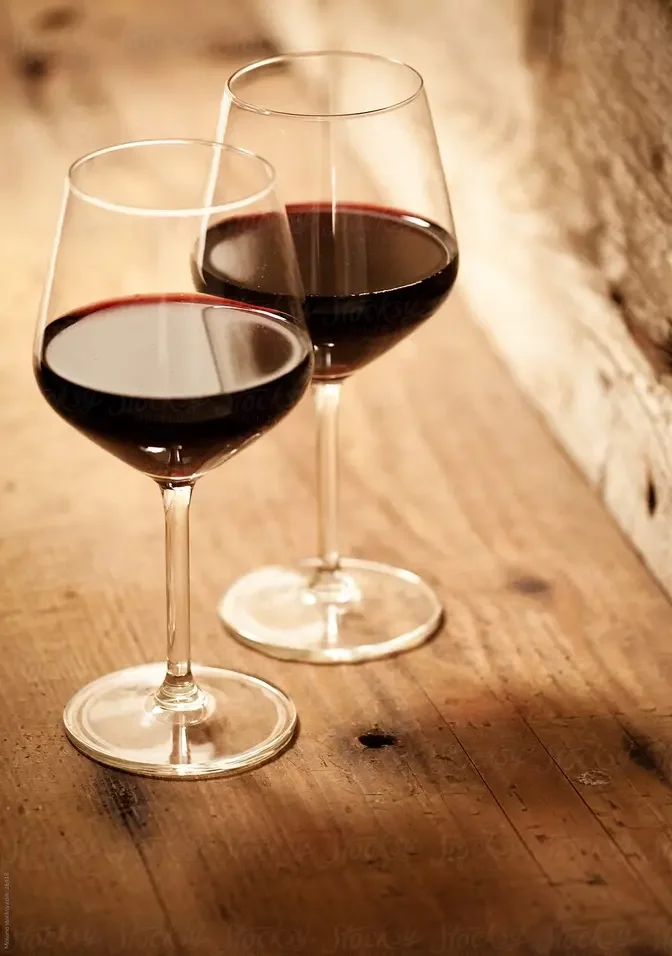
Aging and wine go hand in hand.
That's at least the common perception.
However, a vast majority of wine is not made for aging
and is consumed within a few years after bottling.
Furthermore, I would estimate that more than half
of the small share of wines that are actually meant
to be aged are consumed way too young as well
as people aren't patient enough to wait
for their wines to be ready.
Today, we're going to dive deep into the topic
of aging wines by looking at four wines
that were made in the same way by the same people
but are roughly 10, 20, 30, and 40 years old.
So let's dive in.
There are three main factors when it comes
to the ageability of a wine.
The way it was made starting in the vineyard,
finishing at the winery, the way it was packaged,
and the way it was stored.
A wine that is quickly fermented in stainless steel
at cool temperatures tends to be fruity and lively
and doesn't usually bring the characteristics
to the table that would allow for it
to be aged for decades.
Wines that are matured for a long time in barrel
tend to be more capable of aging
if they are filled into a glass bottle.
But if you fill the same wine into a can or pouch,
they won't last as long as these vessels
will start deteriorating after one or two years.
What you do at home with the wine
will also impact its ageability.
If you take, for example, a class-growth Bordeaux
and put it into a cool and dark cellar,
it will mature gracefully for decades.
But if you take the same wine in the same bottle
and put it on a windowsill in your attic over summer,
it probably won't last as long.
These four wines hopefully will help us understand
aging and maturity of wines a bit better.
They were all made by the same producer,
Kopke, the oldest porthouse in the world.
The winemaking techniques,
at least from what I've been told,
are very much the same for all four tourneys.
The grapes are hand-harvested.
They are fermented in lagares, large vats,
where quite a lot of flavor is extracted from the skins.
Once the desired sugar level is reached,
they add spirit in order to stop the fermentation.
The sweet wine is then aged in large oak vessels
that tend to not give off a lot of flavor.
And they are then blended to match the right style
that they want to put into bottle.
So it's important to note that a 20-year-old tourney
is not made just from wine that is exactly 20 years old.
They say that it's the average.
So on average, the wine is 20 years old
when it says 20 years or 40 years.
But yeah, they basically blend in order to create a style
that represents this age category.
Does it make sense?
I hope so.
So let's see how these wines change in color,
aroma, and taste when they are aged 10, 20, 30, or 40 years.
I'm going to explore this in very much detail.
So first of all, I'm going to do a blind tasting
where I taste these four wines out of dark glasses,
black glasses, so that I can see the color
and try to identify which one is which
just by smell and taste.
And then I'm going to go through these wines in more detail
so that you can actually see them as well.
And hopefully this is going to be fun.
I'm pretty sure it will be.
Let's go.
I realized that this is all a little bit too much black,
but yeah, those are the glasses, they are black.
So I can see through them.
There's no way of me telling what color the wine might be.
I'm going to put stickers at the bottom.
So this is the 10 year old port and so on and so forth.
And then I'm going to use my patent pending randomizer
to mix them up.
Let's see whether I can rely on my nose.
So all four bottles are sealed under these little plugs,
those little stoppers.
And I was wondering how well does the wine
actually age under one of those things?
Does it last as long as if you put a cork in?
I'm guessing not.
If someone knows or knows who might know,
let me know down in the comments.
That was disappointing.
All right, let's spin it.
Let's taste.
The color is probably the most obvious thing
that is going to change over time.
It will get browner and browner.
And it might also get more concentrated
as more and more of the water evaporates
through those barrels.
The flavor is also going to change.
It's also going to concentrate, get richer and richer,
less fruity, more nutty and spicy.
And on the palate, there should also be more concentration,
more sweetness, more depth and richness,
and overall more smoothness as the wine gets older.
So let's see whether I can pick out which one is which.
This is not super easy.
I gotta be honest, I would have thought that it is easier
and that they are closer together,
but they are not worlds apart, to be honest.
There is a difference in style.
Some seem to be a little bit more fruity,
which for me points more towards younger styles,
whereas others are more on those nutty,
really matured notes, nuts, spices are coming through,
which points more towards older tawnies.
There's also quite a bit more sugar in some than in others.
So yeah, I think I get them on order now,
but I'm not really sure whether I was right.
So let's see.
This wine, for me, appeared to be the youngest,
while this was, in my opinion, the oldest.
The difference being,
and this shows a lot of concentration,
while this is a little bit lighter.
Maybe also quality-wise a little less exciting
and more on fruits, while this is more on the nuttiness.
And well, without much further ado,
let's just reveal which is which.
So this, I thought, was the 10-year,
and it is, in fact, the 10-year-old.
A little less, well, concentrated,
more raisiny character, a little bit thick flavor,
some fruits, but also some nuts.
Good stuff.
I thought this was the 20-year-old.
I thought it was more concentrated than this one,
but not quite as concentrated as that one.
But like I said, it was tricky.
So this one was the 30-year-old.
Okay, well, I mixed it up.
Well, this is 30 years.
And this one, I thought, was the 30-year-old,
which can be the 30-year-old, but it was the 20-year-old.
So, okay, that's not too bad.
I mixed the 20 and the 30-year-old up.
I thought they were actually fairly similar, to be honest,
but anyways, and this must be the 40-year-old.
So yeah, I thought this was definitely the richest
and most concentrated.
There is now also a 50-year-old tawny.
This category was introduced fairly recently
and should be even more concentrated than that,
but the 40-year-old is actually already quite delicious.
Retasting them and obviously knowing what they are,
I now gotta say the 30-year-old
has a bit more concentration and richness, but too late.
So now let's look at the wines with clear eyes
or through clear glasses.
Whoa, there they are.
Looks like I picked the wrong colored shirt for this,
but it's pretty obvious that the wine gets lighter in color
as it ages.
The 10-year-old is still quite dark and a little bit red,
while the 40-year-old is pretty light in color
and pretty brown.
This is very typical for red wine.
Red wine tends to get lighter and browner in color
as it ages, while white wine tends to get darker
and also more brown in color as it ages.
Smelling of them, the 10-year-old is also more dominated
by the fruit flavors, while the 40-year-old
is quite a bit more spicy, nutty, and herbaceous.
But I also gotta say that the 10-year-old
just doesn't appear to be the same quality,
which is pretty obvious.
The 40-year-old is a much more highly-priced wine,
and it's much rarer, and there's not as much being produced
as the demand is not as high for this style of wine.
So I'm guessing that the quality
of the 10-year-old base wines is also not at the same level
as the quality of the wine that is used in here.
I still find it difficult to really differentiate
between the different qualities or ages
by smelling at them.
They are fairly close together.
It's not like there's a huge gap, a big, big difference.
I would say for normal table wines,
the aging happens much more quickly.
Port wines tend to stay at a similar level for much longer.
They are also able to age much, much longer
than normal table wines in general.
On the palate, there is also quite a difference.
The 10-year-old is less sweet than the 40-year-old.
That's also analytically correct.
This has 114 grams of residual sugar per liter,
while this has 147 grams per liter.
So quite a bit more sugar,
quite a lot more concentration, depth, and intensity,
which you feel on the palate.
So there's quite a big difference
in terms of sweetness level here.
The concentration and richness
definitely adds quality to the wine as well.
But overall, texture-wise,
they're actually fairly close together.
This is probably because the wines are made
in a pretty similar fashion.
Apart from the base wines,
the main difference in terms of quality
comes also through the evaporation in the barrel.
Over time, the barrel loses water through its pores,
and the remaining wine in the barrel gets concentrated,
richer, more expressive, and more exciting.
This was an interesting experiment, at least for me.
These wines weren't as far apart
as I would have thought they would be,
but it was clear that the older the wines get,
the more concentrated they get.
There was a gap between this wine and that wine.
So thank you for watching.
I hope you enjoyed this video.
If you did, then please like it down here,
subscribe to my channel if you haven't done so already.
My question of the day is,
what do you think about aging wine?
Do you prefer the old stuff or the younger wines?
Let me know down below in the comments.
I hope I see you guys again very soon.
Until then, stay thirsty.