
John Singer Sargent, Painting his Artist Friends
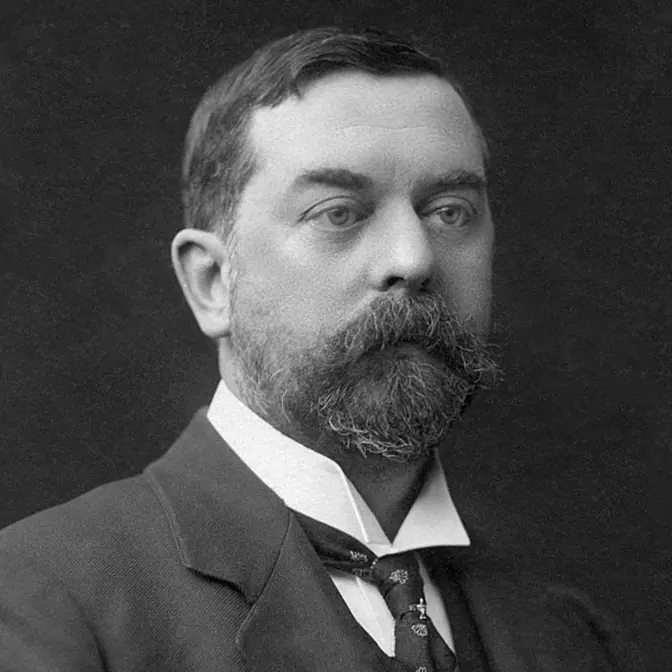
John Singer Sargent throughout his career found himself in the company of family and friends,
often managing to use them as models, sometimes as gifts, and other times just a way to keep fresh
and enjoy their company while staying busy. His energy was boundless and his relationships were
always cordial and agreeable. In this presentation we wish to take a closer look into the artist
as he paints his colleagues, close friends, who often accompany him on his travels.
We call this episode Artist to Artist, where we look to shed a little more light on the portraits
and figure works his friends played a role in. As shown at our beginning there is the wonderful
plane airwork of Paul Helot painting with his wife near the water's edge. It is a very famous
work today and what is interesting is that Helot often travelled with Sargent as they remained
friends for many years from their early school days. There is the story that at an early point
in their youths the successful rising star paid a visit to Helot's small studio up several stairs.
The painter was feeling somewhat dejected at his work. Sargent noticing his predicament spotted
a recent work and asked if he might sell him the picture. Helot agreed and Sargent gave him
a generous 1,000 francs. That was the start of their friendship and a boost to his career he
never forgot. Sargent was generous throughout his life. His friendships began early with such
artists as Carol Beckwith, a fellow painter at Carolus Duran's atelier. Beckwith often sketched
the very lean Sargent and Sargent in kind, drew a sketch of Beckwith. In the pictures shown we see
the two artists practicing their drawing skills while waiting for the model or simply to seize a
moment of interest. It was expected at Duran's atelier that the student was already proficient
at drawing to be accepted. This necessitated both Sargent and Beckwith to enroll in extra
drawing classes at Yvan's atelier and also with Léon Bonnard which usually ended up late evenings.
Sargent was a frequent traveler, often exploring the museums and doing some copy work.
On one such occasion he went to Holland with a couple of colleagues and his friend Ralph Curtis
became the subject in a beach picture where he relaxes on the sand dunes. The brushwork and
flowing brevity are already showing the hallmarks of Sargent's great technical skill. Sargent's
routine from the start in Paris is interesting. He was very friendly with the well-known artists
of the day and known to us today, including the Impressionists and in particular Monet,
his senior by several years, which we will discuss later. From the first he was a worker
of astonishing capacity. He would breakfast every morning with his sister Emily at seven
so as to arrive at the studio before eight and on Mondays in order to secure a good place for the
week he would start earlier. At five o'clock in the evening he would leave the studio and go to
the Ecole des Beaux-Arts where he remained till seven. Dinner over he would go to the studio of
Bonnard and attend a class that lasted from eight to ten at night. On Sundays he worked at home,
dining with his family and bringing fellow students into the radius of that encouraging
milieu. Among these were Carol Beckwith, Frank Fowler, Edelfelt the Finnish painter,
and fellow American J. Alden Weir. With all this he found time for music and for reading.
Paul Hello, then a fellow student, remembers him as always dressed with distinctive care
in a world that still affected the baggy corduroy trousers tight at the ankle, the slouch hats or
tam o'shanters, and the coloured sashes associated with the Latin quarter. Sargent was a striking
figure as he walked down the Rue Bonaparte to the Ecole des Beaux-Arts and was already a little
noted and recognised as one of the very few whose future could be looked on as definitely certain.
In the winter of the year of 1884 Sargent was back again in Paris after a brief visit to London.
There he was at home among the painters Degas, Renoir, Sisley and Pissarro. Among those he saw
most often, however, was Claude Monet the artist of all others with whom he was on the friendliest
of terms. The common meeting ground was at the gallery of Monsieur Durand-Ruel.
About the same time he befriended Rodin the sculptor and did this brilliant portrait of him,
it was quite obvious at this time Sargent had acquired full command of his technique, so much
so that he was able to paint his mentor Carolus Durand that became a sensation at the Salon.
At this point it is interesting to describe in Sargent's own words his approach to painting.
I had been taught to paint a head in three separate stages, each one repeating first start
in charcoal followed by a thin colour wash and lastly in paint. However Sargent had over the
years streamlined this method whereby the head developed by one process. In assisting other
artists Sargent was generous and described his work as follows. If you work on a head for a week
without indicating the features you will have learned something about the modelling of the head.
It was a sure and confident hand that ensured success. Sargent kept a steady diet of drawing
as one can see. Friends and family assisted him in his need to work and at any given moment of
inspiration he could be more of himself to explore interesting patterns of light while
posing them at rest or in some other situation or grouping them together during an afternoon break.
His friends must have enjoyed the outcome of Sargent's portrayals of each one.
The likenesses and use of everyday situations were spontaneous and afforded entertainment
after seeing the results. William Merritt Chase was a leading art teacher at the Art Students
League in New York and an admirer of Sargent's work. This masterpiece by Sargent was commissioned
by a group of his students to honour Chase intending to give it to the Metropolitan Museum
in his honour. Painted in Sargent's London studio it shows Chase in what he called his old blue
studio coat which Sargent insisted he wear instead of the frock coat he preferred. Chase holds his
palette, poised brush and assured stance, the mark of a painter and a gentleman. The students
raised the money to pay Sargent by exhibiting the painting in New York, Philadelphia and Chicago,
a common practice of the day. And we have the brilliant sketch in oils of Charles Stuart Forbes,
another artist friend. Now we come to some of his friends depicted on plain air. One of the
interesting few pictures of Dennis Miller Bunker with Sargent's sister Violet at a pond in Calcot.
Sargent met American artist Bunker in Boston during Sargent's first working trip to America in 1887.
Sargent invited Bunker to spend time with him in England and the following summer Bunker visited
Sargent in Calcot where this picture was painted. Sargent poses Bunker standing by a riverside.
The rich values and casual posture are remarkable as well as spontaneously rendered.
Sargent's mother was also an amateur watercolorist as was Emily his sister. The watercolors shown
here by Sargent demonstrate a side of Sargent that shows just how well he controls the medium
and remains faithful in drawing with the splash of light wonderfully realized.
His modeling of their features and expressions are fully characterized with each sitter.
In other works of artist friends out of doors there is the ever-strong light and shadow
juxtaposed with rich color notes and in each an entirely new way of composing the figures.
One of the finest ways to accomplish this is to paint an artist painting. It is a natural thing
to see and convincing in real life incidences of every day not relying on history or some
manufactured romantic notions of imagined events. Sargent gets right to the point as
with Wilfred and Jane de Glen as they sit by a fountain and enjoy the day. A brilliant work
of art that faithfully captures the light with the bravura of Sargent's brush. Returning for
the moment to a story on Monet we find the same dedication and fervent passion as told by Sargent.
The fidelity that Monet would multiply his representations of the same object
as when he painted 50 canvases of one haystack and repeated his many studies of the Rouen Cathedral.
Sargent used to say that when he visited Monet at the Savoy Hotel he found him surrounded by
some 90 canvases each one the record of a momentary effect of light over the Thames.
When the effect was repeated and an opportunity occurred for finishing the picture
the effect had generally passed away before the particular canvas could be found.
Not deterred Monet persisted in his quest to get it right as faithfully as possible but more
importantly to represent a painterly solution to the visual effects he demanded as can be seen in
many of the unfinished works. The thought that went into the final work as seen here his ruthless
approach to get a thing right straight away to avoid a false start as the expression goes was
not just hyperbole. He goes on to share commence fusing tone into tone each time till finally with
a deliberate touch the highlights are laid in. This occupies the first session and should the
painting not be satisfactory the whole canvas is ruthlessly brushed together. The object is not to
allow any parts to get out of sync to interfere with the principle of oneness or unity. The brushing
together rendered an opportunity to attack the problem afresh so at every session each attempt
resulting in a complete visualization in the mind's eye Sargent would press home the fact
that the subtleties of paint must be controlled by continually viewing the work from a distance
stand back get well back and you will realize the great danger there is of overstating a tone.
Keep the thing as a whole in your mind keep tone so subtle as not to be detected on close inspection
can only be adjusted by this means Sargent was well aware of the pitfalls that await the painter
of a trendy world he tried again and again to escape and he often in his letters expressed his
fatigue he wearied of the limitations imposed by his commissioned art painting those who want to
be painted instead of those whom the artist wants to paint leads inevitably to a bargain
to a compromise between the artist's individuality and the prerogatives of the client
so his excursions into plain air painting were to be his liberator but Sargent gave it all
his integrity as a painter and the honorable lofty position a master must reach never wavered
he was the consummate painter so with that we hope you enjoyed this look at Sargent as he painted his
colleagues who much admired his genius as do we thank you to our subscribers and do leave a like
to help the channel until next time it's bye for now