
Top 5 Must-Visit Tourist Sites in Egypt 2024!
Welcome back everyone! This is the land of the pharaohs, pyramids and ancient wonders.
Get ready to explore the top 5 must-visit tourist sites in Egypt for 2024.
From the colossal pyramids to the ancient temples, this journey will leave you in awe.
Seriously, get ready to spam your followers with some serious travel envy. Let's dive in!
Alright, we're kicking things off with the classics, the pyramids of Giza.
These ancient wonders have stood the test of time, towering over the desert sands for millennia.
I mean, you can't go to Egypt and not see these bad boys. They're like the ultimate
bucket list item for any traveler. Picture this, you're standing there, the sun is blazing,
wear sunscreen, and these massive, perfectly angled structures are just looming over you.
It's surreal. It's like, how did they even build these things? Aliens? Time travelers? Honestly,
who knows? But it's mind-blowing. The sheer scale and precision are beyond comprehension.
We're talking 4,500 years old, people. That's older than, like, everything. Imagine the history
these stones have witnessed. The Great Pyramid, the biggest one, was built for Pharaoh Khufu.
It's the last of the seven wonders of the ancient world still standing. Can you imagine being that
guy? Yo, build me a giant pyramid so I can chill in it for eternity. Savage, but also,
what a legacy to leave behind. But seriously, the engineering, the precision, it's insane.
Each block weighs tons, and they fit together so perfectly without any modern machinery.
You can even go inside some of them. Claustrophobia warning, though. Those passageways
are tight. It's like stepping into a time capsule. Make sure you get the classic tourist photo,
you know, pretending to hold the pyramid in your hand. It's a must-do for the gram. Trust me,
it's funnier than it sounds. Plus, it's a great way to capture the scale of these colossal
structures. And don't forget about the Sphinx that's coming up next. This enigmatic statue
has its own set of mysteries and legends. But seriously, the Pyramids of Giza, it's like
stepping back in time in the most epic way possible. The sense of awe and wonder you feel
standing there is indescribable. And if you get a chance, stay for the night show. The pyramids
illuminated against the night sky with a backdrop of stars is a sight you'll never forget.
The hieroglyphics and artifacts found here tell stories of a civilization that was incredibly
advanced for its time. It's like a giant open-air museum. Oh, and don't miss out on a camel ride
around the pyramids. It's a unique way to experience the landscape and adds to the adventure.
So whether you're a history buff, an adventure seeker, or just someone looking to tick off a
major bucket list item, the Pyramids of Giza have something for everyone. It's a journey
through time and a testament to human ingenuity. Okay, so we just saw the Pyramids. Now get ready
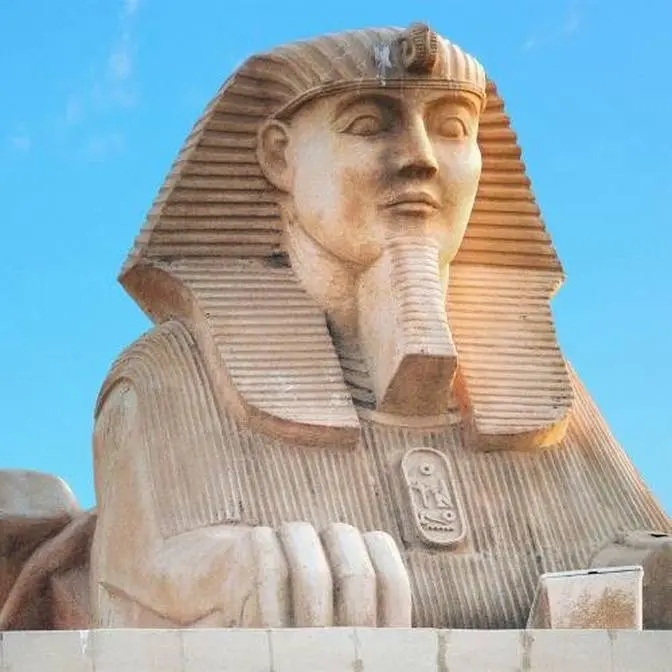
for their slightly less famous but equally awesome neighbor, the Sphinx. This ancient marvel stands
proudly in the Giza Plateau, a testament to the ingenuity and artistry of ancient Egyptian
civilization. This thing is massive, guys. It's about 240 feet long and 66 feet high.
Just imagine the sheer amount of effort and skill it took to carve this colossal statue out of a
single piece of limestone. We're talking a giant lion body with a human head just chilling in the
desert. The lion's body symbolizes strength and power, while the human head represents wisdom and
intelligence. It's a perfect blend of might and mind. Legend has it the Sphinx is a guardian,
protecting the pharaohs in the afterlife. Metal, right? This guardian role is deeply rooted in
Egyptian mythology, where the Sphinx was seen as a protector of sacred spaces and a ward against
evil spirits. And the face, it's said to be modeled after Pharaoh Khafre. Khafre was the builder of
the second pyramid at Giza, and he wanted his legacy to be immortalized in stone. He must have
been one good-looking dude. The Sphinx's face, though weathered by time, still carries an air of
regal authority and enigmatic beauty. But seriously, the detail, the craftsmanship, it's incredible.
The ancient artisans paid meticulous attention to every feature, from the contours of the face to
the intricate headdress. And the fact that it survived all this time, wind, sand, tourists,
everything, that's pretty impressive. Over the millennia, the Sphinx has faced natural erosion,
human vandalism, and even attempts at restoration, yet it still stands as a symbol of resilience.
They even had to do some restoration work on the nose, because apparently some people just
can't resist messing with ancient monuments. Not cool, guys. The missing nose has sparked
numerous theories, from Napoleon's troops using it for target practice, to it being deliberately
removed for religious reasons. You can get some amazing photos with the Sphinx, especially at
sunset. The golden hues of the setting sun create a magical backdrop, making it a perfect moment to
capture. Golden hour, am I right? The light at this time of day highlights the Sphinx's features,
casting a warm glow that enhances its majestic presence. Just imagine the sun setting behind
the Sphinx, casting long shadows across the desert. It's a sight that connects you to the
ancient past, a moment where time seems to stand still. It's like a scene straight out of a movie.
The dramatic lighting at dusk adds an air of mystery and grandeur, making the Sphinx look
even more otherworldly. And speaking of movies, haven't we seen the Sphinx in like every mummy
movie ever? Classic. Hollywood loves to feature this iconic monument, often using it as a symbol
of ancient mysteries and timeless adventures. All right, time to head indoors for a bit, because
we're going to the Egyptian Museum in Cairo. This place is basically a treasure chest of ancient
Egyptian artifacts. We're talking mummies, statues, jewelry, you name it, they've got it. It's like
walking through a history book, but way more interesting. The star of the show here is
definitely King Tut's tomb. This guy was buried with so much gold, it's ridiculous. And his death
mask, pure gold, seriously blinged out. It's no wonder they call him King Tut. But it's not just
about the gold, though. The craftsmanship of the jewelry, the intricate details on the sarcophagi,
it's all so beautifully done. You can tell these people were serious about their afterlife.
And the mummies, I mean, it's a little creepy, but also super fascinating. Seeing these preserved
bodies from thousands of years ago, it's like a glimpse into another world. They even have animal
mummies. Cats, dogs, crocodiles, you name it, they mummified it. Hey, whatever floats your boat in
the afterlife, right? All right, guys, get ready for Luxor, because this place is packed with
ancient wonders. Luxor is often referred to as the world's greatest open-air museum, and for good
reason. This city is a treasure trove of history, with every corner telling a story of its glorious
past. From the moment you set foot here, you can feel the weight of history in the air.
We're talking temples, tombs, and all sorts of historical goodness. First up, Karnak Temple.
This isn't just any temple, it's one of the largest religious buildings ever constructed.
Imagine walking through a place where ancient Egyptians once worshipped their gods,
a place that has stood the test of time for thousands of years. This place is massive,
quite seriously huge. Covering over 200 acres, the Karnak Temple complex is a labyrinth of
sanctuaries, pylons, and obelisks. It's so big that it could easily take you a whole day to
explore every nook and cranny. It's actually a complex of temples built and expanded upon by
different pharaohs over centuries. Each ruler added their own touch, making it a living record
of ancient Egyptian history. You can see the evolution of architectural styles and religious
practices as you wander through the complex. Talk about a long-term project. Some parts of the
That's nearly 2,000 years of continuous building and renovation. You'll see giant columns,
towering obelisks, and walkways. The Great Hypostyle Hall alone has four massive columns,
each one intricately carved with scenes of God. It's a testament to the skill and artistry of
ancient Egyptian craftsmen. It's like walking through a giant history book, but way more
impressive. Every step you take, every turn you make, reveals something new and awe-inspiring.
It's a place where history comes alive, and you can almost hear the whispers of the past.
And then there's the Valley of the Kings, where pharaohs, including our boy King Tut,
were laid to rest. This valley is home to over 60 tombs, each one a masterpiece of ancient art
and engineering. The tombs were designed to protect the pharaohs' bodies and treasures
for eternity. These tombs are carved right into the cliffs, and they're decorated with
incredible paintings and carvings. The walls are covered in scenes from the Book of the Dead,
depicting the pharaoh's journey to the afterlife. The colors are still vibrant,
even after thousands of years. It's like a glimpse into the afterlife, but hopefully,
we won't actually be joining them any time soon. The craftsmanship and detail in these tombs are
mind-blowing. It's hard to believe that they were created, and don't forget about Luxor Temple,
which is beautifully lit up at night. This temple was dedicated to the rejuvenation of kingship,
and it was a place where pharaohs were crowned. Walking through it at night with the temple
illuminated, you're strolling along the Nile River, the air is warm, and this ancient temple
is glowing in the darkness. The reflection of the temple in the water adds to the enchantment,
making it a sight you'll never forget. It's like something out of a dream. The combination of
history, architecture, and the serene night setting creates an atmosphere that's both
peaceful and awe-inspiring. Luxor is definitely a must-see when you're in Egypt. Whether you're
a history buff, an architecture enthusiast, or just someone looking for a unique travel experience,
Luxor has something for everyone. It's a place where the past and present coexist,
offering a glimpse into the grandeur of ancient Egypt.
Last but not least, we're heading to Abu Simbel, home to two incredible
rock-cut temples built by pharaoh Ramesses II. This guy knew how to make an entrance. The temples
are carved right into a cliff face, and they're guarded by these colossal statues of Ramesses
himself. Talk about an ego boost. But here's the really cool part. These temples were actually
moved in the 1960s to save them from rising waters caused by the Aswan High Dam. They literally cut
the temples into blocks, moved them, and then reassembled them like a giant jigsaw puzzle.
That's some serious dedication to preserving history. Inside the temples, you'll find more
incredible carvings and paintings depicting scenes from Ramesses' reign and battles. And
the whole place is designed so that twice a year on Ramesses' birthday and coronation day,
the sunlight shines directly into the inner sanctuary, illuminating the statues of the gods.
How cool is that? Abu Simbel is definitely a testament to the ingenuity and architectural
prowess of the ancient Egyptians. Thanks for joining us on this incredible journey through
Egypt's top tourist sites. From the awe-inspiring pyramids of Giza to the majestic Abu Simbel
temples, Egypt is a country that's sure to leave you speechless. Don't forget to like,
subscribe, and hit the bell icon for more amazing travel content. See you in the next video.