
Biblical Archaeology From the Ground Down: Xerxes I and the Book of Esther
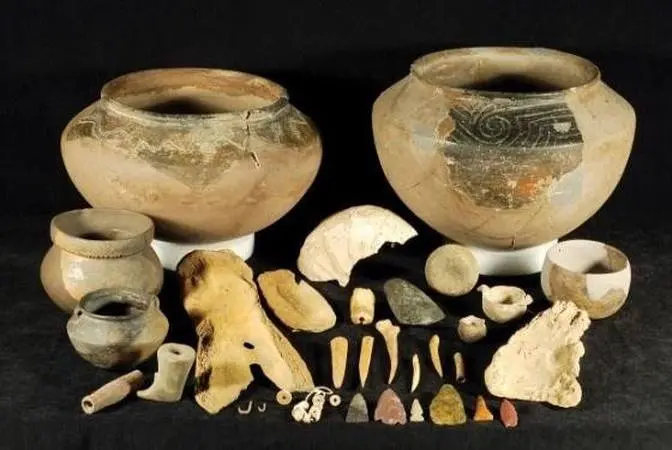
#Archaeology#archaeological artifacts
Welcome to our episode of Biblical Archaeology from the Ground Down, presented by Bible Interact
and hosted by Dr. George Sparks.
Join us as we explore the fascinating world of the Bible from leading experts in the field
of archaeology.
Hello everyone.
I'm Dr. David Graves, an experienced Biblical archaeologist and CEO of Electronic Christian
Media.
I'm here today with another exciting episode on our Archaeology Discoveries channel where
we discuss important archaeological artifacts related to the Bible.
Thanks for watching and be sure to like and subscribe to our channel.
Well, welcome to today's podcast.
This is Bible Archaeology from the Ground Down, sponsored by Bible Interact.
Today my special guest is Dr. David Graves.
We're continuing in the Persian period.
Last time it was Darius, and today it is Verxes I, in correspondence with the book
of Esther.
And Dr. Graves received his PhD from Aberdeen University in Scotland.
He has experience in over 35 years of archaeology in the Middle East, as well as teaching in
the field of archaeology.
I know that he's been teaching long hours in classrooms.
Lately it was Trinity Southwest University in Albuquerque, New Mexico, which is about
10 miles from where I'm podcasting at this very moment.
He has one of his PowerPoints ready to go.
And did I mention he also was my square supervisor in Tell el-Hammam in Jordan, along with other
excavators you're in the team with also.
It was Dr. Scott Stripling now, and lead excavator at Shiloh, and also Dean Barry Byers at Trinity
Southwest University.
Now Dean's not his first name.
That's his position at the university.
I'm going to give everybody a heads up, because on the 15th we're going to be recording a
podcast, and they're going to call it, what, the Three Amigos?
Because they all three excavated together, Dr. Graves, Dean Byers, and Dr. Stripling,
at a number of locations.
I believe you were all at Tell el-Hammam together.
Also is McCarter, the candidate for biblical eye, and of course at Shiloh.
And we just did a podcast about a month ago, when Dean Byers was, I guess he had the day
off, and we did a podcast from his hotel.
And then when he came back, he talked about some of the items, because they weren't published
yet.
So it was a general report on the excavation.
But on the 15th, they're going to get together, and they're going to talk about each one of
the sites that they excavated together, but also their individual experience.
Dr. Graves is going to be the lost city of Livius, and Dean Byers, the lost city of Sodom
and Gomorrah.
And there's nothing lost about Shiloh.
I think everybody agrees that Shiloh is Shiloh, like Jerusalem is Jerusalem, and Megiddo is
Megiddo.
But I believe Dr. Tripling is going to be discussing the location of the tabernacle,
I believe.
I think that's what it's going to be.
So this is going to be very, very interesting.
And they're doing it in, like I say, in honor of reaching our 100,000th subscriber to the
program.
And Dr. Graves put this together for us.
So in appreciation, I want to give everybody a heads up on that.
So if your PowerPoint is ready, Doctor, I believe all of us are in anticipation and
ready to go.
Okay, well, we'll get started here and dive into Xerxes and Esther.
We're going to talk about the book of Esther a little bit because it correlates with the
life and accomplishments of Xerxes.
The material that I'm going to talk about today is found in my book on the biblical
or the archaeology of biblical people, blue volume on that.
So here we have the jar of Xerxes.
We know that he is an actual historical individual mentioned in the book of Esther.
And there's a couple of jars.
These are alabaster jars that have some, I say, Akkadian cuneiform there, but it's actually
Egyptian hieroglyphics on there as well.
So we have Egyptian hieroglyphics and the Akkadian, and it was found in the mausoleum
at Halicarnassus, and that's actually modern day Bodrum in Turkey.
There's Bodrum right there, and this one's in the British Museum.
It was discovered in 1862.
Actually this spot in Bodrum, it has a beautiful medieval castle, and inside the castle they've
turned it into one of the only underwater archaeological museums.
I had a chance to visit it in my travels to Turkey one year and really highly recommend
it.
It's quite an amazing underwater.
They have a lot of reconstruction of ships and how the vessels are found inside the vessels.
So inside the ship, how they were stored, the amphoras, and a lot of stuff that is associated
with underwater archaeology, and the setting is quite breathtaking being in a medieval
castle.
So that's a little bit of an aside, but that's where these particular jars were discovered.
Of course, the Persian period deals with the country of Iran.
We're going to talk about Susa and Persepolis a little bit.
So here are four of them.
They're in different museums.
From right to left, one's in a museum in Paris, two in the British Museum, and then there's
one in the Met Museum in the U.S., another one in the Louvre, and then there's another
one in the museum in Vienna.
So here are actually, well, there's a drawing in the middle there, a B is a drawing of C,
but you can see the Egyptian hieroglyphics on the side of it.
You might ask, why is there Egyptian hieroglyphics on a vessel from a Persian king?
And that's because he was the king over Egypt at that time period as well, and so his name
is found on these alabaster jars.
As I mentioned, my book on the archaeology of the biblical people has all the footnotes
for the material there for anybody that wants to dig a little deeper, 101 different discoveries.
We're only going to talk about a couple, and also the material can be found in my other
book called The Cultural Background of the Old Testament.
This material's on the Book of Esther, and a bunch of other books I've written as well
in the Cultural Background series, some on the seven churches and then some on the New
Testament cities and discoveries.
Now to put things in perspective, Xerxes lived during the time of Esther, and this is the
period right here from about 486 to 465 BC, and he's also called Ahasuerus.
So sometimes you'll hear Ahasuerus, sometimes you'll hear Xerxes.
So not to be confused, goes by two different names.
He was assassinated by his brother in 465 BC, and then the Persian Empire fell in 331
BC, so way over here is when the Persian Empire fell.
But then last week we talked about Xerxes, well we talked about Cyrus, and then Xerxes
right here, the son of Darius I, and then we'll talk next week about Artaxerxes.
And Nehemiah and how it relates to Jerusalem.
So here is the genealogy, Cyrus I, Cyrus II, and then on the other side is Darius I and
his son Xerxes I.
And they reigned consecutively, not consecutively, but after each other.
As I mentioned, he was the pharaoh of Egypt in the 27th dynasty from 486 to 465 BC, the
same time being the king of the Persians.
So he had conquered a large empire.
He was also known for having attacked the Greeks, and then came back and did a lot of,
had a lot of buildings reconstructed and built in his name, succeeded by Artaxerxes I.
So I had already mentioned these jars, there's the different jars.
Building projects, the Apennina Palace in Persepolis, Iran.
Some of the reliefs here, carvings of the soldiers, what they would have looked like
in the Persian period that were on the outside of the buildings.
He's also famous for the Gate of All Nations.
This is the Gate of All Nations right here, the two Lamassu, Lamassu, the bull winged
bulls stand on either side of the entrance.
Some of the other carved pillars, here's the soldiers on the front of the ruins of
the Hara Palace in Persepolis.
He built that as well, there's a side view of it, quite an impressive area.
I've never been to Iran to see them, that was one of my plans, but I don't think it's
really a good place to go recently with the present wars and things that are happening.
But thankfully we have some good photographs to preserve it.
Here's some more of the soldiers, Persian soldiers with their quivers and spears, and
a picture here of King Xerxes I, a relief of him sitting in his chair, looking very
distinguished.
As I mentioned, this parallels the dating of the writing of Esther, and because the
author is unknown, it is difficult to say with certainty when the book was actually
written exactly.
Esther 10.2 states that the book was written after the death of Ahasuerus, or Xerxes, and
he was assassinated in 465, as I mentioned, BC, and the Persian Empire fell in 331 BC,
so the dating for writing Esther should fall sometime between the death of Xerxes I and
the fall of the Persian Empire, because that's when the story takes place.
Although the book of Esther doesn't appear in the Dead Sea Scrolls, we have every book
of the Old Testament appearing in the Dead Sea Scrolls, except for the book of Esther.
Now having said that, some argue that a small Dead Sea Scroll fragment, it's actually called
the 4Q Proto-Esther, the book of Esther is quoted in that particular fragment that links
it to Esther.
The other interesting fact about the book of Esther is that Josephus mentions that Esther
was written during the rule of Artaxerxes, so a little bit later, but although some Jewish
scholars continued to reject the book as late as the 3rd or the 4th century AD, it
was still included in the Old Testament.
An interesting fact about the book of Esther is that it doesn't mention the name of God
or Yahweh in the book at all.
That's why some suggest that it's why it wasn't received, and that's possibly why it wasn't
included among the Dead Sea Scrolls, because of missing the name of God.
So the book of Esther, it was accepted in the Old Testament canon by the end of the
Old Testament period of 400 BC, and it was also confirmed in the Council of Jamniad AD
90, so it has been accepted as part of the Old Testament canon, even though there's been
a few questions about its authorship and so on.
But we're going to talk a little bit about the feast that's mentioned in the book of
Esther, and so the scroll of the book of Esther, there's kind of an interesting story behind
it as well.
It's treated a bit different by the Jewish community.
So traditionally a scroll of Esther is given only one roller fixed to the left-hand side
of the scroll, rather than having two rollers, one on each side, as was used in the Torah
Scrolls.
Here you have a copy of Esther being rolled out.
You see the roller on the left side, but not on the right side.
This is from the 13th to 14th century.
So I thought that was kind of an interesting fact.
So again, it's treated a little bit different by Jewish people.
The cultural background, the events, as I mentioned, of the book of Esther occurred
during the reign of Xerxes in Persia, and Queen Vashti, her refusal to appear at a feast
led to her dismissal, prompting King Xerxes to hold a beauty contest that resulted in
the selection of a Jewish girl called Hadashah, later called Esther, as his queen.
So Esther was positioned by divine providence to protect her people.
So that's her claim to fame.
Esther originally was a captive from Jerusalem, was raised by her cousin Mordecai in Susa,
where he held a significant office in the king's court, according to Esther 1 and Esther 2.
When Mordecai refused to bow to the high-ranking official Haman, Haman plotted to annihilate
the Jews, casting lots to determine the date, and this act underscores Israel's commitment
to their faith and their identity.
So basically, Mordecai urged Esther to intercede with the king, reminding her that her royal
position might be divine placement for this very moment.
So here we have a rose to power under the providence of God for a significant purpose.
Folks might see some parallels in our current political situation, but I won't say more
on that.
But God sometimes raises individuals for such a time as this.
So Esther agreed, fasting for three days in preparation, she invited Haman and the king
to a banquet to reveal her Jewish identity and Haman's plot.
When the king discovered Mordecai's unrecognized act of loyalty, he sought to honor him, mistakenly
believing Haman was to be honored, and ultimately Esther revealed Haman's treachery, leading
to Haman's execution and Mordecai's promotion.
And although the original decree against the Jews stood, a new edict allowed them to defend
themselves, resulting in their victory over the Renneries on the 13th of Adder.
And this day is commemorated in the Jewish festival of Purim, celebrating their deliverance.
It's a theme that's echoed in the New Testament through the Lord's Supper, actually, as a
celebration of salvation through Christ.
So it's kind of interesting how we have a New Testament parallel, the idea of a feast
or the Lord's Supper commemorating deliverance, our deliverance from sin, and in Purim's case,
the deliverance from the Persians.
The book of Esther concludes with an acknowledgment of Xerxes and Mordecai's accomplishments in
chapter 10, and that's how we tie it into the Persian Empire and why it's so significant
to our understanding of this time period in history.
So that's a quick overview of Xerxes I and the book of Esther and its relevance.
So hopefully that'll give everybody a bit of a background, cultural background, as they
read the book of Esther and for what's going on there.
Now, George, I think you've got a few artifacts, maybe?
Yeah, because we talked about cuneiform, which means wedge form, and then you talked about
hieroglyph.
Hieroglyph actually means sacred carving.
I think the word hieroglyph is actually Greek.
Yes.
Many people think it's an Egyptian word, but it's Greek.
It's kind of like the word eushapti.
Eushapti is a Greek word referring to a statue.
I'm off the subject, but I think it's fascinating.
So let's take a look.
You talked about, first of all, this cuneiform.
Now this is a copy, of course.
Can people see that?
Let me see if I can...
Hopefully it's the right direction.
You're getting a reverse of what I'm holding up.
Yeah, that's a teacher's tablet.
Yes, exactly.
So let's say that some young boys were going to a scribal class, and the scribe was teaching
them how to write cuneiform.
And let's do a comparison to our culture, where if you're in, I guess it's the first
or second grade, maybe kindergarten, and you learn how to write, you get a piece of paper
and the lines are very broad, very wide.
They give them coordination and stay in the lines.
But as you get more and more, the individual, the children get more and more accurate, the
lines get smaller.
So you can put more letters on a page, but you can see right here how broad they are,
how wide they are.
So, and it's kind of crooked.
You know, if I hold this right, it's very wide and kind of crooked.
So maybe a scribe drew the lines and the student was to fill it in.
I don't think this would be a beginner's class because it is still neat.
You get earlier ones that are really lopsided.
I think on that one as well, the top line is the teacher writes the letters, and then
the bottom two is where the student is to copy it.
I can't do it on this one because it's a copy that I made, and it's only one-sided.
Because you have some teaching tablets that are just one-sided, such as this, but other
ones have the assignment written by the teacher on one side, and when you flip it over, that's
the student.
So, on one side, it's really neat, but on the other side, it's crooked and kind of sloppy.
That's the student.
Yeah.
All right.
But anyway, that's cuneiform, wedge-shaped.
And then you've got the sacred carving of the Egyptians, the hieroglyph.
Now, can you see this right here?
Yeah.
Is that blurry?
No, you can see it.
Okay.
Anyway, that's the hieroglyph.
So, when we are talking about, one more vessel, alabaster.
This doesn't have anything on it, and alabaster is kind of like a soft stone, so it's easy
to carve in, and its composition is kind of like semi-porous.
So if you put perfume in here, anointment, eventually it kind of soaks into the stone,
so if you leave it plugged up, you can still smell the faint odor.
So, if you left one of these vessels, let's say, don't unplug it, just leave it in there,
and as it absorbs into the semi-porous stone, we find these in tombs.
That's why it's perfect.
That's why it's a tomb alabaster from a tomb.
The scent would fill the tomb, at least for a while.
Of course, this is 2,000 years old, or more, all right?
But we could say, if somebody had alabaster in this vessel, very costly, as we read in
the scripture, and Judah said, why did you do this?
This is worth a lot of money.
And Jesus says, leave her alone.
She prepares me for my burial.
I think it's interesting that he says that, because Lazarus was raised from the dead.
That means this stone was rolled away, right?
Lazarus rolled away the stone, Lazarus come out.
What do you think they're going to do with everything that's precious inside that tomb?
You got to take it out.
It's going to be stolen.
I wonder where they got this to anoint Jesus.
I think it was from the tomb, just an assumption.
And then Jesus turns around and says, leave her alone.
He's preparing me for my, what was it used for?
Burial.
Isn't that interesting?
Off subject, but interesting, okay.
And there's a Greek Lucky Toast, because we're in the fifth century.
And you briefly mentioned that Xerxes invaded the Greek post, the battle of Thermopolis.
Thermopolis, Thermopolis.
And we, we seen this in the battle of the 300, right?
Yes.
So, so the, so you young guys that are all into the battle and everybody with the six
packs, you know, if you don't have a six pack, you don't go to battle.
That's just the way it is.
You got to be completely bad.
I don't want to say bad, but you know what I'm talking about?
So this is Greek.
Fun stuff.
Okay.
Something else.
In battle, you know, arrows and javelins cost a lot.
They're made of metal.
What's cheap?
What's a cheap weapon?
A rock.
And they would cut them with limestone.
You'd cut it to a certain size.
I shouldn't say you, but they, and this is actually, it's given a terminology.
You can say throwing stone, but this is a little bit big for a throwing stone.
They probably put this in some kind of a sling, a catapult and, and sling them maybe more
than one.
Maybe.
Yeah.
This is called a 45 caliber, upside the head.
But this is called ballista and it's where we get our word bullet from.
Ballista.
And you find a lot of these at the excavations that go back to the iron age one, iron age
two period.
So definitely would be included in the time period of, I excavated many of them.
We covered many of them at to tell him mom, when we were excavating the the iron age and
even in the middle bronze, you'd find a lot of these sling stones, but you know, they're
both the size.
They're both the size of a baseball.
Yeah.
That's what it is.
Yeah.
So, and, uh, you know, the perfect to, uh, uses a weapon cause you get hit in the side
of the head with one of those things, they, uh, definitely hurt.
Well, not only that, but you can see, well, this was probably been used because it's,
it's busted in, in corners.
So you think if it hits, it's going to send off fragments.
So it's kind of like a grenade.
The other thing is that they were also used as pounders because in the ancient near East,
you know, you have multipurpose items because of, uh, you know, what do you have laying
around?
If you want to pound some, some, uh, some grain in your mortar, well, I'm going to use
my, uh, my sling stone.
And then the next day, of course you get attacked.
What do you reach for?
You reach for your, your pounder.
And so that's why some of the edges on those sometimes are, are flaked off, but, uh, they're
multi.
Makes sense to me.
So we call them pounders.
Sometimes we call them sling stones and other times, um, sort of depends on, uh, the location
of where you find them.
So sometimes we find them around the kitchen area.
Other times you find them at the base of the, uh, city wall.
So those obviously were used in battle and, uh, we've had a lot of them and, you know,
in battle time periods.
Absolutely.
You can find stacks of them around, uh, dig sites.
Yeah.
Uh, they have some fairly large ones stacked up around, uh, Herodian if you go visit Herodian.
Okay.
Something else easy to identify throughout different archeological periods.
We'll just say time are the different styles of oil lamps because everybody's got to have
an oil lamp.
Now this one is actually Iron Age, not Persian period.
So those that are experts in oil lamps, I don't want to be called on it and say, give
me also that I get a comment saying, Hey, you don't know your oil lamps, but now the
Persian oil lamps are kind of small.
They are smaller, but this is Iron Age, but basically has the same style.
Some call it the croc bat.
Some call it the shell shape.
Now Iron Age usually has either what we call the full base.
I don't know if you can see the base.
This is a full base or smaller one, which is called a modified base.
And some actually make assumptions that full bases were made in, I said Judah and then
modified bases were made up in Israel.
So Northern or Southern, that's an assumption.
Okay.
But here you go.
So let's say an oil lamp from the Iron Age, but very, very similar to the Persian period.
And then we got your cuneiform, which was found on the alabaster vessel, along with
the hieroglyphs, which were Egyptian, because Xerxes already ruled as a pharaoh in Egypt.
Those were found on the alabaster vessel.
But he also laid, we could say laid siege to the coastline in the Battle of Thermopylae
of Greece.
And this is a Greek vessel from the fifth century.
So we've got a number of different things going on here.
So we got some archeology represented.
Hey, we're spoiling these people, David, that's what we're doing.
You know, they get to see actual items.
Now think about how many classrooms students just get books and you get to, well, hey,
wait a second.
Oh, okay.
Here we go.
See, this will show up good for me, not necessarily for you because you got that background going
on mine.
I don't have it.
So this, they could, one of your books right here, you said it's outdated.
I had to argue the point briefly before the, I said, David, everything's like 2000 years
old.
What the heck is outdated in archeology?
He was talking about the book, but don't take it like, look, there's the oil lamp right
there.
Look at that.
We're right on.
We're doing a good job today.
All right.
He looks Persian.
It might be.
It could be like, that would be Hezekiah.
What would it be?
Um, Sennacherib.
Yeah.
And then, uh, but anyway, this is one of his books right here in my stack of books.
I don't know who the author is though.
Is the author of this guy down there, David, David Graves.
That's him.
Okay.
You don't look like, you don't look like Sennacherib though.
You got the beard going on, man.
Got the beard.
Yeah.
Mine's not quite as curly.
You got to have it braided.
That's it.
Braided.
Didn't braid.
You know, if you did this today, you'd be part of the woke generation, right?
Put some earrings on, braid your hair, you'll be in.
Oh yeah.
Cool.
Nothing new under the sun, right?
Nothing new.
So here you go.
That book is actually the, uh, the recent discoveries that have been discovered the
last, probably, uh, last 20 years.
So that has all the, from the old Testament and the new Testament in it.
And, uh, it's in full color, uh, or black and white.
This one's black and white.
I got the cheaper version.
Yeah.
You can get them.
I said virgin.
I didn't say virgin.
Did I?
I said virgin.
Virgin.
There you go.
I looked like that guy looking over the roof, you know, he's got like, he's looking over
the stone wall.
So he has his hands like this.
He's got his hands like this.
I think that was the old.
Yeah.
I think it was the old, old symbol for Kilroy in Vietnam.
He's going like this, but we're off subject again, folks, but let's go ahead and have
a great time.
But all kinds of really cool breakouts in his book.
I do recommend them.
You can see, I got them.
I got them for references.
I told David, I said, I use them for references, but I'd never give him credit because it makes
me look smarter.
I appreciate that.
And, uh, yeah, but it does have a little thing over here.
I think it says Dr. Sparks.
So I got to play along.
Right.
Like that.
Yes.
We got to use like concur.
We concur on the conflagration.
Yes.
So it's good that, uh, the books have the footnotes or anybody wants to do any further
study.
Uh, I bring the receipts and I don't just make stuff up.
So it's, uh, it's all done on the basis of academic research, but it's written in a way
that, uh, is easy to read and, uh, we'll give everybody a good filler for the background
of the cultural setting of the, uh, old and new testaments.
So anyway, George, talking about Xerxes next week, we'll talk about Artaxerxes and there's
some, some stuff that, uh, uh, we're going to talk about Erython next week and, uh, all
right.
Very cool.
We'll get an idea of what those are.
They're really pretty cool.
Drinking cups.
Drink your beer.
Yes.
Right on.
Yes.
Yeah.
I don't have any to show people though.
No.
I'll show some photographs.
A couple of beautiful ones.
I got a gold one.
That's really pretty impressive.
So that would be cool.
Yeah.
And, uh, let's see if I got a gold one.
Nope.
No gold ones here.
Nope.
Darn it.
Just your King Tut there in the background.
Yeah.
You like that?
Well, wait a second.
I got his mask over here somewhere.
There you go.
Oh, yeah.
Right.
Maybe I could put that on.
Well, the big difference between me and Dr. Graves is Dr. Graves has his, what he calls
receipts.
That's his references where I basically say, trust me, bro.
You've got some good pottery there behind you.
I've got a small collection of, uh, odds and ends, but, uh, over the years you've got a
good, good selection.
I was thinking about, um, I'm sorry to interrupt you.
Go ahead.
I was thinking about, you know, when it comes to pottery, we have the museum at Trinity
Southwest where Dean Byers is at.
Also another friend of yours from Tel El Hamam, uh, a church in California, the Woodland Fellowship
Church.
Yeah.
Carl Morgan.
And they have a museum.
Yes.
And they have a museum there.
So I thought about doing something like the Curator's Corner and, and have them, I already
talked to Carl Morgan.
He says he doesn't, he's too shy about doing Zooms.
So I thought, well, if you got somebody else that you trained in the museum, which he's
got a congregation, so hopefully he's got somebody, of course, also trained as an assistant,
as curator in the museum, uh, that we can bring people in by Zoom and they can show
their artifacts, both at Trinity and, um, in California.
And then there's another one, hopefully it'll be opening here in, uh, Albuquerque, New Mexico.
They got a little space going on.
I think it might be around five, 6,000 square feet.
And they got a huge selection of pottery.
And if they don't have it up and ready to go, maybe they'll let us, I call it, I'm going
to call it the vault, because everything is actually, most things are actually stored
in the vault.
Excellent.
I know that they have two sickle swords, pretty incredible.
I think they got four incense shovels, either from the first Jewish Revolt or the Bar Kokhba,
the second Jewish Revolt, where they hide things in the caves, like at Qumran, around
Qumran in the Dead Sea Scroll caves.
But you had experience excavating.
Yeah.
So there's plans for the future when we get out that way.
But once again, I'm going to, I'm going to need Gary Beyer, Dean Beyer, for the 15th.
Anyway, he's going to be busy because we got that podcast coming up.
I'm looking forward to it.
I'll be up early, making sure that there's not going to be any Murphy Law messing up
because this is going to be, uh, I think it's going to, I shouldn't say I think, it's going
to be a lot of fun.
And, uh.
Three excavations.
Yes, sir.
And that, um, that day as well, we're going to, we're going to, uh, record another one.
That's right.
We're going to have Gary Galassini with us.
He was our photographer and he teaches photography, a really good guy.
He's going to talk all about the, uh, relevance and use of photography in an archaeological
dig.
So that's going to be a lot of fun.
And he and I did some, we did a child burial and some photographs of that.
That's right.
Photographs of some of the human remains and, and all the, the, the fun discoveries.
And he also took a lot of fun photos of us as, as diggers too.
So he teaches our photography, so he's a professional and he teaches at the community college.
I think they're at, uh, at Albuquerque if I'm not mistaken, but he'll introduce himself
and, uh, but he's a really, just a really nice fellow and, and, um, will give us a different
perspective on the use of photography and how we take our pictures and the value of
those.
You take pictures of an archaeological dig differently than you take pictures of your
vacation.
So I won't spoil, it won't be a spoiler alert.
I won't spoil it for, for Daniel, but he'll explain, uh, how that's done and why we do
things in a certain way.
And, uh, that'll be a really interesting, uh, podcast as well.
So that's going to be a busy day for us.
And I thank you for mentioning that because, uh, I did forget about it, but, uh, I was
just thinking about you and your three, three amigo buddies, you and the other two.
I've called that one, George, I've called that one three amazing discoveries.
Three amazing discoveries.
Okay.
I thought you were going to cover, call it the three amigos.
Yeah.
Well, we're, we're the three amigos talking about the three amazing discoveries and, and
they really are, um, we each have sort of claimed the fame in our own right.
Even though we work together, uh, we found stuff by ourselves working beside other folks.
And I will talk about those discoveries and, uh, and how we've contributed to the archaeological
world.
So that'll be a good, a good day.
That will be, it's going to be a lot of fun.
We're going to be busy that day too.
So you better be sure you get to bed on time because you told me he's up like the one o'clock
and here we are up again early this morning going at it and, uh, well, people don't need
to know, but sometimes things don't go because of zoom.
Sometimes things get Murphy's law going on.
Yeah.
I was working in some archaeological drawings and when I get in the zone, I forget about
what time it is.
So I looked up, it was one 30 in the morning and he said, I got to get to sleep.
I gotta, I gotta do a podcast in the morning.
So I got my coffee and, and we're ready to go.
So yeah.
Right.
All right.
Let's, uh, wrap this up, doctor, uh, everybody, thank you for tuning in.
If you haven't, be sure to subscribe, tell a friend about the program, um, be watchful
for that, uh, podcast, uh, the three amigos or three, three, this amazing discoveries.
And then later on, we're going to do that podcast on photography, um, at archaeological
digs and it's going to be a great time.
I'm looking forward to it.
I got all the information already on my phone, ready to go.
And of course I email people ahead of time.
Then I emailed people again, all the information that the night before, and then I wake up
early and get everything going and cross my fingers and off we're at it, right?
So everybody, uh, once again, thanks for, uh, participating.
Thanks for subscribing.
It's been, we're not done with the year.
Uh, we're just starting October, but so far it's been really, really good and I appreciate
it.
Thanks George.
Good to be with you.
All right, Dave.
God bless.
Have a great day.