
Biblical Archaeology From the Ground Down: Six Assyrian Kings in the Bible
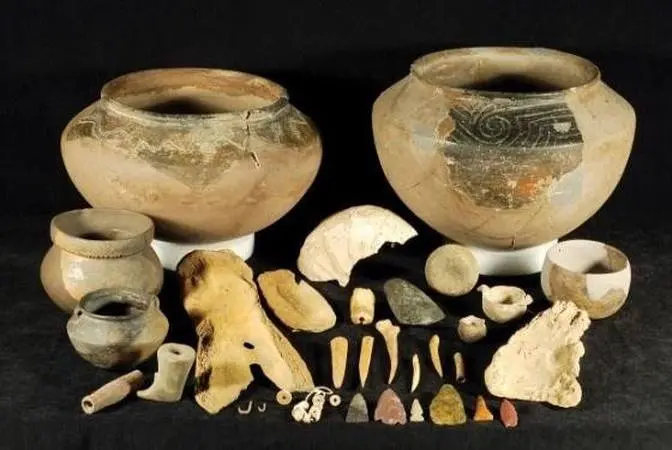
#Archaeology#archaeological artifacts
Welcome to our episode of Biblical Archaeology from the Ground Down, presented by Bible Interact
and hosted by Dr. George Sparks.
Join us as we explore the fascinating world of the Bible from leading experts in the field
of archaeology.
Hello everyone.
I'm Dr. David Graves, an experienced Biblical archaeologist and CEO of Electronic Christian
Media.
I'm here today with another exciting episode on our Archaeology Discoveries channel, where
we discuss important archaeological artifacts related to the Bible.
Thanks for watching, and be sure to like and subscribe to our channel.
Welcome everybody to today's program.
This is Biblical Archaeology from the Ground Down, sponsored by Bible Interact.
Today's guest is Dr. David Graves, and our subject matter is going to be one of the Assyrian
kings called Tiglath-Balazur III.
This is going to be the beginning of six different Assyrian kings that Dr. Graves is going to
talk about.
He received his Ph.D. from the University of Aberdeen in Scotland.
He has been overseas working in the Near East for well over, what, 30 years?
Has excavated at Tell el-Makartar, a candidate for biblical eye, biblical Shiloh, and everybody
knows where Shiloh is Shiloh, no debates about that.
Also he's worked at a tell in Jordan called Tell el-Hammam, a candidate, many believe
it is, Sodom and Gomorrah.
Which one, Sodom or Gomorrah?
Sodom?
Sodom.
So, glad to have him.
Also look at the books behind him on the bookshelf.
He's an author of over 30 books, as well as publications of journals.
He was just showing me one of his more recent academic books.
I don't know, can you bring that up to show everybody?
This is the most academic book.
He's developed this from his Ph.D., took him years, and he showed it to me today, and hopefully
can bring it up for everybody.
It is Dr. Graves, you didn't even say Dr., illustrated by, you didn't call yourself
doctor on this one.
No, I didn't.
It's David E. Graves, biblical archaeology, Old Testament, coloring book, ages 4 to 14.
So people, keep your eyes out for one of the most academic books Dr. Graves has written
to date.
Is this your 31st book?
Something like that.
Yeah, something like that, and I'm sure the rest of them are not quite as academic
as this.
And we went through and looked at some of his pictures, it has to do with, of course,
coloring pictures, and artifacts, which have been excavated, some of the most popular artifacts
out there that are relative to the biblical narrative, let's put it that way.
Ages 4 to 14, I feel left out because I'm closing on 66, you know, I guess.
A lot of adults like to color too, and there's enough detail in them that you can take your
coloring pencils out and color pens and do your coloring as well.
But there's actual photographs of each of the artifacts, along with a little bit of
a description about the artifact, and then there's a coloring plate that sets the stage
for each of the artifacts, and fun for kids, and something that they'll enjoy and learn
about the Bible and about archaeology along the way.
Right.
There you go, before Christmas, that's a great Christmas gift, no doubt.
Hey, I thought one of the qualifications to be able to purchase the book is you gotta
be able to get your birth date, how many years you've been around, your birth years, actually
on the cake.
Now you can't use numbers, you gotta use candles.
Now if you could put your birth years in candles on the cake, you qualify for this book.
If you can't, well, I don't know.
Just kidding.
Yeah, well, it's a little new project, I've got the Old Testament out, and maybe next
year I'll do the New Testament, Lord willing.
There's about 30, I think there's 32 coloring plates, 32 objects that I deal with in the
coloring book.
So, that's something for the children to enjoy, and a new venture for me.
I wonder if you've got a coloring book for anybody in AARP?
Not yet.
Okay, but anyway, folks, he just showed me this, I want to share it with you, Biblical
Archaeology Coloring Book, ages 4 to 14, and it's got a lot of good information as far
as actual coloring, and then the actual artifact next to the pictures, and it was a good idea.
I like it.
Hopefully, you'll have it out soon.
All right, and today, once again, we're going to be talking about Tiglath-Pileser.
I threw him off on this one, folks, so Tiglath-Pileser, or Tiglath-Pileser, it's pronounced differently.
That's not how we said it in Ohio.
No, and it's the third.
We got the third part.
We can all do that equally as good, whoever it is, the third.
Talking about him invading Israel, so this is my AI impression of the scene, but we're
going to be talking about some real live artifacts, not AI-generated stuff, as some people have
suggested.
These are the real deals.
The photographs I've taken at the British Museum, and we're going to talk about his
annals or his history, his documents that document what he did.
I'm going to let people in on this, but before you get going, we were talking about you got
AI.
Of course, these slides you actually did yourself.
I believe they're really good.
I really enjoy them, and we were accused.
We were accused of the whole podcast being animated, me and you being animated.
Maybe I should take that positively that we're actually popular enough to be cartoons now.
That's pretty cool.
Well, George, I don't think AI has a sense of humor like ours.
We got accused of being completely 100% AI.
It's just like, don't you guys do anything real?
It's all AI-generated.
I don't think you can fake that.
That'd be kind of hard for AI to actually generate the quality of glow that I got going
on here, up in this place.
We were just looking at it.
This is the AI-generated one.
I like to give people a sense of the context of what it would be like, and AI does a pretty
good job on that.
Not always.
I do a lot of ... To get this kind of an image, I probably do about 20 others that aren't
satisfactory because I know what it should look like.
This is one from the British Museum.
This is the chariot, horses, a couple of servants leading the horses, umbrella over the chariot.
It's difficult to get anything close to that in AI.
This is one that's actually etched in stone in the British Museum.
The material today is based on my book on the archeology of biblical people, under which
I mentioned Tiglath-Palastar.
He's mentioned in the Bible.
Here is the chronology, the family tree, Neo-Assyrian.
You'll notice that we're talking about Tiglath-Palastar III, and then we're going to talk about Shamanasar
V, Sargon II, Sennacherib, Ezra-Haddon, and Ashurbanipal because they are mentioned in
the Bible.
Tiglath-Palastar today, and then his relatives we'll be talking about, all mentioned in scripture.
That's what the character looked like as he had his relief placed in stone, and here are
the other characters we're going to be talking about.
This plate deals with the individuals Tiglath-Palastar III, or the Bible also calls him Pul, P-U-L.
All scholars now agree that it's not that controversial.
Like anything, you'll find somebody out there that will disagree, but he's understood to
be Pul, and the scripture references, the dates and scripture references are under each
of the individuals.
They're all found in 2 Kings 15, 17, 20, 18, 19, and then Ashurbanipal.
I forgot to put that scripture reference in there, but I'll talk about that later.
Here's a timeline, Tiglath-Palastar III is here around 745 to 727 B.C., and then you
can see the others as they reign in sequence, and then above I've placed some of the prophets
Amos, Hosea, Micah, Isaiah, Nahum, Zephaniah, Habakkuk, and Jeremiah.
So that kind of puts it in the context of the prophets, because they're talking about
the Assyrians, and we're going to talk about his annals, which is the tablet right here,
because he wrote his history, his exploits, his battles, his victories, and put it down
in writing for us, and we can use that to compare with what the prophets were saying
during that time period and get the parallel history.
That's its importance.
Now the annals were found in 1873 in a place called Nimrud by Sir Henry Laird, photo of
the individual here, that's his portrait, today it's in the British Museum in London,
and the significance is that it's the first known extra-biblical reference of King Ahaz
of Judah is mentioned in these.
His name is, my trust is the son of Esherah, Tiglath-Peles III is mentioned nine times
in scripture.
Here are the references here.
Of course we know that Kings and Chronicles are sort of duplicate documents and tell the
same history in a little different way, and so there is the timeline here, the time frame.
I put the kings of Israel on the top, and that's the northern kingdom, and then the
kings of the southern kingdom down here on the bottom of Judah.
So it equals the time of King Ahaz, up in the north you have Menahem, Pekah, and Hosea.
The history of the first 17 years of this king's reign, a number of the kings of Judah
are mentioned, as well as Ammon, Moab, Ashkelon, Edom, Gaza, and Tyre, and the name of Jehoihaz,
king of Judah, as bringing tribute to this king as well, and he invades Israel when King
Pekah is ruling in Israel, and he defeats this defeat of Rezan, king of Syria, as mentioned
in scripture as well, and mentions five Hebrew kings, Uzziah, Ahaz, Menahem, Pekah, and Hosea.
So, you know, everything that's talked about in the Bible, all the kings that live, we
find in these annals from the perspective of the Assyrian king, as he rules and as he
does his thing in Assyria and against Israel.
He paid tribute to this king along with his son, Pekah, and the Assyrian king may have
had a hand in securing the throne for Menahem.
And so, Hosea and Amos speak of the lawlessness and the sin within Israel during this time
period.
So, Menahem continued worshiping the golden calf of Jeroboam in 2 Kings 15, and this period
led to the fall of the northern kingdom by the invasion of the Assyrians.
So, you can see how the Assyrian kingdom is intertwined with the kings of Israel.
I have a map up here right now that we're going to take a look at.
In the days of Pekah, king of Israel's son, came Tigaphalassar, king of Assyria, and took
that's up there in the north, and Abel Beth-Makah, kind of interesting historical point here
that our dig director, the assistant dig director at our site at Tel Hamam, has been digging
up here at Abel Beth-Makah for a number of years.
I've not visited the site, but Carol Cobes has worked there.
They found a lot of interesting things up there in the north, up in the North Galilee.
I wouldn't recommend going up there now due to the war, but I have been working there
for many years.
The next spot mentioned in 2 Kings 15 is Jiona, right there, and then Kadesh, Hazor, and then
of course Gilead.
So these are all mentioned, and of course Galilee, and all the land of Naphtali.
That's the yellow one there on your screen, and he carried them captives to Assyria.
So this is a northern part of Israel that is being attacked, mentioned in scripture,
and you can see the different cities that he conquered.
So he invades Israel, and the Assyrian text says, and in an Assyrian inscription, Tiglath-pelassar
likely refers to this event of the invasion of Israel, and literally the Omri land, because
Omri is the land of Omri, because that was one of the original rulers over the land.
All its inhabitants and their possession I led to Assyria.
So what's mentioned in 2 Kings is now mentioned in the annals, and the inscription of this
king says, Pika, their king, that is Israel's king, they had overthrown.
I placed Hoshea over them.
From him I received ten talents of gold and a thousand talents of silver.
So he paid tribute to him, you know, give me money and I won't invade you.
Give me money, I won't take you and carry you off to Assyria, and you can stay here
under the king I appointed and live happily ever after.
The Bible recalls, from the biblical perspective, the people of the land of Omri, I deported
to Assyria with their property, and Hoshea, the son of Elah, made a conspiracy against
Pika, the son of Ramlah, and smote him and slew him and reigned in his stead.
So the Assyrian account says that Tigath-Pelasar put up a king, Pika, whereas the biblical
account kind of gives behind-the-scenes what happened.
Against him, Hoshea came up Shalmaneser, king of Assyria, and Hoshea became his servant
and gave him presents, paying tribute and booty again.
So this is helpful because we have two different perspectives, two different accounts that
can help us understand what's going on.
Now another interesting artifact from the Israel Museum is called the Iran Stele, Iran
Stele because it was found in Iran.
And the inscription mentions payment of tribute by Menahem, son of Gaddai, a Gaddai, king
of Israel, an event described in the Bible in 2 Kings 15.
It was broken into three pieces but subsequently acquired on the antiquities market in western
Iran, and that's why it's called the Iran Stele.
It records the events of his ninth year, mentions Menahem bringing tribute, the king of Israel,
to Tigath-Pelasar III.
And it reads, the kings of the land of Hattai and of Arameans of the western seashore.
The land of Hattai, Hattai is generally believed to be Anatolia or modern-day Turkey up in
the north, the Arameans of the western seashore, Menahem of Samaria.
So another one is the Ancillary Stele, and this one was found up in Anatolia, up here
in modern-day Turkey, discovered in 1993 by Elizabeth Carter of UCLA.
It was discovered in a farmer's garden, identified to belong to Tigath-Pelasar III.
It's displayed in the Museum of Archaeology in Turkey today, Gaziantepi, and it confirms
the existence of Tigath-Pelasar.
And here it talks about, as Kual, the great king of Assyria, as the Bible calls him, Pul.
So it uses the same name as Pul, so again, confirmation that the Bible is correct in
talking about Tigath-Pelasar III, now confirmed by another inscription.
Here's a photograph of it, and here's a drawing that I did of it, and what he would have looked
like.
It was a boundary stone set up and three inscriptions, Luwian, that's the language that's found
up in Anatolia, Assyrian and Phoenician, but it was overwritten in Greek.
So they had put a Greek text over top of it, so it makes it difficult to read, but they
have been able to decipher it.
They use a lot of advanced visual technology, they can do different kinds of lighting and
so forth, so they were able to read it.
Tigath-Pelasar had two main campaigns, the first in 744 BC, and then the second in 737
BC, and this stela is from the second campaign.
Here's that beautiful chariot again, with the bottom, the middle, so that's what people
are walking on, and the sky above, and they would turn that into writing.
And these are pretty much life-size.
If you go to the British Museum today, they are gigantic, it's just absolutely wonderful
to see the detail in them.
And the translation of the text says, I receive from resident of Damascus, Manahem of Samaria,
Hiram of Tyre, again gold and silver.
That was the money of the day.
Here's that beautiful relief again.
I love it because you can see all the details of how all the horses were decorated, and
all the inscriptions.
The Bible says, Pul, the king of Assyria, came against, invaded the land, and Manahem
gave Pul a thousand talents of silver, that he might help him to confirm his hold on the
royal power.
Manahem exacted the money from Israel, that is, from all the wealthy men, fifty shekels
of silver from every man to give to the king of Assyria.
So the king of Assyria turned back and did not stay there in the land.
So that's the historical background for the invasion found in Scripture, and the inscription
says, as for Manahem, I overwhelmed him like a snowstorm.
I like that, as a Canadian, invades him like a snowstorm.
And he fled like a bird alone, and bowed to my feet.
I returned him to his place, and imposed tribute upon him.
You just sort of hear him saying, from his perspective, how he did the campaign, and
the Bible talking about what they did.
So that's the overview for Tiglath-Palassar III, mentioned in Scripture, and the confirmation
we have.
George, did you want to go back to any of the pictures, or before I stop?
Oh, I think, you know, this individual in the biblical narrative really doesn't get
a lot of attention.
I think we go to Sennacherib during the time period of Hezekiah, because of the artifacts
at that time, such as the Salome inscription in the tunnel, the broad wall, and we'll get
to that when we have time, when he gets to that individual.
But it just shows us the number of—I don't want to use the word references, but the crossing
between the two cultures, how we can align them together.
And they agree, in this case.
Sometimes there's variance.
You know, you get an opinion in the biblical narrative, and then you get a slightly different
opinion that's recorded in the Assyrian chronicles.
Yes.
And that's to be expected, because nobody's ever going to really want to talk about the
defeat.
No.
Especially—
I think we find that with the Egyptians as well, and their defeat.
You don't want to talk about their defeat during the Exodus, so that's why we don't
find a lot of evidence there.
But there's some little hints and clues around that people suggest.
But here the Assyrians give their version of events, and then we have the biblical writers
giving their version of events.
So you have the two sides of the story.
I think it was the Quaker that said, there are three sides to every truth, my side, your
side, and the truth.
And the truth.
Or they say between two rabbis, there's three opinions.
Documents and how they parallel and intersect and interlock with the Assyrian texts in the
annals of Tiglath-Balassar III.
That's true.
I was just thinking of something.
You know, many people—a lot of people come out and they'll say something like, well,
why don't you explain something using archaeology and artifacts?
And people might say something like, you know, my faith doesn't really need artifacts to
prove it.
I don't need artifacts to prove my faith.
Sure.
Right?
But, okay, but what happens when—archaeology can't prove everything.
So there comes a time where we don't have evidence for that in archaeology.
And the same individual that might say, well, I don't need—all of a sudden they get upset.
What do you mean?
How can we not have it?
It must be there.
I thought that was not a requirement for your faith.
You know, if that's the case, then why so upset when there is no evidence, at least
yet, for that?
Now, you know where I'm coming from.
I'm not trying to be mean.
But you know, really, it does make a—I shouldn't say it makes a difference, but it's fun to
have that evidence, right?
And it can be very, very simple, like the parable, just the parable.
But the parable's taking place in the time of the biblical narrative, let's say, of Jesus,
the Roman period, and in the Jewish culture.
So they have their own types of, let's say, there were five women, five wise and five
foolish.
They all had lamps.
But we can get a lamp and say, well, this is a lamp from the Herodian period.
It's a Jewish lamp.
Why?
No graven image.
It's a very plain lamp.
And you go, well, that's pretty cool, that in itself.
It puts into our mind what they were thinking 2,000 years ago, the image in their mind.
It was their culture, their technology.
Or how about the one where Jesus is being anointed, right?
And a woman, a certain woman, it could have been Lazarus's sister, depends on sometimes
the gospel that you might read in that case, okay?
But anyway, it talks about a certain vessel that is being used to anoint Jesus while he's
at a banquet.
All right?
And what type of vessel was it?
An alabaster vessel.
Now, I don't know if it looked just like this, but this is a 2,000-year-old, at least 2,000-year-old
alabaster vessel.
And they were used to store very expensive perfumes, 100%.
That's historical.
We find them in tombs because bodies decompose.
It doesn't smell good.
Hence, Lazarus has been in the tomb for four days.
You roll away the tomb, you shouldn't do that because he will stinketh.
Some say that, King James, stinketh, or he might smell, right?
Well, that's why we had perfume in the tomb.
I think it's interesting.
Not that we might make a connection with this, maybe not so much, because when this woman
breaks the vessel, Judas turns around and says, you could have sold this for a lot of
money, you're wasting it.
That's what he's saying.
And Jesus says, well, leave her alone.
She's preparing me for my burial.
I think within his statement, we have a little connection right there.
But here, like you're doing with your PowerPoint, you're showing us actual artifacts that help
us understand in a very realistic fashion what is going on in the biblical narrative
as well.
Real people, real times, talking about it in their culture, the same event, but a different
culture perspective.
And we can do the same thing with archaeology as well, right?
Fun stuff.
Just like that.
Another point, that's all.
I just happened to have them here because I was doing a small advertisement using artifacts,
so I had them here.
But granted, a stone with Tiglath-Palazar on it would be a lot cooler than just an oil
lamp.
Yeah, well, they're a little larger.
Some of them are eight feet tall.
Well, if I had the opportunity, I'd say, maybe the British Museum, right?
I'd say, well, if you guys want to trade, I'm up for that.
Yeah, you've got to pay for shipping.
I've got to pay for shipping.
Maybe I get some donors.
I'd say, well, I think it'd be a good deal.
Anyway, well, Dr. Graves, thank you very much for this presentation on Tiglath-Palazar.
And it's the first of six, so we have five more to go.
People, you want to stay tuned.
We're going to attach these one at a time, or it'll just be too long.
And it's going to be a lot of fun.
Very educational.
Of course, it goes into points outside the biblical narrative to help explain, you could
say, the whole event.
And this is going to be fascinating.
I learned a lot.
I appreciate it, and I really thank you for your PowerPoint, your time and effort in producing
these slides for us.
It's really appreciated.
And also, for the listening audience, I thank you also for your participation.
I think we're now up to like 124,000 subscribers because of you.
And tell your friends, we got more coming up.
Wow.
We just edited.
Okay?
We just edited the podcast with you.
You were talking about the city, the lost city of Livius.
And then we had Dr. Scott Stripling.
He was talking about Shiloh and the building foundation, which they're still doing documentation
on being the tabernacle.
Yes.
And I think he said they're dotting their I's and crossing the T's.
I think that's almost a quote from Dr. Stripling.
So I don't think it's up for publication yet.
And then we had Dean Gary Byers from Trinity Southwest and Veritas University.
And he was talking about Tell el-Hammam and the gate system, the very unique gate system
that they excavated at Tell el-Hammam.
That's been edited.
It should be up pretty soon.
So people stay tuned if it shows up.
I think it's called Three Amazing Discoveries.
I don't think I called it Three Amigos.
I don't think I did.
I didn't do that to you.
I think it's still Three Amazing Discoveries, according to the slide that you actually made
for the podcast.
So that'll be up soon as well.
Okay, everybody.
Once again, thank you for your time, everybody.
Have a great day.
Good morning, good evening, wherever you're at, or good night.
I appreciate all your time and supporting Bible Interact.
This is Biblical Archaeology from the Ground Down.
Have a good day.