
Thutmose III: Egypt's Greatest Conqueror. His Rise to Power Revealed!
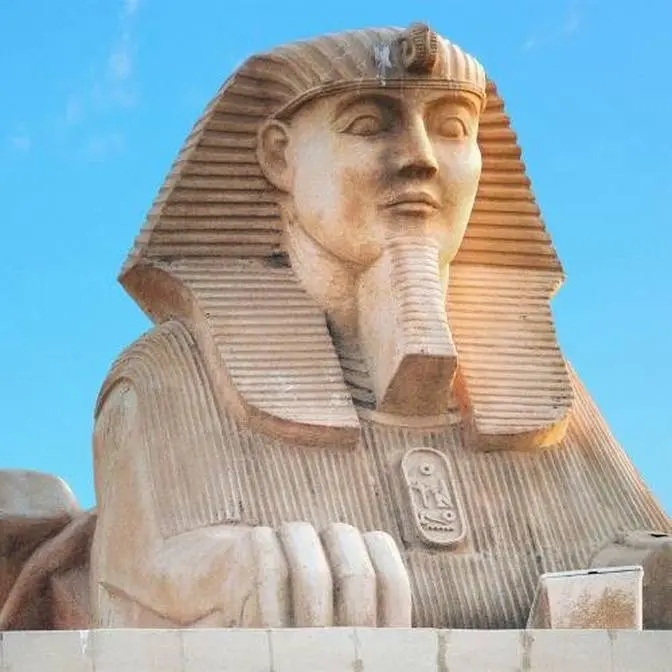
Ancient Egypt, a land of pharaohs and pyramids, of shimmering deserts and the life-giving Nile.
In this world of grandeur and power, few names resonate through time as strongly as Thutmose III.
He was a warrior king, a cunning strategist, and a ruthless expander of empires.
His reign, spanning over five decades in the 15th century BCE,
marked a high point in Egyptian history, a golden age of prosperity and might.
Thutmose III, often dubbed the Napoleon of Egypt, left an indelible mark on the ancient world.
His military campaigns reshaped the political map of the Near East,
his building projects transformed Egypt's landscape,
and his administrative reforms ensured stability and prosperity for generations.
This video explores the life, achievements, and legacy of this remarkable pharaoh,
a ruler who embodied the very essence of ancient Egyptian kingship.
The tale of Thutmose III is a tapestry woven from ambition, military prowess,
political acumen, and an unwavering belief in the divine right of kings.
His story is a reminder that the echoes of great deeds can resound across millennia,
inspiring awe and wonder in those who dare to uncover the secrets of the past.
Subscribe to our channel for more fascinating insights
into history's greatest figures and their incredible stories.
Thutmose III's path to greatness was not preordained.
Born into the 18th dynasty, a period of Egyptian resurgence,
he was not the intended heir to the throne.
His father, Thutmose II, ruled for a short and relatively uneventful period.
Upon his death, the throne passed to Thutmose III, still a young boy,
but actual power rested in the hands of his stepmother, the formidable Hatshepsut.
Hatshepsut, a woman of immense ambition and political skill,
declared herself pharaoh, a highly unusual move in Egyptian history.
She relegated the young Thutmose III to the background,
focusing on trade, diplomacy, and ambitious building projects.
During this time, Thutmose likely received a traditional education befitting a prince,
learning the art of warfare, statecraft, and religious observance.
While Hatshepsut ruled, Thutmose honed his skills,
likely participating in military campaigns and familiarizing himself with the intricacies of
The years spent in the shadow of his stepmother, though frustrating,
proved to be a crucial period of learning and preparation.
When Hatshepsut died around 1458 BCE, Thutmose III,
now a mature and experienced ruler, was finally free to claim his birthright.
Upon assuming full control, Thutmose III wasted no time in asserting his authority.
He was not content to merely sit on the throne and enjoy the luxuries of palace life.
Instead, he was driven by a fierce ambition to expand Egypt's influence and secure its borders.
He embarked on a series of military campaigns that would come to define his reign,
showcasing his prowess as a military leader and strategist.
These campaigns were meticulously planned and executed with precision,
reflecting Thutmose's deep understanding of warfare and his ability to inspire his troops.
Thutmose III inherited an Egypt that was prosperous but surrounded by potential enemies.
The kingdom was a beacon of wealth and culture,
but its riches made it a target for ambitious rivals.
Thutmose recognized the need to protect and expand his realm to ensure its continued prosperity.
The young pharaoh, eager to prove himself,
was determined to secure Egypt's borders and expand its influence.
He invested heavily in military training and strategy,
ensuring that his soldiers were well prepared for the challenges ahead.
His dedication to military excellence was evident in every aspect of his reign.
His first target was the kingdom of Kadesh,
a powerful state in the Levant that had challenged Egyptian authority.
Kadesh was a formidable opponent, but Thutmose was undeterred.
He saw this as an opportunity to demonstrate his military might
and solidify his position as a warrior pharaoh.
Leading his armies with unmatched ferocity and tactical brilliance,
Thutmose III crushed the rebellion at the Battle of Megiddo.
This decisive victory not only cemented his reputation as a military genius,
but also sent a clear message to other potential challengers.
Thutmose's leadership on the battlefield was nothing short of legendary.
This battle, vividly described in Egyptian records,
showcased Thutmose's strategic thinking and his ability to inspire his troops
even in the face of seemingly insurmountable odds.
The detailed accounts left by Egyptian scribes highlight the significance of this victory
and its impact on the course of Egyptian history.
Over the next two decades, Thutmose III led 17 military campaigns,
transforming Egypt into a dominant force in the ancient Near East.
His relentless pursuit of expansion and his ability to adapt to different combat situations
made him a formidable adversary.
Each campaign further solidified Egypt's power and influence in the region.
He conquered Nubia to the south, securing valuable gold mines and trade routes.
This conquest not only brought immense wealth to Egypt,
but also ensured a steady flow of resources that were crucial
for maintaining the kingdom's military and economic strength.
He subdued the Mitanni to the north,
effectively controlling all the major trade routes linking Egypt to the riches of Mesopotamia.
This strategic move allowed Egypt to dominate the trade networks of the ancient world,
further enhancing its wealth and power.
Thutmose III returned from each campaign laden with booty, exotic goods, and prisoners of war,
further enriching Egypt and cementing his image as a conquering hero.
His ability to bring back such wealth and resources from his conquests
not only boosted the economy, but also reinforced his status as one of Egypt's greatest pharaohs.
His legacy as a warrior pharaoh continues to be celebrated in the annals of history.
The thundering chariots of Thutmose III.
Thutmose III's military successes were not solely due to his personal bravery or strategic brilliance.
His reign marked a period of significant military innovation and transformation.
He was an innovator in military technology and tactics,
transforming the Egyptian army into a formidable fighting force.
His ability to adapt and improve upon existing methods set him apart from his predecessors.
One of his most significant innovations was the development of a lighter,
more maneuverable war chariot.
These chariots were not only faster but also more efficient in battle,
allowing for rapid movements and quick strikes.
This technological advancement gave the Egyptians a crucial advantage on the battlefield,
allowing them to outmaneuver and overwhelm their enemies.
The chariots became a symbol of Egyptian military prowess and were feared by their adversaries.
The pharaoh also understood the importance of logistics and planning in warfare.
He knew that an army's strength was not just in its weapons
but in its ability to sustain itself during prolonged campaigns.
He ensured his troops were well supplied, even on lengthy campaigns,
by establishing efficient supply lines and storage facilities.
This logistical foresight prevented shortages and kept morale high among his soldiers.
Thutmose meticulously planned his attacks,
taking into account terrain, weather and enemy movements.
His strategic acumen allowed him to anticipate and counter enemy tactics effectively.
His victories were not merely the result of brute force,
but of careful calculation and strategic cunning.
Each battle was a testament to his ability to think several steps ahead of his opponents.
Thutmose III's military achievements were recorded in meticulous detail on the walls of temples
and on stelae, erected to commemorate his victories.
These records serve not only as historical documents,
but also as propaganda tools to reinforce his legacy.
These inscriptions, often highly embellished but containing kernels of historical truth,
provide valuable insights into the organization,
tactics and equipment of the Egyptian army under his command.
They reveal the sophistication and complexity of his military machine.
They offer a glimpse into the mind of a master strategist,
a leader who was always looking for ways to improve and innovate.
His ability to blend traditional methods with new ideas was key to his success.
Thutmose III was a ruler who understood that military might was an essential tool
for maintaining order, securing Egypt's borders, and expanding its sphere of influence.
His campaigns not only brought wealth and resources to Egypt,
but also solidified its position as a dominant power in the ancient world.
His legacy as a military genius and a visionary leader continues to be studied
and admired by historians and military strategists alike.
The thundering chariots of Thutmose remain a symbol of his enduring impact on the art of war.
Order and Justice – The Pharaoh's Reforms
Thutmose III was not only a conqueror but also a shrewd administrator who understood that true
power lay not just in military might but also in a well-governed and prosperous state.
His vision extended beyond the battlefield, recognizing that the strength of his empire
depended on the stability and prosperity of its internal affairs.
He implemented a series of reforms aimed at centralizing power,
streamlining administration, and ensuring justice for his subjects.
These reforms were meticulously planned and executed, reflecting his deep understanding
of governance and his commitment to the welfare of his people.
He divided Egypt into administrative districts, each with clearly defined boundaries and
responsibilities. Each district was headed by a governor who reported directly to him.
This hierarchical structure allowed for better control and more efficient management of resources.
This system allowed for more efficient tax collection, resource allocation and law
enforcement. By ensuring that taxes were collected fairly and resources were distributed equitably,
Thutmose III was able to maintain social order and economic stability.
Thutmose III also reformed the legal system, introducing new laws and regulations that
emphasized fairness and consistency in the application of the law.
He believed that justice was the cornerstone of a stable society.
Emphasizing fairness and consistency in the application of the law,
he established courts and appointed judges who were known for their integrity and impartiality.
This helped to build trust in the legal system and ensured that all citizens,
regardless of their status, were treated equally.
He saw himself as the shepherd of his people,
responsible for their well-being and their protection from internal strife and external
threats. His role was not just that of a ruler, but also a guardian and protector.
Responsible for their well-being and their protection from internal strife and external
threats, he maintained a strong military presence to deter any potential invaders
and to keep the peace within his borders. To consolidate his power and ensure the loyalty
of his officials, Thutmose III appointed his most trusted men to key positions within the
government and the priesthood. These appointments were strategic,
ensuring that those in power were loyal to him and shared his vision for Egypt.
Thutmose III appointed his most trusted men to key positions within the government and
the priesthood. This not only strengthened his control over the state, but also ensured
that his policies were implemented effectively. He understood the importance of propaganda and
image-making, commissioning numerous statues, temples and monuments that proclaimed his
greatness and legitimized his rule. These structures were not just symbols of his power
but also served to inspire and unify the people, and obelisks that proclaimed his greatness and
legitimized his rule. These grand structures were strategically placed throughout the empire,
serving as constant reminders of his authority and divine right to rule.
His reign was characterized by stability, prosperity, and a renewed sense of national
unity. The agricultural sector flourished under his rule, with the Nile River providing a reliable
source of water for crops, and a renewed sense of national unity, all testaments to his skills
as a ruler. Festivals and celebrations were held regularly, fostering a sense of community
and shared identity among the people, all testaments to his skills as a ruler.
Thutmose III's legacy is one of a ruler who not only expanded his empire through conquest,
but also strengthened it from within through wise and just governance.