
Time Dilation | Einstein's Relativity
At very, very fast speeds, classical relativity breaks down.
But this wouldn't be clear until scientists began flying Sopwith camels and examining
the nature of the fastest known thing, light.
In the middle of the 19th century, it had been known for quite some time that electricity
could be used to make a magnet, and that magnets could be used to make electricity.
But the man who made the first color photograph, James Clerk Maxwell, unified everything known
about electricity and magnetism in four magnificent equations.
And these equations described an electromagnetic wave that would travel through the empty space
at exactly the measured speed of light.
And in fact, this wave was light.
According to Maxwell, light was an electromagnetic wave that moved through empty space with a
speed of 186,000 miles per second.
But from the standpoint of relativity, the question naturally arises.
Relative to what?
The equation seemed to say that light moved at 186,000 miles per second relative to everything.
This was a dilemma facing the physicists at the turn of the 20th century.
If Maxwell was right, then light moves with a velocity of c, 186,000 miles per second
always.
But if classical relativity was right, there is no absolute velocities.
And the velocity of light should depend on who is doing the measuring and their motion
relative to the source of the light.
How could both be right?
Either our understanding of motion, or our understanding of electromagnetism and light
were in jeopardy.
And the very foundation of physics was facing a crisis.
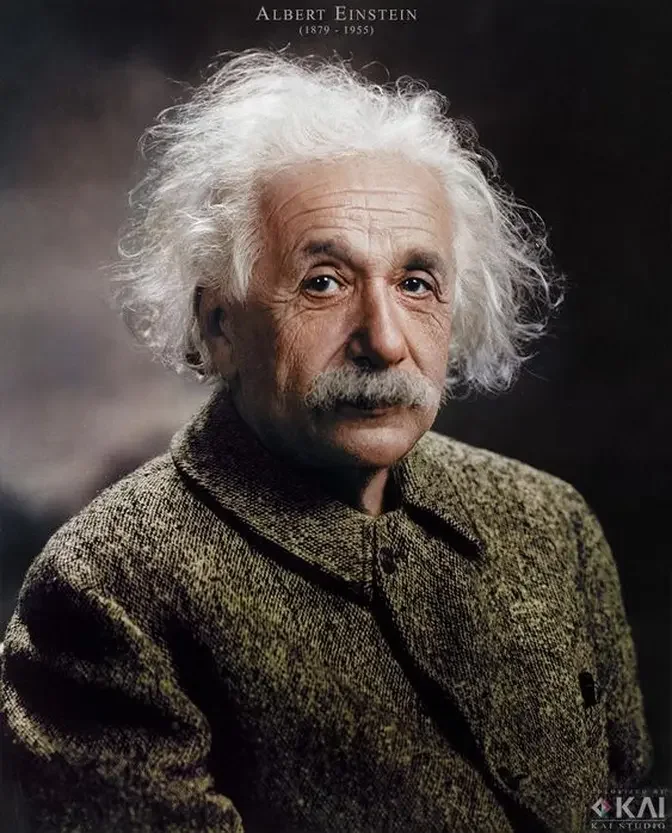
A 26-year-old patent clerk named Albert Einstein would provide the way out of this crisis.
Einstein accepted both of these seemingly contradictory notions and changed the course
of science.
He accepted the idea of relative motion, but restated it as follows.
Any person moving at a constant velocity will observe the same laws of physics that a stationary
person observes.
And since the speed of light is part of the laws of physics, Einstein postulated that
all observers will measure the same speed of light, regardless of their state of motion.
But speed is just a measure of distance moved in a given time.
And in order to agree on the speed of light, different observers might have to disagree
about distance and time.
You may have heard the term light-year used in astronomy or cosmology.
A light-year is the distance that light travels in one year, about 6 trillion miles.
So you could say that the speed of light is one light-year, a distance, per year, a measure
of time.
You could just as easily say a light-second is the distance that light travels in one
second, about 186,000 miles.
And so the speed of light is one light-second, a distance, per second, a measure of time.
Here are two starships, one at rest and the other in motion.
When the moving ship passes a stationary ship, each fires its laser.
Now according to Einstein, the speed of the laser light doesn't depend on the motion of
the ship, so we see both beams traveling side-by-side at the same speed.
The crew of the ship at rest witness their laser beam traveling 12 light-seconds in 12
seconds, and report that light travels at the speed of one light-second per second.
Correct.
But what about the beam from the moving ship?
Does it travel only 6 light-seconds in 12 seconds?
If so, the crew on board the moving vessel would report that light travels at only half
speed?
No they wouldn't, but why not?
According to Einstein, light always travels at one light-second per second, regardless
of the motion of the person who measures it.
How do we fix our picture so that this is right?
Part of the answer lies in the fact that the clocks on the moving ship slow down.
As we stated earlier, if we must agree on the speed of light, we may have to disagree
on the measure of time.
If the clocks on board the moving vessel ran only half as fast as the ones at rest, our
problem would be completely solved.
The light beam from the moving ship would still travel 6 light-seconds, and with the
slow clocks, it would take only 6 seconds for this to happen, and the crew would report
that light travels at precisely 1 light-second per second.
But it turns out the clocks don't slow down enough to be the whole answer.
So in a minute, we'll look at the second part of the answer.
And of course, this isn't a statement about clocks.
It is time itself that slows down.
Right.
Over the last 100 years, countless experiments have shown without a doubt that it is time
itself that slows down.
But why does it occur?
A clock is any device that counts events that occur at regular intervals.
The event that drives a clock can be just about anything.
The swing of a pendulum.
The bounce of a ball.
The unwinding of a spring.
Or the change in current in an electric circuit.
Any regular event will do.
Let's imagine constructing a clock in which a beam of light bounces between two mirrors.
Whenever the light strikes the bottom plate, the clock advances.
The advantage of using this kind of clock is that we can be sure that the observer who
looks at the clock will see the timing mechanism.
The beam of light moving at the same speed.
If two such clocks are stationary, then we would expect the time indicated on each clock
to be precisely the same.
But what happens when one clock is in motion?
Notice although both clocks are identical, the moving clock ticks slower than the one
at rest.
In order to understand why, notice the paths of the light beams.
The light in the stationary clock travels up and down vertically.
But the light beam in the moving clock must travel a longer diagonal path.
Since both beams travel at the same speed, and the upper beam travels a longer distance,
the stationary observer sees the moving clock run slower than his own.
This slowing down of clocks in motion is known as time dilation.
It should be stressed that a person moving along with the moving clock would notice nothing
unusual at all.
A clock and the flow of time would seem to progress normally.
According to this observer, he is at rest and the other observer is moving past him.
According to him, it is the other clock that is running slowly.
The flow of time in Einstein's universe is entirely relative.