
Puppy Questions: Spay or Neuter? Humping? Puppy Blues? and Much More #101
55 Video Views·Nov 2, 2024
If you have ever wanted to ask a professional dog trainer questions about puppy training or living with puppies, then this episode is for you! We’re covering the topics that you want to know about to help your puppy.
If you ever wanted to ask a professional dog trainer questions like,
when should I spay my puppy? And how much exercise should my puppy get? And how do I
combat this overwhelm I'm feeling about owning a puppy? Then this podcast episode is for you.
Because recently I put out on social media, asked me a question about puppy training,
and I got a lot of questions. Hi, I'm Susan Garrett. Welcome to Shaped by Dog.
Today, I'm going to go through as many questions as I can during this 20-minute period to answer
your questions about your puppy and training your puppy and other things about your puppy.
And the questions I don't get to, well, we'll just save those for another episode.
So, let's get going. First up, we're going to open with a controversial one.
When to spay my puppy? You know, it'd be easy for me to sidestep this and just do what I do.
Let me just preface this by saying, in Europe, most dogs are intact. They are not spayed or
neutered. I tend to keep my dogs intact as long as I can. Now, I'm going to also give you this
warning that if you own an intact dog or an intact female, then you have a huge responsibility to
make sure that they are kept under your supervision or under your control and will
not be responsible for accidental litters. We do not, we've got enough puppies out there,
and I'm not saying that you shouldn't be breeding your dog, but if you were going to think of
breeding it, then you need to actually talk to your breeder, go through all these health checks,
yada, yada, yada. Trust me, breeding isn't for the faint of heart. As much as I love having puppies
around my house, I would rather really leave it up to the people who do it full time.
So, then the question is, what about spaying? You know, in North America, it's just accepted
that we should spay females before six months of age. And there was a theory that it would minimize
the potential for certain cancers. When actually, when we do spay females, you're actually removing
organs that are responsible for sending hormones through your puppy's body and hormones are needed
for proper growth. And when you remove those at six months of age, you actually are causing that
to not grow properly. In addition, if you have behavior problems like aggression or fear,
and you spay a female, studies have shown that you actually are going to increase the probability.
That is correct. Spaying a female young or spaying a female while they're showing these
signs of aggression makes it more difficult to overcome the fears and aggression. So,
ideally, if at all possible, you want to keep your females intact.
And how long? My oldest female I spayed when she was nine years old and momentum is now
six and a half. She is still intact. That is what I do. You guys do you,
but I would strongly encourage you to look up the works of Dr. Karen Becker and Dr. Chris Zink,
who both have some excellent input onto why the recommendation of spaying puppies young
is really not a good recommendation. A lot of times you're getting a rescue puppy,
they might be spayed at eight weeks of age. Not the best decision for the long-term health,
but I completely understand why they have to do it. Because their number one goal is we need to
minimize the amount of unwanted puppies in this world. And that's really an easy way to do it,
right? If you're a very responsible person and you can take care of the action of your puppies,
and you want them to have the longest and healthiest life possible, I would recommend
that you consider not spaying that puppy until they're older. I mean, at minimum two years old,
hold out to five if you could, but again, completely up to you. Do your research is the
bottom line. Okay. Next question. Recall while distracted. My six-month-old is focused on me
until distracted outside the home. All right. Number one, if you've listened to this podcast,
you know that the biggest problem with training, it doesn't matter if it's puppies or otherwise,
is the expectations of the trainer are way, way, way too high for the capabilities at the level of
training you've given that dog. So sure, they listen great when the fridge door is open.
They may not listen as great when they're outside. And that's why you've got to be really,
really strategic with the layers of learning and not giving that puppy the freedom to choose not
to come when called when they are in an area where there's a really good chance they're not going to.
And so, I'm going to give you a link in the description here or in the show notes. If you're
listening to this podcast, I'm going to give you a link to a blog that I wrote on how to get your
puppy to come when called. It will give you some really, really good ideas in there on how to start
laying down those layers of learning for you and your puppy. Next, any tips on dealing with
puppies that like to hump? Let me just say, humping is completely normal for many, many puppies.
Your last puppy may not hump, but your current puppy may hump. It is a lot of time,
it's a sign of excitement, but it's a sign of stress or anxiety. Don't let anybody tell you
it's a sign of dominance or sexual activity. It's just, you know, some puppies jump and wag
and some puppies hump. I actually am putting together a complete video. I'm going to put it
on YouTube to help you overcome humping. I just wanted to say though that it's normal. Please
don't discipline the dog. Please don't think that they're trying to rule the world. It's just
excitement. Right now, best case scenario, just take them by the collar, take them off and distract
them. Okay. How to combat puppy blues? Now for those of you who aren't familiar,
puppy blues is an actual thing. It's anxiety, it's depression, it's overwhelm, it's sadness,
it's regret. Having owned a puppy for a set amount of period of time, and that set amount of period
of time could be different for everybody. There's something called puppy blues that may kick in.
Think postpartum depression, and I don't want to belittle postpartum depression. They're
completely different things, but I just want to give you that example. What's another example?
Buyer's regret or buyer's remorse. I don't know. So, somewhere between those two very real things
is something called puppy blues. Now I'm going to give you my approach to it. It's very much
taken from my approach to competing at a world championship, but I will tell you that I have
never suffered from puppy blues, and I believe it's this approach that saves me.
Now I've talked about this before. Anytime that you're feeling anxious or stressed, chances are
you are in one of two places. So, if you're feeling anxiety about what might happen. Oh,
if I don't feed my puppy the right thing, the potential they might get cancer, they might get
sick. If I don't give my puppy enough exercise, they're not going to develop properly. If I don't
get them into the right class, if I don't follow the right mentor, then something bad could happen.
So, if you're thinking that way, that's getting you anxious. Because when you put yourself in
the future, you create anxiety for yourself. You can't control the future. And so, by putting
yourself there, you're trying to control something you can't control. That's what causes anxiety.
Right now, the other place you might be is you might be looking at some of the things
that have already happened. Maybe, you know, you've had some mishaps with your puppy.
You might be blaming yourself. Oh, if I hadn't left the garbage out, they might not have got sick.
If I hadn't have, you know, let the dog have so much line out of the park, they might not have
got jumped by that other dog. Oh, it's all my fault. Oh, I don't know. What is this going to
do to that puppy? Oh. And so, when you're living in the past, you create depression for yourself.
You're thinking, Oh, it's, I am in a pandemic and I never got that puppy socialized and it's
all my bad. And now my puppy is just going to be in a horrific place and they're never going to be
properly socialized and they're always going to be— You are living in the past. You're trying
to change something that can't be changed. You're again, looking at things that are outside of your
control. So, you want to deal with the puppy blues? Think about what is in your control right
now. Your ability to learn. There's over 100 podcasts here. Every single one of them will give
you really good dog training information, a hundred percent free for you. And once you've
gone through all my podcasts, you can go to my blog where I've got all kinds of articles that
you can carry on and go to my YouTube channel where there's some demonstrations of really good
dog training games that will take you to a better place. Those are things that are in your control.
Do one positive thing. Learn one new thing every day. That's going to change your state.
Think about what you can do that's going to help your puppy be moving forward in that training,
moving forward in the number one challenge that you're faced with. And recognize that
I believe that you have got the puppy you've got for a very important reason. That the puppy you
have today was sent to you to help you grow. That puppy was meant to help you become the best
version of you so that you could show up for others, including that puppy, as your best
version of yourself. And knowing that you should celebrate. Yeah. So, all of the things that
happened in the past that I was worried about, that I've screwed things up, I let this happen,
actually happened so that you found Susan Garrett's podcast. So that you could be sitting
here listening to her talk about how you can get out of the puppy blues. That all of those things,
I believe they're all brought to us by owning a puppy to help us elevate to be that person we're
meant to be. And so, ask yourself, if you're feeling depressed, if you're feeling anxious,
if you're feeling overwhelmed, am I thinking about something outside of my control?
What can I control right now? What can I learn? What can I do with my puppy? What can I do? One
thing that's going to bring my puppy joy. Go out and do that and then sit down and learn something
new. Okay. Next question. How can you tell when a puppy's growl during play is excitement or if
it's frustration? I'm not sure if anybody really knows for sure. And then the question is why?
Like why is it important that if a puppy is frustrated, maybe they're frustrated because
they don't really want to tug with you. They want to chase the other dog, but they know that they
should tug with you. And so, they might growl with a little bit of a, you know, like a higher squeal
at the end, but they're doing the right thing. So, that's good. They might be frustrated because
they really want to let go of the toy and bite you, but they're going to keep tugging on that toy
and there might be a little frustrated and that's okay too. And if your question is how can I be
sure that when my puppy tugs that the growl is okay? Well, you've got to know that if you are
tugging and then breaking it up with sessions where you're asking for the toy back, you're
waiting for the puppy to show some control, and then you're giving it back to them and you're
going back and forth like that, then puppies can growl. They like, they're having fun. And that's
a lot of puppies express their joy with growling. And so, as long as that puppy's not redirecting,
dislodging the toy and redirecting on you, I mean, that's not acceptable,
but you know, everything else, they're just having fun.
Next question. Is it okay to have your puppy sit on you and chew their toys or chew stick on you?
This is a split between myself and Sharon who works for us at Dogs That because we go through
these podcasts planning together. And Sharon's like, Oh, I'm disappointed when I have a puppy
who doesn't want to bring their toys and sit on me. And I'm like, Oh, nay, nay, Sharon.
Here's the thing. What we learn first, we learn best. What the puppies learn first,
they learn best. If you have a cute little mastiff puppy that likes to bring their chewy over and sit
on your lap, how's that going to be when they're 140 pounds? Is it going to be just as cute? Then
have at it. I personally want my puppies to learn to chew in their bed. And so, I mean, it's a big
thing. Like Tater Salad, he had a habit of wanting to chew against people and then against furniture,
which caused him to start to destroy furniture. And so, I want them to have the habit of
independence. That doesn't mean that all puppies that chew in your lap are going to chew your
furniture because like I said, all of Sharon's dogs, when she raises them as puppies, she hopes
that they will chew on her lap. So, have at it. If that's what you want, all I ask is sometimes
is any time to a puppy. And is this going to be okay that they do it not just to you,
but to anybody else that comes into your house? If that's not going to be okay, then my suggestion is
let's help direct them towards a dog bed or some other appropriate place for chewing their bones.
Next question. How much exercise does my puppy need? He never settles down. Now you might want
to refer to a podcast episode number 17, where I talk about puppies that are overtired. And it
looks like they haven't gotten enough exercise when in fact it's the complete opposite. So,
don't be too quick to think that your puppy is overtired. But let me answer the how much exercise.
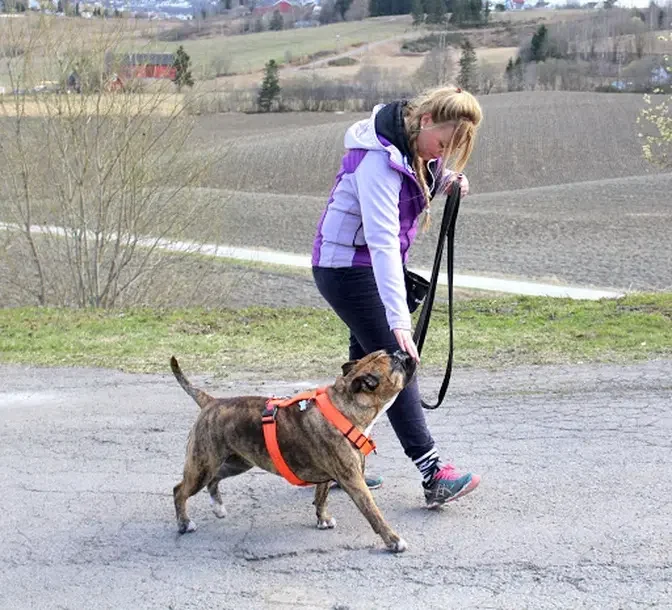
Now for me personally, I don't take puppies for walks on leashes when I first get them home.
I prefer to take them for adventures. So, I get them playing little games like tugging,
and I desensitize them wearing a collar and a leash so that we don't have any flailing puppies
who are freaking out because they're on a collar or leash. And then I might take them on an outing
where I'll just play a few little games for five minutes and get back in the car. And then we go
back home. Or I'll play these games in the backyard, in the living room. Puppies going for a
walk on a leash, I personally don't think is a great idea because it's highly unlikely they are
going to know how to walk on a leash. But let me just say 99% of the time, maybe 99.999% of the
time, a puppy is not going to walk on a leash. So, they're going to struggle or they're going to
pull ahead. They're going to learn bad lessons. There needs to be a history of you teaching them
to find value at your side. And so, I'm all for if you have a safe environment where you can take
that puppy for a little walk off leash, then that's great. And maybe five minutes, it really
depends on the breed. So, large breeds can't be out that long. And smaller breeds, I think the
rule of thumb is five minutes for every month old that that puppy is. But if I have an eight-week
old puppy, chances are I'm not going to get out and play with them much more than five minutes,
period. So, I don't actually take them out on a leash walking really until they're six months
or older. Now for those of you who live in the city and that's the only form of exercise you can
have, then you're going to have to start working on value for reinforcement zone, get that in early,
and you can find videos on my YouTube page. Refer to podcast episode number 53, where I talk about
building value for walking at your side. And that's what's going to help your puppy want to
be at your side. So, my benchmark is six to eight months before I'm taking them out into the city
for very long walks on leash. That might happen for you at three to four months, but play those
games. So, I'll go to like a baseball diamond. It's a place where I'm going right now with my
this to get her more socialized with kids and activities and other dogs and cars and people
and everything. Cause I live in the country and just little outings, get out of the car,
play a few games with me. And you know, she's almost a year old now. So, we might spend 40
minutes there, but in between she's chilling on the ground and just, you know, hanging out
and then I'll do some games and then I'll have her just chill on the ground again.
Okay. So, exercise really depends on the breed, the size of your dog, the size, how big they
may be as a mature dog, and also how much value you've built for walking on a lead.
Okay. Next question. How do I work my puppy up to being comfortable alone in her X-Pen for more
than five seconds? Okay. So, I'm going to suggest a couple other podcasts for you. Number one,
episode number 30, Why crates are not cages. Also, a recent episode number 99,
where I talk about a routine that I have when I leave the home, which is really important.
So, I would start this routine by number one, playing crate games. So, I'm going to put a link
in the show notes or in the description here if you're watching this on YouTube of how you can
find information about crate games. But you want to build value. Like it's not natural for a puppy
to be put into a caged-in box and then say, Oh yes, I'm happy here. I'm completely comfortable.
Now some puppies are. It depends on what kind of environment that they were raised in at the
breeder. And it also depends on how long or how you've grown that value once you got that puppy
home. But I would say most puppies aren't naturally going to go, Oh, I'm chill here.
So, they're going to be a little bit anxious and it's up to us to build that
comfort by building value. And those two resources will be great ones for you to
really start to build a value for being in any kind of confinement.
Okay. Final question. What age is your puppy before you start weaving?
Okay. So many people in the sport of dog agility, they look at the behavior of weaving between
pulls and they think, Wow, that's pretty high-tech. I'm going to have to get on this really early
because it's so difficult. Now I have a method that I developed called the 2x2 method of weave
pull training. And it's super easy. Most of my dogs are trained within a week of starting that.
Now some of my students might take a month or longer, but bottom line is it is super stressful.
I think it is the most stressful activity to a dog in the sport of dog agility.
And so, I'm in no hurry to start my puppies on weave training. I will— now this is almost a
year old— have zero activities related to actually going through weave pulls.
When she's 14 to 16 months old is when I would recommend that you start training your puppy or
at that time adolescent dog to learn to love and execute a set of weave pulls.
Thank you for your questions. Thank you everyone. I will get to more puppy questions in upcoming
episodes of Shaped by Dog, but that's it for today. Thank you for your questions. I'll see
you next time here on Shaped by Dog or Shaped by Puppy as the case may be.
Go get yourself your favorite reinforcement.