
The Brilliance and Paranoia of the First Ming Emperor
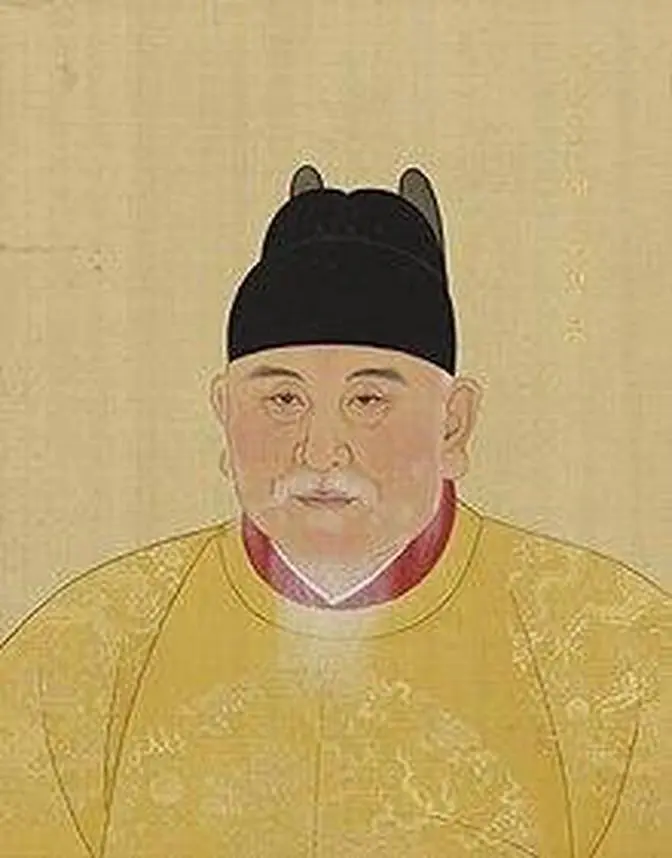
Zhu Yuanzhang, founder of the 276-year Ming dynasty,
is the second of the only two Chinese emperors who were born ordinary peasants.
He's, to say the least, an interesting guy. Born into abject poverty, he experienced the
very worst that 14th century China inflicted on people. Without a childhood education,
he became a self-taught scholar and climbed to power by attracting the most competent officials.
Upon entering power, he sought to bring peace and prosperity to the kingdom by imposing strict
all-encompassing rules on the people. In this way, he's considered one of
the great total autocrats. For a long time, I've been fascinated by his unique,
against all odds story. In a previous video, I talked about the fall of the Ming dynasty.
Here, I want to wind back the clock and explore China's last peasant emperor and one of its
greatest historical figures at the start of the Ming dynasty. Zhu's journey begins in the 14th
century with the Yuan dynasty. This Chinese imperial dynasty descends from the Greater
Mongol Empire, which itself started with the famous Genghis Khan. The Mongol Empire once
governed vast territory stretching from Europe to China, but unrest between the Great Khan's
successors led to its split and the declaration of the Yuan dynasty. The Yuan dynasty would
conquer the remaining parts of the Song dynasty and unify Han China. But after the death of its
Kublai Khan, the emperors of the Yuan dynasty struggled to make good for its people.
The Han majority resented rule by the foreigners and its governance quickly fell into corruption.
The ordinary Chinese began to rise up in protest against Mongol rule. The Yuan dynasty seemed
unable to stop them with their emperors uninterested in ruling and the elite mired in
conflict. The only question seemed to be determining who would next take the reigns.
Zhu Yuanzhang was born September 18, 1328 to an ordinary farmer in what is now Anhui province.
He grew up poor and illiterate in a country that did not offer much prospects for its poorest
people. When he was 17, a famine struck his farm and his entire immediate family, save one brother,
died. Zhu and his last remaining elder brother had to wrap their father's dead body in a map
of reeds bound in rope for burial. But soon after that, his last brother died too
and Zhu was alone. Zhu went to the nearby Huangjue temple and became a monk there.
That temple though quickly ran out of money and its monks had to go beg in order to earn their
keep. Zhu for the next few years begged his way to what is now the city of Hefei,
illiterate and poor. Eight years later, at the age of 24, Zhu went to the city of Haozhou,
now known as Fangyang County in Anhui, to see local rebel leader Guo Zhixing.
He gained the rebel leader's trust due to his intelligence and diligence and was appointed
the bodyguard head. Zhu and Guo soon became very close and Guo would take the young man
into battle with him, trusting him with hairy and critical problems. Zhu would marry Guo's daughter,
joining the family. And he learned a lot under his mentor, the art of running a successful
rebellion. Even then, he had great ambitions for himself and his legacy.
On March 10th, 1356, at the age of 32, Zhu sought to make good on those dreams. He led an army of
36,000 soldiers to what is now the city of Nanjing and defeated its Yuan regiment. Upon its fall,
he declared to the Yuan officials governing the city,
The cruel rule and misgovernment of the Yuan dynasty has led to the chaotic situation all
over the realm. The people have been plunged into misery and suffering. If any virtuous man
wants to follow me so as to make great contributions to this process, I will assign
him to a suitable position with due respect. I will do away with all the improper laws and
policies of the Yuan dynasty. The liberation of Nanjing would
start off Zhu's goal of evicting the Mongols from China. Nanjing would serve as his base of
operations. From Nanjing, Zhu progressively conquered the southern Jiangsu province,
the cities of Zhejiang province and then Anhui. The Yuan government was divided and its armies
were frequently defeated. Zhu's rebellion spread quickly across the lands, but it was not the only
one occurring at the time. In fact, at this time, Zhu's Ming faction was not particularly well
regarded. In the southeast, Zhang Shicheng ruled fertile farmlands that brought his army great
wealth. In the central province of what is now Jiangxi, Chen Youliang commanded a small empire
purported to be the resurrection of the Han dynasty. Zhang owned vast riches. Chen commanded
a fierce, disciplined army. Zhu was just an illiterate, wandering beggar. But perhaps because
of that, he grew to be intellectually voracious. He educated himself thoroughly in the Confucian
classics and sought learned people to work with him. The turning point occurred at the battle of
Lake Poyang in August 1363, when Chen's navy was narrowly defeated by Zhu's smaller fleet.
His usage of burning incendiary ships helped turn the tide. And then came the pure luck of Chen's
death by an errant arrow. His fall would leave his kingdom in disarray and the Ming would shortly
thereafter absorb it. A few years later, Zhu invaded Zhang Shicheng's
southern heartlands and laid siege to the capital city of his kingdom in Suzhou. Zhang was captured
and hung himself, leaving Zhu as the leading challenger to the Yuan. Soon thereafter, he
ejected the Mongols back to the steppe and took power as the founder of China's next dynasty.
At the age of 40 in 1368, he would ascend to the emperor's throne as the Hongwu Emperor.
As the founder of a dynasty, Zhu knew he had special legitimacy to rule
and make real changes to China's government. And as one who actually suffered the ills and
desperation of poverty during his rise to power, he seemed to have genuinely wanted to help them.
To do so, Zhu felt that he needed immense power and he quickly seized it for himself,
sweeping away the checks and balances from the previous dynasty. In this way,
he had a strong authoritarian bent. He sought unlimited power with no checks or balances.
The Ming Dynasty would see the re-establishment of Confucianism as the governing philosophy of
the nation. Zhu himself seemed to have worshipped Confucius, sacrificing several animals and
diligently following the rites. As he reopened schools across the country, Zhu made sure that
students studied the Confucius classics. The ruling ideology of Confucianism suited his ideas,
highly feudalistic, autocratic government. Confucianism would help cement the social
contract between the Ming people and the government. In his vision of the Ming Dynasty,
someone will always have their place and always know who their superiors and inferiors are.
To help create this world, Zhu personally wrote a vast four-part legal document for his subjects.
It is called the Da Gao, literally the Great Warnings. He demanded that everyone in its
kingdom follow its laws. In it, you can find quote contemporary examples end quote of good
and bad behavior. His codes touch on almost everything, including things like clothing,
jewelry, and even household utensils. The Da Gao is written in an earthy, readable Chinese that
differs from the inscrutable scholarly language of the day. This is because Zhu wanted people to
This document is not official talk. It was not scholarly writing. Afraid that people would not
understand it, I spoke this directly so that both high and low could understand.
The thing Zhu struggled the most with was secession. Having ascended to the throne as
a relatively old man at the age of 40, the state immediately put pressure on him to find a
Zhu would sire 26 sons and 16 daughters with his empress and many concubines.
24 sons and 14 daughters made it to adulthood, which is a pretty good hit rate for 14th century
China. Each of the sons received the best Confucian education studying the classics
and morals, the sort of stuff that their father never got in his youth. Zhu even ordered them
to do manual labor from time to time so to better understand the plight of the people.
He told his children's teachers,
He diligently married his sons off to the families of prominent military generals.
Zhu's intention in doing so was to kickstart a class of hereditary nobles with military roots.
This way, the military would never rebel against the ruling power of his family.
Having so many sons has been the downfall of many dynasties. Zhu ironically knew this.
Upon taking the throne, he tried to implement a structure to prevent conflict between those sons.
Upon his ascension in 1368, he split the kingdom into fiefs. Then, as each son grew into age,
he made them lord of a fief. The eldest, Zhu Biao, would stay at his side as the crown prince.
Zhu Biao grew up well. A gentle soul who seemed to fit the model of a Confucian scholar-ruler,
his father began to involve him in the various matters of the empire.
But as the Yiddish proverb goes, man plans, God laughs. Whilst on a trip to survey two cities
for a future Ming capital, he fell ill and died at the age of 36 or 37 on May 17, 1392.
The 64-year-old Zhu Yuanzhang was inconsolable and the imperial court ground into paralysis
as he grieved. Eventually, the court brought him out of his sadness and he designated Zhu Biao's
eldest surviving son, the meek 16-year-old Zhu Yunren, as the next emperor.
Zhu died at the age of 69 in June 1398. He was a doting, caring father who tried to do right
for his progeny. But the death of the crown prince would set off a secession crisis nevertheless
and his schemes to bring his sons in line would fail. But that is a story for another time.
The Yuan dynasty had reached its end point and the country had fallen into chaos. Zhu Yuanzhang
went from the very bottom of that country to the very top. He unified the people,
drove out the foreigners, and brought it out of chaos. He sought to pacify the nation and it seems
like he put actual deep thought in the reasoning behind his actions. Kind of the way he thought of
it was that if everyone knew what exactly their life would be like, what exactly their role was,
then they would never be dissatisfied and they would never be able to cause disharmony.
His approach restricted the free movement of the peoples, assigned them permanent pre-defined roles
and locked them in it forever, and got a bunch of people killed on false pretenses during his
purges. And then he stayed in office for way too long. The first years of the Ming dynasty saw boom
as it recovered from the devastation of the Yuan conquest. There were 1.7 million recorded households
then. 10 years later, that number grew to 10.6 million, which is a good thing. But another 14
years passed and the number was still stuck at 10.6 million. China saw no growth or progression
in those years. Agricultural productivity slowed. Families went broke under onerous
taxes and had to flee. Many people fell ill and died. Over 200 peasant uprisings broke out after
the 10th year of Hongwu. The emperor's frequent waves of paranoid purges would kill tens of
thousands at a time. The people were ready for his passing, though his son and successor
wasn't that much better. Zhu Yuanzhang was a brilliant, thoughtful, charismatic man with
immense force of will. Like with another ruler of China many centuries later,
perhaps he died too late.