
Biblical Archaeology From the Ground Down: Digging Up the Bible Part 2
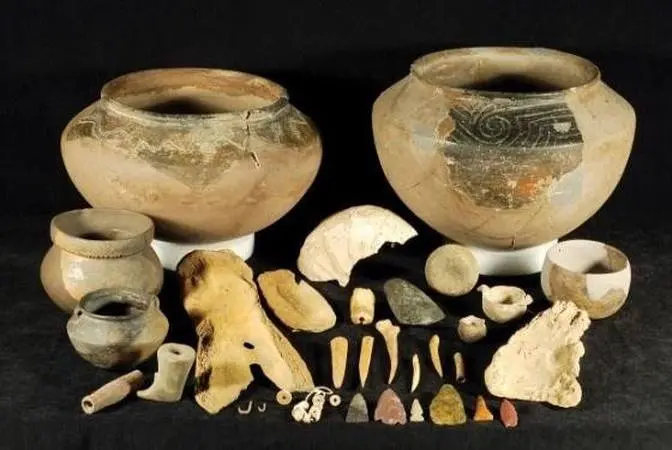
#Archaeology#archaeological artifacts
Welcome to our episode of Biblical Archaeology from the Ground Down,
presented by Bible Interact and hosted by Dr. George Sparks. Join us as we explore the
fascinating world of the Bible from leading experts in the field of archaeology.
Hello, my name is Dr. George Sparks, and this is Biblical Archaeology from the Ground Down,
sponsored by Bible Interact. Today, once again, I got Dr. Dave Graves' PhD. He has received his
from the University of Alberdeen, and he has a number of other credentials that if I go into
every time I read, it takes about five minutes. In all fairness to him, he's excavated on both
the Israel side and also on the Jordanian side. When I excavated at Tell el-Hammam in Jordan,
he was my square supervisor, so he has tons of experience. I recommend that he has a series of
books. We have put them up a number of times for you to observe, and if you would, I think they're
a great collection for your personal home use and also for a church for information on archaeology
and biblical history. So Dr. Graves is going to lead us into more of the early explorers and
archaeologists, and then he's going to give us some of his own experiences in his lifetime
and adventures, and this is going to be a lot of fun. So Dr. Graves, here we go. We've got a couple
of interesting characters that we could talk about as well. So Charles Warren and Charles Wilson,
these two individuals were royal engineers with the British military, and they were dispatched
to do surveys of Jerusalem and the surrounding areas. Major Charles Warren was financed by the
Palestinian Exploration Fund. Now he lacked archaeological experience, but he was a surveyor,
an engineer, and so he was the first person to actually look at Jericho. He wrote an article,
a book called Underground Jerusalem in 1876, but he quit after he didn't find any statues because
that's what he was looking for, the big stuff, as we say, and he drilled seven holes in the
Tyropean Valley in Jerusalem. He had no methods for dating artifacts, and so it was a bit clumsy,
but he identified, we identify a number of sites actually by his name now in Jerusalem.
We have Warren's Gate that stands, we also have, it's about 150 feet north of Wilson's Arch,
we'll talk about Wilson in a moment, a massive stone dated back to Solomon's time.
Warren's Tunnel, Warren's Shaft as it's often called as well, shaft 143 feet long,
so he's responsible for Warren's Gate and Wilson's Arch and Warren's Tunnel and Warren's Shaft,
they're all named after these individuals who were quite important and famous. So that's pretty much
the work on Warren. Now Wilson was an engineer as well, and he was a Sir Charles Wilson,
he was knighted Captain of the Royal Engineers, and the preliminary survey by Wilson
is even used today as one of the key surveys of the region. He discovered the gate to the
outer court of the temple and Wilson's Arch, you can still see it today, large Herodian stones
that he discovered. So he's of significance, and you can even today walk underneath of Wilson's
Arch in Jerusalem as you go underground. And then there's also beside that Robinson's Arch,
a guy by the name of Robinson that discovered that, and you'll see drawings of it,
it protrudes outside of the, it's not the western wall, but you can see the
arch on the outside near the archaeological park in Jerusalem. So a couple of colorful
individuals and important in biblical archaeology. So if you discover something,
often they'll put your name on it, it's like the stars in the sky constellation.
All right, so at this time, you know, I'm going to ask you personally about your own career and
what have you got out there, and you find stuff, you get anything named after you?
I know lately, there's lots of graves. Okay, lots of graves. Yeah, that I guess so.
So tell us about your own personal experiences, if you will. Okay, great. I've been working in
Israel and Jordan and Turkey for probably over 30 years. My primary work was at Tell el-Hammam for
15 years in Jordan that we've identified as Sodom. We've talked about that, I think,
on another podcast. I had the opportunity of working at Qumran, cave 53, where we excavated,
we were the first to excavate a Qumran cave down to bedrock, doing a scientific excavation of it.
It is, we identified it as one of the Qumran caves, cave number 12. But they did a survey
of the whole region, finding caves around the Jordan Valley region. And this was number 53.
So I excavated there, we were there, I think, two weeks or so. Interesting that recently,
it was just announced here. And this was back in 2018, when we excavated the cave.
Recently, we just hear that they found another cave south of us near En Gedi. It's probably a
couple of miles south of us. They were excavating another cave down there, they found some Roman
swords that were, they date back to the time of the Bar Kokhba revolt, or the Romans,
whether it was the Romans that put them there, or the Jews that had Roman swords,
is undetermined. But it dates from that time period. We didn't find any swords, we did find a
blank scroll that didn't have anything written on it. But the pottery matched what we found at
Qumran. The photograph behind me is actually where I'm standing, overlooking the plateau at
Qumran. So that's where our cave was located. We did find a Neolithic arrowhead, beautifully done.
The napping on the flint was just perfect. And that would date to the Neolithic period,
prior to the Roman period, obviously. So people were using these caves for a very, very long time
in antiquity as a place to live, to hide, and to store some of their finds. We found, I was the
director, I was the director of the finds, I recorded all the finds from Qumran. We had about
12 or so people that worked in shifts, the caves, the caves were small, so we couldn't all get
inside of them. So we ended up splitting it up into like two shifts. But everything that they
found, they had to bring out to me, and I had to record it and document everything
that was found in the cave. We found about 800 or so artifacts, mats, and cloth pieces, and
carnelian stone jewelry, the flint arrowheads, pottery, of course. So we found about 800 pieces
in the cave of the Excavated Down of Cave 12. And then I worked at Shiloh. My good friend,
Dr. Scott Stripling is the director there. And I worked at Makahder with him briefly,
and then I excavated with him the first season that he was the director at Qumran,
where we did some of the wall structures. And I think they're on their third or fourth season
right now at Qumran, or at Shiloh. And that was a great experience to be able to work there the
first season. And then I've also worked at the Temple Mount Sifting Project, where we do the
wet sifting, which was transferred from Jerusalem to the first site that was ever used on outside
of Jerusalem, which was Shiloh. And my good friend, Stephen Rudd, developed the wet sifting
station that we use there. And wet sifting is different from dry sifting. We dry sift things,
but you still miss smaller artifacts, such as boule or seals, cylinder seals and
things of that nature. And so they found a number of coins and some
seals due to the wet sifting that we did at Shiloh, which is quite exciting. And I found
myself, I found a coin, probably a putah, a small coin, smaller than a penny, at the wet
sifting project and the Temple Mount Sifting that they did. It was the debris that they took from,
they were, the Palestinians were excavating and trying to put a,
excavating around the Temple Mount, and they took all of the dirt and the soil
and put it on a dump. And so Gabriel Barquet decided that he would take all of that soil
and sift it, even though it's not in context, it was still important for us to do dating,
still important for us to identify finds. A friend of ours, Frankie Snyder, she was able to find
some of the marbles, squares in different shapes that were the part of the floor of the Temple
Mount. And she was able to reconstruct what the Temple Mount floor looked like, or parts of it,
from the tessera and the little, small pieces of marble that she would, we were able to,
to get out of that sifting project. So it's been a fascinating career. And then, of course,
on Tell el-Hammam, I worked in the Roman area and identified what I believe to be
the Roman city of Livius. And of course, that's famous because that's where
John the Baptist was arrested by Herod Antipas, who I believe was living at Livius,
and then just imprisoned down the road at Makaras, from where we are at Tell el-Hammam.
Well, it's been a fascinating career. Wow, pretty cool. So tell us about now,
you told us about your career and some of these other individuals that have excavated around
Jerusalem at the very earlier stage. It's more like exploring at the earlier stage than actually,
you might think of a systematic, academic archaeology as we do it today.
However, this development of archaeology, as we do today, has taken time. And also,
you're going to share with us how it is done. And it's not like an Indiana Jones movie,
where they're all getting together. And all of a sudden, they're digging, and all of a sudden,
they got this great find. And then they got to hide it from the enemy or something.
Tell us about how do you dig? What's an excavation? Well, an excavation is a long process.
First of all, you need to identify a towel or a mound where civilization was living. You need
usually three or four pieces of information for that. Had to be defensible, had to have water,
and had to have evidence of people living there. You have to get a permit, then you have to go
to the governments, whether you're in Israel or Jordan, to the Department of Antiquities and
apply for a permit to excavate. You have to do a survey of the site. So it all has to be
laid out in squares. So you have a surveyor come in and lay it out square by square.
Then you begin your excavation of the towel. And it's done in phases. You have data collection,
where you have to collect the data. The surveyor gives you your plot, gives you your measurements.
Then you do the analysis, and then you have to do reconstruction. The excavation methods that
we use vary from site to site. The traditional method that's being used is a British method by
Wheeler. It's called the Wheeler Canyon approach, where we divide everything up in six-meter by
six-meter squares. And we leave one meter in the north and the east unexcavated, usually,
not always. But that's how you do your stratigraphy. And it's also an area where
you can walk around the bulk. You have a meter that you can walk on. The American method is
normally called the architectural. We use that in part at Tell el-Hallam in the Roman area,
because the structure of the Roman bath complex was so large and so well-preserved, and the walls
were intact that we didn't have to... We divided it up into squares for our drawings and for our
measurements. But then a lot of times, we would take the meter bulk out in the northeast,
because we wanted to see all of the structure. So the structure itself was easy to identify and
could be measured with these large ashlars. And then we have an Israeli method, which is
a combination of those two that they use in Israel. Okay. Let me ask you then. I'm kind
of curious on this one. You said, first of all, you got to go get a permit. Let's say...
Okay. I want to go get a permit. What are they going to ask me? What do I need to have going in?
I'm sure if I have a stack of money and I can afford a permit, that stack of money ain't
going to be good enough to get a permit. Do I have to have some PhDs on board to prove that
this ain't going to be some kind of an archaeological rummage to make sure it's
systematic, to make sure it's done correctly? What would they ask me if I want to go get a
permit? Generally, you have to write a proposal. And so you have to lay out your rationale for
why you want to excavate it. Generally, you have to have a hypothesis of what you believe the site
was. That's a scientific method. We believe that Tell el-Hammam was Sodom. So we had to
lay out our reason and rationale for that. Of course, being connected to the Bible,
that always raises eyebrows unless you're in Israel and you're dealing with Hebrew University
and you're not dealing with Tel Aviv University, which is more liberal.
So you make a proposal and you put together what you're planning to do, how you're going to
excavate it. And you usually have a certain area that you propose starting with and certain squares
that you hope to excavate. And then each year, that develops. I mean, we were 15 or 16 seasons
at Tell el-Hammam. Dr. Collins had to do the proposal. So each year, those develop. You pick
a new area that you want to excavate. But what's interesting on our site was that it was used for
agriculture around the lower Tell. So some years we would come back and they would have used
it to plant their banana fields. And so we would end up having to, the temple area we excavated
that one year, we came back the next, it was all planted with bananas. So we couldn't excavate.
So you have to rotate where you're excavating. So sometimes archaeologists pay, as they do in Israel
and in Turkey, you pay the landowner to excavate a certain spot and then you replant it
for the next year and you rotate like you would the crops. The year that the land is fallow,
you excavate. And so you have to work around the agriculture. Whoa, I didn't know it'd be like that
complicated. Yeah, I work around the banana field. That's right. And so our temple complex
is actually underground now and they've come through with the agriculture and they've plowed
in part of our temple mount, not temple mount, bath complex that we were excavating in Jordan.
Because they get a farm and they're going to make a living and it's owned by a local farmer.
The guy's name is Abu Ahmad and he has passed away a couple of years ago and his family and
his sons manage the plantations around it. The higher Egyptians have come in and sometimes we
work with them and we have Bedouin who come in with their sheep and their goats to settle with
their tents around our temple. It's just like going back in time, really. So to get a permit,
you might have some kind of a religion, political, also financial. You got a lot of
different angles. So this isn't like, oh, we want to go dig and here's the land. Well, you know,
this is my land. If you want to dig, I don't know what it'd be like $20,000 a season. Okay,
here's your $20,000. Leave me alone. And it doesn't work like that. There's a lot more to it.
And it has to be negotiated every year? Every year has to be negotiated with a proposal.
We have to raise money. Dr. Collins had to raise, I think around $30,000 to give to,
you know, the Department of Antiquities. And then we had to pay the landowner. He received a fee
permission to dig in his land. And then we had to pay the bus drivers and then we had to pay
the workers that we have to help us with the goof was licking our dirt out of the square. And
I did some fundraising. I was able to find one of the Roman mile markers up in the Wadi.
They want to put in a museum. So I raised funds at my university to hire a front end loader so we
could drive up into the Wadi to recover the Roman mile marker that I had discovered. One of them
sits at the Mount Nebo museum that I used to identify Livius. But I found another one on the
Roman road. I was the first person to GPS the Roman road from Mount Nebo or Heshbon down to
what's known as Livius. So let me get this right. I got to stop you because you found a Roman mile
marker, right? Is that what you're saying? Yes. Well, they should call that Graves Roman mile
marker. You can name it after you just like Wilson and Robinson. There you go. I said,
man, if you want this, everything's a negotiation. You know, it's got to be Dr. David Graves Roman
mile marker. And there you go. Well, what's interesting is that our first season at Tel
Hamam, they built a mosque. Abu Ahmed built a mosque at the foot of our tell.
And when I brought the Roman mile marker back, it was supposed to go to a museum,
but it never ended up there. It's now sitting at the mosque at the foot of Tel Hamam,
sort of all overgrown, but it's still there. And that's where it sits. My Graves mile marker.
You know, that's interesting. You know, in time, things seem to work their way to museums anyway.
I think, you know, since I, you know, I go out and I acquire artifacts for museums. I don't
acquire artifacts for individuals. I don't do that. It has to be here in the United States.
It'd have to be a licensed 501c3, a nonprofit. But a lot of artifacts that I acquire can come
from like personal collections that, you know what, mom and dad were interested, but the kids
don't care. That kind of thing. Sure. Or, you know, they're in a collection, but they're not
a part of a collection because they're pretty, but they don't really understand the value.
And then I'll get some benefactors and get it together. And then these artifacts go from a
private collection, family collection into a museum where they can be properly displayed
and appreciated. And David, I believe, you know, your mile marker will get there. Sometimes it
takes a little time, but you know, it'll end up.
Now, what's, what's interesting is that excavation is just part of it.
Measuring, documenting, writing down all the measurements where you find it, how deep,
it's just part of it. Then you have to do the drawings of the square. So everything has to
be drawn out. We do photographs of the square. We do photographs of the artifacts. I have to
wash the pottery after the day's dig. We take it back. We wash it all because you could have
inscriptions on things. You could have painting of pottery, painted pottery. Then we have to
send it some of it away to a lab, sometimes to be dated. We use carbon dating for some things
that are carbon. We have brain samples. Those have to be handled differently. We don't want
to contaminate them. Then we actually do the publishing of the find. So excavating is just
part of it. If you don't publish it, it's lost. It's a destructive science. So we tear the walls
down. We document them as we go. If we don't document them properly, we destroy them.
They're gone forever. And so if we don't publish it, then they're doubly destroyed.
So we have to publish. We have a saying in academia, publish or perish.
But every site needs to be published. Now, a story that goes back to Kathleen Kenyon,
she didn't publish her finds until after her death. And her claim that the excavation at Jericho
is just supported now by what she actually published or was discovered
that she found some Philistine pottery. There's a lot of it. And she said there wasn't anything
there. So some of her conclusions have been challenged because she didn't publish while
she was living. It was only published posthumously. So it's very, very important to publish.
And then finally, we do conservation. I was part of the team that did the conservations in the
first season at Shiloh. I invented a process using the cement gun where we were able to,
with the help of Dr. Lane Rittmeyer, the archaeological architect, he had a formula
for mixing up a certain kind of concrete and use the color of the soil. There's no cement in it.
It's using a lime. And we picked up, we mixed up a slurry. And I found a gun, a mortar gun,
a large mortar gun at the hardware store in Shiloh. And I said, this will be perfect.
So we loaded it up and we were able to inject between the stones, this concrete mortar,
and we're able to preserve the stones. And even to this day, they're continuing to use that same
process. And they don't, you can't see the difference. You look at some sites around
Israel and it's a mess, the conservation that they did. So I actually contributed to the
conservation methodology that's ongoing and developing to what we're doing at Shiloh.
So wet sifting is new. The way we're doing conservation is new. I developed the iPad
app that we use to collect all of our data using PDFs.
All right.
We were using iPads that were sealed out in the field to collect all of our data that we were,
instead of writing it on a piece of paper, we put it and we would upload those every night.
I believe they're still using that process in Shiloh.
That makes more sense. And using all those paper forms because you got, well, there's so much
documentation on the paper form where you go into the color of the soil. It's heavily documented.
I was trained on ground penetrating radar for my trip to Mount Ararat, which may lead into our
next podcast sometime on Mount Ararat and Noah's Ark.
Wait a minute. You've been on Mount Ararat? You went to Mount Ararat?
I went to Mount Ararat. I didn't climb to the top, but I was able to climb into the Ahura
Gorge on the Armenian side, which is rare. I was probably one of the first Westerners to
climb on that side. I have a whole story to tell on that with being arrested or
detained and confiscating of my camera.
That'd be funny. You got arrested. You got a picture of you in handcuffs?
No, we got detained. I would put it that way, perhaps.
Oh, wow.
I have a whole story on that.
Well, it'd be more intriguing to see a picture of you in handcuffs. You can make all kinds of...
But you picked the lock and got away.
Well, one of our guys was actually arrested or detained in Israel. He was doing a tour without
a guide permit. He was guiding without a guide permit, which is kind of funny. We always joke
about our friend being arrested or detained for guiding without permits.
Okay. Well, you know what? It's been interesting. We learned about some of the early explorers.
Fascinating about Sir Flinders Petrie. His brain was preserved in formaldehyde. That's
pretty unique. Your adventures and also how an excavation is done. Not necessarily just
getting a bunch of people together and choosing a location and start digging. It sounds very
complicated to deal with a country. It's politics, it's religion, and of course,
financially. That's a big part of it too.
Then lately, this last where you talked about you and your friends getting detained in handcuffs
or whatever. I'm going to leave it there because that's pretty good. We'll leave you with the
police today. When we come back, did we finish this book? You know what we could do? Let's talk
about Mount Ararat if you'd like. You left us with that. You're the one that started this. You
said you went to Mount Ararat and got arrested. Come on. Now we got to find out what was Dr.
Graves' PhD doing on the mountain, getting arrested. We got to find out. Stay with us
next time, folks. This is going to be good. Join us again with Dr. David Graves. Doctor,
thank you for being with us today. I appreciate your time. Have a good day, everybody. My name
is Dr. George Sparks, sponsored by Bible Interact. Don't forget to like and subscribe.