
Attention to Detail: How Korea's Only 3-Star Michelin Chef... | THE GLOBALISTS
28 Video Views·Oct 17, 2024
The restaurant “Mosu” run by chef Ahn Sung-jae became the only dining establishment in Korea to earn 3 stars from the Michelin Guide in 2024, a culmination of its remarkable rise in Seoul’s restaurant scene since first opening in 2017. Chef Ahn had previously run a Michelin 1-star restaurant in San Francisco before deciding to move to Korea to explore the coutry’s diverse range of ingredients. His philosophy revolves around providing guests with a unique dining experience by invoking a sense of warmth and nostalgia through his cooking.
In this week’s edition of the Globalists, we sit down with chef Ahn Sung-jae to learn about his journey in the world of fine dining and his take on how to facilitate the global expansion of Korean cuisine.
Secret to getting a star.
Is it important?
Our service team.
I tell them to take a ballet class.
Why?
Isn't it wonderful to see Korean restaurants pop up all over the world
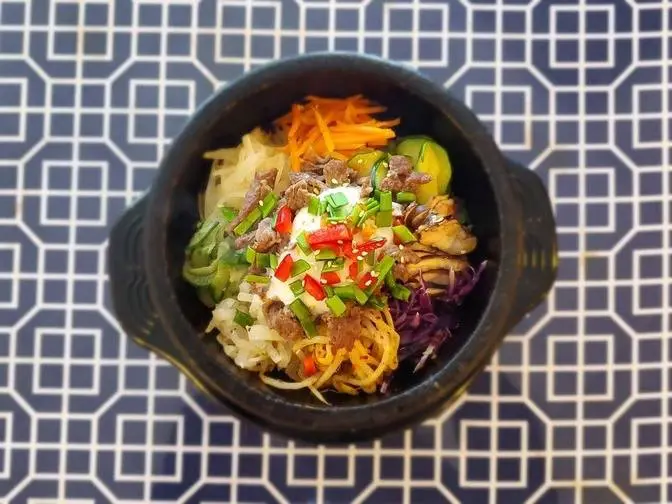
and Korean food like bibimbap or kimchi really being enjoyed by people everywhere?
But in the world of fine dining though,
Korean fine dining has yet to become established.
But you, Chef Ahn, Ahn Sung-jae, is on a path to change all that.
Your restaurant, Mosu, is Korea's only Michelin three-starred restaurant.
So Chef Ahn is here with us to talk about what makes Korean fine dining so unique
and why you should definitely try it out.
Welcome, Chef Ahn, to The Globalist.
Thank you, Jie.
Sung, please announce our three-star restaurant.
Restaurant Mosu.
So congratulations on your second three-star.
Thank you.
It's not two stars, it's a three-star,
but it's two years in a row that you've gotten your three stars.
Yes.
I hear that pretty much in Korea,
and pretty much you've always had a Michelin star, whether it's one, two, or three.
So what's the secret?
Well, secret to getting it?
Yes.
Secret to getting a star.
It shouldn't be about the stars.
It should be about running a restaurant where people come and eat.
So our main focus is how did we do today?
How was our performance?
And we review, and we do it the next day.
Hopefully, we do better.
And then daily basis and weekly basis,
we review ourselves and then make sure that our guests are having a good time.
And we try to make it better in every aspect of it.
And once we start doing that,
and then once that continues to the daily basis,
I think like Michelin or any other people who comes in to kind of review our restaurant,
I think they will find it as a great restaurant
because of our effort, like relentless effort to make it better.
So tell us about the outcome of your efforts,
your cuisine, the food that really says it all.
Describe your food.
In the past, you would say it's French, it's Japanese, it's Korean.
And that wouldn't really make sense to everyone.
But I think in modern days,
especially now when everything has evolved so quickly,
the cross-cultural, the multicultural,
how difference between each culture kind of collides together,
especially myself coming from US,
you know, did like a Japanese cuisine, French cuisine,
the classicals and learn how the new techniques.
And once we combine the ideas together, it becomes something very new.
You're going to have to describe a dish and how that comes together.
Yes. So I have this dish called abalone taco.
Oh, they tell me it's to die for.
Abalone taco.
When I was growing up as a teenager, I could actually walk down to Tijuana.
Even in San Diego, there's like, you know, burrito shops, taco shops everywhere.
Everywhere.
And it's so good.
So it's kind of my soul food that I grew up on.
So I came to Korea and I see this beautiful product of abalone.
Korean abalone is one of the best abalone you could find in the world.
And I was like, how can I express this in my own lens, you know, how in my style?
And because I did a Japanese cuisine, there's something called yuba.
When you cook soy milk and then you slowly heat up, there's a protein layer on top.
Film.
Like a film.
We throw it away, usually.
Yes, you throw it away.
But that's actually a protein coagulating.
So we scoop that up and then we make it into crispy taco shell, which is a tortilla.
Wow.
So instead of using corn or flour as a tortilla, we use that yuba as a taco shell.
And then we use abalone into the shell.
And you use different vegetables and seaweed because abalone feed on the seaweed.
So make the flavor come alive.
So there's a texture layers and the flavor layers and all this mixed together.
Just like you said, even though I explained, you can't really wrap your head around like,
how is it going to taste?
How is the texture?
So you actually have to experience it at the restaurant in order for you to understand.
So I think that when that comes together,
in my mind, that's one of the most beautiful things that you could experience in food.
I really will have to go to your restaurant to taste it
in order to know truly.
But it does conjure up images of being experimental at the same time,
but really trying to break barriers and really forward-looking type of thing.
Is that what fine dining really is about?
No, no, I don't.
I don't have any barriers.
You said breaking the barriers.
I don't have any barriers to break.
I don't set any lines where I can cross and cannot cross.
I just utilize everything that's surrounding to me
and having an idea or the childhood memories or whatever I experienced.
I try to bring that and then put it on the plate for people to enjoy.
So it's more of like showing and sharing my ideas and my life on a plate.
I utilize using cooking as a tool rather than,
OK, I have this genre of this here.
I'm going to show this to them.
Experimenting, no.
Experiencing myself.
I have to make sure that their experience as a guest has to be in a certain standard.
So it cannot be experimental.
It has to be good.
It has to be very, very good.
It has to be satisfying from the start to finish,
or else, you know, I can't really call it fine dining.
So what would you like your customers to experience when they go to your restaurant?
The food has to be excellent to everyone that comes in, hopefully.
But there are layers of things that we do to make sure,
not just the food, but the service.
Service, to me, we have this motto in Mosul that comfort is new luxury.
When you think about luxury, it's really about, for me, it's about comfort.
So we try to make guests comfortable,
more comfortable than they could be at home, you know, more comfortable at home.
OK.
So when they turn their head, we're not like scoping down,
but we actually know by instinct that they need napkin
even before they realize that they need napkin.
You know, we try to stay ahead.
So I'm just giving you an example of like how much we care
to make sure that they have this amazing time at this place.
But that is my standard as a three Michelin star restaurant.
Every restaurant has a different opinion about what kind of experience that you want.
You want the music to be loud.
You want this to be more of a drinking place,
or you want this to be more loud and more, you know, a comfortable place.
You know, I think for me, it's a whole package
rather than you like one of the just linear thing of just eating.
And you talk about feeling very comfortable.
Our service team, I tell them to take a ballet class.
You know, why?
You know, you sitting down for three hours, two, three hours.
You're watching them serving your food.
If their movement is, you know, robotic or stiff or kind of, you know, awkward,
you're not going to feel comfortable.
You know, you're not going to feel amused or entertained by that time.
So every movement, even for the last touch,
when a server drops the food has to be beautiful in a way.
But we talked about before about in the world of fine dining,
Korean food is still not really made a presence.
Sure.
Is that true?
It's in the process.
Yeah, I think it'll be there.
Why is it important for Korean food to be known as a fine dining establishment?
Is it important?
You know, depends on how you look at it, which angle you look at it.
But for me, I look at it as a more cultural way.
As a chef, you know, we look at the ingredients,
we look at this geography, the culture.
There's so much to share.
There's so much to share that hasn't really been shown to people from all over the world.
Something simple like kimchi fermentation,
there's rice and galbi and kimbap and bulgogi.
It's everywhere.
I think people would actually understand like, oh, I know what that is.
But just like every culture, there's so much more in depth to it.
And fine dining, whether we study the tradition
and then we bring something from the Joseon dynasty or Goryeo dynasty,
or we think of something very contemporary
and create something that has a possibility of being tradition in the next 100 years.
We think about that too.
If you look at every generations or dynasties in Korea or any other country in the world,
the culture that they have now, it came from somewhere.
It derived from something.
So why is it important for Korean fine dining to push forward now
is of course for the present, but also for the future.
This is more of like a core of identity of our culture.
And the food is a strong part of it from every culture.
That's why it's very important for a fine dining level to push forward with Korean.
But it sounds like it would be a very challenging thing
because when they come and they expect this from you,
because they're not going there to choose.
They're going there to experience what you have created.
So the expectations are quite high and that must be really hard.
When we were unknown to the Korean diners or even international diners,
we didn't expect to be in the forefront of this Korean cuisine.
But now, like you said,
As Korea's only Michelin three-star restaurant.
I'm put in this position whether I like it or not, whether I choose or not.
And I have to, I take it.
Foreign guests, they would come to Korea, you know,
and then they probably stay one, two nights
and they look at whether it's Michelin guide or any guide to come.
Which restaurant should I go to?
That's what we do when we go to other countries too.
So they come and they look at, oh, this is the best restaurant, they say.
So they will come and they will tell me, they will walk in and they say,
I came to this restaurant because I heard this is the best restaurant in Korea.
So I would judge subjectively that whatever the experience that I have tonight
will reflect the whole Korean food scene, restaurant scene.
And I don't want to misrepresent our great culture.
I can't really tell them by, oh, there's so many options.
You have this and that, but they don't want to hear that.
They came to the place, they came to the best restaurant in Korea
and then they want to experience something
and they will decide whether they will come back to Korea
or they will stay longer in Korea
or whether they go to different restaurants in it.
Yeah, never go to a Korean restaurant again.
So they tell me that.
When I hear that, the pressure skyrockets
but I have to make sure that I stay composed
and then make sure that everything is right for the table.
Hugely challenging, but at the same time rewarding.
Very rewarding, very rewarding.
In order for me to be here, even here as a globalist
or at the restaurant daily basis,
that people come and have their expectations through the roof.
And when they say, you know, the compliment that they would give us
and it means the world, you know, it means the world.
And then we come back next day, hopefully we come back stronger.
And there's a saying, I tell my staff members,
what is the most important food as a chef for you to make?
You know, what is the most important dish?
And no one gets it right, but I tell them it's the next dish.
Because last night's dish, we've succeeded
because we, you know, satisfied all the guests.
But that's not important anymore.
Our most important dish is the dish that we make it next.
So that's kind of the mindset that we have at Mosul.
So you talk about how you got the inspiration for the abalone tacos
and it goes back to your childhood.
But what are the roots of your cooking?
Who is your inspiration?
To think back of who has influenced me,
not the style of plating,
but flavor of how I think about the food is my grandmother.
Grandmother chef, kind of cliche, you know, but it's true.
It's so true that the food that they made, you know,
so much love and so much technique and the knowledge that they have provided.
And then I think that generation of the Japan annexation
and the Korean War is traditional, yet also very regional too.
And regional is nostalgic, you know, for me,
because it's the style of thing that they always cook.
And whatever they cook, it makes sense.
Maybe at that time, I might dislike something.
I might enjoy something more, so they cook more.
So like, they're from North Korea.
They're both from North Korea, my grandfather and grandmother.
And they would make naengmyeon.
They make yakgwa, which is kaesong yakgwa.
They would make ginger rice syrup, ginger cookie, Korean traditional cookie.
Or they could make a potato dumpling, which is very North Korean.
So I grew up on that.
And when I say they influenced me, it's the food that I miss the most.
Food that I, okay, what do I want to eat?
Okay, I want to have that, which I cannot.
You know what I mean?
Do you talk to her at times when you create food?
Unfortunately, she passed away before I became a missionary star chef.
In your mind, you have this dialogue with your grandmother?
I try.
As we grow older, in the connection between family,
inevitably, there's a distance to it.
But I try to, from time to time, I reminisce.
I try to remember her, how she feels, how she made me feel.
And I use that as a weapon.
I use that and utilize that feeling.
I put it into my cooking.
I put it into my restaurant so that they feel that somehow, some way,
that when I, through food or through the ways that we try to serve the food to the people,
or even the ambience or just the air,
I try to give that warmness to people.
What is Korean food to you?
Korean food, it's definitely a soul food as a Korean.
But as a professional chef, I don't want to just,
because I'm Korean, this is Korean food, I'm pushing Korean food.
I don't want to say that.
That would be kind of unfair to many people.
Or that wouldn't be explaining it right.
There's a reason that I came back to Korea after success in San Francisco in a restaurant.
I came to Korea to travel and to explore while we opened in San Francisco.
Where you already had one Michelin star restaurant.
Michelin star in San Francisco.
I came to Korea and all I knew, all I knew is I grew up in the U.S. too.
So all I knew was my family food plus what restaurants serve in California or U.S.
I didn't know the diversity of the depth of diversity in Korea.
So I traveled around the Korean peninsula and there's so much to offer.
There's so much ingredient that I have never tasted, never seen before.
There are the farmers that put all their love and effort into it.
The orchards, the fruits that from different region has different flavor.
You know, like all this in a small country,
but there's so much to offer that has not been discovered yet.
Not even to Koreans.
We're talking about, you know, seven years ago,
short time, but Korea, you know, so it changes so quickly.
So seven years ago, and I would go to find dining restaurant there and then
everyone would have exactly same, you know, method of serving it.
And then this is hotel style, you know, the standard style.
First course, second course.
Right. And then they have this term.
And if you're anything outside of that box, then it's like, oh, this is not right.
But in my viewpoint, I was like, why, why is that?
You know, and I and then from there, I was like, there's so much to offer.
Why are they serving asparagus from, you know, France or Japan or U.S.?
There's so many different vegetables here that we could offer to
just Korean diners and also to foreigners that could showcase what we have here.
So I have this thought and I went back and that's one of the reason I came back.
I was like, OK, actually, I have to go back.
I have to go open a restaurant.
You brought an entire family back to Korea.
Yeah. And also my family wanted I wanted to be closer with my family, immediate family.
Yeah. So it wasn't it wasn't a difficult decision.
Many people said, OK, why are you leaving San Francisco?
There's California products are beautiful, this and that.
I was like, I understand.
But as a Korean and also as a chef, I'm curious what is what possibilities we have in Korea.
And I want to go see what the possibilities are.
So what part of your curiosity led you to open Mosu Hong Kong?
Hong Kong, one of my favorite city in the world.
It goes back to, I think, what I've shared earlier about emotion.
I grew up in San Diego, in L.A.
And during that time, during the early 90s, Hong Kong flicks, Hong Kong movies.
It's everything we have everywhere.
Yeah, it's everywhere.
It's the most popular thing.
And then you see this Hong Kong sunglasses, a toothpick out, the trench coat.
And then, you know, as a young boy in California, as a minority.
And obviously, there are a lot of racism within different neighborhoods, different cities.
So for me to experience that and wanting to stand up for myself, my race,
you know, as an Asian, as a Korean, you know, we go look at the flick, OK?
Oh, we can actually be strong.
And then, you know, you have to beat up a lot of Western guys.
You know, you have this thing.
Yeah, so you have this.
So growing up from there, I always wanted to go to Hong Kong.
And every time I go, I feel like I'm in that movie.
You know, I feel like, oh, I remember that.
The building, I see that.
I visited Hong Kong before, and I met some people that really,
really enjoyed their time in Seoul, Motor Seoul.
So we've been talking a little bit, but I couldn't really find time.
I couldn't find opportunity to go there and actually work on it.
But during COVID, I actually had a little more time.
You had a lot more time, a lot more time.
So and, you know, obviously, the business was in a big jeopardy.
Very, very little business, if I understand.
Especially in Hong Kong.
In Hong Kong.
But they wanted, OK, COVID will go away at one point.
So for now, it's kind of weird to open business now.
But let's start prep, prepare ourselves to introduce Mosul to Hong Kong market,
which is, I think, the world market.
So I thought it was a great idea.
I need some time to go somewhere because I didn't really have much to do.
So I went.
We started working on the project, location, the menu and the chef and partners.
And now, yes, it's in one of the biggest museum in Asia.
Yes.
Which is M Plus Museum.
How's it doing?
It's doing great.
You know, the Korean food phenomenon.
I can imagine.
And what's next, Chef Phan?
It's the first time relocating my restaurant in Seoul.
But near where it was.
Nearby, I have a beautiful place.
I think I could well represent the best restaurant in Korea in the new space.
We're working on it.
There will be a lot of upgrades, in my opinion.
But that is also not the end of what is next.
I think what's next is the topic that we're talking is Korean food,
the culture and the restaurant business in the industry.
Korean food is getting more famous and people are noticing more.
But that doesn't mean the Korean restaurants are doing better.
Obviously, there's the economy and the political issues and this and that.
But import and export laws and those things have to be, I think, updated.
All the infrastructure has to be restored.
From the Japanese annexation time, it hasn't changed at all.
What I can do as a restaurateur and fine dining restaurant chef
is to kind of challenge that status quo of this old way of doing it.
Food can develop, it can evolve, it can be something crazy, something different.
But if the infrastructure is followed through,
it cannot grow as a whole society and the culture.
It's probably a great time to do it because I think there's a much better understanding
about the possibility of Korea's restaurants as a big industry, a potentially global industry.
They understand.
I think we have to cohesively work together.
I think it can actually happen.
So I'm hopeful.
I hope you great success in both your restaurant and your non-restaurant endeavors.
Thank you, Jae.
And that's it for me.
I will be back next week with another globalist who's putting Korea on the map.
Soong-G out.