
Khufu: The Great Pyramid Architect
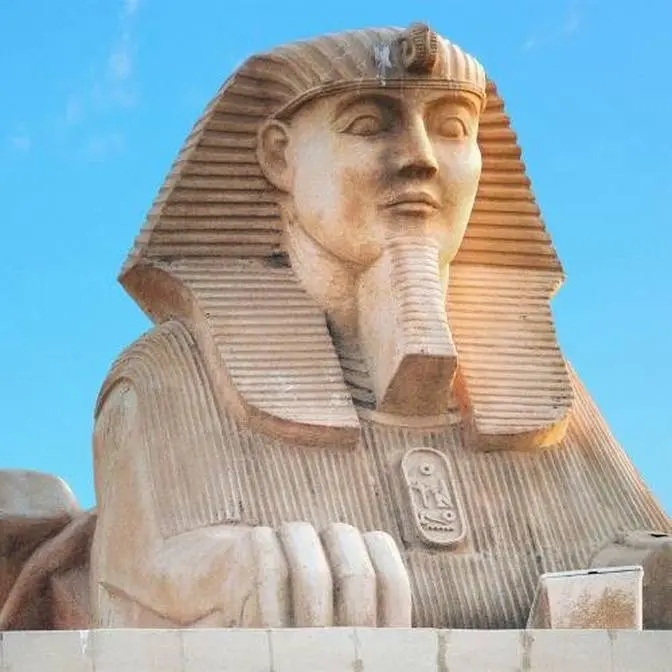
Ancient Egypt, the land of pharaohs, pyramids and mysteries that continue to captivate us.
Imagine a time when mighty rulers warped the earth, leaving behind colossal monuments that
have withstood the test of millennia. Among these legendary figures stands Khufu, a name synonymous
with one of the most iconic structures ever built, the Great Pyramid of Giza. But who was Khufu?
What do we really know about the man behind this architectural marvel?
Khufu's reign marked a pivotal period in Egyptian history, a time of unprecedented prosperity and
architectural innovation. His story takes us on a journey through the sands of time,
offering a glimpse into a world shrouded in both grandeur and mystery. Join us now as we
delve into the life and times of Khufu, the pharaoh who forever etched his name in the annals of
history. His story is a testament to the ingenuity and ambition of a civilization that continues to
inspire awe and wonder. To understand Khufu's significance, we must first journey back to the
era known as the Old Kingdom, a period spanning from roughly 2686 to 2181 BCE. This era represents
the zenith of ancient Egyptian civilization, a time of unparalleled peace, prosperity and
artistic flourishing. Imagine a land bathed in the warm glow of the sun, its fertile fields nourished
by the life-giving waters of the Nile. The Old Kingdom was a time when pharaohs considered divine
rulers, presided over a highly organized society. They commanded vast resources and wielded absolute
power, shaping the destiny of their people. It was during this golden age that the art of pyramid
building reached its pinnacle. Pyramids, those colossal stone structures, served as elaborate
tombs for the pharaohs, ensuring their safe passage into the afterlife.
These architectural marvels stand today as enduring symbols of ancient Egyptian ingenuity
and their unwavering belief in the afterlife. Within the Old Kingdom, Khufu belonged to the
illustrious Fourth Dynasty, a period that witnessed the construction of some of the
impressive pyramids ever erected. The Fourth Dynasty, spanning from approximately 2613 to 2494
BCE, was a time of exceptional wealth and stability in ancient Egypt. Picture a society
where skilled artisans, architects and laborers worked tirelessly, their combined efforts giving
rise to monumental structures that defied the limits of human imagination. The pharaohs of
the Fourth Dynasty were not content with mere tombs. They envisioned colossal monuments,
testaments to their power and legacy, designed to reach for the heavens themselves.
Khufu's reign marked the pinnacle of this architectural fervor, a time when the pyramid
reached its zenith in terms of scale and grandeur. His reign ushered in an era of unprecedented
building projects, forever changing the landscape of Egypt and leaving an indelible mark on human
history. Khufu's story begins with his lineage, a lineage steeped in power and divine right.
He was born into the royal family, destined for greatness from the moment he drew his first breath.
His father, Sneferu, was the formidable pharaoh who preceded him, a ruler renowned for his own
impressive pyramid-building endeavors. Imagine growing up in the royal palace, surrounded by
opulence and the weight of legacy. Khufu's childhood would have been steeped in the
traditions and expectations of his royal heritage, preparing him for the day he would ascend to the
throne. He would have received the finest education, tutored in the arts of leadership,
warfare and religious doctrine. Khufu's mother, Hetepheres thus, also played a significant role
in shaping his destiny. As a powerful queen, she commanded respect and influence, her wisdom and
guidance shaping the young prince into the ruler he would become. Khufu's lineage, a tapestry woven
with power and ambition, set the stage for his own remarkable reign. The Ascent of Khufu Claiming
the Throne. The exact circumstances surrounding Khufu's rise to power remain shrouded in mystery,
a puzzle with missing pieces that continue to intrigue historians. Did he ascend the throne
peacefully upon his father's death, or did his path to power involve intrigue and perhaps even
Ancient sources offer tantalizing clues, but the full story remains elusive.
Some accounts suggest a smooth transition, with Khufu inheriting a stable and prosperous kingdom
from his father, Sneferu. Others hint at potential rivalries and power struggles within the royal
court, whispers of intrigue that add a layer of complexity to Khufu's story. Regardless of the
exact details, Khufu's claim to the throne was secured and he assumed the mantle of Pharaoh,
the living embodiment of Horus on Earth. With his coronation, he inherited not only the vast
wealth and power of Egypt, but also the responsibility of maintaining order, upholding justice
and ensuring the prosperity of his people. Reign of the Master Builder, a Time of Architectural
Wonders. Khufu's reign, estimated to have lasted around 23 years, would be defined by an unprecedented
period of architectural innovation and monumental construction projects. He earned the moniker
Master Builder for a reason. His vision transformed the Giza plateau, leaving an indelible mark on the
landscape and forever altering the skyline of Ancient Egypt. Imagine the scene, thousands of
laborers, skilled artisans, architects and engineers working tirelessly under the scorching desert sun.
The air would have been thick with the sounds of hammers chiseling stone, wooden rollers creaking
under immense weight and the rhythmic chanting of workers as they hauled massive blocks into place.
Khufu's ambition knew no bounds. His vision extended beyond the construction of his own
pyramid, encompassing temples, causeways and other structures that transformed the Giza plateau into
a sprawling necropolis, a city of the dead designed to rival the splendor of the living world.
The Great Pyramid of Giza, a testament to Khufu's vision. The Great Pyramid of Giza, a testament to
his ambition and the engineering prowess of the ancient Egyptians. Even today, millennia after its
construction, the Great Pyramid stands as an awe-inspiring feat of human ingenuity. A colossal
structure rising from the desert sands, its smooth white limestone casing gleaming under the Egyptian
sun. The Great Pyramid was a marvel of precision and engineering, its sides perfectly aligned with
the cardinal points, its interior a labyrinth of passages and chambers designed to protect the
remains and guide his soul into the afterlife. The sheer scale of the Great Pyramid is staggering.
It was the tallest man-made structure in the world for over 3,800 years, a testament to Khufu's vision
and the skill of the ancient Egyptian architects and laborers who brought his vision to life.
Beyond the pyramid, other notable achievements. While the Great Pyramid of Giza stands as the
enduring symbol of Khufu's reign, his accomplishments extended far beyond this
single monument. He commissioned the construction of temples, causeways and other structures that
transformed the Giza Plateau into a sprawling necropolis, a testament to his power and legacy.
Imagine a complex of temples dedicated to the gods, their walls adorned with intricate carvings
depicting scenes from Egyptian mythology. Picture long covered causeways leading from the Nile
River to the pyramid complex, facilitating the transportation of materials and serving
as ceremonial avenues for religious processions. Khufu's reign also saw the expansion of trade
networks, bringing wealth and exotic goods into Egypt. He maintained a powerful army,
ensuring the security of his kingdom's borders and projecting Egyptian influence throughout the
region. His reign was a time of prosperity and stability, a golden age that left an indelible
mark on Egyptian history. Life in Khufu's Egypt, a glimpse into the past. Beyond the
grandeur of pyramids, what was life like for ordinary Egyptians during Khufu's reign?
Most Egyptians were farmers, artisans or laborers, their lives intertwined with the Nile River.
Imagine waking up at dawn, the sun casting long shadows across the fields. Farmers depended on
the Nile's annual floods for water and fertile silt. Artisans created pottery, jewelry and
textiles. Laborers toiled on construction projects, shaping the landscape. Life was a
mix of hard work and simple pleasures. They celebrated festivals with music, dance and
offerings to the gods. Khufu's legacy, an enduring enigma. Khufu's reign, though marked by monumental
achievements, remains shrouded in a veil of mystery. Despite the wealth of archaeological evidence,
much about his personality, motivations and the details of his reign remain open to interpretation,
fueling ongoing debate among historians. Imagine deciphering ancient texts,
piecing together fragments of pottery and analyzing the architectural details of colossal
structures, all in an attempt to unravel the enigma of Khufu's life and reign.
While we may never know the whole story, the search for answers continues to captivate our
imaginations. Khufu's legacy extends far beyond the physical structures he left behind.
He is remembered as a pharaoh who embodied the ambition and architectural prowess of the old
kingdom, a ruler who left an indelible mark on the sands of time. The everlasting allure of
ancient Egypt. Khufu's story is just one chapter in the vast narrative of ancient Egypt. His reign,
marked by the Great Pyramid, shows the ingenuity and legacy of this civilization.
The pyramids remind us of time's passage and human creativity.
Khufu's legacy invites us to explore the mysteries of ancient Egypt. The allure of
ancient Egypt lies in its ability to transport us to a world of gods, pharaohs and mummies.
So go forth, explore and discover the wonders of ancient Egypt.