
ONLY Cooking KOREAN FOOD for a WEEK
12 Video Views·Oct 1, 2024
ONLY Cooking KOREAN FOOD for a WEEK
In this video, I'm only going to be cooking Korean food this week.
So I live in Korea and I'm surrounded by amazing, amazing Korean food.
And I'm going to be honest with you, I think I've been a little bit complacent.
And I'm going to use this week to challenge myself and hopefully be better at Korean cooking
than the week before. Right, Julie?
To start off our first meal, I am going to be making the ultimate Korean breakfast,
which is gyeranbap. Personally, I have so many fond memories of this dish because
my dad used to make it on Saturday mornings when my mom was going to school for her PhD.
For the sauce, there's 25 grams of green onion, quarter cup soy sauce,
two tablespoons of rice wine vinegar, one tablespoon of sesame oil,
one teaspoon gochugaru, Korean chili flakes, and one teaspoon of sesame seeds.
And this sauce, I'm telling you, is so versatile. So I usually like to make
enough to last me throughout the week. My pro tip is to baste the hot oil over the egg
so it puffs up like a cloud and the bottom gets nice, crispy, and golden brown.
Obviously, a drizzle of sesame oil goes on at the end because I'm Korean.
And this, to this day, is one of my favorite breakfast combo because it's quick, easy,
and simply delicious. A taste of childhood. Oh, you know what? You know what would be perfect
with this? Because everything is better wrapped. I'm going to make a couple staple Korean sauces.
I'll be making a thick gochujang sauce that you can use for both stir fries and for tteokbokki,
and also one great for marinating meat. I'm kinda using the first day to meal prep a little bit.
Just all the sauces and stuff because they honestly taste better with time,
and it makes the idea of cooking every single meal a little less daunting.
For the gochujang sauce, it's going to be half cup gochugaru, half cup soy sauce,
half cup mirin, half cup brown sugar, quarter cup rice malt syrup, and half cup minced garlic.
I'm calling it a gochujang sauce, but there's no gochujang actually in it because we're essentially
making our own gochujang. This version is just a little thinner, and it has a cleaner aftertaste
in my opinion because there's no starch to thicken it. I use this sauce for stir fries,
tteokbokki, and even for fried chicken, and it's really really good. And for our protein this week,
next week is actually Chuseok, aka Korean Thanksgiving, so I decided to make some
Into the blender goes in one cup soy sauce, half cup mirin, half cup brown sugar, one onion,
half cup minced garlic. I soaked a kilo of frozen short ribs in cold water for about an hour to get
rid of some of the impurities and blood, rinsed it under cold water, drained it, and then poured over
making sure everything is well submerged. I'm gonna let this marinate in the fridge for two days
so it gets nice and tender. Also another essential holiday dish is japchae, and it's definitely a
labor of love because it requires a lot of veggie chopping, but if you just get it out of the way,
it comes together super quick. I'm also prepping some extra vegetables I need for the day after
because I don't want to clean my cutting board twice. This week I prepped onions, zucchini,
carrots, and Chinese chives, cut into matchsticks, and stored in an airtight container for easy
accessibility. I soaked the sweet potato noodles for about an hour until they doubled in size with
some dried wood ear mushrooms, and I'm making a vegan version without any meat because I already
have a lot of meat heavy dishes, and personally I don't think that japchae needs meat. For the sauce,
it's going to be quarter cup soy sauce, one tablespoon dark soy sauce, two tablespoons sugar,
one teaspoon minced garlic, two tablespoons vinegar, two tablespoons sesame oil, one tablespoon of
neutral oil. And now that everything is ready, we are gonna start sautéing, and maturing is realizing
that one pot meals are the way to go, and I'm gonna be sautéing everything in this white ceramic pot.
You want to sauté from the lightest color to the darkest, starting with the onion, then carrots,
and the spinach. Set the veggies aside, add in half a cup of water along with the sauce, and simmer
the noodles with the wood ear mushrooms. By sautéing the noodles like this, instead of adding the sauce
at the end like the usual traditional method, the color is going to be really nice and golden brown,
and there's a really nice aroma that comes from the evaporated vinegar. Once the noodles have
cooked through, and there's no excess liquid, add the vegetables back in, and combine everything
together. Plate it and garnish with sesame seeds, and there you have it, my fast and easy vegan japchae.
Was it a little bit too much? Yes. But am I Korean? So is there such thing as too much sesame?
No. Warm japchae is such a such a specialty.
Might have been smarter to cut it, because it's a little bit long, but it's so good.
Juni, you want some vegan japchae? The vinegar definitely like cuts away some of the greasiness,
and really just makes the dish taste more like itself. But if you're not a big fan of a lot of
acidity, just cut it down to half. I personally love it. I think it really makes everything come
together really well, but it's up to you. You'll see here that this is a damn good bowl of japchae,
because even after a couple hours later, the noodles haven't gone mushy. They're still tangy
and bouncy like my ass. So store the japchae in an airtight container, and I'll show you how to
I'm gonna make some dinner. My family's over, and we're gonna make some spicy baby octopus
with some bean sprouts. So in Korea, they sell these frozen baby octopuses,
and it's so easy to cook with it. You just have to defrost it in some water, and voila.
And for the veggies, I already have them pre-prepped with the carrots, cabbage, onions,
and some bean sprouts. I'll just assemble this outside because the weather's so nice,
and it's actually cooling down. So we're gonna celebrate that by eating outside.
I'm sorry that the mic is here, but we're trying to do ASMR con- oh, do I have sauce on my knees?
Delicious. Hey, Julie! But it's the only way right now because we're doing ASMR.
The sauce is so killer. I know rice malt syrup is pretty difficult to find,
but you gotta find it. It makes the world of a difference because it's like not too sweet,
and honey is unfortunately not a good substitute because honey just has that like almost like
medicinal aftertaste to it that's like not nice, especially when it's cooked.
But rice malt syrup, it has that like almost like molassy
like molassy aftertaste, and it's just so nice.
Wow. Oh, there's something magical about eating it outside also.
Good morning! This morning, I'm gonna make some gyeran gimbap, which is rolled egg gimbap.
I'm not sure if you've caught on at this point, but I really love eggs,
and that's the end of my story. Anyways, I'm gonna use the sauce mixture I made the day before for
gyeran bap to flavor our omelet. I'm also going to add a little extra carrots and scallions to
make our cross-section later beautifully speckled. To make a Korean rolled omelet,
first you get your pan hot, drizzle in oil, and roll from one end of the pan to another. Then
just pour in a little bit of egg mixture at a time, making sure to lift up the omelet so that
can stick on to the new layer. Keep on rolling like you would with a dubi. And there you have it,
a kind of ugly shaped omelet, but don't worry because this is Korea, and we can fix that with
a simple plastic surgery of wrapping it in a kitchen towel, tight into a cylinder, and setting
it aside. Now comes the fun part, assembling the gimbap. Two things you need to know. Number one,
the rice should never be hot because too much steam will make the seaweed soggy. And number two,
spread that rice thin like your mom's. I may be 26, but I could never pass up an opportunity to
slide in a your mom joke. Now place your rolled egg in the center, and I'm going to be adding two
slices of good old American cheese because deep inside I'm just a filthy boy. Roll it tight like
we did with the egg earlier, and you got yourself a super easy egg gimbap perfect for picnics with
your imaginary waifu. Brush it with some sesame oil to make it nice and shiny, and a little bit
of ground up sesame for garnish. So the beauty of this is like putting the vegetables inside the
egg omelet, so when you cut into it like the cross section it has like this almost
terrazzo-like speckles, and a cheese obviously.
You know how we made japchae last night? Well we're gonna use that and make
kimari and have some tteokbokki with it because I love tteokbokki. This is one of the more modern
ways of making kimari using rice paper, and I honestly have never looked back after finding
out about this method. It's so simple, hassle-free, and uses a lot less oil. All you need to do is soak
some rice paper in cold water, and while the rice paper soaks, prepare your seaweed by cutting it
into quarters. Then place the soaked rice paper on a flat surface and put the cut seaweed in the
center. I'm filling my kimari with leftover japchae, and when you're rolling the kimari, don't be too
greedy because if the seaweed isn't there to gently protect and coat the noodles, everything is
gonna start exploding. Trust me, it really comes from experience. Make sure they're tightly rolled.
I didn't realize how many things were rolled in this video, but I guess that's the reason why my
handle is called Doobie Doobop. But all jokes and kimari aside, I'm going to prepare a super fast
tteokbokki for one using our homemade gochujang sauce. In goes 300 milliliters of water and around
4 tablespoons of our sauce, and adjust the level depending on how spicy you like your tteokbokki.
Once the base comes up to a simmer, drop your rice cakes in. I'm just making a super simple version
with only rice cakes and leftover cabbage in the fridge, but feel free to put in whatever your
heart desires. Simmer your tteokbokki for about 10 minutes or until the rice cakes become soft and
pillowy, and I'm going to just transfer this to another stove while we fry up our kimari. For
you can both pan fry it or roast it in the air fryer, but I'm going to drizzle in 2 tablespoons
of neutral oil in a non-stick skillet on medium heat. Then once the oil comes up to temperature,
gently drop your kimari in. You'll see right away that the rice paper is going to puff up
and become blistered. Make sure to keep turning it for about 6 to 7 minutes or until all sides
become nice, crispy, and golden brown. This channel became an ASMR channel. I'm here for it.
This is insanely delicious. Insanely. It's out of this world. I'm telling you, this sauce,
it's out of this world. The most important part about this sauce is letting it rest in the fridge
overnight, so it kind of like marinates and all the flavors get to know each other,
and the amount of depth of flavor that develops over time is insane. This is definitely like the
medium level when it comes to tteokbokki sauces. The ones that I've made before uses gochujang,
and it doesn't use rice malt syrup because I wanted it to be very easy, but this is slightly
more intermediate because it introduces more novel ingredients, but it is so worth it. And
this is really my staple sauce that I always have in the fridge, and it lasts like forever.
OG doobies will know this. Let's make some fried chicken.
So
spicy Korean scallion fried chicken. I'm gonna go for the leg first.
Chicken is so juicy. Wow.
Perfect fry. This is the beauty of double frying. This sauce, I'm telling you, it's spicy,
it's sticky, it's sweet, it's everything you want on top of a fried chicken. This is Korea's
version of a Nashville hot chicken with green onions and our gochujang sauce. Okay,
I'm gonna watch some K-drama while I eat this. Bye-bye. Good morning. We're gonna make some tofu.
That's my Kourtney Kardashian voice. And it's literally gonna be so easy. That was bad,
that was bad. For breakfast this morning, we're starting off with the protein-rich and filling
silken tofu using the leftover sauce I made for gyeranbap. I prefer to eat it cold,
but if you're irked by the idea of eating cold tofu in the morning, just microwave it for 30
seconds. It's super easy, great plant protein, and keeps you full throughout the day. And the
sauce that I put on top, it's so versatile. You can really use it for eggs, tofu, eggs,
perilla. Not the best examples that I'm giving out right now, but it'll come to me. It will.
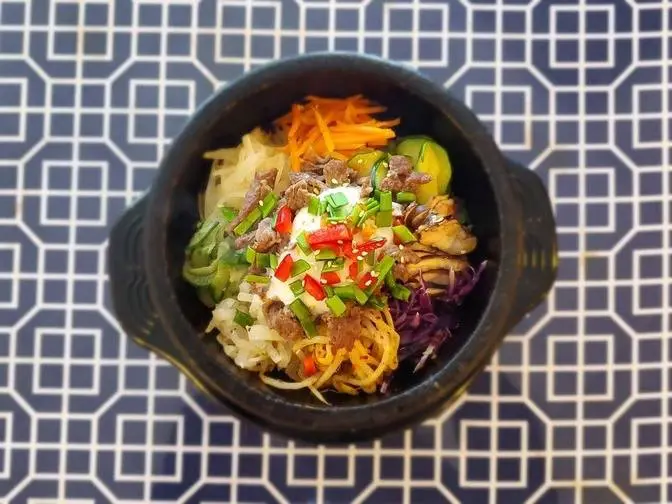
For lunch today, I have a lot of leftover veggies, so I am going to make
skillet bibimbap. What I love about bibimbap is that it forces you to eat a lot of vegetables.
But unless you're cooking for a lot of people, individually preparing all the namul, aka the
veggie toppings, on the bibimbap can get pretty time-consuming. By pan-roasting the vegetables,
it's incredibly simple and becomes a one-pan meal. I have my oven preheated at 190 Celsius,
or 375 Fahrenheit, and I'm using some of the veggies I prepared on Monday. But really,
the world is your bibimbap. It's whatever you make out of it. I'm putting in onions, zucchini,
carrots, and kimchi in the oven. Then I'll add the bean sprouts and spinach just at the end for
about a couple of minutes. Now that our veggies are roasted, let's prepare our deolsot skillet.
For those who've never had bibimbap before, usually it comes in a traditional Korean stone
earthenware pot called deolsot. But instead, I'm going to be using a skillet today because
it's essentially the same thing except even more surface area for the rice to become nice and
caramelized. Coat the pan in half-and-half neutral and sesame oil for the aroma, and put a thin
layer of the rice. Place your roasted vegetables on top of the rice, and once the rice starts to
crack in an egg, making sure to not break the yolk. Ahem. I didn't feel like eating something
spicy today, so I omitted the gochujang, but if you want it spicy, feel free to add some. I just
added the soy dressing that we made for the eggs. It can really just be anything you have in the
fridge all mixed up with a little bit of rice. The thing with bibimbap is that it takes a lot
of time to cook each and individual component of the dish, all the namul, but by just cooking it in
the oven on a sheet pan, it just eliminates all that work and it reduces your dishes so so much.
I personally even like it even more because of the caramelization and the char. And by using
the skillet, there's just more kernels of that like slightly roasted rice kernels, and that is
my favorite. Editing day. I gotta go work. For dinner, we're gonna eat some might.
The key to good galbi is all about tasting. So this is my spread. I have some freshly made
white rice and some Chinese chives as well as perilla, which is like the Korean herb.
And look how beautiful this short rib looks. I'm gonna make a quick ssam with the perilla leaf,
rice, and a little bit of Chinese chives as well as the galbi on top. And for some reason,
my audio completely cut out here, but this is me taunting you with my bite. Pretty explanatory.
Yeah, I was very very happy with this galbi. By marinating it in the fridge for three days,
the meat was so tender and juicy and it was just, it was actually just so good. I'm actually
having a hard time doing this voiceover right now because my mouth is watering so much watching this
footage. And yeah, you can clearly see that I was very happy with this bite. This is my
Karen dance with my Karen hair. Okay, yeah, that's enough. Good night.
Bro, I'm gonna let you in on the single greatest invention after sliced bread. Sliced spam. It's
Mine's low-key kind of ugly, but so are you, so it's still gonna be delicious.
I know this is like such a late TikTok trend, but oldie but a goodie. So for lunch, I recently went
to this really amazing Chinese Korean restaurant called Ippum, and they have this like really
chunky black bean noodles. And I'm going to try and recreate it because not everyone's going to
be able to come and visit Korea. And I've just been dreaming of it ever since, so I'm going to
try and recreate that. Okay, so the original recipe also has zucchini in the sauce, but I didn't have
any, but it still turned out to be really close. Prepare your onions and napa cabbage into one-inch
squares and get your wok ready. Now, I don't have like a jet fuel wok like most Chinese kitchens,
and I'm assuming that you also don't, so here's my way around it. Heat your wok to high and drizzle
in neutral oil. Then saute your vegetables, but most importantly, one at a time. We want to be
able to maintain the crunch of the veggies while having a nice charred surface, and we need to
avoid overcrowding the wok. So transfer each vegetable after a brief touch on the wok, and
this also applies for our beef. Now it's time to toast our black bean paste, and this is usually
what scares a lot of people, but it's not so difficult. Drizzle in a quarter cup of neutral
oil, and with the heat on medium low, add in your black bean paste. Stir to combine, making sure to
emulsify and toast the paste evenly, and you'll know that your paste is ready when it starts to
look like small chunks. Once it does, drizzle in soy sauce, and you'll be hit with this amazing
intense toasty smell, and that's exactly what we're looking for to recreate that smoky wok hay
aroma. Then you want to add in your sugar to create a caramel, and in goes the vegetables. The key to
good ganjajang is to not put any water or potato starch, but to let the moisture from the vegetables
be the base for the sauce. Mix to combine, and serve it with some fresh noodles.
Pretty freaking close. It's actually very very similar to what I ate. I'm actually very happy
about this. They have like slightly different ingredients, but I made the simplified version,
but the key is that there's no water added in this. It's just using the water coming out from
this craving for noodles inside of me. So today I'm gonna make my infamous chili oil ramen,
but with a little more broth, because I'm feeling brothy. So I'm gonna call this
sundubu ramen, because I also have some silken tofu, and it's always bulking season for some
plant protein. So one of my most viral recipes I've ever made was chili oil ramen, and I never
knew in a million years that that would be popular, because it was literally a stupid little idea that
I had one night, and more than 80 million people have seen it. And in a way, I feel like sometimes
it's the simplest recipes that resonates with the most people, than like super complex fancy dishes,
and it's something that I've been thinking about more lately. Anyways, this sundubu ramen is an
ode to the simpler days when I was living at my parents' house, sneaking around and making ramen
and content. Get your pot ready, and heat up two tablespoons of neutral oil. Add your soup packet
in, essentially making a chili oil, and then add your water. My tip is to add 100 ml less than the
package directions, because we'll be supplementing it with some silken tofu later on. Drop your
noodles in, and once the noodles have just started to untangle, add your tofu and crack in an egg.
I garnished mine with some thinly sliced leeks that I had in the fridge, and there you have it,
spicy chili oil sundubu ramen.
Ah! Oh, spoon. Look at the yolk right here. I think I'm just gonna break it apart.
A little bit of the sundubu, and the chili oil rising to the top. Dude, looks so good.
Mmm.
Wow. What the oil does is it like blooms the spices, and it makes kind of like an aromatic
chili oil, and it's so good. And the key to making good sundubu ramen is 100 ml less than the package
directions for water, because you want the broth to be salty to compensate for some of the silken
tofu. Mmm. Yeah, I needed some broth in my life. Good morning! I'm gonna make a little bit of a breakfast
lunch kind of thing, brunch. I'm gonna make it one pot because I don't want to do dishes, and I'm out
of rice. Sopap is literally just pot rice, and yeah, that's it. Actually, is this two? Is this
is this one pot? One pot, one pan. It's not bad. Pot rice is my go-to meal when I run out of rice,
because there's nothing that beats a fresh bowl of rice. As for topping, I knew that I didn't have
any fish this week, so I defrosted some salmon bits I had in the freezer, and I
pan-fried it with some brown sugar, mirin, and soy. Simmer it until it becomes a thick glaze. I also
used the leftover chives to create like a bed of chives for the salmon bites to lay on, and
drizzled in some sesame oil and seeds for the final garnish.
Mmm, like freshly made pot rice. Well,
actually gonna be a little bit disgusting, and put some mayo on top of it.
It's not disgusting. It's good. It's like basically Emily Morico's
salmon rice, but yeah, it's actually the same. Oh, why is mine so non-aesthetic and diarrhea-y?
Aesthetic food vlogs are not gonna happen in my lifetime.
Oh, that was kind of a pick-me comment, because I know my food looks good.
Ah, even better. This is going to be my last meal, and for my last meal,
is it really Korean food if there's no kimchi and pork belly? I'm gonna make some bossam.
So while the bossam's going, I'm gonna make a little fresh kimchi called geotjeori.
Ignore my mess in the background. Shit happens, okay? Bossam!
I'm gonna be honest with you, I haven't been cooking as much lately, just because life has
been a little bit hectic, but this was really fun, actually. I felt like I was getting a little
afraid that my Korean cooking was gonna be a little bit rusty. It wasn't. I'm gonna have all
the recipes linked down below, so if you want to try it out, try it out. That's it. See you soon,
doobies! I'm gonna enjoy my bossam now. Have a good night! See you next time, doobies!