
Ask Yourself: Why Is Einstein So Famous? What Exactly Did He Do?
Hello wonderful person, this is Anton, and in this video we're going to be talking about
the most famous scientist ever.
Let's talk about this wonderful person, and welcome to What I Met.
You know, just for fun, try this experiment with someone you know.
Come up to them and just ask one question.
Who is the most famous scientist in the world?
It's actually very likely that 99.9% of your answers, even in countries like China or India
where the culture is completely different, is going to be exactly the same.
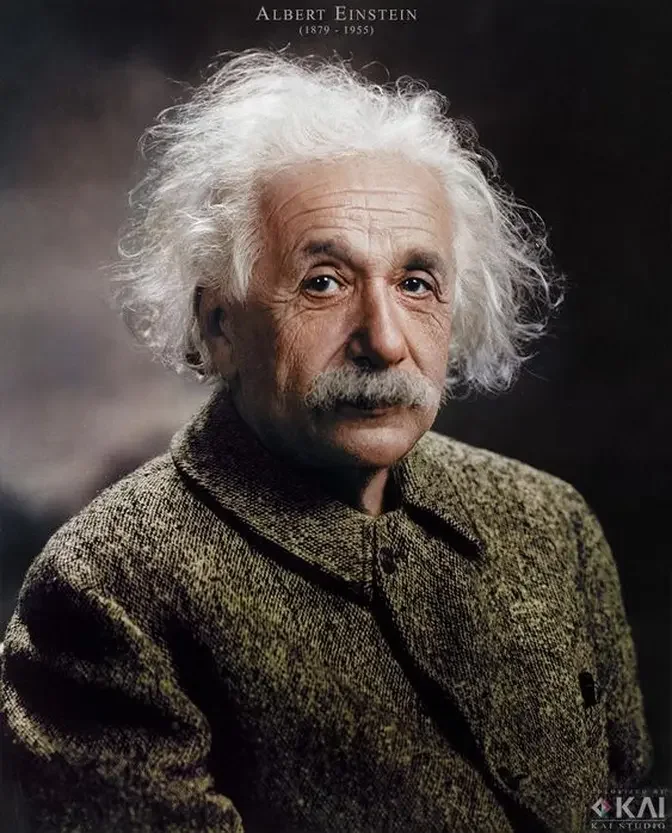
The answer is going to be this right here, Albert Einstein.
Now this might not really surprise you right away, unless you start thinking about one
simple reason, why?
Why is this right here the most famous scientist in the world ever?
Why is this right here the person that we think of when we try to define the idea of
genius?
As a matter of fact, the TV show Genius used Einstein in their first season.
And just for fun, do ask this question to whoever you ask about the most famous scientist.
Why?
Why is Einstein so famous?
Now the reason I actually wanted to talk about him today is because exactly 100 years ago,
on November of 1919, he literally became famous overnight.
He previously was known in the physics and also scientific community because he did have
very interesting publications, and even though he did win the Nobel Prize, it wasn't actually
until 1921, so not for two more years, basically.
So in that sense, he was still a pretty kind of an unknown scientist out there, and it
could have been technically anyone.
So why this guy?
Why Einstein?
What made him so unique and so special that did not really qualify anyone else?
And although I've asked this question to many of my close friends, and for the most part,
all of them say the same thing, well, didn't he actually make a bunch of stuff that we
use today?
Didn't he propose ideas that changed the humanity completely?
And the follow-up question that I usually ask is, yes, but what?
What exactly did he do?
Did he propose something that we currently use that we cannot live without?
And normally this is where most of them kind of stop talking to me and walk away.
Basically the story of my life.
And so this is kind of the focus for this video.
I wanted to answer this question of why he's famous, but also give you an idea of what
exactly he proposed so many years ago that does make our life a little bit better today.
Not by much, but just a little bit.
So anyway, let's start with exactly what made him so famous.
In November of 1919, there were a few, I guess you can call them clickbait titles.
Now, I personally have done a few myself, and I'm guilty as charged, because sometimes
I just tried new things, and once in a while, those titles do bring a lot of new audience.
But my goal is to actually educate more so than become famous.
And Einstein's goal was actually very similar.
He did not care for fame, he cared more about people really talking about his ideas and
discussing them and learning from them.
So anyway, pretty much all of the major newspapers in 1919 were alight with this idea of this.
Stars bending light, and suddenly this idea being a reality.
Now here's the kicker.
Back then, in 1919, only a handful of people, literally like five people maybe, understood
what Einstein was talking about.
Today this number is a little bit higher, but still, a lot of people misunderstand what
exactly happened and what made him so famous.
And let me kind of describe the situation to you.
This was very shortly after the end of the Great War, World War I, and even though most
of the world was excited about the peace, obviously Germany was in ruins.
The economy was struggling, and with the British Empire essentially coming on top and winning
the war, along with obviously other allies, and all of the German allies losing the war,
most of the mentality in Germany back then was obviously on the low side.
There was a lot of depression, a lot of regret, and obviously a lot of really negative emotions.
And suddenly, out of nowhere, comes this Jewish-German boy who is against the war, he's a huge pacifist,
and a few years prior, he actually proposed this unusual idea that defied the generally
accepted physics, physics that were back then technically the British physics, physics of
the famous Sir Isaac Newton, a British scientist, the most famous British scientist.
But when Einstein formulated his idea of relativity, it was still very theoretical.
In physics you actually have to find a way to prove your idea, and for Einstein this
proof had to come from astronomy, it had to come from observing the stars.
And he even proposed a very interesting way of doing this during a lunar eclipse.
If you were to look at the sun during the lunar eclipse, you could technically observe
the effects of the sun itself on nearby stars.
And this is how Einstein thought he could prove his theory.
Now, unfortunately he did not get enough support from other scientists or actually any finances
to try to prove it himself, but he did rely on others by publishing his paper and hoping
one day someone will actually prove it.
And this someone was this gentleman right here, Sir Arthur Eddington, who essentially
was the science communicator of his time.
This was a very famous British scientist and astronomer who was very well respected and
who in November of 1919 was actually defending Einstein's theory in this building right here
in England.
This is the so-called Royal Society, a very prestigious organization that has been in
existence for several hundred years and the goal of which has always been to promote science
and scientific knowledge.
And to defend his ideas, he actually performed the experiment Einstein suggested.
He went to Brazil, took this beautiful photo that you see right here during the eclipse
in May of 1919, and what he discovered was that the actual stars were shifted just a
little bit.
They were not where they were supposed to be if Newton's ideas were correct.
It seemed that Einstein's theory was actually the best explanation here because the light
from those stars was bent by the actual mass of the Sun, as you can see in the picture
right here.
And interestingly, the simulation from Universe Sandbox 2 shows you exactly where objects
were located in November of 1919 and shows you exactly where the Moon was in regards
to the Sun and how all of this sort of happened when Arthur Eddington was able to take this
photo.
And so this photo right here literally changed the world, at least in some sense, because
it was actually the combination of things that made Einstein so famous.
It was the sudden need around the world for this positive news coming out of Germany.
A German-Jewish scientist who was against the war suddenly being proven by the British
scientist and also showing that the British science was actually incorrect, that the German
scientist was right all along.
All of this together made the Einstein a household name pretty much overnight.
In some sense, this would be similar to, let's just say, a scientist from Afghanistan or
Iraq suddenly proposing an idea that is then proven by an American scientist that actually
proves an American theory wrong.
This would be such a groundbreaking discovery that would suddenly send shockwaves around
the world as well.
So this is kind of why Einstein became so famous, and this is why we believe it's very
unlikely to kind of happen again.
There are very few scientists that are technically household names, and unfortunately in the
last few decades, no one else has ever gotten to that point.
But to answer the other question of, well, so what exactly did he propose and does it
actually have any effect on our lives today?
It does because his theory proposed several things.
And one of those things is, of course, his very famous energy mass equivalence equation
that does derive from the theory of relativity.
This equation right here is technically how we get a lot of energy today.
E equals mc2 is basically the principle of nuclear energy.
And although maybe not everyone appreciates the nuclear energy as a source of energy,
it still is a groundbreaking discovery and something that wouldn't exist without his
ideas.
On the other hand, pretty much every single piece of technology today, including that
thing that we all use that's technically the largest collection of human wisdom and knowledge
in your hand, but also is basically the thing we use to look at pictures of cats, relies
on various satellites orbiting around our planet.
And every single one of these satellites is constantly affected by Einstein's theory of
relativity.
I've talked about this in one of the older videos, but in a nutshell, because this satellite
here moves around the planet and has a velocity that's higher than our velocity.
And at the same time, because these satellites are in a different gravity well from us on
the surface, both of these effects create what's known as a time dilation, which also
relates to the idea of the twin paradox.
So this is something we know for a fact exists because essentially all our satellites have
to be slightly adjusted on a regular basis to maintain the actual track of time.
If we did not have an algorithm to adjust satellites for essentially the theory of relativity,
eventually most of our satellites would be so out of sync and pretty much useless to
us that we would have to constantly launch new ones and they would only function for
possibly a few days before becoming completely useless.
This is especially true of satellites like the GPS satellites that have to be always
above a certain point in a location around our planet at a distance of about 40,000 kilometers
from the surface, and at the same time they have to be extremely precise.
So the GPS satellites that you see in orbit right here, this is the red ring that's formed
by various satellites around our planet, all of them have to have this algorithm that is
essentially the basis of Einstein's theory.
And even though it's not really a big sort of groundbreaking discovery or something that
we couldn't live without, we definitely wouldn't have GPS or effective satellite communication
if Einstein's theory did not exist, and it's also very likely that we'll be probably struggling
to figure out why so many of our satellites lose connection and stop communicating with
us after only a few weeks.
But to make the story even more exciting, something else happened very recently, literally
a hundred years after the original excitement about Einstein's theories, the birth city
of Einstein, this place right here known as Ulm, although technically it's not the city
but the university that's located here called Ulm University, proposed a really exciting
experiment that they are currently now working on and are building it as we speak.
The experiment will try to actually combine two ideas, the Einstein's theory of relativity
with the so-called quantum physics, something that we've been trying to do for a very long
time but still haven't really succeeded because for the most part both theories are still
sort of separate.
So what exactly is this experiment about?
Well, in quantum theory, really small objects like for example atoms and subatomic particles
can exist in what's known as superposition, they can be literally in two places at the
same time.
This idea is sort of beyond the scope of this video but it's something we've been able to
prove many times over and over so we do know that it's sort of real.
But what happens if you take this particle and as it occurs in two different places you
take this one place where it occurs and you give it acceleration or velocity and basically
you put the two different versions of the same particle into two different general relativity
frames.
What would happen when they return back into a single object?
And the scientists from Ulm University decided to investigate this by building a relatively
large apparatus and they're going to be using this for the next few years to try to discover
what really happens and whether the particle actually changes in some way.
In other words, this image right here might help you understand what's going to happen.
They're going to take a particle, which in this case is represented with a little Einstein,
the particle will then separate into two different Einsteins, one of the Einsteins is going to
receive slightly different time dilation from the other and when they come back together
they'll see what happens.
Because it's literally like combining two twins, one with a different age from the other
into one, the combination of both Einstein's principles and quantum physics.
And this is where the discoveries from this particular experiment will probably be extremely
groundbreaking because it's going to be really important for us to understand what happens
if you combine the quantum physics with general relativity.
And the paper for this announcement and for how this experiment will be performed is right
here, you can check it out in the description below.
They're referring to this as a quantum twin paradox, which is a pretty cool name and something
that might help us transform our understanding of how things work even more.
And obviously help us in some other way as well.
Now we're still not entirely sure what all of this will bring in terms of practical applications,
but remember, 100 years ago when all of this was just discovered by Einstein and when only
a handful of people understood what he was talking about, most people had no idea what
any of this will actually result in.
Today, most of our energy and of course most of our communication and the fact that you're
watching me right now on the screen depends on his ideas and theories.
All of this came as a result of his discoveries that back then made no sense to most people
but made a lot of people excited.
So whatever these guys discover is very likely going to change humanity in maybe next hundred
years or so.
So make sure to subscribe because I'm definitely going to come back and talk about this in
a little bit more detail in the next few years.
But until then, that's all I wanted to mention.
So hopefully now you know why Einstein became so famous, what exactly he discovered and
how it was actually made famous, and most importantly, what we're doing about it right
now.
Thank you for watching!
I'll see you guys tomorrow, come back tomorrow to learn something else.
If you enjoy being a wonderful person, consider supporting this channel by also maybe purchasing
this beautiful t-shirt.
And at the same time, maybe consider supporting this channel on Patreon because it does help
me quite a lot.
I'll see you tomorrow, space out, and as always, bye bye.
Crazy hair, crazy hair, crazy hair, crazy hair, crazy hair, crazy hair, crazy hair,
crazy hair, crazy hair, crazy hair.