
Cave Temples of Dunhuang: Buddist art on China’s Silk Road
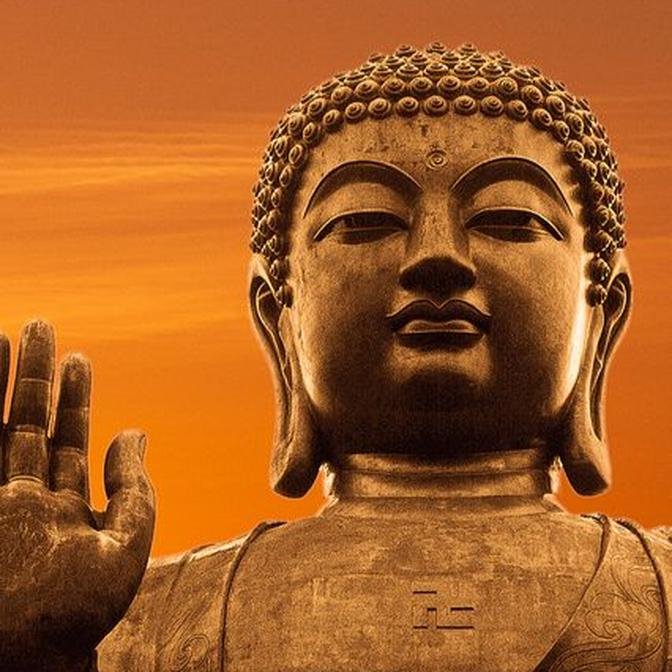
May Lee shows us the full-sized replicas of China’s Cave Temples of Dunhuang at a traveling art exhibit in Los Angeles. #AntiqueBuddhaStatue
One of the most famous art museums in the U.S. has recreated one of China's most important heritage
places, the cave temples of Dunhuang. They were once a popular rest stop, marketplace, and religious
shrine along the fabled Silk Road. But today, more than 1,700 kilometers away from Beijing,
they're not the easiest place to visit. So now an international effort is underway to bring the
I recently got a chance to see the wonders of the Dunhuang caves right here in Los Angeles.
In the northwestern province of Gansu, China, lies the Dunhuang Oasis,
once a strategic point along the Silk Road and home to the spectacular Mogao cave temples.
Nearly 500 grottoes feature stunning Buddhist art from the 4th to the 14th century.
45,000 square meters of murals depicting historic, cultural, and religious experiences
lie in the caves, and more than 2,000 painted sculptures hold court.
For most people, visiting this remote UNESCO World Heritage Site isn't likely,
but thanks to a long-term project between China's Dunhuang Academy and the Getty
Conservation Institute, or GCI, full-scale hand-painted replicas of three Mogao caves
are now at the Getty Center in Los Angeles for a special exhibit.
Well, the Getty Conservation Institute works around the world to improve the practice of art
conservation, and we always do that in partnership. So in this particular case with the cave temples
exhibition, we're doing that with the Dunhuang Academy, and we've been working with them for
25 years, as you know. Two figures that are facing each other with round shields.
Neville Agnew of GCI has worked on the Mogao conservation project for 28 years.
He's familiar with every hand-painted inch of every cave and all the colorful stories.
Well, they're brought to justice, and they're blinded.
The eyes are put out, and then they're turned loose in the forest.
But they appeal to Guanyin, the Bodhisattva of Mercy, here.
And Guanyin tells them to lead pure lives and restores their eyesight to them.
Two of the three Getty caves were built using the same original methods from centuries ago,
from the ground up down to the tiniest brushstroke by a team of artisans who came
to Los Angeles from China's Dunhuang Academy specifically to help create the exhibition.
Historically, replication was a traditional part of Buddhist practice and a way of earning
karmic merit. And opposed to Western attitudes, copying in China was a way to master Chinese
painting. Professor Fan Jinshi of Dunhuang Academy has been working to restore and preserve
the Mogao grottoes since 1963.
Another part of the extensive Dunhuang exhibit uses modern technology to bring history to life.
The virtual immersive exhibit includes panoramic projections and 3D stereoscopic technology.
Cave 45, an ornately decorated cave with a seven-figure sculpture group,
is featured in the 3D film.
Since the Getty Conservation Institute began working with Dunhuang Academy in 1989,
the focus has been twofold. First, on research and site stabilization,
and then conservation techniques to help prevent further deterioration of the ancient site.
Not only has GCI provided assistance in Dunhuang, but the techniques developed for the project
are now benefiting crucial conservation efforts around the world.
We've taken some of that knowledge and now we're applying it to work we're doing in Egypt
at King Tut's tomb. So what we try to do with what we accomplish in one place is to share
that knowledge and share that understanding in many, many places.
An example of how international cooperation for good can truly make a beautiful and lasting
impact around the world. For Full Frame, this is Mei Li in Los Angeles.
The exhibit truly is stunning. Well, that's it for this week. Join the conversation with us
on social media. Get the latest news, headlines, and connect to us on Facebook, Twitter,
YouTube, and Weibo. Until then, I'm Mei Li in Los Angeles. We'll see you next time.