
10 Interesting Facts About Ancient Egypt
Hello and welcome back to another video, today we will be going over 10 interesting
facts about Ancient Egypt. But before we start make sure to leave a like and subscribe,
and turn on that notification bell so that you're notified when we next upload.
And without further I do let's jump right into it.
Number 1. Pyramids as Tombs.
The pyramids, particularly the Great Pyramid of Giza, were constructed as elaborate tombs
These massive structures demonstrated the Egyptians' advanced engineering skills
and the importance they placed on ensuring a safe passage for their rulers into the next world.
Number 2. Hieroglyphic Writing.
Ancient Egyptians developed hieroglyphics, a complex writing system that used symbols
and pictures to represent words and sounds. This system was used for religious texts,
official decrees, and inscriptions on monuments,
helping to document the civilization's history, culture, and beliefs.
Number 3. Mummification Process.
Egyptians practiced mummification to preserve the bodies of the dead for the afterlife.
This intricate process involved removing internal organs,
drying the body with natron, and wrapping it in linen.
They believed the preserved body would be essential for the soul's journey
and existence in the afterlife.
Number 4. The Rosetta Stone.
Discovered in 1799, the Rosetta Stone was crucial in deciphering Egyptian hieroglyphics.
The stone features the same text in three scripts, Greek, Demotic, and Hieroglyphic.
Scholars used the Greek text, which they could understand, to unlock the meaning of the
hieroglyphics, revealing the secrets of ancient Egyptian writing.
Number 5. Pharaohs Were Considered Gods.
Pharaohs in ancient Egypt were not only political leaders but were also considered gods on earth.
They were believed to be the living embodiment of Horus, the god of kingship,
and acted as intermediaries between the gods and the people,
ensuring harmony and prosperity in the kingdom.
Number 6. Nile River's Crucial Role.
The Nile River was central to life in ancient Egypt.
Its annual flooding deposited rich silt on the land, making it fertile for farming.
The river also served as a major transportation route, facilitating trade and communication,
which helped to unify the country and sustain its civilization.
Number 7. The Sphinx Mystery.
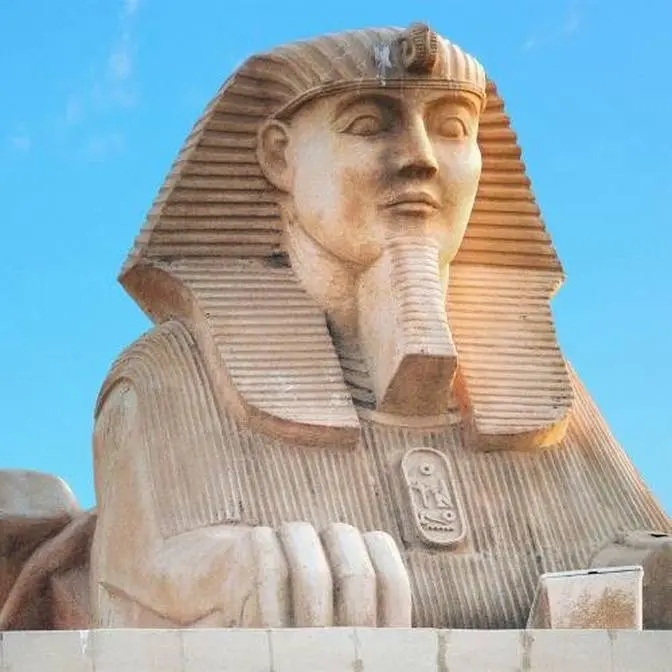
The Great Sphinx of Giza is one of Egypt's most iconic and mysterious monuments.
This enormous limestone statue, with the body of a lion and the head of a pharaoh,
likely represents Pharaoh Khafre.
However, its exact origins, purpose, and the reason for its construction
remain subjects of speculation and debate among historians.
Number 8. Women Had Legal Rights.
In ancient Egypt, women enjoyed legal rights that were rare in other ancient civilizations.
They could own and inherit property, manage businesses, and initiate divorce.
This relative equality allowed women to play significant roles
in both the economic and social spheres of Egyptian society.
Number 9. Solar Calendar.
The Egyptians developed one of the first solar calendars, which divided the year into 365 days.
This calendar was essential for regulating agricultural activities,
such as planting and harvesting, and for organizing religious festivals.
It reflects the Egyptians' advanced understanding of astronomy and timekeeping.
Number 10. Egyptian Medicine.
Ancient Egyptians were pioneers in the field of medicine.
They practiced surgery, used a wide variety of herbal remedies,
and had a deep understanding of human anatomy.
Medical papyri, like the Ebers papyrus, reveal their knowledge of treating wounds,
illnesses, and even performing complex surgical procedures.
And that's it for today make sure you leave a like and subscribe and turn on that notification
bell so that you're notified when we next upload. See you next time.