
The Art of Edmund Blair Leighton
One of my all-time favorite things is medieval themed art. Now, I say medieval themed instead
of medieval art because they're kind of two separate things, but there are two artists
that I just absolutely love and I kind of actually collect their work. I have replicas of them
as well as I collect images online that I can high resolution of their work. The first one
is probably my all-time favorite artist, Frederick Burton, who did The Meeting on the Turret Stairs,
which will be a whole other video in the future, I'm sure. And the other one,
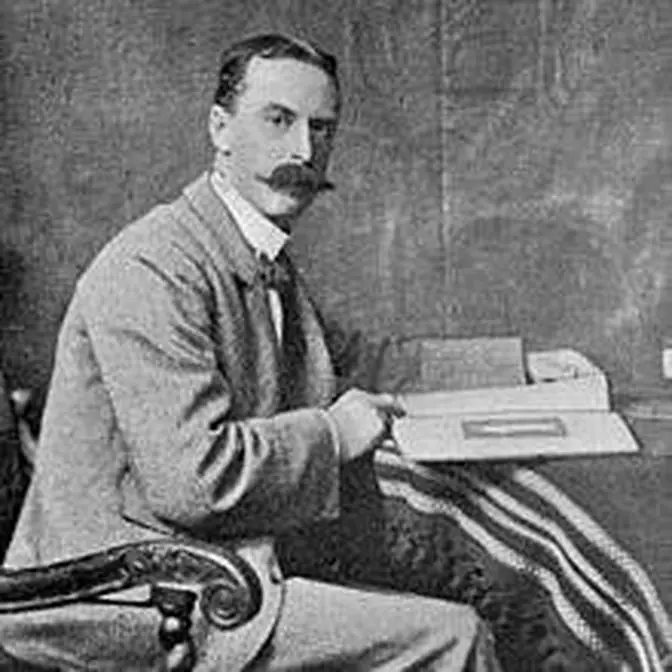
who is the subject of today's video, is Edmund Blair Leighton. Now, Leighton's work is wildly
famous in terms of medieval art. I think everyone has seen his art, even if they didn't even realize
it was his. And I use his art in a lot of things. I have a replica of his painting, The Accolade,
in the background of almost every single sword review I've done. But I really wanted to speak
to the themes of chivalric ideas as well as romantic ideas, the romance of the Middle Ages,
as depicted in his art. We are actually going to take a look at four of Leighton's paintings. Now,
he's done a lot more than that, some of which are even medieval themed, but there are four
that I really wanted to speak to because they represent my favorite of his work. Now, we're
going to start with what is essentially his most famous painting, at least that I'm aware of. I
don't know of any of his that are actually more well-known than this one, and that is The Accolade.
This has been reproduced many different ways, many different times. It's been done as a statue
that you could buy. It's very, very iconic. One of the things, though, that I really love
about Leighton's work is not so much what is overtly obvious, but the aspects of the art
that are less than noticeable. So, I'm not going to speak a lot to the aesthetics of the art,
because I think you can really see that just in looking at it. What I'm actually going to do is
I'm going to speak to kind of the background to the story that's being told in the art.
So, an accolade is the knighting ceremony, and while what is being depicted here is most
definitely a more romanticized and fantastic version of an accolade ceremony, i.e. with a
princess or queen doing the knighting instead of a king, it is perfectly valid. It was a thing that
had been done. However, what I find to be very interesting about this painting is what's
essentially a very subtle detail, and that is right here on the back of this knight and on his shield.
That's his crest. Now, I have a chainmail heraldry banner that I made for myself.
It's kind of a cross between some things that I really like, as well as, well, my actual family
crest, as it were. In the combination of those things, I actually did use this knight's crest
from Leighton's painting. It's actually kind of a Germanic eagle, but I actually used it as more of
an Italian eagle, speaking of my heritage there. But what I find really interesting in this painting
is actually the crescent moon. Now, if you don't know a lot about heraldry and the symbols that
are used in heraldry, a crescent moon actually represents a second born son. What actually makes
this notable from a historical standpoint, and I will actually assume that Leighton knew this going
into it, is that the second born was very rarely going to ever be knighted. Even in a noble house,
what would be more likely to happen is the second born son would very often go into the church.
They would become part of the clergy, or become a monk. And so what we actually have here is not
only the knighting ceremony of a person who obviously did great deeds, but actually broke
outside of the confines of the expectations of the time, and actually became worthy of knighthood
despite his birth. And I think that's a very interesting thing for me, because I am actually
the second born son in my family. I have an older brother, and if I were to have been born in the
Middle Ages, it might have been very likely that I would have been in the clergy. However, this
painting kind of throws out there, kind of gives me hope that maybe there was a little something else
as well that I could have attained. And so ultimately, when you look at the painting of
the whole, yes, it is a very beautiful painting, it's very invocative. But it also has that little
detail that makes it that much more poignant. The next painting we're going to look at is entitled
Godspeed. And this is a depiction of a soldier or knight heading out into battle and leaving behind
his lady. Now we know this because she's tying off her garter or handkerchief of sorts to his arm as
a favor. Now having a lady's favor is something that, again, is very invocative of chivalric ideas,
very invocative of concepts that came from Arthurian legends. And again, I believe that
Leighton knew very well what he was doing here. Now this is a very common thing. I think
most people are well aware of the concept of having a lady's favor. But what's also poignant
about this painting is the concept that this might be the last time that she will see this man.
And it's throwing out the more romantic ideas, not so much in the adventurous romanticism,
but rather the love form of romanticism. And it's kind of a bittersweet concept because,
as you'll see in the next couple paintings, this is something that Leighton actually returns to
really quite often is the concept of wondering if you will ever see the return of a loved one.
Although this is Leighton's probably second most famous painting, it isn't all that high
on my list in terms of favorites, but I do think it's a really good jumping off point for the next
two that will actually lead up to one of my favorite of his paintings that is almost completely
unknown. And actually the next two paintings are ones that it's quite possible the viewers of this
will have never seen before. And so we come to a painting that is entitled An Arrival.
Now unfortunately I could not find a good high resolution version of this painting. I think it's
because it's actually in private hands and so there aren't many good pictures that have been
taken or good scans have been taken. There's not a lot in terms of reproductions out there.
So unfortunately this is the best image I could find, but it's more than enough.
What I find most invocative about this painting is actually if you pair it with the very last
painting that we'll look at. And I'll speak to that in a moment. So I'm showing you this one
first because the concept of this painting is that this lady is standing on the ramparts of
a castle wall and she's looking down at people who are arriving. And so you look at the painting
Godspeed and you have this concept that she's sending someone off to war. Well here now we have
a lady who is waiting for someone to come back. And it's left as a cliffhanger of sorts. You're
always wondering what is she seeing? Is she seeing a small army defeated coming back? Is it a
triumphant army? Is it the person that she sent away? Is he coming back or is he being carried
back on a cart? It's one of those things that you just don't know and that's part of what
makes this one really stand out. I really wish that there was a higher resolution version of
this image available because I do think it is one of his better pieces of art in the scene that it's
capturing, the concept of it. And I really wanted to highlight this one because I feel it leads up
into the next piece of art we're going to take a look at very nicely. And that is this one.
This is entitled The Shadow. Now I've actually had the opportunity to see this painting in person.
It is owned by the Berman World History Museum in Alabama. So it's about an hour and a half drive
from where I live, maybe a two hour drive. And it's a very interesting museum, has a lot of
different arms and armor and weapons and firearms from throughout the ages. But they also have this
painting. And this is probably when I saw it, it was immediately it became my favorite Leighton
painting. So although I really do love the accolade, this one very quickly became the top
most. So I'm gonna give you a little bit of background on this, thanks to information that
is given by the Berman World History Museum. Now I'm going to read this little snippet of text
about The Shadow. It says, The Shadow is based upon the Greek myth of Debutates, a Corinthian
girl who drew the portrait of her beloved on the wall of her bedchamber by tracing the outline of
his shadow cast by the lamplight on the night before he departed for war. Leighton changed
the setting for the drama to the battlements of a medieval castle, below which the young
crusader ships are waiting. Now again, this is keying in on the concepts of sending someone away
to war and never knowing if they're going to return. And when you think about the painting
and Arrival, it's actually kind of interesting that the lady in both these paintings looks very
similar. And I almost kind of wonder if there isn't a little bit of Leighton telling a larger story
here. Because if you look at the battlements on both of these paintings side by side, you'll see
they're actually very very similar. And it kind of makes me wonder if just off to the side of the
painting and Arrival, just off here to the right, is there not a shadow that's been drawn on the wall?
I like to think so. And I think that that is is one of the reasons that I really like Leighton's
work, is because he tells stories that can be combined in his paintings. You can almost have
two of them side by side and begin to develop a narrative, which I think is very interesting.
Looking at the details of this painting, specifically that there is a ship waiting in
the background, there is a sense of urgency here that this is going to be a rather quick last
farewell. And that kind of romance, in the sense of both adventurism as well as just the simple
concept of love, is something that I think is very very well portrayed in these paintings. And it's
what, in my opinion, has made Leighton truly a master artist, especially when it comes to medieval
themed art. And he chose the Middle Ages to do a lot of different settings for his art. And I think
that's because the concepts of chivalry and the concepts of romance, again both love and adventure,
is something that is so very much tied to the Middle Ages. I think the shadow really represents
what I believe to be Leighton's true masterpiece. A lot of people might say that it's the accolade,
but I really do think that it is this piece of art is by far my favorite of his. And it's so close,
it's so close to being on the same level as Frederick Burton's Meeting on the Turret Stairs,
in terms of just invoking all the imagery that I really love to kind of think of when I think
of the Middle Ages, the more noble aspects. And reading finally, just kind of to close out this
video, reading about Leighton and how he paints, I will speak finally to just what is said, again
a little snippet. It says, the poignancy of the moment captured in Edmund Blair Leighton's
painting, The Shadow, is immediately apparent. A knight in full chain mail stands in profile
before a castle wall, absolutely still and unhurried, while his beloved traces the shadow
he casts with a piece of charcoal vine. The presence of a ship in the harbor, though distant,
creates a sense of impending departure, likely to battle, and gives significance to her drawing
as possibly the only remembrance she will have of him for some time to come. Leighton was,
and is known for his romantic, noble subject matter, in period pieces that often displayed
couples in significant moments in their lives. The knighting ceremony of the accolade,
the well wishes and hopes for safe return in Godspeed, waiting for a lost loved one to come
back to you as in an arrival, and the capture of remembrance in the shadow. It is paintings such
as these that truly make Edmund Blair Leighton a master artist.