
TRAVEL GUIDE: HENAN WHERE CHINA BEGAN | Living Asia Channel (HD)
The birthplace of Chinese civilization has a lot of stories to tell.
With a history dating back 5,000 years,
Henan is a province rich in culture and is home to a number of heritage sites,
as well as four of the eight great capitals of China.
Luoyang, Anyang, Kaifeng, and Zhengzhou.
An ancient Chinese proverb goes,
a bosom friend afar brings distance near.
We were welcomed with such warmth on the 5th International Mayor's Forum on Tourism,
IMFT, with a theme, Quality Urban Tourism in the Era of Sharing Economy.
Held in Henan province, a place that has opened its heart
to friends from 95 cities in 28 countries all over the world.
Almost mystical in its beauty,
the landscape of Henan varies, but is always majestic.
There is no shortage of natural or ancient man-made sights to see.
North of Zhaizhou city is Mount Yingtai Mountain Global Geopark of China.
It consists of a series of geological relics.
Visitors can enjoy a scenic walk through the geopark's unique topographic landforms.
Tourist attractions include hanging springs and waterfalls,
mountains and streams, and the Qingshanhe River,
and the Dragon Crest Ridge of the Sennongshan Mountains.
A must-visit in Luoyang are the Longmen Caves,
which hold as many as 10,000 statues of Buddha and his disciples in 2,345 caves.
These statues range from as short as an inch to 57 feet tall.
The site is on the UNESCO World Heritage List
as an Outstanding Manifestation of Human Artistic Creativity.
In Kaifeng, one finds the Iron Pagoda Park, which holds the Kaibao Temple Pagoda.
Originally a Buddhist Chinese pagoda built in 1049 during the Song Dynasty,
the temple is a 13-story octagon structure measuring 55 meters high.
While it looks like an iron pagoda from afar,
it is actually made of red, brown, blue, and green glazed bricks.
The pagoda houses 168 steps to the top floor, which has a scenic view of the Yellow River.
Right in front of the Iron Pagoda is Cheyin Hall,
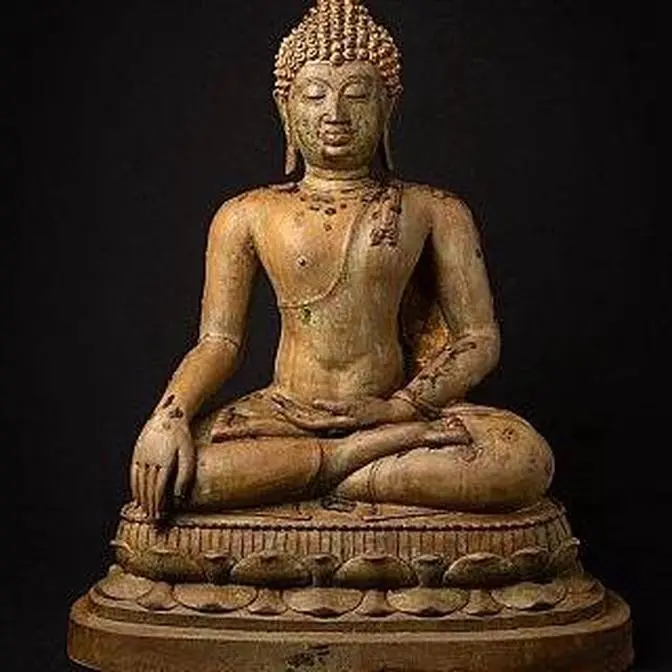
which enshrines a Buddha statue of Sakya Muni, the founder of Buddhism.
Also in Kaifeng is the Tingning Riverside Landscape,
better known as the Millennium City Park.
Located on the western shore of Longting Lake,
it is a large-scale cultural theme park founded in 1992
and offers a taste of what life was like in Kaifeng about a thousand years ago.
Park highlights include the Rainbow Bridge,
the Upper Gate to Virtue,
Kissing Cloud Pavilions,
halls near the water,
and the Water Center Pavilion.
Tourists are greeted with cultural performances depicting the Song Dynasty.
No trip to Henan would be complete without a dose of Kung Fu.
Shaolin Kung Fu and Tai Chi are rooted in Henan.
The Shaolin Monastery in Tangfeng County, along with its pagoda forest,
was inscribed as a UNESCO Heritage Site in 2010
and is the cradle of Chinese Zen Buddhism and Shaolin martial arts.
Located here is Tahu Martial Arts School.
It is the biggest Kung Fu academy in China,
where students are trained by authentic Shaolin masters
from the original Shaolin Temple.
Inside the temple are the Hall of Heavenly Kings,
the Mahavira Hall,
the Pagoda Forest,
the Dharma Cave,
and the Martial Arts Training Center.
The International Center of Kung Fu
and the Wenzhen International Tai Chi Holy Land in Chaozhou City,
the birthplace of Tai Chi Chan,
allow visitors to experience Kung Fu culture
through water shows and acrobatic art,
such as Wushu performances and the Shaolin Zen music ritual.
Today, Henan is a land full of vitality.
Consider the source of Chinese civilization,
philosophy, medicine, martial arts, cuisine, and art.
Henan proudly opens its doors,
eager to share its past,
present, and future to the world.