
Cirrus Vision Jet Flight Vlog! Scottsdale to Sacramento in a Private Jet!
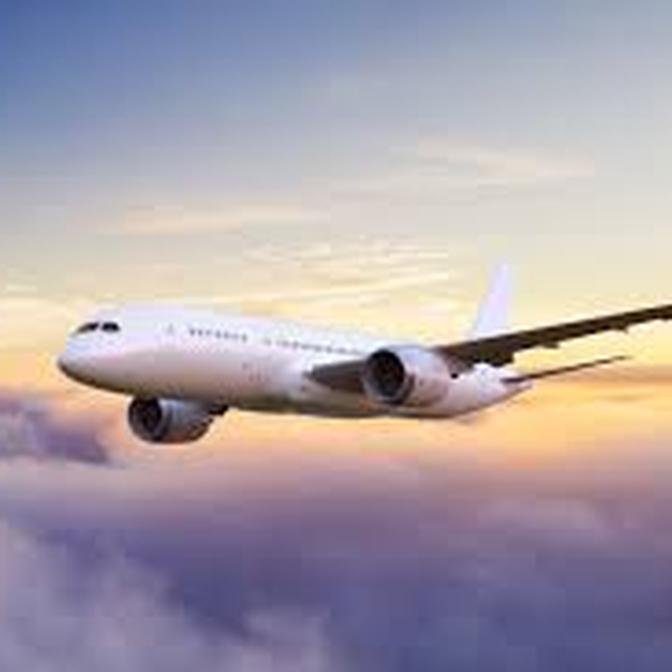
I hope you enjoy this flight from KSDL to KMCC. Still trying to figure out where the best spots for cameras should be in the plane. Stoked to bring you along in the G2+
Please note:
I am not a flight instructor and these videos should not be used for instruction
All checklists are complete and videos are shortened for length.
Cirrus
Vision Jet
Private Jet
General Aviation
Arrive
Scottsdale
Sacramento
#Aircraft
What's up guys, welcome back to another video. First video in 1-2 Victor Juliet. We're here in
Scottsdale, Arizona, heading home to Sacramento McClellan, 30,000 feet, two and a half hours up
in the air. Let's go flying.
Alright, welcome to the checklist, strobe lights on, caster clear, thrust lever is idle,
brakes are held, engine knob is coming around.
I hear the pump, I see it, 1001, N2, we got light off, we got N1 before 25 percent,
ITT is coming up, back to N2, looking for a hung start, I don't see it, it's rising,
coming through 40, battens are charging, N2 stabilized, that's a good start.
Clearance, good evening, Vision Jet 1-2 Victor Juliet, looking to pick up our IFR to Sacramento
McClellan. Vision Jet 1-2 Victor Juliet, Scottsdale Clearance, going to the McClellan airport via the
Mesa 7 departure. Rasta transition, Kingman, and then Papa Alpha, Tango Oscar Kilo, and then
it's filed. Maintain 5,000, and expect flight level 3-0-0 three minutes after departure.
Alright, we're clear to Mike Charlie Charlie airport via the Mesa 7 departure, Rasta transition,
Kingman, then Patok, then Asphalt, maintain 5,000, expect flight level 3-0-0 in three minutes,
frequency 1-2-0.7, squawking 2-6-5-3, 1-2 Victor Juliet.
2-6-5-3, Victor Juliet, readback correct, thank you.
Mesa 7, runway 2-1, Rasta transition, we'll load it up, we'll make sure it's good once we get going.
Alright, departure, the Maya 7. Alrighty, runway 2-1, climbing right turn, hitting 3-3-5,
or assigned. Expect radar vectors to cross separate above 10,000, then on track to 3-0-8 to Maya,
then Rasta transition, maintain ATC assigned. Okay, I'll make sure there's no speed. Speed
restriction, do not exceed 210 until established on assigned heading. We won't hit that, so that's
good. Navs are good, let's go back to nearest airport, Scottsdale, airport info, frequencies,
ground, COM2 active, tower's in COM1, departure 1-2-0.7, 26-53, 26-53 is good. Radius clearance
is received, altimeter is 2-9-8-5, transponder is squawking good. I'm gonna go here,
I'm just gonna go nav mode, go flight level change, and that looks good, manual. Cool.
Scottsdale Aviation Jet 1-2-Victor-Julia over at Jet Aviation with Zulu, taxi please.
November 1-2-Victor-Julia, Scottsdale Ground, runway 2-1 at Alpha 15, taxi via Alpha.
Runway 2-1 at Alpha 15, taxi via Alpha 1-2-Victor-Julia.
Alright, we'll make sure we have enough room there at Alpha 15.
Alright, I'm clear on the right, I'm clear forward, I'm clear on the left, lights are on,
we're looking good. Give the guy a thumbs up. Alright, giving the peace. Thank you,
Jet Aviation, you guys are amazing. Alright, left wing's clear, right wing's clear.
Always good being in Scottsdale. It's not super hot yet, fortunately, so that's amazing. But
always good to be going back to Sacramento-McClellan, drop some buddies off, and yeah.
The plane was in maintenance for a little while, but we're super stoked to take you
on the first video on 1-2-Victor-Julia, it should be a super fun one.
Alright, here's Alpha, departure briefing. Alright, anything goes wrong, initial ground
roll, runway 2-1. We're going to stop 0 to 600, we're going to land straight ahead,
600 and to 1,000, it's called 1,500, which would be 3,000 MSL. We're going to pull caps.
If we're getting fire, fire signs, we're not going to pull caps, we're just going to come
back here, we've got a firewall that'll keep us safe. But if everything's normal,
we're going to be doing the I-7, I-7 Arasa transition.
Tower, VisionJet 1-2-Victor-Julia, holding short runway 2-1, Alpha 15, ready for departure.
1-2-Victor-Julia, Scottsdale Tower, I got you on the question on the next one.
Thank you, sir.
VisionJet 1-2-Victor-Julia, traffic on funnels going around runway 2-1, clear for takeoff.
Alright, runway 2-1, we have the traffic in sight, we are clear for takeoff for 1-2-Victor-Julia.
Aviator 16, number 2, follow Cherokee, their wing up left base, report to Cherokee, 1AVL.
Number 2, I've got that Cherokee in sight, Aviator 16.
Aviator 16, runway 2-1, cleared to land.
2-1, cleared to land, Aviator 16.
Clear left, clear right, flaps are 50, all the lights are on, looking good.
Says on 1-3-DELTA, you can make left close traffic, cross turns approved, you're number 3 back.
Left close, number 3 back, 1-3-DELTA.
Alright, check out power is set and achieved, 1 good engine, airspeed is live.
SCOTSA Tower, Aviator 3-5, SCOTTA does transition, full stop with Zulu.
Aviator 3-5, SCOTSA Tower, make left traffic, runway 2-1.
Rotate.
Left traffic, 2-1, Aviator 3-5.
On the brakes, positive rate, gear up.
SCOTSA Tower, 4-6-3-4-9-er, holding short 2-1, northbound departure.
SCOTSA 3-4-9-er, SCOTSA Tower, hold short of runway 2-1, landing traffic.
Hold short 2-1, 3-4-9-er.
1-3-DELTA, CHOP calls their wing up right base to Cessna.
Alright, looking for an 8.
Having a sight, 1-3-DELTA.
1-3-DELTA, number 3, runway 2-1, cleared touch and go.
Cleared right.
Number 3, runway 2-1, cleared touch and go, 1-3-DELTA.
VisualJet 1-2, Victor, Juliet, second departure, you have a good day.
No departure, good day, 1-2, Victor, Juliet.
Cherokee 5-1-9-er, Alpha Foxtrot, friction approved.
Going 20, let's go 130, over departure, looking outside.
Fixed departure low, VisualJet 1-2, Victor, Juliet, 2.4 climbing 5,000 on the Maya 7 departure.
1-2, Victor, Juliet, departure, radar contact, Phoenix, Alpha Commander 2-0-8-3, climb and maintain 6,000.
2-9-8-3, up to 6,000, 1-2, Victor, Juliet, thanks.
Aviator 75, leaving Phoenix, Bravo, airspace, radar 3-1-3,
landing gears up, flaps are up, airspeed's good, thrust lever is extended.
YOLO at 7,000.
YOLO at 7,000, Doppler transition is good.
We got Doppler transition to go.
So we have FMS built in speeds in the programming here with the VisionJet,
but on the departure I want to climb out a little steeper so that's why I go manual.
Number 2, Victor, Juliet, turn left heading 270, Vector to Zephyr.
Left turn heading 270, Vector, Zephyr, 1-2, Victor, Juliet.
And I like to climb out just a little bit faster,
and then as we get higher transition into those FMS setups.
Gorgeous evening.
It's a privilege to fly this plane, so thankful.
A lot of work has gone into it and couldn't be happier to finally be in it, so.
Number 2, Victor, Juliet, climb and maintain 7,000.
Climb and maintain 7,000, 1-2, Victor, Juliet.
Flight 2869, turn left heading 1-3-5-0.
FMS, autothrottle, flight level change.
Does it all for you, 6 or 7, we're looking good.
Number 2-0-0, contact approach 1-3-3-point-5-7.
1-3-3-point-5-7, 2-0-0, thank you.
We got Phoenix off to our left.
Tempe.
10-4-0, 53.
53, cleared, visual approach runway 25 right.
Number 2, Victor, Juliet, cleared direct Zephyr, resume navigation.
Hi, direct Zephyr, on the av, 1-2, Victor, Juliet.
All right, we're going direct Zephyr.
Cleared right, 252.
Number 2, Victor, Juliet, contact departure 1-1-0-point-2.
19-2, good day, 1-2, Victor, Juliet.
Phoenix, good evening, VisionJet 1-2, Victor, Juliet, level 7,000, direct Zephyr.
VisionJet 1-2, Victor, Juliet, Phoenix, departure, climb and maintain, flight level 2-1-0.
Climb and maintain flight level 2-1-0, 1-2, Victor, Juliet, thanks.
All right, that's great, up to 21.
I see it.
Go heading sink, and we're back up to MCT.
Gorgeous sunset off to our left tonight.
A little rocket shift climb in, what is it going to be around?
There's 3,100 feet per minute.
I picked up this plane in Duluth, Minnesota.
Flew it all over the country to knock out some of my SOE training,
supervised operating experience, needed 25 hours for that.
We did Billings, Montana, we went to Boise, we went to Sky Harbor every night,
we did Telluride, we went all over Arizona,
and just knocked out a ton of time learning all about the plane.
As you know, I went and got type-rated in this jet,
but it also requires that 25 hours of operating experience
where you really get to be in the plane learning about it,
and it was just, it was an amazing experience.
We just got the plane back today after some maintenance,
so we needed a couple things, as always with airplanes, right?
Super stoked to have it back.
Alright, cleared up to 30, I'll let you know.
Alright, it's going to be a long, slow climb up to 30,000 feet.
We'll catch you at cruise, show you guys the sunset,
and then we'll catch you on the descent to Sacramento Clone.
Thanks for watching.
Alright, we're coming up through 28,000 feet,
about to enter RVSM airspace.
Most of the airplanes flying are within that area,
so they put you closer together.
Basically, you have to be on autopilot.
You have to have ADS-B.
In the United States, if you go international,
you need a different set of manuals and stuff,
and you can't have the de-ice boots on
because it'll cause swaying and vertical speed,
and it can kind of get close to other planes on the ATC screen,
so we're about to enter the airspace now.
So autopilot's on, boots are off, we're looking good.
Alright, leveling at 30.
Cruise lever is as required.
Ice protection's all off, but the probes are on.
Stabs are good.
Descent checks are next.
Put that screen to full.
Thank you guys for watching,
and we'll catch you in the descent into Sacramento Proclone.
It'll be a beautiful one.
Contact, we're reading 320, climb and maintain 4,000 feet.
Delta, Cadet Maguire Approach.
Alrighty, we are on our descent into Sacramento Proclone.
Descending out of 21 and a half miles and feet.
It's negative 23 degrees Celsius,
so we're about to go into the soup here.
Got the inch de-ice on, probes are on.
I got my ice light to see if we pick anything up.
Got nothing on my radar,
so I don't think it should be too thick,
but I get to make sure that everything's on,
so it doesn't fail.
Alrighty, 19,500 for 1,600.
I'm going to split my screen here.
Thrust lever is good.
Landing field elevation is set to 77.
Ice protection system.
I'm going to turn off my engine de-ice,
and we're going to turn off my ice light.
Alright, altimeter transition to go.
We're looking good.
Alright, coming through standard 2986 is set.
Alright, seats and seatbelts are secured.
Brakes are checked.
Approach briefing.
We haven't got a sign for it yet,
but ILS runway 16.
We got the weather talking to NORCAL.
CTAF 122.975, we know that.
Localizers 109.7.
Final approach course 163.
What we do is a final approach fix at 1,500,
bring that down to 277.
Let's call it 280.
First approach climb to 1,200,
then climbing right turn to 2,200 outbound
via the MCC VOR radio 344 to Bonds, and so on.
We're going to have a safe altitude.
Obviously, we've got mountains around here,
but other than that, it's pretty safe and we're good.
Like I said, left turn off to McClellan Jet,
when we land.
Garmin Perspective Plus Touch is absolutely amazing.
Having all these screens,
and then I can split them,
so I got my chart, I have my map,
I have my checklist,
and then I have my attitude, speed, and so forth there.
And then I have my Garmin Touchscreen 1,
GTC 1, GCC 2, GTC 3.
Middles, more flight plan.
Right side is comms, navs.
Left side is for my nav source.
Timers, minimums, all that good stuff,
and I use them constantly throughout the flight,
so there's not one that doesn't really go untouched.
N2VJ, contact NorCal Approach 123.7, good night.
23.7, good night, N2VJ.
NorCal, good evening.
VisionJet 12VJ, 15.6, descending 1,200.
N12VJ, NorCal Approach,
Sacramento Altimeter 2987.
Descend and maintain 10,000,
advise local weather at McClellan.
2987, descend and maintain 10,000.
We have the one minute weather at McClellan,
requesting ILS 16, will be a full stop.
N2VJ, roger, flight present heading for now,
vector to the localizer.
Flight present heading, 12VJ, you got it.
N4120, NorCal Approach,
N4120, cleared ILS runway 22 approach.
So I do want to just do the visual,
especially because I know this airport so well,
but I don't want to get complacent
because I know studying a lot of,
like SOPs and how ATP pilots fly.
I know in the Pilatus I fly at night,
you do an instrument approach.
Why? Because you're safer.
That's that.
So even if you know your airport very well,
do the approach.
And yeah, if we're flying at night,
it's definitely a lot more dangerous.
But even when it's clear,
it's good to do the approach
because you never know who could be in the pattern,
not talking or think you know where you are
and you end up not being where you are.
So we're just going to call it safe,
do the approach.
If you're from NorCal,
if you're a pilot,
you're from the area,
I would love to hear from you.
Such a small aviation community that we have.
So shoot me a DM on Instagram
or leave a comment down below
and let me know what tail number you fly.
It'd be great to listen up for your tail number
and say hello.
So yeah, 8.2 descending 7,000, we're looking good.
N2VJ, turn left heading 270,
descend and maintain 2,000.
N2VJ, descend and maintain 2,000,
N2VJ.
All right, 2.8 for 2,000,
heading 270, that looks good.
Go approach mode.
N2VJ, you're five miles from Bordeaux,
turn left heading 190,
maintain 2,000,
tail established at Lone Fletch,
cleared ILS runway 16, approach McClellan.
N2VJ, maintain 2,000, tail established,
we're clear for the ILS runway 16, McClellan,
field in sight, cancel IFR, please.
N2VJ, IFR cancellation received,
keep the beacon until you land,
change to advisor frequency approved,
have a great day.
Keeping the beacon until we land,
over to advisories, have a great night,
N2VJ, see ya.
See ya.
All right, speed check, first notch,
flaps are coming in,
FMS mode, we're looking good.
Lighten up the runway, I see it.
Flaps are 50, speed's 140,
one dot above, speed check,
gear's coming down.
Free green, no red,
landing gear's down and locked.
Flaps, one to go,
cabin pressure differential is coming down,
windshield's off.
Always have my go around checklist,
just in case I have to go around.
Coming up on the final approach fix,
speed check, flaps are coming full.
Can't let the plane have all the fun.
Autopilot's coming away once we get trimmed out.
It's always good to let the plane trim itself,
so then once you start flying,
it is so much smoother.
All righty, autopilot's coming away.
McClellan traffic, Vision Jet,
two Victor Juliet, four mile final,
one six, full stop, McClellan traffic.
Before landing, gear's down,
three green, no red,
flaps are full, you have to empty go.
McClellan traffic, Vision Jet,
two Victor Juliet, four mile final,
one six, full stop, McClellan traffic.
All right, we're transitioning VREF plus 10.
We're right on localizer,
right on glide slope,
looking for 95 knots.
Going to keep the engine spooled up
just before touchdown,
so if we do need to go around.
500 checks, three green, no red,
flaps are full, you have to empty go.
You have to empty away.
Minimums, minimums.
Continue, landing checks are complete.
Greased it, keeping the nose off,
and we're down.
All right, we did cancel our IFR,
so we don't have to worry about that.
There's no tower here,
so always make sure
to be a left turn off delta straight
at McClellan Jet Services.
McClellan traffic, Vision Jet,
one two Victor Juliet, clear runway one six,
taxi to McClellan Jet Services, McClellan traffic.
All righty, follow checklist.
After landing, flaps are coming up,
wings are off, engines off.
I can turn off my probe.
I can drop my landing light.
All right guys, thank you so much
for watching Stoked.
I can bring you along in the Vision Jet.
We'll see you on the next one.
Have a great night.