
MY FIRST TIME FLYING THE VISION JET to the BAHAMAS! + HYBRID SUPERYACHT TOUR!
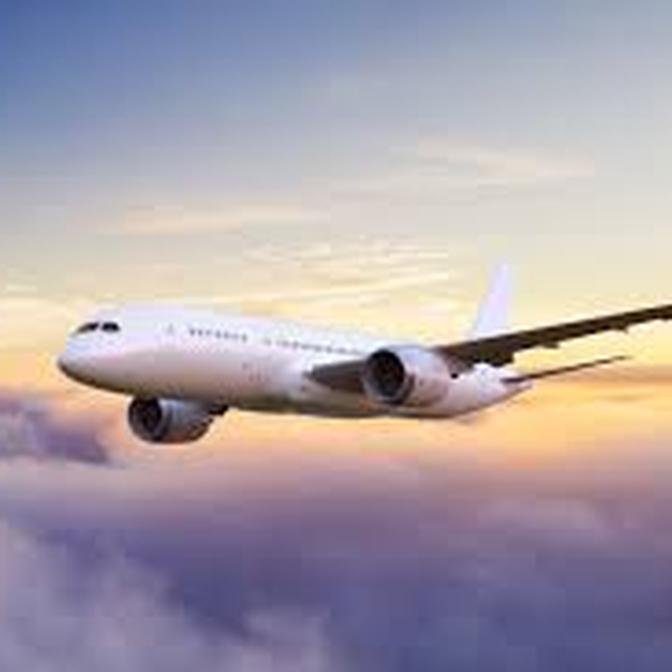
We're here today at Fort Lauderdale Executive Airport, and I'm here with my friends at
Bricci Aviation.
I'm excited to bring you along.
We're going to fly the VisionJet from Fort Lauderdale over to Nassau, and we're going
to check out one of the biggest super mega yachts in the world.
Let's get this started.
I said it before and I'll say it again.
Life moves pretty fast.
It's not about personality matrix holes and charts.
It's all about the bumps in your heart.
All right, everybody, welcome aboard the VisionJet.
Thanks Charlie for having us on board.
We'll start this thing up.
Throw on battery two.
Battery two's coming on.
Battery one's coming on.
Everything's just initializing right now.
Correct.
Excellent.
Okay, put the strobe lights on.
Strobe light's coming on.
And then now you can take the run dial for the engine.
Take it to run.
Going to run.
Standby.
Start.
And I'm going to push this.
One time firmly let it go.
There we go.
We're getting our light on.
I'm watching ITT.
I'm looking at a bunch of other numbers, but that would be my abort plan.
Okay.
So yeah, we have an exciting day today.
We're going to be flying this VisionJet right on over to NASA.
We're going VFR.
17,500 is the altitude we're going to take.
Affirmative.
And when we get over there, we're going to check out our friend Captain Matt, who is
the captain of one of the biggest luxury yachts in the world.
We'll get the ATIS here.
Lima.
All right.
We have information Lima.
That's the current ATIS here at Fort Lauderdale Executive Airport.
All right.
We'll let clearance delivery know what our plan of action is.
Now we're going to go over to ground frequency here.
VisionJet 777, Charlie Bravo.
Roger.
Runway niner.
Taxi via Charlie Echo.
Hold short of 13.
Runway niner.
Via Charlie Echo.
Hold short.
Runway 13.
VisionJet 777, Charlie Bravo.
And I tested my brakes.
Good.
Your brakes good.
Here's your armrest for you.
So yeah, I'd like to welcome everybody on board.
This is my second time flying the VisionJet.
Thank you.
Me and Charlie, we flew up to Heaven's Landing.
Northeast Georgia last time.
And today is going to be a little bit different going out over into the Bahamas.
I fly as a professional pilot in my career.
Today we're just flying for fun.
And I partnered with PilotInstitute.com.
And there's a lot of free courses that they provide that are amazing.
And it's all linked in the description below.
They also have some paid courses to help you get through all your ratings.
And also I use the iPad Mini 6.
With the pivot case systems.
And the mounts.
That's also linked in the description below.
Pivot cases.
My discount code.
You can save 15%.
Yeah, if you hear a lot of Charlie Bravos, my DA62 is flying.
22 is flying.
Yeah, so you're going to hear a bunch of Charlie Bravos.
So the DA62 is taxiing right now.
So we're using caution for that.
Using our full call sign.
Okay, so this is one tree.
We're cleared to cross.
Cleared to the left.
And cleared to the right.
Charlie's got a flight school here.
Breachy Aviation here at Fort Lauderdale Executive.
If you guys are looking to go to a premier flight school.
Check this place out that Charlie runs here.
He's got an amazing fleet of airplanes.
We have an SR20, a 22 Turbo.
We have an Extra 300, a DA62.
The Vision Jet we're flying today.
Skyhawk.
And we typically sell two or three of our planes every year or so.
And we get a couple more.
Listen, somebody's got a pilot deviation.
Yep, I just heard that.
So this is G3000, correct?
Right, so this is G3000.
Technically, it's Garmin Perspective Plus Touch.
When you get to the HondaJet or the TBM 930, you'll see a third screen in here.
But you have your GTCs, your Garmin Touch Controls.
And it's essentially the same thing.
Actually, that's makers there.
My old job.
They fly right here in front of us.
That's one of their newer caravans.
So we're going to rotate around 85 knots?
Correct, yep.
You've got all your speeds right here.
You can glance at them right before we get on the runway again.
Okay, perfect.
All our checklists are done.
We did all our safety briefings.
We'll just do a quick recap.
Our survival equipment's all the way in the back next to Elise.
There goes makers there.
Going out to the Bahamas also.
All the way down to the Staniel Key Yacht Club.
Boy, I love hearing the turbine spool up and down when you manipulate the throttle.
It's a lot more fun compared to a turboprop.
Watermaker 634, runway N, A2, line up and wait traffic, N, 2 1⁄2 miles, left base.
Line up and wait, A2, Watermaker 634.
We'll wait right here in case for some reason this guy doesn't want to get going.
We can still make A2 if they want to give us that.
Yeah, I like where your head's at.
N433MJ, runway N, line up and wait traffic, 2 miles final.
Line up and wait, 433MJ, turn to 9.
Codec 252KT, roger.
N34J, expand downwind.
N34J, after 422, taxiway G.
And as a reminder, as we line up and you accelerate, you'll have your feet about halfway up.
As that airflow and that speed increases and you get more airflow over that rudder,
it'll become more effective.
Then you bring your toes all the way to the bottom of the rudder to avoid riding the brakes.
That's really a serious thing with how the nose wheel works.
N777CB, runway N, line up and wait, traffic right downwind.
N, line up and wait, N777CB.
Clear final.
Final's clear.
Looking good.
And runway, we just got somebody clearing.
Alright, look, hey, our DA62's off the right wing.
There we go.
That was the first flight we flew together.
We're going to line up and wait here.
Line up here on center line.
There we go.
All lined up.
Just waiting for his call.
N7CB, fly eastbound.
Runway N, clear for takeoff.
Fly eastbound, VG777CB.
Here we go.
Takeoff power is set.
Thrust is set.
Hold the center line here.
I'm going to start to shift my feet down.
You can bring them all the way to the bottom of the rudder now.
You got it.
Looking good.
Looking for a rotation speed.
Looking good.
A little bit of a right crosswind.
Rotate.
There we go.
Rotate.
Man, this thing gets up and goes.
There you go.
I'll get your gear up.
And I'm standing by for flaps.
Looking really good.
Lower that nose to about 7 degrees nose up for now.
Sounds good.
That'll be a good pitch attitude.
Alright, flaps are up.
Takeoff checks.
Clear to the right.
Give me about a 1-1-0 heading.
1-1-0 heading.
Climb 135 knots for now.
Up to 1,000 feet for now.
And you can bring your thrust to max continuous.
There we go.
Max continuous set.
There's 1,000 feet.
Level out.
Alright.
And 1-1-0 heading.
We got somebody taking off that's faster than us.
That's why we offset.
And we got our yaw damper on.
Alright.
Go up to 2,000 feet.
Fly heading 1-0-5 now.
1-0-5, 2,000 feet.
Yep.
I'm going to navigate the airspace here.
Look at the air.
Beautiful view out there.
Coming up on the beach over here.
Man, it's nice and quiet.
I can't get over how quiet it is inside this airplane.
Alright.
We're just getting outside of the Class Charlie airspace here.
Climbing up to 2,700 feet.
As you can see out the front window now, it is a beautiful day out here in the Bahamas.
So we've got direct to NASA programmed into the computer system of the airplane here.
I'm still hand flying it as I really don't know if I want the airplane to have all the fun.
I like to enjoy hand flying this airplane.
We're clear.
We can go up to 1,700 feet now.
Alright.
1,700 feet.
Yeah.
Go 15 degrees nose up for now.
We'll use that speed.
And then as the speed bleeds, we'll do a cruise climb at 1,600 feet.
1,600 feet.
There we go.
Hey, look at that VSI.
Now we look like a Learjet.
5,200 feet a minute.
And there we are bleeding off.
There you are.
Perfect.
1,600 feet.
One of the things that ESP reacts to immediately.
Go ahead and just start banking to like the 60 degree mark right now.
I want you to feel the pressure I'm talking about.
Just start banking to it.
You'll see these little ticks right here.
Start pitching up a little more.
Go past that 45 degree marker.
Feel that pressure.
Just let go of the stick.
You'll see the airplane starts correcting it slowly.
See that?
Yeah, wow.
Now if you did fight that, let's do one to the right and actually get the ESP engagement.
Go to the right.
Start that right turn.
And just hold it at like 50 degrees.
Go a little more, a little more.
All right.
Now fight that pressure.
You feel the airplane fighting?
Oh, yeah.
I want you to continue to fight it.
Hold the nose up.
Yep.
Keep fighting it.
Fighting it?
Yep.
Just keep the turn going.
Oh, yeah.
I'm fighting it hard.
Yep.
Keep fighting.
I want you to see what the computer does.
All right.
Let go.
So it said engaging autopilot.
It went to level mode.
Level mode.
Autopilot's on.
And it says, hey, man, let's go back to wings level.
Wow.
That keeps you really safe if you really start screwing things up.
There's some good technology in the plane.
You just have to understand the systems.
Yep.
You can disengage the red button and turn us on course.
Wow.
That's pretty interesting.
Oh, it's got that technology built in.
Great view down there.
Yeah.
With this turn, you've got a great shot of Bimini now.
Oh, yeah.
Look at out the front here, guys.
See, there is the island of Bimini, the closest island in the Bahamas to Florida, south Florida
here.
Great place to go explore.
My two favorite spots in the Bahamas, a lot of people ask me, I love Staniel Key and Exumas
is my number one spot.
And then I also love Harbor Island up there by North Eleuthera.
That's my second favorite area to go enjoy in the Bahamas.
See that little switch right there that says enable.
Can you turn that on?
I just need the Wi-Fi on to notify.
Oh, you've got onboard Wi-Fi too, huh?
We do notify our ride that we are landing shortly.
So, Charlie, today, tell us what we're going to go out here and explore at NASA.
I'm proud of all my students.
One of my first students, the gentleman's name is Matt, and he finished at the bare
minimum time at the time we were part 61.
He finished at 40 hours, and he soloed on his second flight lesson.
I couldn't believe it.
He did have some 10 hours of experience 10 years before, but this guy was landing on
center line with proper crosswind technique, eight, 10 hours into training on the second
flight lesson.
And he soloed.
He has the record soloed on the second lesson and finished, I think, about 22 days of training.
And his background, he's been a yacht first officer and then a yacht captain for some
pretty big, noticeable ships.
And we're just really proud of him.
So he was nice enough to offer us this tour of this mega yacht that he's the captain of.
And he's got a fantastic crew.
The ship, I think, it's a million dollars, a million euros a week to charter out, plus
tips and food.
And he's the captain of this boat.
He's sailing this thing all around the world, correct?
That's correct.
Yeah.
I talked to him a couple weeks ago.
He's in France.
A couple weeks before that, he's here, he's there.
And now they're doing a little, you know, kind of Bahamas Island charter thing.
It's going to be exciting.
I'm excited to talk to a captain in the marine industry on a big vessel like this as I'd
like to compare the different challenges of being a captain on an airplane compared to
also the challenges of what it's like to be a captain on a big vessel like that.
So it'll be interesting to talk with him and have him show us what it's all about.
Yeah.
I'll notice the guys and gals that are captaining ships.
In flight training, they tend to be inherently smooth.
They plan their turns out.
Their SA, their situational awareness is very high.
We're at a level off of 200 feet.
And that's just something I see consistent with anybody that's even, you know, if they
have a small boat that they've been driving around in, they're just inherently smooth.
So I see that transition.
They usually are most successful, most expeditiously.
There we go.
Level at 1,7500 feet.
Take a look out there off the left wing.
That's what it looks like from 17,500 feet.
Pick up the information there at NASA.
Arriving aircraft, must contact NASA.
Push control on frequency 121.0.
All participating VFR aircraft, contact NASA.
Push control approximately 2.5 nautical miles from the airport and expect back this for sequencing.
All departing aircraft, must contact NASA.
Deliver on frequency 118.3 prior to taxiing.
Advise on initial contact, you have ATIS information, hotel.
All right, we got the weather and information there at NASA.
Delta 1944, you're following a slow station on a...
Ho, ho, ho, ho.
Called out a slow station.
Bahamian ATCs not hold back today.
All right, so we have our cruise checklist done.
Our vertical navigation profile is set.
We're starting our descent.
Eight minutes, 45 seconds.
We'll call approach 25 out per their procedure.
Perfect.
Jake, you're back.
Shut your face.
I came back for the music.
And as you can see out the front now, we've got NASA in sight.
357, good day.
We're going to be coming in to runway 10.
Alpha Victor, Alpha.
Join left base 14, tower 19-5. Good day.
Good day, sir. Thank you, sir.
I'm actually going to disconnect the autopilot and have a little fun.
Yay, that's what we love to hear. Go for it.
And it'll just re-engage the damper?
It'll engage by itself, yeah.
It'll turn off at 200 feet.
So that's when you...
It'll automatically turn off at 200 feet?
Yeah, you'll see the YD come off.
And if you wanted it off before then, you could.
You just push and hold the red button.
Okay, how long do you have to hold it for to have it disengage?
As soon as you hold it, it'll turn off.
He is going to slow down tremendously.
Why does he want to slow down tremendously?
I think that's just the tower's experience with the Citation, I guess.
He's been bashing them a little bit this morning.
You're right, he has.
We've got our runway in sight out there.
Okay, so we'll go first notch of flaps.
Selected.
And we also make sure it indicates.
Indicating.
Let's go gear down.
Gear selected.
Down.
120 for now is good.
Okay, 120 is what I'll be pitching for here.
I'm going to take a look at his ground speed right now, see what he's doing.
Okay, thank you.
So he's doing 98.
We're doing 110.
So let's go 105 indicated now.
105 indicated.
Look at the beautiful view of the beaches and the water down there.
Three green, that's the second gear check.
Full flaps selected.
Okay, watch the donut.
That's going to give you your VREF, your final approach speed.
Wait until the full flaps come down and I'll point out to you.
Because it continues to change with weight and other factors.
Okay, do you see the donut?
I see the donut.
Okay, you see it's about 78.
So right now, 88 is going to be your final approach speed for now.
And then as we're coming into ground effect, then our eyes are just outside.
So you're doing VREF plus 10, so 88.
Now you'll see as we make angle of attack movements, essentially you'll see the donut shift a little bit.
So you can just in your minds, 90 is a good final approach speed right now.
Stabilized approach criteria has been met.
We're good to go.
Sounds good.
Alright, it's our third gear check as we approach 500 feet.
Checklist done.
Got three green.
We'll keep our toes on the bottom of the rudder.
We're going to taxi all the way down and make a right turn for Odyssey.
So we will...
We don't get any points for landing on the numbers today.
We'll go all the way down.
It's a nice long runway.
Wow, look at the view off our wing.
It's a cloudy day out here.
And it's still beautiful.
So we have a little bit of a wind coming off the right side.
Looking good.
Now this yaw damper will turn off automatically at 200 feet, right?
200 feet will come off.
We'll call it out.
Continue.
There it is. It's off.
You have rudder authority.
RNAV runway 10.
It's pretty much coming right down the runway.
Looking good.
You can start reducing that power smoothly to idle as you enter ground effects.
Wow.
I feel like you do this every day.
Are you flying a Vision Jet on the side?
Are you cheating on me here?
I don't know.
What is this?
I always say it's better to be lucky than good.
But that was a smooth landing.
Man.
So they want us to have this expedite down to Kilo.
And we'll go over to ground frequency.
So welcome to NASA, guys.
I hope you enjoyed that flight.
To me, it was an amazing flight.
Amazing views.
Amazing crew.
It was so much fun.
Like I said, don't go anywhere.
We're going to go check out this mega yacht and see what it's like to be a captain on this boat.
To sail it around the world.
Well, no one clapped.
It was the best landing.
No one clapped.
Come on, people.
Come on.
Here's Kilo.
Checklist is complete.
Next checklist will be the shutdown checklist.
And right up here, this is Odyssey.
This is the FBO that we'll be using.
They also have customs here where we're going to clear in.
I can see our marshaler here.
We'll make a hard left.
Look at that big float plane right there.
So that's not Caribbean.
Yeah, we just went up to Jack Brown's and did our seaplane rating.
That's great.
So much fun.
Highly recommended.
All right, I can see our guy at 1 o'clock.
Very good.
He's going to have us park right up there in the front row.
Yep, I can see us waving.
I can see him waving.
There you go.
You see him?
Yep.
Cool.
Here we go.
We'll be parking right between a HondaJet and a Slotation.
When we come to a stop, we'll just have a one-minute cool down at idle power.
Perfect.
Clear, clear, clear.
Feels good to be back in the Bahamas.
Well done, Captain.
Sounds good.
Thank you, buddy.
We cheated death one more time.
Yeah, exactly.
Live to tell the story.
Okay.
One minute.
Take your headsets off.
Take that dial and switch it to off.
And then push that button one time.
Start button is right here.
Just push it once and push it again.
Perfect.
It's bleeding.
Awesome.
Alright, let's go explore.
Let's do it.
Alright, and then from right to left, we'll turn all the stuff on.
One, two, three, four.
Alright, guys.
We're here on the yacht Savannah, and we found Captain Matt.
How long have you been in the yachting industry, and how do you like it?
Yeah, I've been in yachting for close to 19 years.
Been on board Savannah for seven months.
New command to me.
Really love the yachting industry.
Been doing it for that long.
That's my love of it.
It's an amazing industry.
You get to meet a lot of cool people.
I can imagine.
Great crew.
So, you've been on this yacht for seven months now.
What is it like transitioning onto a brand new boat that you've never been on before?
Not easy.
Not easy?
No, it takes some time.
There's two captains on board.
Okay.
I share the command with Chris Durham, another friend of mine.
And, yeah, learning the vessel.
We're 273 feet, 3.5 meters.
273 feet.
Is this the biggest yacht you've ever been on command of?
It's my largest captaincy.
Is it?
Slightly smaller than a previous boat I worked on before.
How many other yachts significantly have you been on throughout your whole career?
I've only worked on four yachts my whole career.
Four yachts total.
So, I think, Matt, we should go up to the bridge and you can show us where all the magic happens
to try to maneuver this thing around and show us the systems up there.
Sounds great.
Perfect.
Happy to show it to you.
Hey, guys.
Welcome to the bridge of Savannah.
We're quite a special boat.
I call it a boat.
Steve was calling it a boat.
We're a mega yacht, super yacht, whatever you'd like to call it.
Something quite special about Savannah is she is a diesel-electric hybrid vessel,
but also with this breathe propulsion system.
So, we have an azi-pull and a pusher.
Both are constant-speed propellers with variable pitch,
and the azi-pull allows us to have pretty excellent maneuverability.
They counter-rotate.
The counter-rotating blades allow us to be more efficient than, say, a conventional yacht like Chaos behind us,
which has standard twin shaft, twin props.
So, this saves us about 30% of fuel on our efficiency, which is great.
That makes us quite special compared to most other yachts in the yachting fleet.
That's all controlled here.
It's called the breathe system, commissioned by Rolls-Royce and Feadship.
It's a little dim.
It's like a big iPad.
Yeah, basically.
So, all our different modes go in there.
When we're maneuvering, we're using just the pod.
We can also bring in the forward CPP pusher,
and we have a large bow thruster as well to help us maneuver the boat alongside or in other conditions.
Up on the bridge, we have our full CCTV camera system.
This allows us to see what's going on in the exterior, the engine room, all the technical spaces,
make sure no one's where they shouldn't be.
Obviously, it's security as well.
Our radar, X-band radar.
Our transits, NaviSailor.
We're a full-active bridge, meaning we don't carry any paper charts, much like your airplanes.
Our conning station.
So, on the right, we have our bow thruster, which is our yaw for you airplane folk.
Left and right of the bow.
Our forward pusher.
It's all automated.
And then we have our azipod, azipole, excuse me,
which allows us to really maneuver the stern in any direction we wish, positive and negative pitch.
Oh, that's pretty sweet.
Yeah.
So, our different propulsion modes, we have maneuvering, which is just solely on the azipod, azipole, and our bow thruster.
We then go into diesel-electric, which automatically changes our speed, maintains our speed,
but then brings us over to the forward propeller.
We control both props with just a single lever and allowing us to steer the ship with this tiny little wheel.
Then we have our range mode, which will make this be more apparent when we get down to the engine room
and we discuss the different propulsion.
Because we're diesel-electric, we run on generators,
but we also have a one-megawatt-hour battery bank along with an auxiliary engine,
which you'll find that funny when you see it.
It's a 3,000-horsepower, nine-cylinder Wärtsilä engine.
S-band or X-band radar, we can swap those back and forth.
Our redundancy, to be fully paperless, we have to have full redundancy of our navigational charts.
And then this is our AMS or monitoring system,
which allows us to see everything from fuel consumption to electrical usage.
Right now, you can see our power distribution, which is our Caterpillar generators.
We have a C32, two C18s, an emergency generator, and then our battery bank.
This is also the Wärtsilä down here, so you can see our current state of charge, 61% on either bank.
You can see then we have our fuel consumption, our fuel total.
Right now, we have 120,000 liters on board.
Max capacity is 172,000 liters.
Wow, that's quite a bit of fuel.
Absolutely.
How long do you usually go if you top off?
How long would it take to have to re-top off again?
It depends on our speed, obviously.
Our range mode is our most efficient, 12.5 to 13 knots,
and we can go about 4.5 to 5,000 nautical miles depending on the weather conditions and current.
Well, Matt, that was pretty cool to get to see the bridge up here.
I'd like to know, being a captain, you have how many crew on board this boat?
24.
24. You're the captain.
I would like to see where your accommodations and where you get to call home while you're out at sea and underway.
Can you show us that?
Absolutely.
Right behind the bridge here, the first door, we keep the captains close to hand.
This is where I get to sleep and work.
We have a little bit of an office here and a nice en-suite.
A tremendous view compared to a lot of vessels that I've worked on before.
Yeah, definitely.
I'm very lucky.
It's a beautiful area to be able to call home.
And I work across from the chief officer and financial officer who have their office here right next door,
so everyone's close together.
And what type of work do they do in here?
A lot of administrative tasks.
The majority of our job is not running the vessel in terms of maneuvering.
We spend a lot of time budgeting, accounting, scheduling.
We have 42 crew on the payroll, so there's a lot of people to come and go,
flights, organizing, everything like that.
So here we are on the mooring deck.
As you can see, it's also doubled up as a crew gym,
so when we have guests on board, the crew often come up here to work out or stretch.
We've got our mooring platforms that lower down at the sides here behind me,
and off to your left there, Steve,
allow the crew to see where we're going when we're docking and to draw our lines ashore.
Oh, so those doors open up behind you and they can stand out there?
Yes, they fold down.
We have handrails that go in.
It allows us to draw our heating lines ashore, get our lines ashore,
tie up the boat, or unmoor the vessel.
We also have our anchors, which allow us to stop and not be underway.
How long of anchor chain do you have?
We carry eight shackles per side.
Eight shackles? So how long is that?
One shackle is 27.5 meters.
We tend not to anchor anything more than 80, 90 meters max,
otherwise it starts getting a bit iffy,
but if you're in the Bahamas and don't have to worry about it,
and you're anchoring in 7 meters,
basically just drop it and don't have to use much chain.
An intricate system here.
As you can see, it goes up and over, which can offer some complexity.
I see a sign here that says,
caution, the mooring deck is a snap-back zone.
Yes, so when we're tying up, we're using these capstans, or windlass.
Also as a capstan, we can unclutch them,
so when they're not using them for anchoring operations,
we tighten our mooring lines with them.
And if you snap a line, you can do a YouTube dial on that
and see what a line can do to a person if you get hit by it.
Definitely wouldn't be pretty.
No.
Back here on the midship, I believe,
they have a nice gym where Captain Matt said
they can actually use all this equipment
when there's no guests on board.
It can work out with a view.
There we go.
Am I doing the right form?
I don't know, but it's good to always stay in shape.
Down, down, down we go.
Where do you think we're going to be going next?
In the laundry area.
Got a lot of washer and dryers.
Alright, so in here, we're in the laundry room,
but just forward is our battery room.
It really makes our hybrid diesel-electric system what it is,
and so that sort of makes Savannah Savannah.
It allows us to really be a little more efficient
and run our machinery more efficiently,
so our generators are always charging something
instead of running under load.
These are all the batteries.
Wow, so these are all the batteries.
My goodness.
We're actually upgrading these to 2.5 megawatt-hour.
All the batteries are coming out,
and with technology that's advanced these days,
we can almost triple our capacity.
It goes all the way around.
Both sides.
A lot of batteries.
Alright, so we'll head through the engine room.
Some people really love the engine room, some don't like it,
but it really is the heart of the ship.
Our propulsion, our water makers are there.
Everything that we need to keep the vessel running
happens behind this door.
Oh, my gosh, this thing is amazing.
Alright, so welcome to the engine room on Savannah.
As you can see, it's also set up as a workshop,
but primarily what you see is what you get.
We've got two generator rooms on either side,
which helps keep the noise down for when we're sitting in port
just running on generators.
Really, the centerpiece is our Wardzilla 9-cylinder
3,000-horsepower engine,
which can run both propellers and the entire hotel load,
so we just run the entire vessel on this one engine.
If we kick up into higher speed modes,
we start really pushing it.
We've got a top speed of 17 knots.
Then we start bringing on the other generators,
giving us that additional power that we need.
Not very efficient.
We try not to do it very much,
so really run this as much as we can.
Our most efficient slow-speed engine.
It runs about 1,000 RPM.
That's obviously the main engine exhaust
that goes up through that stainless steel.
You can see all the engines have that stainless steel shroud,
which also insulates it and prevents the heat from
heating up the engine room
and also getting our emissions out of the vessel.
As I'm sure you can tell, I'm not an engineer,
but this is where the chief engineer, second and third,
get to spend some of their time
when they're not out fixing the rest of the equipment
out on the decks or inside the engine room.
But the ECR is called the engine control room
and allows them to monitor and control all the ship systems.
So this is our tender garage.
It's made ships.
Both shell doors open up.
This side opens down.
This side opens up.
We've got two four-ton gantry cranes
which help launch our tenders.
It holds two laser sailboats,
multiple kayaks, paddle boards,
three seeders, two AWIC surfboards,
E-foils, every inflatable you can imagine,
fishing gear, paddle gear.
So this is where really all our water sports is launched from
and how we keep everything nice and clean and looked after.
It's really great having boats kept inside.
So the reason why we're actually here today
is Captain Matt is a pilot in aviation
and Charlie was his flight instructor about five years ago.
So Matt was probably one of my first students
when I first started out and started doing primary training.
And he's very humble about it,
but he was definitely one of the star students,
meaning that he sold on his second flight lesson.
He finished the minimum 40 hours,
and it was rewarding having that brushstroke in his aviation career.
But we've become very close friends since that time,
and now we fly formation to Key West,
and it's just a good time.
It's probably one of the most fun things that I get to do
besides doing training is just breaking off with guys like Matt
when they're not working
and just kind of enjoying and sharing aviation together.
What type of airplane are you currently flying?
So I'm part owner of a 1969 Mooney M20F.
Oh, sweet. That's got to be a lot of fun.
I'm not IFR rated yet, so I try to stay humble, stay safe, and try to...
So flying as a captain in a career and all that,
you have different challenges.
Coming over to this type of career,
I'm sure you have a lot of challenges
that you have to navigate being a captain on a yacht.
What would be some of the most challenging aspects of captaining a yacht like this?
For sure. I think a misnomer might be that everyone thinks
the captain is just driving the boat all the time.
Honestly, that's the funnest part.
As you saw, the propulsion system is amazing.
It's really maneuverable, great fun to drive.
Often I'm not touching it, though.
I'm letting the chief officer and second officer drive the boat.
I want them to be getting that experience.
I think when you become qualified at something
and feel confident teaching others, it's very rewarding.
And so driving the boat is the easy part.
We're not doing it very much.
When we're crossing the Atlantic, we're staring at a window,
making sure that we don't come into contact with other vessels.
But really the hard part is managing the crew.
Managing the crew. That's interesting.
You are a supervisor of this whole operation,
and you've got to make sure it runs efficiently and safely.
Absolutely. We've got 40 employees on the books, 40 crew that come and go.
Not to say they're a problem.
We have a lovely crew on board Savannah.
I'm very fortunate to work here.
But that takes up the majority of our time,
is moving people in and off the boat,
and making sure that we maintain a high level of service.
The clientele we have on board really demand the best,
and we have to run at a high level.
Guys, we'd like to really thank Captain Matt for having us on board Savannah,
and thank you also for Charlie for bringing us over on the Vision Jet today.
It was an amazing day, an amazing experience.
Thank you so much for having us on board.
No problem, Steve.
We look forward to seeing you guys again in the future.
If you guys like the video, smash that thumbs up button,
subscribe to the channel.
I'll also link everybody's social media in the links down below
if you want to click on any of those.
Be sure to give them a follow.
I hope all is good, and we'll talk again Sunday soon.
Transcribed by https://otter.ai