
The Rise and Fall of Julius Caesar - How He Reshaped Roman Politics Forever! #history
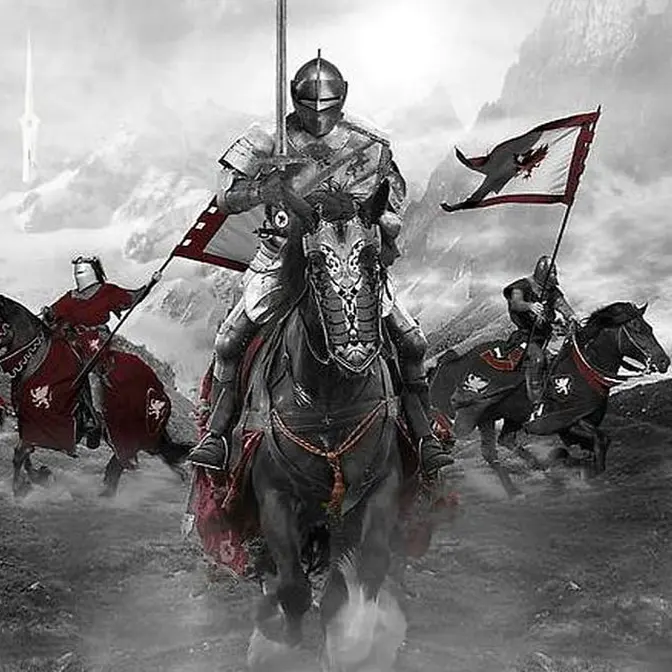
Dive deep into the incredible life of Julius Caesar, from his noble birth to his dramatic assassination. In this comprehensive documentary, we explore the strategic genius, ruthless ambition, and indelible impact of one of Rome's most legendary figures. Witness how Caesar rose to power, his conquests, the pivotal moments that defined his career, and the betrayal that led to his downfall. Join us as we uncover the stories, tactics, and legacy of Julius Caesar that continue to influence the world today.#history #JuliusCaesar #Roman #Rome
The Rise and Fall of Julius Caesar
A brief exploration, Julius Caesar stands as a pivotal figure in history due to his
profound impact on the Roman Empire.
His conquest expanded Rome's territories, while his political reforms reshaped its governance.
His life and death marked the end of the Roman Republic and the dawn of the Roman Empire.
Born into the prestigious Julian clan in 100 BCE, Caesar's early life was steeped in
Roman tradition.
His family, though noble, was not wealthy, and this upbringing instilled in him a determination
to restore their former glory and influence within Roman society.
Caesar's education was comprehensive, covering rhetoric, philosophy, and law, which were
essential for any aspiring Roman leader.
His early exposure to influential thinkers and the political atmosphere of Rome profoundly
shaped his ambitious nature and strategic mind, setting the foundation for his future
endeavors.
Caesar's military career began with a stint in Asia Minor, where he demonstrated exceptional
leadership and bravery.
His early exploits garnered him recognition and respect, paving the way for more significant
military opportunities and establishing his reputation as a formidable military commander.
Entering Roman politics, Caesar quickly aligned himself with influential figures and utilized
his oratory skills to gain public favor.
His political acumen and relentless ambition enabled him to climb the ranks swiftly, setting
the stage for his eventual rise to unparalleled power in Rome.
Caesar's marriages and alliances played crucial roles in his ascent.
His union with Cornelia aligned him with powerful factions, while his subsequent marriages furthered
his political ambitions.
Forming strategic alliances, Caesar built a robust network of influential friends and
supporters, crucial for his political maneuvers and military campaigns.
The Siege of Mytilene marked Caesar's first notable military success.
Demonstrating exceptional leadership and bravery, he led Roman forces to a decisive victory.
This achievement earned him the Civic Crown, one of Rome's highest military honors, enhancing
his reputation and solidifying his standing within the Roman army and political circles.
Captured by pirates on a voyage, Caesar famously turned the tables on his captors.
After securing his release through a ransom, he raised a fleet, hunted down the pirates,
and exacted revenge.
This bold move showcased his determination and resourcefulness, adding to his growing
legend and influence.
Upon returning to Rome, Caesar's political ambitions took center stage.
Leveraging his military successes and strategic alliances, he sought public office.
His charismatic speeches and populist policies won him the support of the masses, setting
the stage for his rapid rise through the political ranks and increased power.
Caesar's influence in Roman politics grew steadily.
His adept handling of political rivalries and alliances, combined with his oratorical
prowess, earned him key positions.
As he gained more authority, Caesar skillfully navigated the complex political landscape,
consolidating his power and laying the groundwork for his eventual domination of Roman affairs.
Julius Caesar's first term as consul in 59 BC marked a turning point in Roman politics.
He formed the first triumvirate with Pompey and Crassus, using their combined influence
to push through key reforms.
His political maneuvers laid the groundwork for his future dominance.
During the Gallic Wars, Caesar showcased his military prowess.
Over nearly a decade, he expanded Roman territory by conquering Gaul.
These campaigns not only increased Rome's wealth and power, but also bolstered Caesar's
reputation as a formidable leader, earning him the loyalty of his troops.
Caesar's conquests significantly contributed to the expansion of the Roman Empire.
Beyond Gaul, his campaigns extended Rome's borders and secured its dominance in Europe.
These victories brought immense wealth to Rome, enhancing its global influence and further
solidifying Caesar's status as a key figure in Roman history.
The crossing of the Rubicon in 49 BC was a defining moment.
Defying the Senate's orders, Caesar led his army into Italy, effectively declaring war on Rome.
This bold move symbolized his break from traditional Roman politics and set the stage for the ensuing civil war.
The civil war between Caesar and Pompey was a dramatic conflict that reshaped Rome.
Caesar's strategic brilliance outmatched Pompey's forces, culminating in the decisive
Battle of Pharsalus in 48 BC.
This victory solidified Caesar's control over Rome, paving the way for his eventual
rise to dictatorship.
Caesar secured a decisive victory at the Battle of Pharsalus, where his strategic brilliance
outmaneuvered Pompey's forces.
This win cemented his dominance, showcasing his unmatched military prowess.
The aftermath saw Pompey fleeing to Egypt, only to meet his tragic end.
Thereby eliminating Caesar's primary rival and altering Rome's power dynamics significantly,
Caesar's appointment as dictator for life marked a pivotal shift in Roman governance.
His unparalleled authority allowed him to implement sweeping reforms, centralizing power
and diminishing the influence of traditional Republican institutions.
This unprecedented concentration of power stirred both admiration and animosity, setting
the stage for his eventual downfall.
Caesar's reforms were ambitious and wide-ranging.
He restructured the calendar, initiated public works, and extended citizenship to many provincials.
These changes aimed to stabilize and unify the empire, reflecting his vision of a stronger,
more cohesive Rome.
Despite their benefits, these reforms also intensified fears of his growing autocracy.
Public perception of Caesar was polarized.
Many Romans revered him as a military genius and a champion of the common people, while
others viewed him as a tyrant threatening the Republic's core values.
His charismatic leadership and populist policies endeared him to the masses, but alienated
the senatorial elite.
Key figures played crucial roles in either supporting or opposing Caesar.
Loyalists like Mark Antony and Octavian stood by his side, bolstering his power.
Conversely, staunch Republicans like Brutus and Cassius viewed him as a usurper, ultimately
leading to his assassination.
These alliances and enmities would shape Rome's future dramatically.
Julius Caesar's relationship with Cleopatra was both a strategic alliance and a romance
that captivated the ancient world.
Their union strengthened Caesar's influence in Egypt, providing him with significant
political and military support.
Cleopatra bore him a son, Caesarion, further intertwining their legacies and solidifying
their bond.
The conspiracy to assassinate Caesar stemmed from fears of his growing power and potential
tyranny.
A group of senators, known as the Liberators, orchestrated the plot.
Their goal was to restore the Republic, believing Caesar's death would halt his perceived
ambition to become a monarch.
On the Ides of March, 44 BC, Caesar was assassinated in the Senate.
The conspirators, led by Brutus and Cassius, stabbed him multiple times.
His death shocked Rome, creating immediate chaos and uncertainty.
The event marked a pivotal moment in Roman history, altering its future trajectory.
The aftermath of Caesar's assassination was tumultuous.
Rome plunged into a series of civil wars as power struggles ensued.
His murder did not restore the Republic as intended.
Instead, it led to further instability.
The immediate consequences included the rise of Caesar's supporters seeking to avenge
his death.
Caesar's death had long-term effects on Roman politics and society.
It marked the end of the Roman Republic and paved the way for the rise of the Roman Empire.
His assassination highlighted the deep divisions within Rome and set the stage for the emergence
of Augustus as the first emperor.
The assassins, known as the Liberators, sought to restore the Republic, but their actions
plunged Rome into chaos.
Many fled the city, and civil war erupted.
Key figures like Brutus and Cassius met tragic ends, unable to secure the freedom they envisioned.
Their failure marked the end of the Roman Republic.
Caesar's assassination created a power vacuum, leading to the rise of Augustus,
his grandnephew and heir.
Augustus skillfully consolidated power, becoming Rome's first emperor.
He maintained the illusion of a republic while holding ultimate authority, transforming
Rome from a republic to an empire, a legacy lasting centuries.
Julius Caesar's impact endures through his profound influence on history and culture.
His military strategies, political reforms, and personal ambition have been extensively
studied.
His life and death symbolize the potential and peril of unchecked power, offering timeless
lessons on leadership, ambition, and governance.
Historians offer varied perspectives on Caesar, from ruthless dictator to visionary leader.
Some view his actions as crucial for Rome's progression, while others condemn his ambition
as destructive.
These differing interpretations highlight the complexity of his character and the enduring
debate over his true legacy.
Julius Caesar's portrayal in literature and media spans centuries, from Shakespeare's
iconic play to modern films and TV series.
His complex personality and dramatic life events make him a compelling figure.
These portrayals often reflect contemporary concerns, showcasing his enduring relevance
and the timeless fascination with his story.
Monuments and memorials dedicated to Julius Caesar can be found throughout Rome and beyond.
The Roman Forum houses several significant sites associated with him, including the Temple
of Caesar.
These locations draw countless visitors, serving as tangible reminders of his influence on
history and architecture.
Recent archaeological discoveries continually shed light on Julius Caesar's life and times.
Excavations have uncovered artifacts and structures linked to his era, providing deeper
insights into Roman military strategies and daily life.
These findings enrich our understanding of Caesar's impact and the world he inhabited,
bridging past and present.
Julius Caesar's life offers lessons for modern politics, illustrating the complexities of
power, leadership, and ambition.
His strategies in governance and warfare are studied in political science and military
academies worldwide.
By examining Caesar's successes and failures, contemporary leaders can glean insights into
effective leadership and the potential pitfalls of absolute power.
Julius Caesar's actions and character have sparked numerous debates over the centuries.
Some view him as a brilliant strategist and a visionary leader who expanded the Roman
Empire and instituted crucial reforms.
Others see him as a power-hungry dictator whose ambition led to the erosion of democratic
institutions.
Reflecting on Caesar's life, one sees a tapestry of triumphs and tribulations.
His rise and fall illustrate the fragility of power and the enduring impact one individual
can have on history.
His story serves as both a cautionary tale and a source of inspiration for future generations.