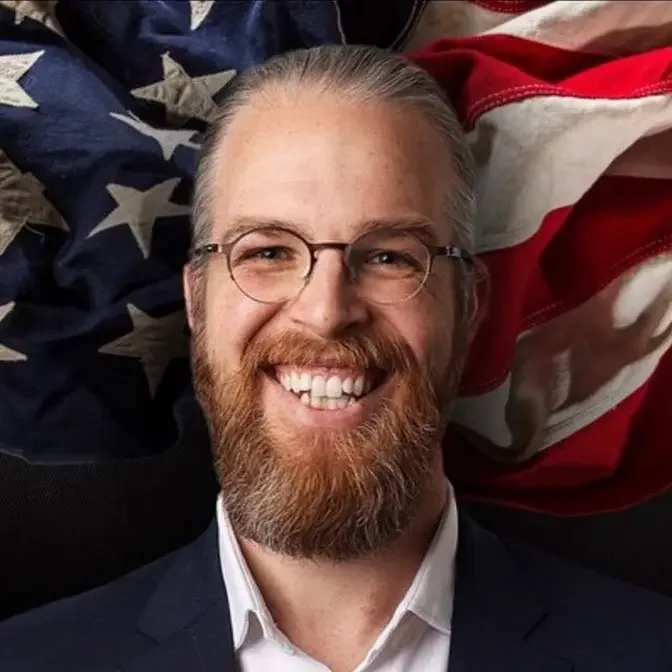
Ladies and gentlemen, welcome to Man in America. I'm your host Seth Holhouse. In America we've seen
over the past couple of decades and especially the past say five to ten years, we've seen our
culture dramatically change. We've seen the values that America was founded on really spat on and
discarded and we've seen this whole new set of values come in that's promoting, you know, all
kinds of weird gender ideology, you know, the just all kinds of just bad stuff actually. Sexual
freedom, the even pedophilia, the violence, drug abuse. And you go to Netflix and scroll through
or you look at what the, you know, top artists are doing at the Grammys and you can see that
there's a dark agenda behind this. And we've oftentimes looked to understand like what is
this dark agenda and who's behind it. Now my guest today, Tiffany Meyer, who you've probably seen,
so she's the host of China in Focus. She's with the Epoch Times and she also is hosting
the Evening News. So she was the producer of a new documentary called Hollywood Takeover.
So I'll play the trailer for you because it's a significant, it's a significant and important
documentary that highlights the amount of control the CCP has over Hollywood, but also why control
over Hollywood is so important. And as Andrew Breitbart had once said, that politics is
downstream from culture. So they understand that and they understand that the power of
controlling culture. So I'm going to play the trailer for you for this documentary. I'll be
right back. There's something magical about the movies that I just love. Hollywood invented
America to the world in the old days. And as a medium, it's really powerful. But for some,
that power isn't used for good.
Our way of life is being censored by the Chinese Communist Party.
They said we get a lot of our money out of China. Is there any way you could make this movie a
little bit more attractive to the Chinese? Is it really just about money? Are there other parts
at stake? I had friends in Hollywood who said this will kill your career. You won't get funding.
They're afraid of even mentioning one line.
Chinese influence was playing into what we see in US films.
China said, you can't have that in there. And Hollywood listened.
This is insane. This is a joke, right? We raised our hand and we dove right into it.
But over time, all of us have been punched in the nose.
The Chinese Communist Party followed no rules.
What's at stake? The soul of the nation is at stake.
We want indoctrination access to America. They could basically take over America without
firing a shot because they control access to our minds.
And we all know that their goal is global domination.
People have been brainwashed without knowing it.
So folks, enjoy the interview with Tiffany Meyer.
Tiffany, thank you so much for joining us today. It's a pleasure to have you on the show.
That's an honor to be with you.
So I've seen you all the time on the evening news with MTD. You've got the China in Focus show.
You've just released this new documentary that I think you're the producer of. Is that right?
You're the producer of?
Yes, I'm the host, narrator, slash one of the producers. We had multiple roles.
I think I was more of the creative producer. I told them to change a lot of things.
Perfect. Of Hollywood Takeover, which we're going to be diving into.
I already played the introduction for folks in the trailer there.
And so I want to dive into this because most the audience knows I've been covering China
for a very long time. And I'm consistently going back to that same thing, which is like,
this is the enemy we have to be focused on. A lot of people are focused on various,
whether it's the World Economic Forum or the bankers. And there's a lot of threats to America,
but I really believe the Chinese Communist Party is the greatest threat to America and to our
freedom. And so let's just first start. What is it that led you to want to create a documentary
highlighting China's control over Hollywood? Kind of multiple parts. One, as you mentioned,
I host China in Focus. So I'm always watching communist China's influence in all sectors,
especially because we started that show with the pandemic. At the time, we didn't know it was a
pandemic yet. So that whole thing unfolded. And then many people were suddenly like, wait,
what is China? Right. Why does this country so far away actually have an impact on me as we
were running out of face masks, all those things. And then my personally, I always loved movies,
but I felt like throughout the years they've changed. They didn't really feel like movies
anymore. And I left theaters feeling more depressed instead of like hopeful. And then also
our company, especially over the times they were starting to make documentaries. And so the CEO was
like, hey, why don't you make a documentary on communist Chinese Communist Party's influence
and infiltration in the government? And I was like, no one's going to watch that. But
Hollywood is actually where most of it starts because it ties into the whole soft power thing.
Right. So the Chinese Communist Party knew if you can control culture, eventually you get to
politics and everything. And so kind of all these different factors led to this film's idea. And
then so we started shooting it in, I think, 2022, the fall. And then it just released. So it's been
a journey. I'm sure. I think it was Andrew Breitbart who said that politics is downstream
from culture, which is really, it's such an important thing because here in America, our
culture has changed drastically in the last, even the last five years, let alone the last
20 or 30 years, especially since we opened up to China. And I think for a lot of people,
they've, especially with the pandemic, they kind of came out of this phase, this kind of haze of
what is America now? And now you're like, what are they teaching our kids in school? And what are
they singing about in the music industry? And they're really seeing it now, it's being uncovered.
And so there's two kind of aspects I want to question you about with relation to what they're
doing with Hollywood. So from my understanding, there's one aspect of it, which is using Hollywood
to create a favorable impression of China, of the CCP, and you focus a lot of that in the
documentary. But we also know that Hollywood has been used as a tool to push a lot of Marxist ideas,
a lot of very degenerate ideas. When I say Marxist ideas, I mean, you could even say that
transgenderism, a lot of the LGBTQ movement. I've interviewed Trevor Loudon a lot. These
are all things that are rooted in a lot of the Marxist ideology. And so you can see that
Hollywood has been used as this great tool to undermine the morality of our culture here in
America. And so first off, I guess, in terms of creating this favorable impression of China,
what do you think is the bigger picture behind that? And then I want to dump into the morality
of it. Right. So the Chinese Communist Party knows it's an illegitimate government or governing body,
we call it the Chinese regime. And with that, their biggest fear is their own people,
the Chinese people, realizing that they are illegitimate. And so everything is controlled
and censored inside of China. I'm sure everyone knows about the Great Firewall, right? You can't
even get access to the point where even students who get to America and go to the Ivy League schools,
if you show them a picture of the tank man from Tiananmen Square, the massacre that happened,
and ask them what it is, they're like, oh, I don't know, maybe like a parade, maybe like a party.
They really don't know, right? And that was a defining moment in current Chinese history,
right? But they don't even know that. So that's the extent of censorship that happens inside the
country. Now with Hollywood and other mediums, they now make the whole world perceive communist
China that way, and they squash what's really happening, right? So even in the pandemic,
we don't know how many people died. We just know certain clips of where you see people
jumping off of the buildings, because that's how much despair they feel and how hopeless they feel
because it's been locked down. There's no food, all of these different things. Or with, say,
the one child policy that's starting to kick in, you're seeing all these issues.
So now the Chinese regime is like, you have to have three kids. It's like really pushing everyone to
try and change the population, all these different things. We're not hearing those stories.
And that's kind of the level of censorship that now we're seeing around the world.
So basically, right, since 2012, we haven't seen a major studio come out with a movie with China
as the villain. And then you think about that, right? You go to the theaters, you see, say,
Gravity, Sandra Bullock, gets saved by the Chinese in space. Not even the ones on the IAS,
not the US or the Russians, right? The Chinese save her. And then 2012, the disaster film,
like the end of the world movie, I don't know if people remember that one.
Everyone gets saved because the Chinese regime had the foresight of building a massive arc,
probably with slight labor, but no one talks about that, right? So then it's like you start
getting these images of, oh, the Chinese Communist Party, the Chinese are kind of just like us.
Maybe there's some human rights, what country doesn't have issues? And then you start
whitewashing, if you will, what's happening over there.
Meanwhile, there are so many reports of the horrific human rights abuses happening there,
whether that's the Tibetans, the house Christians, the Falun Gong, the Uyghurs,
right there in the news now, and you don't hear about that. And so that's starting to change
all aspects, including the way laws and legislation are passed. So then you see,
say, the UN voting and saying, oh, there's no human rights abuses happening in China.
It's really all over the place, and that's really what we're up against.
And so, and as for the other aspect, which is this, the morality, I mean, we've seen,
I mean, in a lot of ways, you could see that they're openly pushing Satanism. I mean,
you look at some of these Grammy award ceremonies, some of the pop stars, even going on Netflix,
you scroll through Netflix, and it's Lucifer, and it's just, it's a very, very dark and evil
agenda. And I know that communism in and of itself, it's really, you'd say it's atheist,
but if you go back to Marx's original works, I mean, he talked a lot about God, and it wasn't
that he said, there is no God, it was, I will destroy God, right? That was his perspective.
I think that's an important thing to understand, really, what's behind a lot of communism. And so
what role do you see the CCP having in the moral, just the complete degradation of the morality and
the moral code of what's being pumped out by Hollywood and the entertainment industry? How
do you think the CCP's tentacles are intertwined with that? Well, as you were mentioning, right,
all the way back to Marx, he talks about God, but as you mentioned, destroying God,
basically, on the side of Satan. And you see that in communism, where they are an atheist country,
but it's weird, because basically, they make everyone believe in the party. So that's like a
kind of faith, but they go after actual faith. And the point of that is, they want to not just
destroy people's bodies, but their souls, right? Because to people of faith, if they die, they
don't really mind, like, sure, that's not great. But you're like, oh, my soul will live on, it's
okay. They have a greater purpose. But the Chinese Communist Party, especially, and you
saw that in the Soviet Union as well, right? They go after the people with the fear of
death, and they kill people, especially if you have faith. And they want to instill that fear
so that you believe in the party. And that is the end all and be all of everything. And so
they really try to get people and then control them, but then also destroy their souls, so that
the point that they feel hopeless, and they will listen, right? But then now you are seeing that
all over. And that ties into the Chinese communist regime's end goal of hegemony,
right? They want to be the ultimate power. And what that means is you can't have, say,
two tigers on a mountain, right? You can't have two ruling powers. So what does that mean? It
the demise of the United States or the free world. And part of that is it ties into what's
called unrestricted warfare, or winning without fighting. And so what you do is you destroy a
country from within. And by doing that, you turn people against each other. We're seeing very
divisive times here in America, right? Whether that's race, gender, politics, and it's not
you're an American, it's, oh, you're a Republican, you're a progressive, you're a left, you're this,
you're that, right? It's like, we don't remember what this United States, it's a United States,
where it started out as. And instead now everything is kind of what you saw in the
Cultural Revolution in China. People are turning against each other. Friends are turning against
each other. You're a different color. You're something else, right? It's like, oh, one of
them has to be the oppressor. That's straight out of communist terminology. Everything is a struggle.
And the reason is the Chinese Communist Party, or communism in general, it creates
these conflicts, these struggles, so that everything is getting destroyed. And then
the Communist Party comes in and is like, oh, I'm going to come and save the day.
But that whole problem was started by them. But then it's been lost, right? So then what happens
is whoever's left is like, oh, we have to listen to this party. They saved us. They gave us food.
Forgetting that life used to be good when they were in charge and all these different aspects.
So you're seeing that where it's creating this divisiveness, but also this era of despair,
if you will, right? People look out the door, they feel hopeless. They're like, the economy's bad,
education, no one knows what people are learning in school anymore. I turn on the TV,
the news is depressing, the shows are depressing. Everything is really
dampening people's spirits. And then imagine if you're a, you don't even have to come in with an
army, right? It's like the country has already dissolved on its own. And that's what ties into
all of that. Because I think here in America, we think of the arts as say, freedom of the arts,
freedom of expression. But in China, since Mao, Mao Zedong, the Communist Party founder,
he's used art as a tool that serves the end goal of the party or the state. And so since then,
it's been weaponized. And that's one of the hard parts for people to realize. It's like
the Chinese Communist Party is using this as a weapon. And then we're seeing the fallout of it,
as you were mentioning, right? Our entertainment industry, everything.
Folks, how do you feel? Me, I feel great. And one of the reasons I believe I feel better is
because I take Balance of Nature's fruits and veggies in a capsule. They have an amazing story
how this product was developed by Dr. Douglas Howard. It's right there on their website.
Balance of Nature receives over a thousand success stories every single month. They have hundreds of
thousands of customers who've purchased billions of capsules of their fruits and veggies over the
past 20 years. You should check it all out on their website. Their products are gluten-free
and non-GMO, and they contain no added sugars or synthetics. I think if you're looking for something
to make you feel better naturally, you should definitely give Balance of Nature a try. In fact,
order today. Whether you order online or call them direct, you must use a promo code,
Seth. That's S-E-T-H. They get this special offer of 35% off, plus $10 off any additional sets,
plus free shipping and the money back guarantee. So call them at 800-2468-751
and use discount code Seth, or order online at balanceofnature.com and use discount code
Seth to get 35% off. Yeah, I remember one of the quotes from the documentary that stood with me
was something to the effect of Mao Zedong saying that there's no such thing as art for art's sake,
right? That there's always a purpose for the creation of art, which you could see that from
his perspective, it was to control people and propaganda. And one thing also it's worth
mentioning is that in the documentary, you talk a lot about what's happened since around that time
of in the past couple of decades, when there's this big shift with China never being a villain,
etc. But even looking back in the past 50 years of filmmaking, when you think about movies about
totalitarian governments, it's almost always the Nazis, Schindler's List. I think The Pianist was
another one. It's always, always, always the persecution of the Jews in Nazi Germany. Those
are the Hollywood blockbusters. You never, ever see a big Hollywood movie about the Cultural
Revolution or about the Holodomor, even the Soviet Union. It's really focused, it seems, on
painting this terrible picture of what they call fascism, of what Hitler was as a fascist.
But there's nothing about the 100 million plus that have been killed at the hands of communism.
So it also makes me wonder how long this industry has actually been controlled,
and controlled in a way that it's only pointing towards one thing while hiding the other. Even
the Nuremberg Trials, it's like, well, where are the trials of the Khmer Rouge? Where are the trials
to hold the communist leaders accountable? They used fascism in World War II, and that story
as the big boogeyman. Even when Trump was coming into office and saying, he's a Nazi, he's Hitler,
all the words and the terminology they used were tied to that. Why not say that he's a Stalin,
or he's a Mao? Because it didn't fit their narrative. I just find it to be a very interesting
thing to look at, if you look at the history of what's happened with the film in the past
five, six decades or so. What you're pointing out is that ties into our perception of the world.
So it's like everyone knows those terms like Hitler, Nazis, fascists, right? But if you say
a communist, you're like, wait, what is a communist? It's harder to think of that because
it hasn't been portrayed in the arts. And so I think, I guess, well, Oppenheimer came out recently
and they're talking about the Communist Party, not really in a negative life. It was more,
you were getting punished if you were associated with it.
But it is tying into all of that where, because it isn't shown or because you're seeing the Chinese
Communist Party as a hero. In the future, if you talk to your kids or something, you're like,
what do you think of the Cold War? And they're like, Soviet Union, the spies, right? It's like,
that's what you think of because that's what's portrayed in the movies. But yeah, it's like,
what do you think of China? Then you would think of communist China's portrayal in movies where
it's like, oh, everything's great. Or like in Xinjiang, the Uyghurs are happy, they're dancing.
You don't see what's really happening there. Meanwhile, the BBC says 1 million of them are
held in vocational camps or basically detention centers. And that ties into the aspect of control
again, right? It's like, if they can control the narrative, not just in their own country,
but around the world, think of how much power that is, but also how much we're losing out on
to the point where you even have prestigious universities, right?
Where if you want to speak about, say, pro-democracy in Hong Kong, well, suddenly you don't get a very
good venue because a lot of funding comes from China. Or if you want to talk about a film,
well, in our film, we have Kay Rubachek, who exposes the human rights abuses in China,
especially when it comes to the forced live organ harvesting of the Falun Gong group.
She wanted to show that film in a lot of different colleges and was turned away because a lot of
those universities have a lot of foreign students from China and they're afraid of losing that
funding. And so we think of these institutions in America as like the beacons of democracy,
of freedom of speech and all that. But even there, it's being stifled, right?
So it really is in all aspects. We're seeing that in, say, the education, as you're mentioning,
also government and, of course, our film industry and all over to the point that it's reshaping
our whole worldview and then the way we will vote, right? Because if you go to the polls,
you're like, oh, this person is very pro-China, engagement is great, the two superpowers,
blah, blah, blah. And then what is the end result? We're losing jobs, right?
All our jobs are going overseas, equality is going down. And it's also hurting the people
there, right? It's not helping the Chinese people. They're treated like slaves. They have to work
ridiculous amounts of hours without getting any compensation or very little compensation.
During COVID, they had these things where they literally had to live in the manufacturing hub
so that they could still manufacture things without getting COVID, right? If you don't
leave, you can't get in, supposedly. And so all of that. And we're helping to fuel
those human rights abuses. But then often people are like, oh, what does it matter, right?
You can save some dollars here. But then it's like, what is the quality that you're getting,
right? It's like, even if you pay less now, you're going to have to buy a ton more of them.
So in the end, it's the same price as if you paid one good quality one. So that's one way a lot of
people are waking up now when they see things that used to be made in Switzerland, say,
and then it breaks after a year. People are like, oh, it seems everything is now made in China.
And with regards to Hollywood, how much control does the CCP have over Hollywood in two ways?
One way being the ownership of Hollywood, right? The ownership of the movie studios,
movie theaters, et cetera. How much control do they have there? And also,
how much control do they have over the messaging coming out of Hollywood?
How many movies that we might go and watch on the big screen at a movie theater,
how many of those movies have been filtered through what's acceptable to the CCP?
Right. So a lot of this goes back to 2008 when the Beijing Olympics were all the rage. And
that was obviously the U.S. also had its own financial crisis, and China was seen as on the
rise. And the next thing China wanted to do was enter Hollywood or get their own version of
Hollywood. And so a lot of studios in America were like, great, movies are expensive. We can
have joint partnerships. This is a massive country with massive population, lots of money to be made.
But part of that was the Chinese Communist Party only allows a certain number of films in per year.
That number has grown over the years. I think the peak was 40, but then since COVID, it's gone down
again. And so it's not easy to get your film into China. So a better bet is if you have a joint
venture with a Chinese studio, because then they control part of it. And then part of that is also
the Chinese Communist Party censors. And then you work with them to try and get this film in,
you have a better chance at getting in. But what does that mean? You have to start changing the
story. So as we point out, two cases in the film Looper and Iron Man 3 that did get into China,
the scripts were changed to add all sorts of Chinese Communist Party elements in just so it'd
be more acceptable to the censors and to get in. And the result is you get a lot of money.
But then you do see that where it's growing, where now a bunch of studios are like,
oh, I'm going to create a theme park in Shanghai or somewhere in China. I'm going to build the
Hollywood of China. And then it starts getting to the point where you have to tow the party line.
So we saw Scorsese had a film on Tibet, right? That was tabled. It's Scorsese. But even him,
you know, everyone pretends that never happened. It's really hard to find Quentin anywhere.
And then Brad Pitt was in Seven Years in Tibet. And him and the studio Sony were both punished
for quite a long time just for making one film because it portrayed the Chinese Communist Party's
takeover of Tibet, the violence that ensued a little too accurately. And the Chinese Communist
Party didn't like that. And so they were punished. But the point of that was to send a message
right to all studios, like, hey, if you make one film that we don't like, it's not just your
studio like Sony proper as the whole company also got punished. And so after that, studios were like,
you know, if I want to make money, I want to go in, I better listen to this.
It's gotten to the point where over the years, there's self-censoring happening,
like the Chinese Communist Party censors don't even have to say anything. The movies are already
rewriting scripts, changing characters, all these different things without being told.
But I think you're seeing changes in that because, for instance,
Senshi and the Legend of the Ten Rings and Eternals both had Chinese cast, Chinese crew.
People thought they're tailored made for the Chinese audience, but neither of those Marvel
films made it into China. And part of that was because Simu Liu is the lead character in Senshi.
He had years ago said something slightly negative about the Chinese Communist Party,
about what his parents endured in China. And so some are saying that for that reason alone,
didn't get in. And Chloe Zhao, the director of Eternals, also decades ago,
had said something slightly negative. And so people are like, wait, if these stories and
cast and crew that are tailor made for the Chinese audience can't even get in,
what are the odds of a much more American film?
But even with Top Gun Maverick, you're seeing that because it's like the most patriot
film ever you could think of, right? But it's very expensive.
So originally, you had this massive Chinese tech giant called Tencent was backing it.
And then as many people noticed in 2019, when the international trailer came out,
two patches were missing from his jacket. Instead of the Japanese and Taiwanese flags,
they were some random shapes because those are very sensitive topics to
the Chinese Communist Party. And then after a lot of international outrage, there was also COVID.
So all studios had to not release anything. No theaters are open, so you could make changes.
Tencent backed out and then the patches returned. And then Top Gun Maverick made over a billion
dollars worldwide without the China market. That's the first Tom Cruise film to make
a billion dollars. And so you're seeing those changes where it's like, oh,
even if I self-censor and do all these things, I might not get into the China market.
But then you're also having a change within China where since the pandemic,
you're seeing this, say, nationalism, if you will, where the Chinese population themselves
prefer to watch their own propaganda films about the Chinese-Japanese conflicts or Chinese-Korean
conflicts in the past. Obviously, the Chinese side is portrayed as the heroes in those.
But you're seeing that too because throughout the years of this partnership, if you will,
the US and Hollywood have taught China how to make movies on par or at the same level
as Hollywood. But they can put their own elements into it, their own movies.
So you're seeing all these different aspects where the market, if you will, is changing.
And then obviously during the pandemic, China had those draconian lockdowns for years,
like three years, right? So you can't even get a movie into China because everything is under
lockdown. So you're seeing all those changes play out. And then you're also seeing the rise
in streaming or independent studios where Sound of Freedom did super well. And it was in theaters
and it's now on Amazon. And that's from Angel Studios, right? This is an independent studio,
not controlled by the money in Hollywood and those major backers.
So you are seeing those types of changes to the point where Chris Fenton, he's the film executive
in our documentary that we talk about who got Looper in, Iron Man 3 in. He says, now you're
having studios greenlight films with zero in the box for the China profits. So it's gotten to that
point where you are seeing a change in the way films are made. Hey folks, I've got a quick
message for you. So I'm sure you've heard a lot of people, myself included, talking about the
importance of buying precious metals, gold and silver. But what's really behind that? Is it just
a thing of, hey, buy this gold, buy this silver, right? Or is there something deeper that we should
be looking at? So I recently came across some figures about house prices. So in 1930, the
average family home was approximately $4,000. Fast forward to 2023, the average family home is just
over $400,000. So you have to ask yourself, why is that? Is it because things have just gotten
more expensive? No, it's actually because the dollar has lost 99% of its value since 1930,
right? When people talk about the collapse of the dollar or inflation, this is what it means.
Now, let's take a look at gold. So in 1930, if you wanted to purchase your home in gold,
it would take approximately 200 gold coins. So 200 gold coins would purchase the average family
home in 1930, about $4,000. Now, if you, instead of buying a home with that gold or cash, you set
those aside, if you set aside $4,000 in cash in 1930, it would be worth $4,000 today. What can
you buy with $4,000? Can you buy a family home? No, you can't even buy a crappy used car. But if
you set aside $4,000 worth of gold coins in 1930, which is 200 gold coins, one ounce coins, that
would be worth approximately $400,000 today. And this is the key lesson about precious metals.
It's not about getting rich. It's about putting your money into an asset that protects you against
inflation and against the destruction of the currency, which is what happens to all fiat
currencies, especially now we're in the end days of the dollar. And so that's why it's important.
Maybe not all of your money, but a portion of your money, a portion of what you have,
I highly recommend putting it into precious metals of gold and silver, because what it's
doing is it's protecting you. This is an asset that has stood the test of time, not just stood
the test of time since the 1930s. We're talking about the rise and fall of civilizations. Gold
was used to buy houses back in ancient Rome. It's still around. It's an asset that will forever have
its value. So folks, if you want to do this and you need someone you can trust, there's no person
I can recommend more than Dr. Kirk Kelly. He's a very good friend of mine. He's a strong Christian
patriot, and he's out to really help people to protect their savings and what you've worked for
against the destruction of the dollar, not to mention also protecting it against the dangers
of a central bank digital currencies. So to learn more about this, go to goldwithseth.com
or call 720-605-3900. Again, that's goldwithseth.com or 720-605-3900. Both those places
will allow you to set up a quick appointment where you can talk to a wealth advisor that
will help get you started on this path. Again, goldwithseth.com, 720-605-3900.
...portrayed the Chinese Communist Party's takeover of Tibet, the violence that ensued
a little too accurately, and the Chinese Communist Party didn't like that,
and so they were punished. But the point of that was to send a message to all studios, like,
hey, if you make one film that we don't like, it's not just your studio, like Sony proper,
as the whole company also got punished. And so after that, studios were like,
you know, if I want to make money, I want to go in, I better listen to this.
It's gotten to the point where over the years, there's self-censoring happening. Like,
the Chinese Communist Party censors don't even have to say anything. The movies are already
rewriting scripts, changing characters, all these different things without being told.
But I think you're seeing changes in that because, for instance,
Senshi and the Legend of the Ten Rings and Eternals both had Chinese cast, Chinese crew.
People thought they're tailored made for the Chinese audience, but neither of those
Marvel films made it into China. And part of that was because Simu Liu, who's the lead character
in Senshi, he had years ago said something slightly negative about the Chinese Communist
Party, about what his parents endured in China. And so some are saying that, for that reason alone,
didn't get in. And Chloe Zhao, the director of Eternals, also decades ago had said something
slightly negative. And so people are like, wait, if these stories and cast and crew that are
tailored made for the Chinese audience can't even get in, what are the odds of a much more
American film? But even with Top Gun Maverick, you're seeing that because it's like the most
patriot film ever you could think of, right? But it's very expensive. So originally, you had this
massive Chinese tech giant called Tencent was backing it. And then as many people noticed in
2019, when the international trailer came out, two patches were missing from his jacket.
Instead of the Japanese and Taiwanese flags, they were some random shapes,
because those are very sensitive topics to the Chinese Communist Party.
And then after a lot of international outrage, there was also COVID. So all studios had to
not release anything, no theaters are open, so you could make changes.
Tencent backed out, and then the patches returned. And then Top Gun Maverick made over a billion
dollars worldwide without the China market. That's the first Tom Cruise film to make
a billion dollars. And so you're seeing those changes where it's like,
even if I self-censor and do all these things, I might not get into the China market.
But then you're also having a change within China, where since the pandemic,
you're seeing this, say, nationalism, if you will, where the Chinese population themselves
prefer to watch their own propaganda films about the Chinese-Japanese conflicts or Chinese-Korean
conflicts in the past. Obviously, the Chinese side is portrayed as the heroes in those.
But you're seeing that too, because throughout the years of this partnership, if you will,
the US and Hollywood have taught China how to make movies on par or at the same level
as Hollywood, but they can put their own elements into it, their own movies.
So you're seeing all these different aspects where the market, if you will, is changing.
And then, obviously, during the pandemic, China had those draconian lockdowns for years,
like three years, right? So you can't even get a movie into China because everything is under
lockdown. So you're seeing all those changes play out. And then you're also seeing the rise
in streaming or independent studios, where Sound of Freedom did super well.
And now it was in theaters, and it's now on Amazon, and that's from Angel Studios, right?
This is an independent studio, not controlled by the money in Hollywood and those major backers.
So you are seeing those types of changes to the point where Chris Fenton, he's the film
executive in our documentary that we talk about, who got Looper and Iron Man 3 in, he says,
now you're having studios greenlight films with zero in the box for the China profits.
So it's gotten to that point where you are seeing a change in the way films are made.
And I want to round out this question with that. I want to ask about the future and the positive
pushback. But before we get to that, you mentioned before that pre-pandemic, a lot of people didn't
really care much about China. And I had that experience too, because I've worked in various
ways to expose human rights abuses in China for decades. And say back in 2010, most people,
if you try to talk to them about human rights atrocities in China, they're like, well, that's
America. They didn't really care. But I've seen now, actually, that everything goes back to the
CCP. It's become even very mainstream to talk about the CCP and what it's doing, which I think
is a good thing. Because Sun Tzu, in Art of War, if you're at war, well, know yourself, but know
your enemy. And if we have no idea who the enemy is, we're going to lose the war. But people are
now seeing that, yes, it is, in fact, the CCP. And I still think, though, that there's a lot
of Americans that have this normalcy bias. When I've had people like Jeff Nyquist or other China
experts come on, and they've talked about this final war. I know Josh Phillips over at Epoch has
done a documentary on this. He covers it a lot. And understand actually what China's end goal is.
And I think that more people would benefit from knowing that. And so you're someone that's
absolutely on the front lines of exposing and understanding what's happening in China. You're
experts on China. So from your perspective, what is the bigger picture of this? Where does
the control over Hollywood and culture, where does it fit in? Is it just fear-mongering to
say that China wants to take over America and colonize America? Or from what you're seeing,
is that absolutely part of their long-term goal is to basically end America as we know it and turn
America into a Chinese communist colony, basically. You're seeing multiple ways the
Chinese Communist Party is doing that. I think, for instance, recently in the news was the massive
hacking effort that went into Microsoft on the islands of Guam and all of that. So you're seeing
instances of that. But also in terms of, say, the Chinese nationals that are coming across the border
illegally. They're now the biggest, the fastest-growing group of people who are coming
across. And what's concerning with that is China has exit bans, right? So you don't leave unless
the Chinese Communist Party wants you to leave. And many are noting that these are single men
who are military-aged. And under the 2017 China National Security Law, China sees all of Chinese
people as its property, if you will. So even if you're an American, but you have family back home
in China somehow, maybe different generations, they still see you as one of theirs. So they will
pressure you through your family members or relatives or anyone to try and toe the party
line, if you will. So you have instances of a Chinese national literally digging up a seed
in a cornfield in Iowa to steal that technology and bring it back to China, to the point that the
FBI is saying every year we lose about $600 billion in intellectual property theft to China.
So this is a multifaceted attack, if you will, on all parts of the country, whether that's education,
the government, entertainment that we've talked about. But now you're seeing it at the border,
you're seeing it in terms of hacking, you're seeing it in terms of national policy.
But we are seeing kind of a pushback, right, as you were pointing out, because now we have this
bipartisan House Select Committee on the CCP. It's bipartisan. It seems like the only things
people can agree on in Capitol Hill now is the China threat. So that's a change.
So you are seeing that aspect. But I think what's also concerning is if you look at the
military development, right? So now China has the biggest navy, and their army is also bigger than
ours. Many people say, it's untested. But it's like, if war were to break out, say if China
invades Taiwan and we go and protect Taiwan, a lot of people don't like to send troops there.
But it's like if that starts folding, you're gonna see all the countries around it start
folding as well. And then it's gonna end up here. It's like if you don't stop it, it will spread.
But if you see that, it's like, just say if something happens in the Pacific, right?
That area is basically China's backyard. So we would have to send a lot of resources there.
It's already gonna be harder. And in that type of a situation, numbers do matter, right? It's
not just quality. If you have one destroyer, but you have 10 ships coming at you, not too great,
even if they are untested. So you're seeing all of those to the point where
many of the experts we bring on do talk about where you want deterrence so that you don't
have war. You wanna be ready to fight a war so that you don't have to.
And many of them talk about using nuclear missiles and stationing them around China.
Kind of like what you saw in the Cold War, but to the point being like,
hey, we do have weapons and we are willing to go there, you should back down. But right now,
what we're seeing is we're seeing tensions all over, right? You have the Israel-Hamas war,
you have the ongoing conflict with Russia and Ukraine. If you look at those, the US hasn't
been able to send that signal of deterrence. You have those conflicts that have sprouted.
Many are pointing to the withdrawal from Afghanistan, the very chaotic withdrawal
as an indicator of when things really got bad, especially in the Middle East.
But the world is watching those things, right? Especially in totalitarian authoritarian regimes,
where it's not a president every four years. They're in power for a long time. They're like,
maybe I'll just wait four years and see what the next person does, if they're
nicer to us, if they can be controlled by us. And then that's when they would launch an attack.
So most of the experts I talked to, they're very concerned about what they're seeing
and what's unfolding around the world. And they really don't know.
Everyone's just saying this is a very uncertain time, and it's a very dangerous time. So it is
very real threat. I think people are realizing that now, especially as you see the illegals at
the border, but also fentanyl, right? I think most people, almost everyone has known someone
who has been impacted by fentanyl, maybe died from it. And the precursors come from China,
from Wuhan, where people might remember that city from the pandemic. Very famous city or
infamous city now. And the Chinese Communist Party could stop that, but they don't. Instead,
they talk a big game of, we're gonna set up a committee to work with the US and look into it.
That's like, well, they could stop it if they wanted to. But this is another type of warfare.
We wanna go back to unrestricted warfare. Drug warfare is one of them as well, where
some are saying the sheer number of Americans that have died would be like a battalion of
American soldiers, if you wanna look at it that way. That's also destroying American strength.
These illicit pills that are put into other ones that maybe look like an ad bill, right? A lot of
the people who died or college students who were trying to maybe get a night's rest or less stress,
and then they got a fake pill and they died. These aren't drug addicts. And so that's one way that
everyone is seeing and feeling the impact. And so from the looking towards the future,
I know that the Epoch Times has grown to be a major player in the media industry,
where I see it mentioned way more often than the New York Times, which is great,
because the New York Times has become a tool, like a lot of these other media.
That's a whole different story is getting into the CCP's control of the media companies and how
they do that and inviting the journalists over and who knows what kind of honeypot situations
and whatnot happen. So are you seeing that there are a lot more people that are becoming aware of
this threat? Even within the Epoch Times, are you noticing this trend of a lot more Americans,
especially, really waking up to the threat of China? And then also, is it trickling upwards
to the politicians where they're actually taking it much more seriously as well?
I think you are definitely seeing a shift, especially since the pandemic. Sure, we have
been covering China for years over here, but as you mentioned, other media not so much.
But since the pandemic, you're seeing that, right? Fox is covering, say, the
secret police stations that were in New York, the Chinese police stations. Obviously,
we covered them, but you're seeing legacy media. CBS is covering the 60 Minutes, covered the
China's version of TikTok, Douyin, that had step-by-step guides for Chinese illegal immigrants
to illegally enter the US. It's like, here's the hole in the wall. This is how you get in.
These are the answers you give when you're being questioned, all that kind of thing.
So you are seeing, say, even the legacy media covering China and the China threat a lot more,
and also human rights, right? I think the plight of the Uyghurs is quite mainstream now.
You're seeing that on Capitol Hill, a lot of bills, a lot of politicians talking about that
when it comes to human rights or transnational criminal repression, right? The long arm of
the communist regime that's terrorizing dissidents or even Americans in America,
trying to silence them. And so you are seeing that. And then as we were mentioning earlier,
right, the bipartisan House Select Committee on the CCP, that is a House committee that's
specifically designed to look at the threats posed by the Chinese Communist Party and also
the human rights abuses. So I think you are seeing changes. And then I think also,
as you were mentioning at the top of the show, with the pandemic, people are waking up and being
like, wait, this isn't just a country on the opposite side of the world. What happens over
there does impact me. Maybe I get something that's been tainted, you know, that's going to have an
impact here, or the fentanyl that's coming over, all these aspects. So I think you are seeing a
change. Which is good, which is really positive. One thing, because I want to also get your
perspective on this, is you're looking at, okay, the CCP is an enemy of ours, absolutely. When you
look at the control mechanism that they have, the tentacles of control they have over the media,
over Hollywood, Wall Street, et cetera, it seems very frightening. It's a very imposing
enemy. But from your perspective, do you think the CCP is coming from a position of strength
or weakness? Do you think that they're getting stronger and they're going to continue seizing
more power around the world? Or do you foresee that their collapse or their end might actually
be somewhat near? I think from the very beginning, because it's an illegitimate power
that gives you everything you need to know, it tries to have the appearance of being strong,
but it knows it's illegitimate, that it doesn't belong. Especially China has a
pretty divine history. If you look at the emperors, the dynasties, all these different things,
the people are quite nice and gentle. Anyways, actually that ties into one of the other stories
of the, I guess you could say the biggest human rights abuse happening in China, the Falun Gong,
because that was a practice that started in the early 90s. And it got super popular,
about 100 million people were cultivating this, which has the tenets of truthfulness,
compassion, and forbearance, even communist party officials. And as these gentle meditative
exercises, many people started doing that and felt health benefits, but also with their,
spiritually, they felt like they were better people, especially after the darkness of the
cultural revolution, right? Many people were like, oh my gosh, they had that in them is the point.
This is something that wasn't born to them. But 100 million was more than the communist party
members. And so in 1999, the regime launched an overnight persecution campaign or a clampdown
that still continues to today. And with that, you see some of the most horrific things where people
are beaten, raped, all these things happening in jail, to the point that you also have live organ
harvesting happening, because China doesn't have a history of organ donations.
It's against their history. They see the body as you should keep it whole. That's part of
Chinese medicine, all these different things. And you don't have many donors there. Maybe it's
grown a little bit, but not to the point of China becoming the go-to place for organ tourism.
And so that raised a lot of questions, and especially the medical community being like,
where are these people coming from? Even if you have prisoners, how do you have that many prisoners
who are able to be matched that fast? And what they found was these people, mostly prisoners
of faith, so either Falun Gong, some house Christians, those are the leaders,
are being killed on demand to supply this. And that's not being reported on. And as you're
mentioning, right, I'm gonna talk about that some other time, the media and all these different
aspects. But you are seeing all of these different aspects where it is quite terrifying how it fits
into that. But I think right now it's kind of curious. We had the two sessions, the biggest
political meeting in China. And after that, the premier just canceled a three-decade thing of
normally giving press conferences afterwards. He's not taking answers anymore. So people are like,
oh, why would you do that? And it's supposed to go through 2027. So it's like, okay,
that's been a change, why? And then you're seeing all these reports of infighting within the
political party. So it's actually quite unstable right now, especially after Xi Jinping got his
third term and stacked his cabinet with loyalists. There are interesting things happening,
especially because the economy isn't doing well in China, right? The real estate crisis,
Evergrande, Country Garden, these indebted real estate giants. You also have record high youth
unemployment to the point that the young people are doing this thing called lying down.
They just are so hopeless for their future. They're like, I can't get a job.
What's the point of anything? They're very despondent. And then you have the,
it seems the military apparatus is the only part that's making money there.
They're increasing their defense budget, their weapons manufacturing, their stations,
the amount of military stations they have. So it is a turbulent time even for the Chinese people
where they are suffering and they don't really know what's happening. The economy is not getting
better. They're being lied to. It seems the whole world is being lied to. So you're seeing all of
those different elements to the point where you do have some people saying it does look like the end
is near, but it's tricky. You never know. Sometimes right at the end is when someone is most vicious
or something, right? So it is still a dangerous time. It's definitely not about to be like peace
around the corner. That might be a really bad thing first, but it is, it's an unprecedented
time if you will. No, it certainly is. So I'll pull up the website for folks to watch the
documentary. Again, the trailer is an introduction, hollywoodtakeover.com. It's also, if folks are
Epoch Times subscribers on Epoch TV, they go to Epoch Times. So here's the Epoch TV link for it.
Highly recommended. Extremely well done. And I just want to just give you a great thanks for
myself and I think from a lot of the audience that what you've done with the Epoch Times and
just the team there, you're playing such an important role. And especially as we head into,
I think probably the most important election in the history of America and determining the fate
of our country, having a media company that's not bought off, not controlled, that is really just
striving for true independent journalism is so important. And you're just playing such a critical
role in this country and around the world. So just a big thank you for the team there. Thank you for
making time to come on. I encourage folks that are watching or listening to this to share the
interview, but also to go subscribe to Epoch Times, get their print newspaper, go check out
the documentary. I'll put the links in the description. And then Tiffany, do you have any
final thoughts as we wrap up? I think like no matter how dark the times seem, there is always
hope. So even say the voiceless in China who think they're unheard, you know, there are
media coverage of them, whether it's us, whether it's like other outlets, maybe not a lot, but
there is that recognition and people are learning about the plight of these people around the world
and trying to help them. And so I think it's important to remember that,
you know, no matter how dark times seem, you know, if enough individuals still believe
in the goodness of other people in the world, that that will prevail. And often, you know,
it's a select few who like to bark about the end times, if you will. But to remember,
I guess, going back to even the constitution, right, where we started from and what that
stands for and getting back to the United States of America. And as you were mentioning, right,
communist China poses a massive threat, remembering that that is something we can
unite together. And it's not to go after the Chinese people, right, because they're the
biggest victims of the Chinese Communist Party, but that by countering the Chinese Communist Party,
you're actually also helping the Chinese people and, of course, Americans and the freedoms of
the whole world. Exactly. Well, important and wise words to finish with. So, Tiffany,
thank you again for being here. It's a pleasure speaking with you and look forward to the next
time. Folks, I have a quick message for you. Look, the 2024 election is do or die for the
globalists and communists that have infiltrated our country and are currently running it. And
either have to win or they're going to destroy America. So nothing is left either way. And if
you're the person that's watching this show and following this information, unfortunately, you
have the weight on your shoulders of making sure that your family is prepared, especially as we
head in to this next year and this next election cycle, because unfortunately, I think it's going
to get rough. And one of the ways I know they're going to target us is through our food supply.
You can see all the food factories burned down. You can see the warnings of coming famines and
food shortages and everything like that. And food is one of the number one ways. So
totalitarian regimes have always used to control the populations, destroy the food supply. So
if you don't have at least two, three, four, five, six months worth of stored food,
I highly recommend you take that very seriously because look, as I mentioned, if you're the person
that's watching this, you're the person that carries the burden of making sure your family
is prepared. I would recommend at least six months, if not a year of storable food. So if things go
haywire, whether it's grid down or terrorist attack from what's coming across the border,
that your family can safely stay in place and you can feed your family. So folks today,
go to heavensharvest.com and make sure you get your storable food that will last for up to 25
years. Just in case things go south, you know that you have what's going to take to feed your family,
which is so, so critical for us to get through this next stage of history. So go to heavensharvest.com
today, order your food that lasts up to 25 years and use promo code Seth to save 15% on your entire
order. Again, that's heavensharvest.com and use promo code Seth to save 15% on your entire order.