
This is life in Cameroon - dangers, culture, history, destinations, what you should not do.
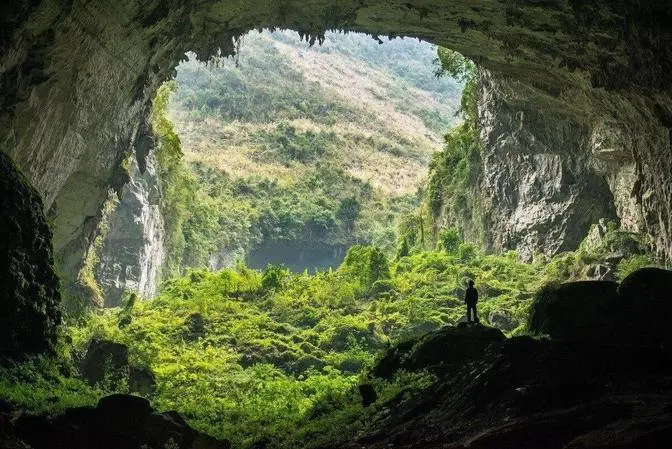
#wonder #nature #landscape #travel #traveltip #documentary #wildanimal #animal #traveltheworld #wanderlust #naturelovers
The cultural and geographical diversity of Cameroon is so vast that it is known as Africa
in miniature. It has most of the landscapes you could observe throughout the entire African
continent. Savannas, deserts, beaches, jungles, and mountains stay with me to learn about life
in Cameroon and many other curiosities. 1. Geographically, Cameroon is in Central
Africa with a medium-sized territory of 179,768 square miles. It borders the Republic of Congo,
Equatorial Guinea, and Gabon to the south, the Central African Republic to the east,
Chad to the northwest, and Nigeria and the Bight of Biafra, which is part of the Gulf of Guinea
and the Atlantic Ocean to the west. 2. Tropical forests cover 40% of Cameroon.
There are 19 national parks, including Bakosi National Park, Lobeke National Park,
Waza National Park, Benue National Park, and Faro National Park.
The national animal is the lion, but Nile crocodiles, hippos, various snake species,
chimpanzees, gorillas, elephants, wild dogs, baboons, and many other species also inhabit
the country. A place of special interest is Korup National Park, one of Africa's oldest and
richest forests. It spans 486.45 square miles, and its nature is practically untouched.
It is one of the most accessible Cameroonian national parks, with tourist infrastructure
for lodging and numerous sites to visit. It is known for birdwatching and observing primates
in the wild. 3. The population of African elephants in Cameroon is around 6,500 individuals,
one of the largest in Africa. But in 2010, there were about 21,000. The situation of these animals
due to poaching is very complex in places like Dengdeng National Park or Dia Wildlife Reserve.
Sadly, every year, at least 20,000 African elephants are illegally hunted for their tusks,
with China being the largest importing country, where ivory is a symbol of wealth and status.
It is worth noting that China banned elephant ivory trade in 2017, but it has continued to
be introduced illegally. Additionally, due to habitat loss, elephants can attack settlements
and destroy property, causing Cameroonians to attack them in self-defense. 4. Two other
endangered species are the Cross River Gorilla and the Western Gorilla. Of the former species,
scientifically named Gorilla-Gorilla d'Aile, only about 200 or 300 individuals live in the wild,
making it the gorilla or primate with the highest risk of disappearing in the world.
Of the Western Gorilla, scientifically named Gorilla-Gorilla, there are about 95,000 left
worldwide in nearby countries like Equatorial Guinea, Republic of Congo, Gabon, and Central
African Republic. Like elephants, gorillas are threatened by poaching and habitat loss.
5. The pangolin is another endangered animal in Cameroon. There are three species, the giant
pangolin, the tree pangolin, and the long-tailed pangolin. It is one of the most trafficked mammals
in the world. There are no statistics on the pangolin population in Cameroon,
but locals say that while they used to be abundant in forests and jungles,
they are now rarely seen. Initially, they were hunted locally, but since 2008,
demand has rapidly grown in Asian markets. It would be difficult to continue listing
endangered species that inhabit Cameroon. To give you an idea, about 630 species are
under threat within its borders, according to the International Union for Conservation
of Nature's Red List. In most cases, their disappearance is due to wildlife trade
and indiscriminate hunting, not much different from the reality of other African countries.
6. About 40% of Cameroonians live in poverty, with a population affected by three major
humanitarian crises. The conflict in the Lake Chad region, the crisis in the northwest and
southwest, and the situation of refugees from the Central African Republic. In 2022,
3.9 million people required humanitarian aid. More than 70% of the population depends on
agriculture as their main source of income, which directly affects them due to climate change,
extreme weather events, and scarcity of potable water. The country is part of the Congo Basin,
also known as Africa's lungs, and its tropical forests provide food for local communities,
but the forests have been diminishing. 7. Some of Cameroon's biodiversity is
represented by its waters. When reviewing its hydrography, we find Cameroon's explosive lakes.
In 1984, Lake Monoum killed 37 people with its lethal gases, and in 1986, Nios suffocated
thousands of people and livestock. It is feared that the same could happen with Lake Kouk,
as in 2022 it experienced a change in its chemical composition, affecting its coloration and smell.
These accidents have happened because the Earth's mantle's carbon dioxide has accumulated
at the bottom of these lakes, being in a volcanic area. And upon release, the air has become
unsuitable for human or animal life. 8. Part of the volatility of their lakes
is due to Mount Cameroon, also known as Mount Fako, the country's highest point and one of
Africa's tallest volcanoes. It rises 13,255 feet and is one of the continent's most active volcanoes,
last erupting in 2012. Other significant eruptions were on March 28, 1999 and May 28,
2000. 9. Dibundesha is a village in southwestern Cameroon that is among the five rainiest places
in the world. It is estimated to receive 10,000 milliliters of rain per year. The reason is that
it is close to the equator, which gives it a constantly humid and warm climate. Also,
Mount Cameroon blocks the water-laden clouds that remain in the village area.
10. You can find deserts in the far north of the country. Cameroon is part of the Sahel,
the semi-arid region bordering the Sahara Desert, and is a common point linking this country with
Chad and Nigeria. Like any desert, it is an area where drought and soils unfit for life can be
observed. 11. Cameroon's savanna vegetation is abundant in shrubs and grasses. It is located
between the center and north of the country, a natural area that serves as a bridge between
Nigeria and Chad. Rain is scarce and temperatures are medium-high. It has been included as part of
the East Sudan savanna ecoregion. 12. Cameroon is the only country in the world named after
a crustacean. It is due to Portuguese explorer Fernando Poe. When he arrived on the present-day
Cameroonian coast in 1472, he noticed the number of shrimp in the Wuri River, which the conquerors
then called the Shrimp River. For the English, it remained as Cameroon. 13. Yaoundé is the
country's capital, with around 4 million inhabitants, known as the City of Seven Hills.
It is an economic hub for coffee and cocoa, with factories producing cigarettes,
timber, beer, clay, and other products. The climate is tropical, humid, and dry,
with maximum temperatures of 36 degrees and minimums of 14.
14. The other major city in Cameroon is Douala, the economic center, located in the west along
the Atlantic Ocean. Here is the largest port in Central Africa and the main international airport
of the country. 14. Cameroon's cultural
richness is not limited to indigenous peoples. Its colonial past has contributed to the diversity
you have seen so far. In 1472, the Portuguese arrived to establish sugar plantations
and enslave people. In 1884, the country came under German rule through the intervention of
They were responsible for improving plantations and road infrastructure
in the region. After World War I, which ended in 1918, the territory was invaded by France
and Britain. In 1960, they gained complete independence from France, and in 1961,
a plebiscite was held to determine the future of British possessions.
The south joined the newly formed Republic of Cameroon, and the north became part of Nigeria.
15. Since its independence more than 60 years ago, Cameroon has had only two presidents.
Amadou Ahidio was an independence leader and president from 1960 to 1982.
When he resigned, his successor, Paul Bia, has been the national leader ever since.
16. Press freedoms in Cameroon have improved since the first decade of this century,
but some censorship still exists. Media outlets often self-censor to avoid government reprisals.
At the same time, many outlets are state-owned. Only cell phone and internet services are not
entirely regulated in the country. 17. Cameroon's coastline stretches 250 miles
long, and its northern segment is called Ambazonia. In this region, you can find several cities.
Bouia, an English-speaking city with a humid climate, Douala, the country's economic heart,
Kumba, the main English-speaking commercial city in Cameroon, and Limbe, also English-speaking.
18. The world's largest frog inhabits Cameroon, although you can also find it in Equatorial Guinea.
Known as the Goliath, it can grow up to 13.4 inches long and weigh around 6.6 pounds. Its
jump can reach 9.84 feet, and it can produce up to 10,000 eggs during its lifetime. It is a
threatened species, likely to disappear in the not-so-distant future.
19. More than 1,000 butterfly species live in Cameroon,
representing more than a quarter of all species found on the African continent.
To be precise, 1,593 butterfly species have been studied, of which 110 are endemic,
meaning they can only be found in Cameroon's natural habitats.
20. If you venture into its forests and jungles, a fun activity you can do is try to identify
the different species. There are hundreds of them, so you won't get bored if you try to count them.
20. There are certain things you should know if you are going to Cameroon.
Firstly, you will hardly find traffic signs and roads. Speed limits are not posted,
and almost nobody abides by them. Other dangers you may encounter on the road
include poorly maintained vehicles, animals crossing, and unqualified drivers.
Therefore, it is recommended for tourists not to travel at excessive speeds to avoid risk factors.
21. Another thing you shouldn't do is travel without proper documentation.
In addition to being in a foreign country, Cameroon is generally considered unsafe in
its rural areas. It is not uncommon to find security personnel inspecting roads to improve
safety. It is highly likely that one of them will ask for at least some documentation for you to be
able to travel. For practically the same reason, it is advised not to travel from Cameroon to a
neighboring country by road. It can be dangerous and very cumbersome for people who do not have
citizenship in either of these states. 22. If you are going to take this risk,
make sure you have the most essential provisions – fuel for vehicles and cooking, food and water
for several days, and some means of long-distance communication, such as a cell phone.
As a precaution, avoid showing cash, avoid dangerous areas, and be discreet in your
clothing and actions. You may not experience any issues, but you should prevent risk factors
related to crime. Multiple robberies have been reported in several of its major cities in recent
years. Try not to walk alone and avoid entering poor areas of cities if you are carrying valuable
items. Avoid approaching or immersing yourself in their non-coastal water currents, as there may be
dangers in the depths or the chemical composition of the water at that precise moment. Also,
remember that hippos, Nile crocodiles, and other dangerous species live in Cameroon.
21. Let's also talk about culture and customs. Wherever you go, make sure to greet and
acknowledge other people. They are a very friendly culture, and if you do not greet them,
they will feel slighted. Avoid being considered rude and be kind to others.
Always use your right hand to shake hands, eat, or hand something over. The left hand can be
considered unclean. If you are left-handed, do your best to demonstrate a minimum of dexterity
with your right hand or do things alone without anyone else seeing. Cameroonians will appreciate
it. Cameroon is a hierarchical society where older people inspire deep respect. Therefore,
it is ideal to start by greeting older people first. You should also grant them certain courtesies,
such as letting them enter or exit a place first, or offering them your seat if the others are
occupied. Bow your head to greet them and avoid making eye contact at that moment. Try not to
call a Cameroonian by their name, regardless of the purpose of your call. People in this country
are very sensitive to being called directly. They may consider it a call for attention or
a lack of respect towards them. And if you are a foreigner, they might become upset and consider
you disrespectful. 22. If you are a member of the LGBT community, you should know that Cameroon
is not a safe destination for you. Native members of this community face discrimination
and are condemned by society. In more extreme cases, these individuals can be punished with
up to five years in prison, and there are no recognized rights for this community.
23. The national flag of Cameroon has three colors, green, red, and yellow, distinctive
colors of the African continent. Its distinguishing feature is a yellow star in the center of the red
stripe. The green stripe represents the forests covering the southern part of the country,
the yellow is the savanna located to the north, and the red symbolizes national unity.
The yellow star also reflects the Cameroonian Union and must be in the center to emphasize
this condition. 24. Cameroon has more than 240 tribes with three main ethnic groups,
Bantu, Semibantu, and Sudanese. The number of national languages spoken in the country is over
240, but the official languages are French and English due to their colonial past. Among both,
the most representative is French, as it is spoken by more than four-fifths of the national
population. 25. There are about 27 million Cameroonians, and the population is very young,
with a median age of 19 years and a high fertility rate of almost 5 children per woman.
The life expectancy in Cameroon is 60 years, which is low by Western standards. But in 1950,
the average Cameroonian lived until 37 years, so living conditions have clearly improved,
although there are still serious health problems. One of the most severe problems and the leading
cause of death in Cameroon is malaria, a disease to which the entire population is exposed.
The second cause of death is AIDS. Currently, there is considered to be an epidemic in the
country, with about 500,000 children infected with HIV. 26. Ambazonia is a Cameroonian
separatist territory that declared its independence from Cameroon on October 1,
2017, becoming the Federal Republic of Ambazonia. It is home to the Anglophone
community of Cameroon and has not obtained any international recognition so far. Therefore,
it cannot be considered an established state. 27. The predominant religion is Christianity.
Almost 70% of the inhabitants profess this religion, while 20% identify as Islamic.
Almost 11% identify as atheist or of other religions, mostly those of their indigenous
peoples. 28. One of the strangest beliefs of some Cameroonians is that of inhabitants who
claim Mount Cameroon is home to powerful ancestral spirits. It is believed that within it dwells a
mountain god who produces earthquakes and spews fire in moments of anger. 29. Cameroonian music
and dances are an integral part of their ceremonies and festivals. Their purpose can
be recreational, but they can also be deeply religious. 30. They almost always involve
choreography and separate men from women. When both sexes are allowed in the same dance,
it is prohibited for only one sex to participate. The two main musical styles are Makossa,
which uses strong electric bass rhythms and brass instruments, and Bikutsi, which is more
danceable and characterized by an intense rhythm. 30. As a culturally diverse country,
there is no single way of dressing. Their clothing is also influenced by the climate
and religious beliefs. Moreover, most of the major cities mix modern and traditional elements
in their inhabitants' attire. This is a traditional dance outfit from the south.
This from the north. This from the east. This from the northwest. But there are many more.
31. Cameroonian handicrafts serve commercial, decorative, and religious purposes. They are
commonly made from wood, clay, leaves, gourds, embroidery, and leather. They also often stand
out for their colorfulness and originality. Contemporary art is promoted by independent
cultural organizations or developed autonomously by artists.
32. The national dish of Cameroon is called Mdole. It consists of a peanut-based stew made
from spinach and bitter leaves, seasoned with aromatic spices, and enriched with any type of
meat. Usually it is shrimp, but it can also be dried fish or ground meat.
33. The Indomitable Lions is the national soccer team of Cameroon
and one of the best teams on the continent. They have participated in the FIFA World Cup
five times and in 1990 they became the first African team to reach the quarterfinals.
They also won gold at the 2000 Sydney Olympics and have won the African Cup of Nations four times.
34. Cameroon is an economy with an intermediate level of development within Africa.
It is one of the most important exporting economies in sub-Saharan Africa,
although it is an unequal country in terms of people's purchasing power
and has a generally unfavorable business climate.
35. Its agriculture is quite rich. It is the third-largest producer of moussa,
a type of banana, with nearly 4 million tons annually. It is also the case for taro,
a type of cassava, with almost 2 million tons annually. It is also the fifth-largest producer
of cocoa, producing about 307,000 tons annually. It also stands out for its palm oil and yam
productions, with 2.6 million tons and 674,000 tons respectively.
36. Since 1977, Cameroon has been developing the oil industry.
Much information cannot be provided because national authorities treat the matter secretively.
However, during prosperous times, large sums of money have been collected
that could serve as reserves for periods of lower revenue.
To continue learning about African countries, visit this video about Mozambique.