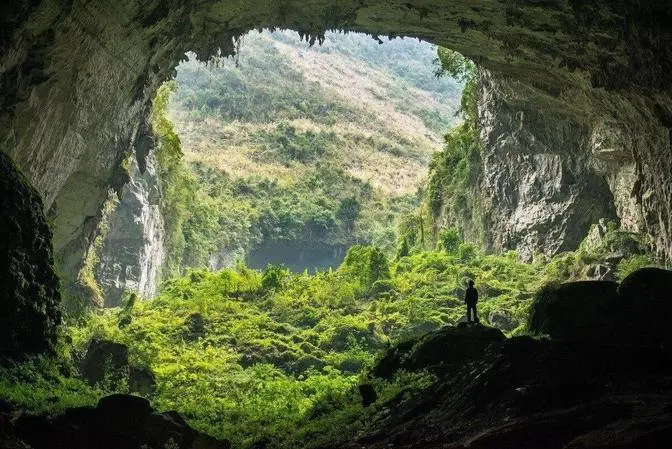
ETHIOPIA: The Hidden Side of Africa You’ve Never Seen | 4K Travel Documentary
A country that refuses to conform to the rest of the world. In Ethiopia, there are 13 months in a year, and it’s not 2025… it’s 2017. A new day doesn’t start when the clock strikes 0:00, but when the sun actually rises. In the hottest part of the planet, scientists have found the oldest human fossils – more than 3 million years old. From the spooky moss-covered forests of the Bale Mountains to the rift valleys where our ancestors first stood upright, Ethiopia, another planet hiding right on Earth.
Ethiopia is a land of profound contradictions, blending ancient spiritual heritage with extreme geological wonders. From the rock-hewn churches of Lalibela and the Aksumite Empire's obelisks to the hostile Danakil Depression and the diverse tribes of the Omo Valley, the country showcases a unique intersection of resilient cultural traditions, biodiversity, and deep religious devotion.
Ethiopia, a country that refuses to conform to the rest of the world.
In Ethiopia, there are 13 months in a year and it's not 2025, it's 2017.
A new day doesn't start when the clock strikes zero, zero, but when the sun actually rises.
In the hottest part of the planet, scientists have found the oldest human fossils,
more than three million years old. From the spooky, moss-covered forests of the
Baal Mountains to the rift valleys where our ancestors first stood upright.
Ethiopia, another planet hiding right on Earth. The only African country never fully colonized
and one that has preserved its identity for millennia.
Christianity became Ethiopia's official religion in 330 AD, long before most of Europe adopted it.
People still live on ancient plateaus cut by the Great Rift Valley,
where tectonic forces defy the very notion of permanence.
Traditions endure, protected by isolation and devotion.
In Ethiopia, history is not confined to ruins, it is present in the mountains,
worshipped in rock-hewn sanctuaries and spoken through people who refuse to forget.
And to understand Ethiopia, you start from a place where tools are not built.
They are extracted from the rock. A place where faith is not built, it is opened from fire.
Lalibela. The 11 churches were not built vertically. They were hewn vertically,
cut straight out of a single block of volcanic rock.
According to historical records, these churches were built not over centuries,
but in just 24 years. This was a project under King Lalibela,
who vowed to build a new Jerusalem on African soil, accessible to all Ethiopian Christians.
At nearly 2,800 meters above sea level, surrounded by dry, rocky highlands,
more than 40,000 builders used only basic tools—picks, levers, small axes—to dig structures
up to 50 meters deep. The most iconic of these there,
St. George's Church, shaped like a perfect Greek cross.
There are not many records about how this church was built,
but the local people and devotees always believed that it was the Church of Angels
and that they themselves helped build it at night. Just behind the highlands of Lalibela,
the road descends into what scientists call one of the most hostile environments
humans have ever inhabited. This is the Danakil Depression,
where three tectonic plates are pulling the Earth apart at a rate of 2 centimeters per year.
A landscape formed not by erosion, but by tearing. Temperatures average 35°C year-round
and frequently soar above 50°C. The basin sits 125 meters below sea level,
and the air is saturated with hydrogen sulfide, a pungent smell of rotten eggs
that assaults the lungs. The water here is so acidic it can dissolve metal.
Yet life persists. Scientists have recently identified microorganisms—nanohaloarchaea—with
cellular structures resembling lifeforms that could exist on Mars or Venus.
The surface itself is never still. Boiling saltwater evaporates rapidly, creating new
vents while others vanish in days. Pools of neon yellow, toxic green,
and burnt orange form a chemical hallucination amid the salt desert. No trails, no shade,
just the hiss of gas vents and the trembling of magma beneath.
From the arid lowlands of eastern Ethiopia, the ground suddenly heaves upward into colossal blocks
of stone. The Simian Mountains, a UNESCO World Heritage Site, rise like a natural fortress
with escarpments dropping thousands of meters. Mist frequently shrouds the peaks,
moving with the mountain winds, causing the terrain ahead to vanish in seconds.
Eroded over millions of years, these peaks form sharp, jagged steps.
Where Ras Dashan, at over 4,500 meters, stands as the pinnacle of geological uplift in the region.
This is one of the few places on Earth where the Galada monkey, known as the bleeding heart monkey
due to the bright red patch on its chest, lives in large troops on the high grasslands.
Despite being related to baboons, their diet is almost entirely vegetarian,
consisting mainly of grass. By grazing while seated, they maintain stability
on the edge of the abyss, a rare biological adaptation to high-altitude living.
In the same realm, the Walia ibex endemic to Ethiopia navigates the sheer rocks with
perfectly adapted hooves. They can scale slopes of over 80 degrees without slipping,
accessing ledges safe from predators. This is the Omo Valley, a plateau that
sinks into vast plains, a mosaic of dry riverbeds, thorny acacia trees,
and vermilion soil that stretches toward the Kenya-Sudan border.
Seasonal rivers carve temporary lifelines through the land, leaving fertile patches where communities
settle in circular houses built of wood, mud, and straw without walls.
Life here is still dictated by climate, not time. The Hema, one of the valley's most distinctive
tribes, are almost entirely dependent on cattle and honey. Their homes are arranged in protective
circles, where cattle are kept indoors at night not only for safety but also because they represent
status, wealth, and survival. Women express their identity on their bodies.
Their hair is coated in a mixture of ochre and butter, braided into thick locks that glisten
red in the sun. They wear copper bracelets, beaded necklaces, and metal collars to show
their marital status and even the number of wives their husbands have. But the most astonishing
tradition is the bull jumping ceremony, where young men, completely naked, must run over a
line of bulls to be recognized as adults. During the ceremony, the women of the family
voluntarily submit to whipping, not as punishment but as a declaration of devotion and resilience.
Having served as Ethiopia's capital for more than 50 years,
Gondar challenges conventional assumptions about African history.
Founded by Emperor Fasilides in 1635, the city marks a turning point in Ethiopia's history,
the moment when imperial power moved from a fluid state to a permanent one.
To cement this transformation, he ordered the construction of a fortress unlike any other
on the continent. Dubbed the Camelot of Africa, Fasil Gebi, the imperial enclave
spans 70,000 square meters and is surrounded by 900 meters of defensive walls.
Much to the astonishment of many historians, this massive architectural complex,
built entirely of volcanic rock mixed with egg yolk as a binding material,
became the first castle complex in Africa, designed and built by Africans for an African emperor.
Its architecture is a striking combination of Portuguese Moorish pragmatism, Ethiopian resilience
and later Jesuit-Baroque influences. The Enquilal Gem, or Egg Castle, with its dome
reminiscent of a cracked seashell, was the emperor's private prayer room with 360-degree
views of Gondar. From the castle's watchtower, you can still see Lake Tana, a strange feeling.
The heat begins to radiate from you kilometers away.
Eta Ele rises from a terrain that is mostly salt flats and volcanic crust.
It is one of only five volcanoes in the world known to have a permanent lava lake.
The molten surface is constantly churning at temperatures that can reach up to 1,100 degrees.
The area contains fissures that stretch for more than seven kilometers across the terrain,
with some openings wide enough to cause lava to spill visibly during periods of peak activity.
The sky is completely black, interrupted only by the red-orange glow of the lava lake.
Waves of heat from the gas constantly rise, distorting vision and making sound difficult
to hear. A place where faith and doubt are all but eliminated.
High on the sandstone cliffs of the Geralta Mountains in Tigray,
there is a church carved directly into the sheer cliff face.
Abuna Yamata Gu can only be reached by hiking across exposed rock outcrops and climbing to
the top barefoot, clinging to the rock wall without any protective gear. The final stretch
is barely the width of a small foothold, and one wrong step could mean falling into the gorge
that stretches into the valley below. The structure dates back to around the 15th or 16th century.
Inside, the walls show vivid frescoes depicting the Twelve Apostles and nine Syrian monks,
painted with mineral pigments that have survived centuries of wind and temperature changes.
Journeying south of Lake Tana, the Blue Nile plunges from a basalt outcrop,
spewing water so high into the air that locals call it Tissa Bay, the Big Smoke.
Depending on the season, the falls drop between 37 and 52 meters and can be as wide as 400 meters.
The scene, sometimes thunderous, sometimes gentle, reveals the volcanic layers that
shaped the plateau. Nearby, a 17th century arched stone bridge, the first ever built
across the Blue Nile, is still used by rural communities. Although part of the river is
diverted to feed a hydroelectric power plant, the seasonal surge is still strong enough
to maintain the ecological connection between Lake Tana and its downstream tributaries that flow
towards Sudan and Egypt. There is a city in Ethiopia where the streets seem too
narrow to be passable today. Harar, a fortified maze of 368 alleys crammed into less than a
square kilometer, feels more like a living manuscript of Islamic tradition than a modern
settlement. Its thick stone walls, built between the 13th and 16th centuries, are not just defensive
structures, but also a spiritual boundary that separates the sacred world from the outside world.
Inside the walls, mosques and traditional houses, painted in pastel colors, wind through
alleys so narrow that only people, goats and shadows, can move freely. A surprise ritual
takes place, not in a prayer room, but as the sun sets on the outskirts. Here, men call wild
hyenas from the darkness with horse calls passed down through generations. The animals come close,
they eat raw meat, all like old friends. It is believed that this practice helps maintain peace
between humans and hyenas. The Baal Mountains, formed by ancient volcanic eruptions ancient,
stretching more than 4,000 meters above sea level. This is where the Ethiopian wolf,
the world's rarest dog with less than 500 individuals remaining, lives. Unlike conventional
predators, they hunt silently, listening for the calls of underground rodents before attacking
with absolute precision. Their professional, decisive digging movements and the ability
to detect scent seem to have become immortal instincts. In the distance, wildlife suddenly
rises up because of the fight of the Menelik bushbuck antelope, a brawl for territory for
themselves. Long before the churches of Europe or the colonial cities of Africa, there was Aksum,
a kingdom that recorded its power not on parchment but on stone tablets weighing hundreds of tons.
Located in northern Ethiopia, Aksum was the capital of the Aksumite Empire, a dominant power
from the 1st to the 7th centuries AD. At its height, it ranked alongside Rome, Persia, and China
as one of the four great civilizations of the world. Aksum controlled the trade routes across
the Red Sea, linking the Roman Empire with India, and became the first sub-Saharan African kingdom
to embrace Christianity around 350 AD. Today, the most striking evidence of its technological
sophistication lies in its massive obelisks, carved from single blocks of granite and erected without
mortar or modern machinery. Some of the obelisks are over 24 meters high and weigh over 500 tons,
a weight that defies scientific calculation. However, Aksum's greatest mystery remains
unsolved. According to Ethiopian Orthodox belief, the Ark of the Covenant, the sacred ark,
said to contain the Ten Commandments, was brought here by Menelik the Fii,
son of King Solomon and the Queen of Sheba. It is said to be housed in a small chapel
guarded by a monk who dedicated his life to protecting it. No one else is allowed in,
not even other priests. Hidden beneath the limestone plateau of southeastern Ethiopia
is a network of tunnels carved by the Weyib River over thousands of years.
Sof Omar Cave stretches more than 15 kilometers underground, making it the longest known cave
system in East Africa. According to legend, the cave was revealed by Sheikh Sof Omar in the 12th
century through divine guidance. He and his followers converted some parts of the cave
into a temporary prayer space. Still considered a spiritual practice, in some areas, light from
small openings above shines directly onto the stone columns, turning them into vertical beams.
For a moment, the cave seems to breathe. Then, darkness falls again. Awash National Park is
located in the Rif Valley of eastern Ethiopia, where grasslands stretch to volcanic plains
and old lava fields fade under a blanket of dust. Rainfall is limited. Shade is scarce.
But life goes on. It is also home to the Besa Oryx, with its straight, spear-like horns,
gentle but full of danger. Their ability to survive days without water is one of the reasons
they stay here, where predators patrol and water sources dry up between seasons.
The villages of southern Ethiopia look more like defenses carved from the land than human
settlements. This is Konso, a UNESCO World Heritage Site, where communities have for more
than 400 years crafted their habitats to withstand drought, erosion, and conflict.
Built on steep, rocky hills, the villages are surrounded by concentric stone walls,
soaring terraces that resemble the rings of an ancient amphitheater. The Konso people grow sorghum,
vegetables, and fruit, and their agricultural system is recognized as one of the most
sustainable in Africa. But beyond survival, Konso also preserves identity through wood-carved
monuments called waga, statues erected to honor warriors, leaders, and ancestors.
The Danakil salt flats are a hyper-saline body of water surrounded by salt flats so dense that
one can easily float on them, similar to the Dead Sea. The lake is fed by geothermal springs
and surrounded by volcanic formations, creating mineral-rich water that is used to mine salt.
Life continues in conditions seemingly inhospitable to humans, where temperatures
can exceed 50°C and the soil is more than 100 meters below sea level.
Here, more than 700 workers battle the heat to remove impurities from the salt
and cut it into rectangular blocks. Every day, long caravans of camels, sometimes stretching
more than a kilometer across the salt desert, each carrying blocks of salt weighing an average of 20
to 30 kilograms each. The leader does not use a rope to lead the caravan.
He keeps pace with his footsteps and a short, whispered command. There are no trees or natural
stops. The caravan continues until it reaches the trading post. The waters of the basin in
northern Ethiopia are so still that it is hard to imagine Lake Tana as the source of the Blue Nile.
Its surface appears unbroken, disturbed only by fishing boats pushed by long poles.
Flocks of African pelicans glide across the water like living sailboats. They have massive bodies,
huge white wings that reflect the golden sunlight, and large orange-yellow bill pouches.
Pelicans often gather in large groups, creating a very ceremonial scene.
Long rows of birds lined up along the water's edge, leisurely waiting for the fish to surface.
In contrast to the noisy appearance of pelicans, hippos appear mysterious. From a distance,
you only see small ears and round eyes floating on the water's surface. Then suddenly the whole
giant body rises. Hippos here are quite gentle and often move quietly in small groups like
silent guardians. At 2,355 meters above sea level, Addis Ababa is the third highest capital city
on Earth. From a distance, its skyscrapers rise into the thin air. But up close, the contrast
is stark. Soviet-era Lada taxis run alongside newly imported SUVs. Construction cranes stand
next to corrugated iron workshops. There's no contradiction, simply two time periods coexisting.
Addis Ababa sits precisely where two Ethiopian climate zones converge,
the Daga, temperate highlands, and the Wena Daga, cool semi-highlands. Urban areas sprawl across
both zones, making it one of the few cities where a walk downhill can change the weather.
The heart of the capital is the Merkato, one of Africa's largest open-air markets.
Traffic may seem chaotic, but this is where you can buy just about anything.
A bustling market filled with people and goods, time is different here too. Ethiopia
uses its own calendar, 13 months a year, currently seven years behind western time.
The Teer Stonefields are one of Ethiopia's most haunting archaeological sites. An ancient
cemetery marked by 36 monolithic stone stelae, many engraved with symbols that no one has yet
fully deciphered. Ranging from one to five meters high, the stelae bear mysterious swords,
spirals, and geometric symbols, suggesting stories long forgotten. Archaeologists believe
that Teer was a cemetery from the 10th to 15th centuries, where young men were buried in the
position with the graves marked by these mysterious stones. A UNESCO World Heritage Site,
Teer stands as a silent puzzle of an ancient culture still waiting to be discovered.
You might think that the ancestral traditions of remote African tribes are preserved in stone,
wood, or animal skins. But in the Omo Valley, the Dasanak people rewrite that assumption.
With resources scarce and survival a daily struggle, members of this semi-nomadic tribe
transform discarded bottle caps, broken watch straps, and pieces of plastic into exquisite
headdresses and jewelry. What most of the world would consider trash becomes a statement of
identity. The Dasanak, with a population of around 50,000, have migrated across many territories
for generations. Their environment has shaped their aesthetic, bold, fearless, and practical.
A young woman might wear a headpiece, made entirely of metal soda can lids,
arranged in precise, symmetrical patterns. Some combine wigs made from recycled materials
with lip ornaments made from grass stems. The contrast is striking modern waste,
repurposed to sustain centuries-old customs. The Church of Our Lady of Zion in Axum is one
of Ethiopia's most sacred and mysterious sites, revered not only for its centuries-old faith,
but also for a legend that continues to captivate the world. According to Ethiopian tradition,
this is where the Ark of the Covenant, the biblical chest said to contain the Ten Commandments,
has been guarded for more than 3,000 years. Only a monk, ordained for life, is allowed to see it.
No one else. The church complex, which combines ancient Axumite stonework with later Ethiopian
Orthodox architecture, is both a spiritual center and a symbol of national identity.
Long before coffee culture, espresso machines and global coffee shop chains were born.
The world's most consumed morning ritual began here. The Kaffa region, widely believed to be
the birthplace of wild Arabica coffee, is a story told by locals that predates trade with Europe
and Middle Eastern caravans. A goat herd noticed his goats become unusually active
after eating berries from a particular shrub. The shrub was later identified as Coffea Arabica.
The traditional coffee-making ritual remains a treasured cultural ritual.
Coffee beans are roasted over an open fire, ground by hand, and brewed three times, each time
symbolizing a transition from bitterness to connection, from solitude to community. Incense
burns gently, filling the air with a sacred scent. The first thing that catches your eye
in the Lower Omo Valley is not movement or sound, but patterns. Hours before sunrise,
members of the Karo tribe begin decorating their bodies with white chalk, ochre, and charcoal.
Each stroke has a purpose. Nothing is decorative. For them, paint is not an accessory,
but a language. With a population of fewer than 3,000, the Karo are one of Ethiopia's
smallest ethnic groups. They live along the east bank of the Omo River,
relying on seasonal flooding for their crops and livelihood. Scarification rituals mark the
progression of life events. Hair shaped with red clay and decorated with ostrich feathers
symbolizes achievement. Sometimes victory in conflict, sometimes survival after a hunt.
In the past, children branded Mingi, believed to bring bad luck, were left to die.
But now, they are protected, loved, and cherished by the community.
Survival now depends on adaptation. Some traditions are preserved as heritage,
others are quietly forgotten under the influence of the outside world.
Debridemo requires courage. Perched atop a flat mountain in northern Tigray,
the monastery stands isolated on steep cliffs. No roads, no stairs, no escape.
The only way up is to grab a leather rope tied to the edge and climb the 15-meter-high cliff.
Local monks calmly call it the Climb of Faith. But you'll have to call it something else,
the most terrifying entrance to a religious site on earth.
Traditionally, the monastery was founded in the 6th century by Abuna Aregawi,
who is said to have been carried to the top by a serpent sent by God.
Whether myth or symbol, the setting reinforces the message, spiritual elevation.
What shocked many was not just the climb, but the exclusion. Women were forbidden to enter,
and even female animals were not allowed to set foot on the plateau.
Planet of Limestone Chimneys
If there is one place in Ethiopia that looks like the setting of a sci-fi movie,
it is Lake Abbey. Located on the border between Ethiopia and Djibouti, this is where the Awash
River ends its journey, not into the sea, but evaporating into nothingness. Hundreds of
travertine chimneys formed when hot spring water, deep underground, meets colder lake water.
Precipitated minerals gradually accumulate, forming natural stone pillars up to 40-50 meters
high. They stand scattered across the area like the ruins of an abandoned city from an alien
civilization. Some chimneys still emit hot steam, creating a thick mist around the base of the
towers, giving the whole area the appearance of another planet. Amid the harsh landscape,
flocks of large flamingos appear as a contradictory but attractive detail.
Flamingos are attracted to the lake's high salinity, where algae and microorganisms thrive,
providing an abundant food source. When thousands of individuals gather,
the pale pink of their plumage reflects off the water, creating a stark contrast to the gray rock
and giant travertine columns. They move slowly, heads bowed to feed,
occasionally flapping their wings in unison, painting the air with soft pink streaks in an
alien landscape. Away from the aridity of the desert and rocky mountains,
Wenchi is a forgotten green paradise. Located at an altitude of 3,000 meters,
this extinct volcano crater now contains a beautiful emerald green and dark blue lake.
The steep mountainside is covered with lush vegetation, and small waterfalls cascade into
the lake. The highlight of Wenchi is the small island in the middle of the lake,
where the ancient Kirkos Monastery is located. To get there, you have to ride a horse down the
mountain slope and take a traditional wooden boat on the cold water. Wenchi has a peaceful beauty,
like a peaceful dream in the heart of fierce Ethiopia. Amidst the arid plains of the Bale
region, the white domes of Sheikh Hussein appear like a mirage. This is not just a temple,
but a sacred Islamic architectural complex that has existed for more than 900 years,
considered the Mecca of Ethiopian Muslims. This shrine was built to honor Sheikh Hussein,
a legendary Sufi saint. What is fascinating is the unique architecture with thick white walls,
narrow passages, and sacred caves around, where mud mixed with ashes forms a white mortar that
is considered to have healing properties. During the pilgrimage, tens of thousands of worshippers
in white robes flock here, the sound of prayers echoing through the canyons, creating a mysterious
and solemn spiritual atmosphere, affirming the great religious diversity of this country.
Yehar is a memory of the birth of civilization. Nestled quietly among the mountains of Tigray,
the ruins of the Temple of Yehar, Great Temple of the Moon, have stood there since the 7th century
BC. Older than any other structure in Ethiopia. Built by the mysterious Da'amat civilization,
this structure is a perfect cube made of giant limestone blocks, polished and fitted together
without a drop of mortar. The construction technique is so sophisticated that after nearly
3,000 years, through many wars and earthquakes, the 12-meter high walls still stand tall.
Ethiopia is a journey through time, a proud, mysterious Africa that breathes life in ways you
have never seen before. A land where history is etched in stone, where faith clings to cliffs,
and where survival becomes an art. Yet despite all we have discovered, this is only the beginning.
The world still has places that define logic and redefine wonder. The question is,
where will you dare to go on your next journey? Subscribe and follow the channel to continue
exploring new wonders with us.