
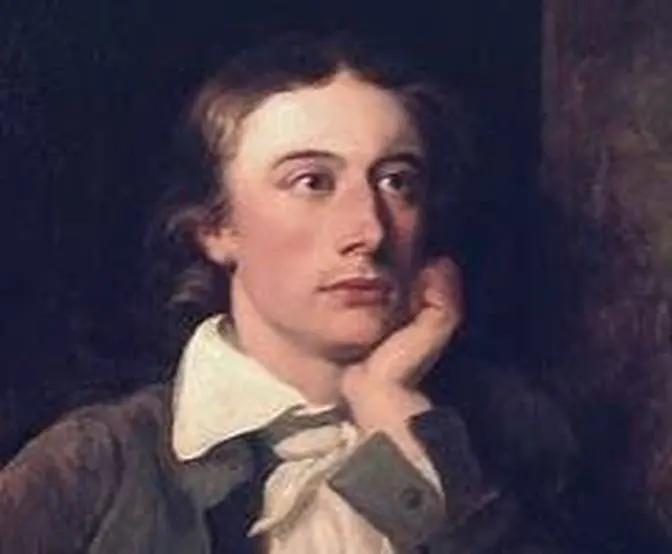
Letters To Richard Woodhouse by John Keats
67 Video Views·Dec 27, 2023
My dear Woodhouse, your letter gave me a great satisfaction, more on account of its friendliness
than any relish of that matter in it which is accounted so acceptable in the genocide of Carbony.
The best answer I can give you is, in a Clark-like manner, to make some observation on two principal points
which seem to point like indices in the midst of the whole prone con
about genius and view and achievements and ambition and seating.
First, as to the poetical character itself, I mean that sort of which, if I am anything, I am a member,
that sort distinguished from the wordsworthier nor egotistical sublime, which is a thing perceived and stands alone.
It is not itself. It has no self. It is everything and nothing.
It has no character. It enjoys life and shame. It lives in gusto, be it foul or fair, high or low, rich or poor, mean or inebriated.
It has as much delight in conceiving an Iago as an intruder.
What shocks the virtuous philosopher delights the chameleon poet.
It does no harm from its relish of the dark side of things any more than from its haste for the bright one,
because they both end in speculation.
A poet is the most unpoetical of anything in existence, because he has not.
He is continually informing and filling some other body.
The sun, moon, sea, and men and women who are creatures of impulse are poetical and have about them an unchangeable attribute.
A poet has none. No deity.
He is certainly the most unpoetical of all God's creatures.
If then he has no self, if I am a poet, where is the wonder that I should say I would know more?
Might I not at that very instant have been cogitating in the character of Saturn and Ops?
It is a wretched thing to confess, but is a very fact that not one word I ever utter can be taken for granted as an opinion growing out of my identical nature.
How can it, when I have no nature?
When I am in a room with people, if I ever am free from speculating on creations of my own brain, then not my self goes home to myself.
The identity of everyone in the room begins to press upon me.
I am in a very little time an outlady.
Not only among men, it would be the same in a nursery of children.
I know not whether I make myself totally understood.
I hope enough so to let you see that no dependence is to be placed on what I said that day.
In second place, I will speak of my views and of the life I purpose to myself.
I am ambitious of doing the world some good.
If I should be said, that may be the work of mature endurance.
In the interval, I will assay to reach to as high a summit in poetry as the nerve bestowed upon me will suffer.
The fate of the sections I have of poems to come brings the blood frequently into my portals.
All I hope is that I may not lose all interest in human affairs.
But the solitary indifference I feel to a cause, even from the finest spirits, will not blunt any acuteness of vision I may have.
Do not think it will.
I feel assured I should write from the mere yearning and fondness I have for the beautiful,
even if my night's labour should be burnt every morning and no eye ever shine upon me.
But even now I am perhaps not speaking for myself, but from some character, in whose soul I now live.
I am sure, however, that this next sentence is for myself.
Feel your anxiety, good opinion, and friendliness to the highest degree.
And I am yours most sincerely, John Keats.