
Esercizi schiena lombare: i migliori STRETCHING e RINFORZI per la colonna!
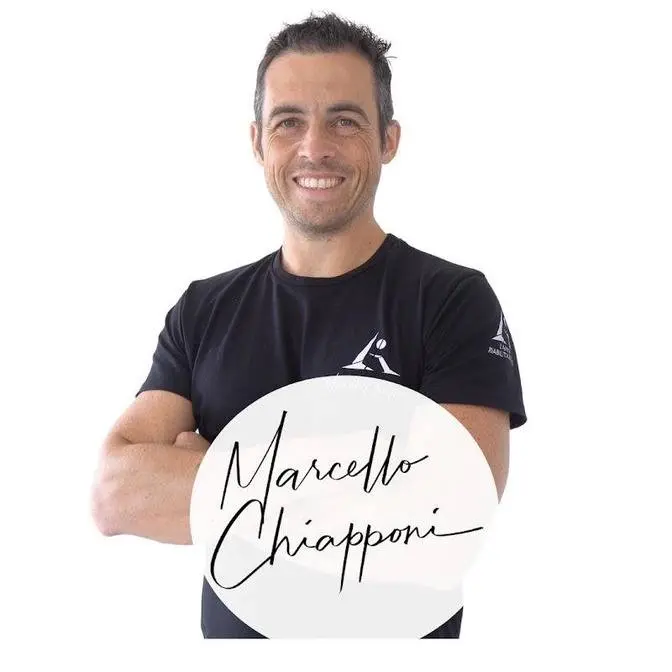
In questo video praticheremo insieme i migliori esercizi per la colonna lombare, sia in termini di stretching che di rinforzo.
ISCRIVITI ALLA MIA INIZIATIVA SULLO STRETCHING TERAPEUTICO
https://bit.ly/49IsoyG
VISITA IL MIO SITO PER GLI ALTRI CONTENUTI
www.laltrariabilitazione.it
La colonna lombare è una delle parti della schiena maggiormente soggetta a dolori e problemi di ogni genere.
Del resto, il mal di schiena è il problema muscolo scheletrico #1 nel mondo: un motivo ci sarà sicuramente!
Per fare in modo che la nostra colonna sia sana, dobbiamo assicurarci che i suoi muscoli funzionino bene, e proprio questo è lo scopo degli esercizi di questa seduta!
What are the most effective back exercises, especially for the lumbar spine,
if our goal is to make it feel good, improve posture, reduce pain, make it stronger and more resistant?
We'll see it in this video. In this video you will find a complete routine to follow minute by minute,
so to train with me, which is based on what I have seen to be the most effective exercises for the back.
But I'll take a minute before starting the session to explain to you why I think these exercises are particularly effective,
to explain to you my approach to the exercise, because then I hope you want to go beyond this routine
and continue your journey, maybe with my methods.
You will hear, if you look a little on the various social networks, videos and so on,
you will find those who tell you that you need to improve the mobility of the spine and therefore you need to do mobility and stretching exercises,
and others who tell you that you absolutely need to strengthen it and you don't need to mobilize it too much, but you need to strengthen it more than anything else.
What is the truth? It is banal to say it, the truth is in the middle.
Our spine can benefit both from stretching, especially from stretching some muscles,
and from strengthening, especially certain types of strengthening, and that is exactly what you will see in this session.
In many ways, stretching exercises can be a great start, especially for those who are a little sore,
and then you also go to add reinforcement.
In this session I will definitely work on the psoas, which is one of the strongest, biggest muscles of the lumbar spine.
At the spinal level, the best effect on the psoas is with the distension.
What you will find in the session are stretches.
Does this mean that it is wrong to strengthen it? No, but if we have to make a selection of the most effective things, we will certainly not stretch.
Another muscle that we are going to work on is the rectus abdominis.
Doing abdominal exercises reduces back pain, not all types of abdominal exercises,
but what you will see is certainly what helps the most is stabilization,
because in fact the rectus abdominis, together with all the other muscles of the heart,
for what we will work in a certain way, helps stabilization, and stabilization is more stable in the spine, unless there is pain.
And then there is the gluteus muscle, which is an interesting muscle,
because it is a muscle that benefits both from the lumbar spine and from its distension,
because very often there are pains in the areas of the pelvis that benefit
when the musculature decreases its tension, its rigidity, its contraction,
but also from direct stimulation, from reinforcement,
because in the end the gluteus are the muscles that we should prefer for the movements of the leg,
for the movements of the pelvis, instead of the movements of the spine.
Very often it happens to do the movements of the spine, but we can safely use the gluteus,
and therefore give less continuous stresses to the spine.
With this session we will stimulate all these muscles in the most effective way,
but I wish you, indeed, that you do not stop at this session,
if you want to go on, you can continue with my methods,
I recommend you look at the links that are in the description of the video.
Well, here we are with a new session,
dedicated in particular to the lumbar spine, the area of the pelvis and the hips,
and let's start by doing a little bit of mobilization of these structures,
but extremely sweet.
So let's start by pushing back the shoulders,
gently descending on one side, shoulders back, arms straight,
I go down on one side, when I feel I have to pull here, I have a slight compression here,
I move on to the other side.
I arrive, I hold for a moment, and return.
On the other side.
Sensations, especially when we go in lateral inclination,
must be rather light,
this is a movement that our spine is not extremely used to,
it is a rather disadvantageous movement,
a rather disadvantageous position for our spine,
it is a movement, however, that allows us to open the joints between one vertebra and the other well,
so certainly something we want to do, but we want to do it gently.
So, I repeat, modest sensations,
but this, among other things, is a rule that applies to any sensation,
let's say, in the field of exercise and training for our purposes,
postural purposes, purposes of relaxation of the tension.
We certainly don't want to feel too strong sensations, or even worse, annoying.
Good.
Ok.
And let's melt for a moment.
Let's repeat the same thing, but when we are in position,
let's take a deep breath, all in and all out.
I don't care how you breathe, diaphragm, thoracic,
as long as we do everything in and everything out,
so we involve all the muscles.
So, always shoulders back,
I tilt, and from this position,
all in,
but above all,
all out.
You will feel that the tension changes when you do everything in and everything out,
just like that, because the diaphragm is an important postural center.
I go to the other side,
I inhale,
and I change.
I tilt,
I feel something, well, it's there that I stop,
I inhale,
and from the other side,
I feel something, well,
whatever the sensation,
I inhale and exhale.
Great.
Let's do a couple more,
but let's do it with the hand in position,
let's say, as if I were to scratch my back up.
So, the elbow is wide open,
I tilt down,
the tension will be slightly higher,
so the tension is always very modest,
so we don't go too down, we go down a little less.
I inhale, and here you can hear even better how it changes,
between inhalation and exhalation,
and we go to the other side.
I feel that any kind of tension is created,
great.
One more on the side,
I tilt,
and from the other side,
always with the hand,
and everything inside,
and everything out.
Great.
And let's melt.
Let's change target muscle,
let's go a little more on the famous,
at least for those who usually follow me,
the lobe psoas.
Let's stretch the lobe psoas from standing up,
first we mobilize it,
then we stretch it.
So, a leg well forward,
a leg well back,
I straighten the spine,
the leg here, which is well straight,
the spine straight, but not thrown back,
I just bend the leg,
very little flexion is enough,
so even if the knee is a little ballerine,
there is no problem,
I create a slight tension in front,
I turn up,
I go down,
I create a slight tension in front,
I turn up,
I go down,
slight tension,
I turn up,
I go down,
slight tension,
I turn up,
I go down,
and I stay in position.
We did a moment of mobilization,
now we keep the position
to take a breath.
Everything inside, slowly,
and everything out.
Also here you will feel that the tension changes,
when you are in maximum inspiration,
or maximum exhalation.
Normal, because
also here the diaphragm is very important,
compared to the obsolescence,
it is the closest to home.
Everything inside,
and everything out.
Notice that I always lean on something for balance,
something I recommend more or less always.
Can it be done even without?
Ok, absolutely yes,
let's take a moment.
But,
if I have something that allows me to lean on,
I can focus better on stretching,
and not on balancing.
I want to focus on that here.
Well,
let's go from the other side,
so a leg well forward,
a leg well back,
back straight,
this leg straight,
I just bend the one in front,
there is no need for great flexion,
and I turn up,
two,
and I turn up,
three,
and I turn up,
four,
and I turn up,
five,
I stop for three breaths,
one,
two,
and three.
Very well,
let's loosen up,
and let's go
to stretch
other muscles,
which are particularly critical,
the gluteal muscles,
and the piriform muscle.
Let's do it in the simplest way,
absolutely,
we never need to complicate our lives,
at least not in these cases,
so I put my belly up,
legs parallel,
let's start here with a mobilization,
hands behind,
if for some reason
they don't reach well behind the leg,
I use an extension,
I use a hand dryer, for example,
so hands behind,
I bring the leg towards me,
until the pelvis is detached,
I hold for a moment,
and I let go.
I feel a tension at the level of the gluteus,
that's more or less where I want to concentrate,
good,
three,
good,
four,
good,
and one more,
I pull towards me,
when I'm in position,
I breathe,
and one.
Here you will feel a little less difference
between maximum inspiration,
let's go again,
between maximum inspiration
and maximum exhalation,
because the connection between the diaphragm
and the gluteus piriforme
is less clear,
then everything is in connection with everything,
I could say anything,
the eye is in connection with the light,
yes, in some way, absolutely yes,
but you also have to see
how much we dissolve these,
how clear these connections are,
I mean, if you inhale the diaphragm
and the tension changes,
here definitely less,
well, let's go to the other side,
first let's mobilize a little,
I bend,
I turn,
I bend,
I turn,
I bend,
I turn,
I bend,
I turn,
I bend,
and I hold,
I inhale,
always everything inside and everything out,
and it's also good as a general relaxation,
from the nose slowly,
as a sigh of relief,
out of the mouth,
also from the nose,
but out of the mouth more,
a sigh of relief,
more relaxing,
well, and let's melt,
great,
let's go now on the components
a little more reinforcement,
an exercise that can be
certainly very useful in this case
is the isometric bridge,
so we are actually in the same position
as before,
but instead of pulling the leg,
let's start from the heel
a push,
we push up
and we try to reach
our highest point,
while we reach it,
shoulders and neck remain relaxed,
always remember that there is no need
of shoulders and neck
to do this exercise,
so there is no need to stiffen them,
and we try to keep well
in our highest point,
we will feel the gluteus
that comes into action,
I push,
5,
4,
3,
2,
1,
down,
30 seconds is a good standard
for the exercise,
and then again,
I push up,
on the other hand,
we make a change,
I push up,
I find my highest point,
well, once I have it,
I try to keep it,
pushing up well,
and 30 seconds,
be careful that during these 30 seconds,
the highest point tends to go down
a little bit,
a little bit because the muscle gets tired,
and a little bit because our brain
looks for a strategy
to make a little less effort,
so,
come on,
we try to push up well
our highest point,
and we keep,
5,
4,
3,
2,
1,
down,
I release,
and let's go to the other side,
let's do it again,
1 and 1,
go,
I push up,
up,
I keep the position,
I try to keep
my highest point,
and it's good to repeat it
every now and then,
like a mantra,
highest point,
10,
9,
8,
7,
6,
5,
4,
3,
2,
1,
down,
and from the other side,
go,
I push up,
up,
highest point,
now it gets annoying
if I keep going,
so,
go,
I push,
10,
9,
8,
7,
6,
5,
4,
3,
2,
1,
down,
now,
we create,
as those who follow my lessons
usually do,
a thickness,
one hand on top of the other,
not too thick,
I recommend,
it shouldn't be annoying,
we put it
under the lumbar spine,
if you can't do it,
put a towel,
a towel,
so you have a thickness
that you can feel,
but not too much,
under the lumbar spine,
from here,
shoulders,
relaxed neck,
I inhale,
trying to inflate
especially the belly,
if you can't inflate the belly,
try to put a book on it,
so you feel better,
I inflate the belly,
out the air,
when the air goes out,
I push,
I press
the hands
with the back,
during all the exhalation,
I press,
and when I have to inhale,
I relax,
and then,
I press,
when I'm during the exhalation,
I press without lifting the pelvis,
without stiffening shoulders and neck,
without anything,
I press,
good,
and then I inhale,
and then,
I inhale,
and I press,
I press,
during all the duration of the exhalation,
I press the hands
with the back,
I inhale,
I relax,
and out,
good,
just 3 more breaths,
let's go,
I inhale,
out,
I press,
always relaxed shoulders and neck,
the challenge is also that,
good,
a couple more,
I press,
good,
one more,
I press,
good,
you can feel the contraction of the abs,
when I press like this,
but shoulders and neck remain relaxed,
very good,
let's relax,
let's relax the hands for a moment,
because a little bit of annoyance,
of maybe pressing like this,
gives it,
but with this exercise,
however,
our session is over.
Well,
then,
our session is over,
I hope you enjoyed it,
the invitation,
of course,
is to use it several times,
safely on a daily basis,
if you have back pain,
the advice is,
usually,
to use it
when you have
less pain,
not when
you have more pain,
the exercises
are much more effective
when there is less pain,
to avoid
the pain
later.
And of course,
as I have already said,
don't stop
at this session,
the more stimuli
we give
to our muscles,
the better they are completed,
right?
So,
we have seen some,
go to continue
with my methods,
how to do?
Look at the links
that are in the description
of this video,
because you will find
all the information.
Well,
that's all for this video,
if you found it interesting,
don't forget to leave a like,
don't forget to subscribe
to my channels,
thank you very much for your attention,
see you next time!