
History of Chinese Civilization (Part 1) 1.7 The Condensation of China Yu and Xia
We just talked about the kiln
Talking about the Taosi ruins
And we are between the kiln and Taosi ruins
Established a connection
Er, because there are ceramic ruins
The artifacts that were unearthed, uh
And the nature of those artifacts
help us understand
How was China formed?
So what about the process of such a formation?
Uh, it also revealed to us
Some unique qualities of Chinese culture
And what about some of these unique qualities?
In the classics left to us by our ancestors
All are reflected
So based on these excavation materials,
We compare the classics with it
Basically we can do this
Between the Taosi ruins and the kiln site
establish contact
So what's next for us?
Talk about Yu
uh so with
In fact, it can also be done to a certain extent
Proven by archaeological excavations
So what is this archaeological excavation?
Hey, this archaeological excavation is the Erlitou site.
So what about this ruins?
It was first discovered in Yanshi County, Henan
This Erlitou
Well, what happens next?
A large number of these ruins were excavated
We both belong to the same pedigree as him
So what now?
There are many archaeologists
And the historians?
Everyone thinks that this Erlitou ruins
It should be the capital of Yu
Where is the capital of Yu?
So where do we go from here?
I saw a very interesting phenomenon.
Yao's capital was north of the Yellow River
That is, in the southern Hebei region
In Xiangfen, Shanxi
And Yu's capital is south of the Yellow River
It was also near present-day Luoyang
Well, what about this?
We can also say that early China
Just when China was born
In fact, where is its center?
There was a transfer
Just move from north to south.
From the north of the Yellow River
Moved to the south of the Yellow River
What about here?
In fact, let’s just talk about Yu by the way.
uh i don't know
When I mentioned Yu
What will everyone think of?
At least when I first learned this history
Where is our teacher?
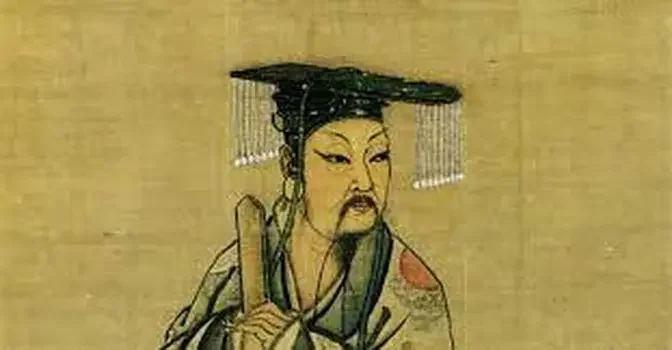
The Yu I talked about
I immediately thought of it
Mr. Hu Jiegang's
A very interesting statement
this
I remember it seemed to be in this article by Lu Xun
also mentioned
What about this rain?
Just a bug
Hey, the rain is heavy rain
Just a worm
Uh, this is a change in ancient history in the 20th century.
A very interesting idea proposed by the Ancient History Bian School
A point of view that has attracted widespread attention
So what about such a point of view?
It also has a great influence
right
From such a point of view
It greatly promoted the ancient history school
This spread of the relics trend
ah
We have just mentioned this relic trend
right
So one of the main positions of the relics trend of thought is that
The classics left by our ancestors
Especially the Six Classics
Or we say the Five Classics
What about this record in the Five Classics?
None are reliable
It’s all the Warring States Period
Even those people in the Qin and Han Dynasties
they made it up
In order to cater to the political needs of the time, they
Made up this ancient history
Well, what about Yu?
It's made up
What about Yao and Shun?
It's also made up
But what?
This archeology we introduced from the West
It actually proves to us
Yao, Shun and Yu
At least it's all true.
We may not be able to uh
I can say with absolute certainty that there is a real person.
But in our classics
Those events recorded in the era of Yao, Shun and Yu
It did happen to him
to that
For example, these two capitals
In fact, in our classics
They are all very clearly documented
We are also our scholars
That is, according to the records in these classics
Exploring consciously
This is also Chinese archeology
Studying is very different from Western archeology
Everyone knows that, right?
What about Western archeology?
It developed very early uh
Also very developed
But what about in the West?
What about archeology?
It can be said to be an independent discipline
But it’s different in China
From the moment archaeological autobiography was introduced to China
It has a very close relationship with history
Moreover, it is not an ordinary history
actually
It is similar to those classics that record ancient history
have a close relationship
That is to say, it is closely related to the Five Classics
Well, a lot of our archeology
Archaeological excavations are organized based on the records of the Five Classics
Vice versa
What about archaeological excavation?
Does it depend on the records of the Five Classics?
Hey, so where does that come from?
As for this material that was excavated?
give a coherent explanation
Hey, everyone knows that, right?
You can dig it out from this underground
They are all scattered utensils.
But what about these utensils?
what does it mean
What's the point of it?
What is the connection between these artifacts?
Hey, what can they tell us?
lifestyle
What kind of lifestyle do people have
What kind of religious concepts do people have?
Right? What kind of political system is there?
What kind of socioeconomic form is there?
That depends only on the objects themselves
It's hard to figure it out
What about Chinese archeology?
very fortunately
These classics left by our ancestors
How do we go through these classics?
It can be excavated from the ground
These scattered artifacts
a coherent explanation
But what about us now
some archaeologists
especially young archaeologists
They still don't remember well
They always think that this archeology
It's history
Even a slave of Confucian classics.
Depend on him
no independent status
So they just uh
I hope to strengthen the independence of archeology
I don't rely on this classic
I rely on these artifacts excavated
Yeah, let's construct a narrative about history.
What do I think?
This is purely a competition between oneself and oneself
It's not necessary
We have this book
This set of classics
It can be said that among all major civilizations in the world
unique
Where are our classics?
left a legacy about our ancient history
living record
What about these records?
Well, from these existing archaeological excavations, we
Uh, let's compare it with this classic
In fact, you find that most of it is believable
So here we are today
Hey we should break Nico
Such a thought bubble
in my opinion
He is a thought bubble
Right uh
We can trust it today
We uh
Can
What about these classics left to us by our ancestors?
There is a kind of warmth and respect
With a sense of warmth and respect we
to look at our classics
Uh, I think so
Have such an attitude
we can understand more accurately
Our Chinese history