
Anglo Saxons Explained in 10 Minutes
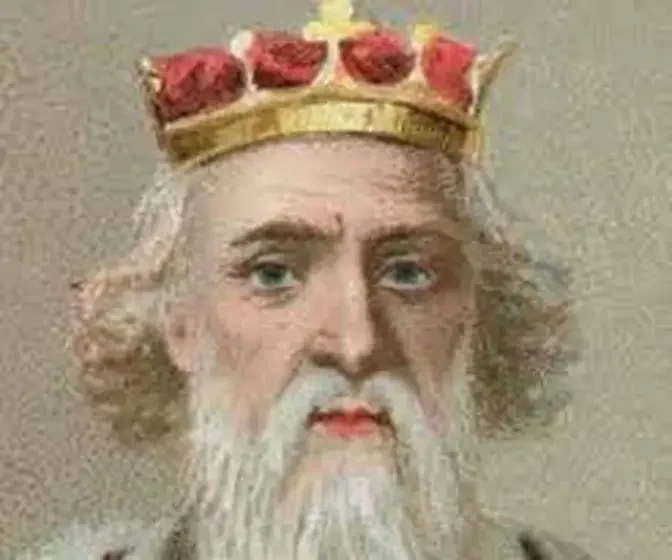
This video is brought to you by Captivating History.
For people living centuries ago, it would have been impossible to imagine that a small island
off the coast of continental Europe would one day be epicenter of world power and prestige.
A kingdom that would have control over about one quarter of the planet's land and its population.
Although the United Kingdom no longer enjoys its once lofty stature,
it is still a key player in world politics.
Before reaching its zenith, however, England and its neighbors were a strategically placed
jumble of islands that hosted more than its share of turf wars. The Romans, Vikings,
Britons, and Celts all vied for control of England, as did a loose group of tribes from
Central Europe who became collectively known as the Anglo-Saxons. Beginning about 43 CE,
the Romans lay claim to most of the British Isles, except for Scotland. But by the late
3rd century and into the early 4th century, the Roman Empire was in decline. Therefore,
resources were pulled from outlying posts such as Britain. Although it is much less tidy than
history books make it seem, the end of the Roman rule over Britain occurred in the year 410,
the year that the Visigoths sacked Rome. The Romans pulled out of Britain, leaving the people
living there, a blend of native Britons, Romans, and Celts, vulnerable to raiding barbarians.
Although they were no longer part of the Roman Empire, the people of Britain still closely
identified with Rome. Religion, laws, written language, and government all reflected its Roman
background. With the departure of Roman rule, Germanic marauders met with little resistance
during their raids on Britain. At the time, these marauders were not called Anglo-Saxons,
but were most likely members of the Anglos, the Saxons, the Jutes, and other Germanic groups.
After decades of raiding British villages, then sailing back to their homes on the European
continent, the Anglo-Saxons put down permanent roots on the British Isles.
The transition from Roman control to England's Saxon rule was not a smooth one, but in time,
the Anglo-Saxons merged with the native Britons. They moved into their villages,
took over their farmland, and intermarried with the people already living there.
They commanded military forces and, over time, rose to power as leaders of villages,
towns, and regions. Historians often use the term Dark Ages to describe the time
after the Roman rule of Britain, the time when the Anglo-Saxons ruled the land.
This implies that the era was a time of intellectual stagnation and brutality,
but this was not the case. The Anglo-Saxons injected a set of new religious beliefs,
military tactics, literature, and a unified attitude into the Roman lifestyle of the island.
The resulting blend of ideas took Britain on a different path,
one that eventually led to something akin to world domination.
The Anglo-Saxons had no written language, so historians don't have a complete picture of
their belief system after they converted to Christianity. Bits and pieces of archaeological
evidence tell a story, though. For example, the graves of high-ranking people, including kings,
queens, high priests, and military heroes show us that people in higher social statuses were
revered, even in death. Another clue could be found in the names of places, as the Anglo-Saxons
were fond of naming their settlements to honor certain deities. Some villages even bear names
that include the words like Draka and Thriss, which mean dragon and giant, hinting that the
Anglo-Saxons' belief system may have included fanciful beasts. Despite the lack of written
records, we can assume that the Anglo-Saxons' pantheon of gods was similar to that of other
Germanic tribes, and oral stories bear this out. Even written stories, much later, mention the
chief deity of the Anglo-Saxons as Woden, a name that sounds strikingly similar to the Scandinavian
Odin. Various Anglo-Saxon gods remain part of our everyday vocabulary in the names of the days of
the week. Tuesday, for example, comes from Tuesday, and Thursday comes from Thursday.
The Anglo-Saxons must have felt so strongly about keeping their deities in the names of the days,
because the names have lasted for centuries and have become ingrained in the English language.
The Anglo-Saxons seem to have had a pagan belief system closely tied to nature.
Specific trees or certain groves within forests were thought to have spiritual energy.
Interestingly, many of these places were used as sites for churches and Christian structures.
The Anglo-Saxons organized themselves into social classes similar to other Germanic tribes.
At the head of the tribe is the chieftain, a title that later became king. The position of
chieftain or king passed through male bloodlines, with the ruler's eldest son as the heir.
The word king comes to us from the ancient word kin, which literally means family lineage.
The Anglo-Saxons strongly believed that the male bloodline had to be kept pure
because it was the family's link back to Woden. Once the Anglo-Saxons of Britain converted to
Christianity, the custom of heredity remained important, though sometimes the crown passed
to indirect heirs and even female leaders. Before their conquest of Britain, the Anglo-Saxons had
no written language. They only developed one after their conversion to Christianity.
But this doesn't mean that the Anglo-Saxons were not creative storytellers.
Once they adopted a written language, they recorded many of their legendary tales,
most notably Beowulf. This epic poem was first put to paper in the 19th century by an unknown
scribe. Over time, Christian elements were added to the story. Beyond the tribal chieftains,
the Anglo-Saxon villagers were structured with social hierarchies similar to other medieval
settlements. There were farmers, merchants, builders, and people who made weapons, cloth,
leather goods, and other necessary items. This working class answered to the ruling class,
but were free to live their lives as they wished. The slave class enjoyed far fewer freedoms.
The most prominent occupation was farming. The production of food also included hunting and
fishing. Evidence tells us that the men of the tribe not only grew and hunted the food,
but they also prepared and cooked it. Women baked bread, brewed beer, and made cheese,
but it was the task of the male members of the community to cook the meat they procured.
Women in Anglo-Saxon culture, no matter their social standing, served drinks to the men.
The Anglo-Saxons may have earned a reputation for violence and brutality, but they also loved to
have a rowdy good time. Parties with drinking, feasting, singing, dancing, and beautiful women
were commonplace. As shown in caricatures of the Anglo-Saxons, they did decorate with deer antlers
and drink from polished horns. Both men and women worked as entertainers, dancing, singing,
or acting out oral stories for enthralled crowds at festivals and gatherings. The Anglo-Saxons
didn't make wine, but they did make a weak beer. Their beverage of choice, however, was mead,
a drink made with fermented honey with a higher alcohol content. When they weren't celebrating
with mead and venison, the Anglo-Saxons were often engaged in battles against the Britons
and the Romans, who ruled over them. When the Romans pulled out of Britain, the Anglo-Saxons
exerted their formidable power over the Britons living in coastal communities. The warfare was
more like raids. Between attacks, the Britons carried on with their own lifestyles, and their
way of life was not greatly changed by the Anglo-Saxons for decades. When the Anglo-Saxons
eventually settled in parts of Britain, they fought off Viking raiders in the same manner
that the Britons fought them. The chieftains of several of the Anglo-Saxon settlements on
the British Isles banded together against the invading Vikings. Leading them was an Anglo-Saxon
king who became known as Alfred the Great. Under his leadership, the Anglo-Saxons defeated the
Vikings at the Battle of Eddington in 878. After that, the Vikings retreated to the
northeastern region of the island and left the remaining territory to the Anglo-Saxons.
The Anglo-Saxons developed some battlefield innovations that changed warfare for the
Britons, Anglo-Saxons, Vikings, and later, the Normans. First, they brought together numerous
small village armies into one large, well-organized, and well-commanded fighting unit.
They employed archers, javelin throwers, and slingshotters, besides swords and spears.
Soldiers used large shields to form an impenetrable wall. Anglo-Saxons even
used horses in battle. The Anglo-Saxons held control over Britain until 1066,
one of the most momentous years in world history. The Anglo-Saxon king, Edward the Confessor,
died, and the crown passed to his successor, Harold Godwinson. His reign, however, lasted
only about nine months. Shortly after, William the Conqueror of Normandy launched the Norman
Invasion and attacked Britain. Following the Battle of Hastings in October of 1066,
the Normans took control of Britain away from the Anglo-Saxons,
although the majority of the people living on the islands remained Anglo-Saxons.
Even though historians refer to the Anglo-Saxon era in Britain as the Dark Ages,
the Anglo-Saxons made their mark on the history of England, and in fact, all of Europe. Once
they converted to Christianity, they helped to initiate the conversion of their pagan allies,
using their various alliances to negotiate foreign relations and to establish a booming trade.
Perhaps their biggest contribution was their success in merging the different kingdoms of
Britain into one unified force. For the first time, the people living on the British Isles
viewed themselves as something bigger than their individual kingdom. They viewed themselves as
English. To discover more about the history of the Anglo-Saxon people, then check out our book,
The Anglo-Saxons, a captivating guide to the people who inhabited Great Britain from the
early Middle Ages to the Norman Conquest of England. It's available as an e-book,
paperback, and audiobook. Also, grab your free mythology bundle e-book for free while
still available. All links are in the description. If you enjoyed the video,
please hit the like button and subscribe for more videos like this.