
Exploring the "Chinese Gate" on Xuanzang's Journey to the West
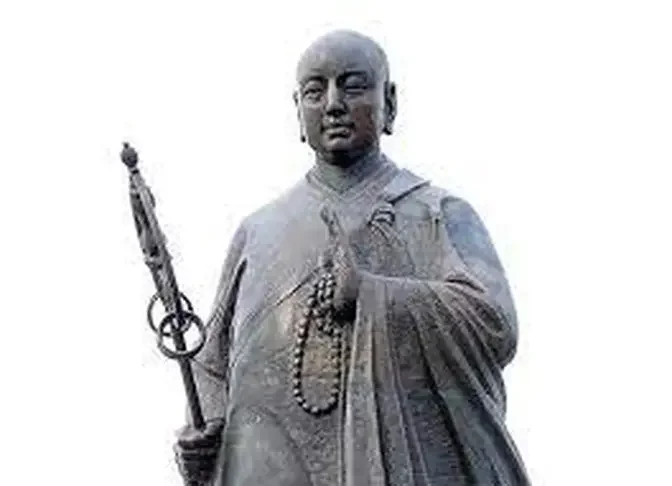
Are you sure we can find the China Gate?
Yes, at least we will try.
You can drink the juice from it.
I used to drink it when I was young.
I can see the time passing by here.
I wouldn't have imagined that we would meet in Uzbekistan
one year after our first encounter.
And I didn't anticipate that we would explore the home country of Ruslan,
often referred to as the heart of Asia,
and the spirit of the early great explorers,
just as Xuanzang once traveled.
Do you want to go up?
You don't want to go up?
I want to go up, yes.
You can buy and eat this and just die.
I want to buy more.
You should save your money and buy melon or watermelon.
Wow, let's have a try.
No, no, no.
No, why not?
I want to live. I don't have to die early.
Ruslan has got our backs,
letting us know that throwing down uncured and smoked fish
might not be the healthiest move.
I think I've tried something like this before in Beikal Lake.
I think it's Russian style, not Volkov.
You should open it.
Really? I don't want the soup out.
Your country has such good food.
I don't know that before.
Because it's local food.
Tashkent, we have like this.
But small.
Small.
I think we have these khao baozi in Xinjiang as well.
In Central Asian countries, we have our different languages,
but we can understand maybe 70 or 80 percent.
Before, I didn't see much news about that region,
but this year and last year,
there's a lot of topic among this area.
The last five or six years in Central Asia,
the situation is changing so fast.
So we become, maybe sometime we became like European Union.
Your president called this the gold era of China
and Central Asian countries' relation.
Like Tang Dynasty, we see a lot of the same thing in our history.
You know Sogdian people?
Yes, Sogdian.
They live in Shanxi.
This is the capital of Sogdian.
In days of old, the Sogdians, vibrant merchants of Samarkand,
amassed treasures from distant shores,
gathered a plenty within its bonds.
As Shenzhen gazed upon the city's affluence,
this thriving metropolis held a pivotal trade gate,
known as the Chinese Gate.
This is the Afrasiya.
So our mission is to find the China Gate.
You sure we can find the China Gate?
Yes.
You sure?
At least we'll try.
If you want to go to China,
you need to go through the Chinese Gate.
So this is the direction of China.
Yes, this is the direction.
Oh, I see.
When did you come here?
I came here in the 5th or 6th century AD.
I was in China at the time.
That's when I learned about the Chinese Gate.
During that time, I was interested in China.
For example, when I was young,
I used to go to China to pray.
That's how I learned about the Chinese Gate.
The Chinese Gate has five gates.
The first one is the Wall of China.
It's a well-known wall.
I used to pray there.
So now we are really going to the Chinese Gate now.
Yeah.
You know, Professor, we have a...
There's a picture of you.
They say it is the Chinese Gate.
Do you recognize it?
No, not this one.
Not this one?
No, not this one.
This is not the Chinese Gate.
This is not the Chinese Gate?
Archaeologists made a mistake.
So we don't know exactly what Xuanzang wrote.
It's up to our fantasy.
We can just imagine where he has been.
I think this is the thing which is interesting in history.
It's nothing. It's just stones.
But we can imagine how it was before.
Here, here.
So we are standing on ancient city.
We will be dust after 2,000 years.
We are seeing the dust of human history.
Journalists.
This is dust of journalists.
This is dust of scientists.
This is the dust of travellers.
Explorers.
What's that sound?
That was the wolf.
That's the wolf.
Wolf or dog?
No, no, no. Dog, dog.
Dog.
It's a dog.
I have never seen a dog singing.
Those places just make people sad.
Why?
I don't know.
I don't either.
Why?
It's hot.
Can I buy some?
It's like a colour palette here.
Oh, can I?
Yeah, yeah.
Tashkent, Tash is a stone.
Tash is a city, yeah.
Tash is stone.
That's why we call it the city of stone.
So shi liu is fruits from Tashkent.
I see, I see.
It's like 16, yeah?
Yes, how do you know that?
I know numbers in Chinese, yeah.
Okay.
Cool.
It's too sweet.
Yeah.
You're going to work after all of this.
Bye, guys.
Ruslan returned to work at 11pm,
leaving us to work independently for a temporary period.
When it comes to Samarkand,
there are always grand events measured in millennia.
Given that our lifespans rarely extend beyond a century,
the primary concern for most of us
remains the opportunities of the present.
Do you know the Chinese dragon?
The Great Wall Dragon?
Great Wall Dragon?
Great Wall Dragon, right?
The Great Wall Dragon of China?
Come, I'll take you there.
Okay, okay.
It's okay.
Oh, that's the Great Wall Dragon.
Jackie Chan is your English name.
Yes, my English name.
Why are you called the Great Wall Dragon?
Because I like the Great Wall Dragon.
You're the Chinese dragon, right?
This is the Great Wall Dragon.
Hello.
You're the one we're looking for, right?
Yes, I am.
Nice to meet you.
We saw on social media
that a group of Chinese people
and friends from Uzbekistan
came together to build a Chinese city like this.
Are you interviewing him?
He's a customs officer.
Most of us Chinese
work as wholesalers here.
The customs officers we work with
are mostly wholesalers.
Do Uzbekistanis like hot water?
No, they don't.
They don't like it?
Uzbekistanis like it.
It's a little hot.
Do you like it?
Cheers.
Good, good.
Good.
What do you think
is the style of business
that Chinese people do?
The main thing is that the boss is not proud.
Like a friend.
I think you know
Chinese culture very well now.
You know how to praise the boss.
We Chinese will bring
more advanced skills
to Uzbekistan
so that their lives
will be more comfortable.
You're his sister-in-law, right?
Yes, I'm his sister-in-law.
Sister-in-law.
Ruslan, we are here.
I'm glad to see you.
It's for you.
Oh, what's this?
Pomegranate wine.
Oh.
And please don't give that wine
to your friends or someone.
Please drink it by yourself.
Okay, I can drink
the whole bottle of it.
No, no, no.
I just want you
at least to try.
Yes.
You know it's pilaf?
In Uzbek language,
it's pilaf.
You can say pilaf.
And this is the first
letters of ingredients.
For example,
P is pilaf.
It's onion.
The A is carrot.
So pilaf is the origin
of everything.
Yeah, yeah.
And Osh is water and rice.
It means water and rice.
So if you know the name,
you can cook,
and it's how,
what you should put first,
for example, with food.
First is onion.
Yeah, yeah.
In recipes,
it's on his name.
So the people who invent
Uzbek words,
is it cook?
It's one of the words.
Maybe.
So how long is the history
of eating pilaf?
I think more than 1,000 years.
So who tasted the pilaf
in China,
in the history?
I don't know.
Have a guess.
Do you think so?
What's your plan for next?
My plan is visit China
to participate
in Color Belt and Road Tour.
So see you in the summit?
As usual, as usual.
As usual.
And I'll pretend
I don't know you.
Yeah, yeah.
Hello, Sandra.
How do you call that?
Bibi Khanna?
Bibi Khanum.
Khanum is a woman
you can show respect.
Several centuries ago,
a great emperor
constructed a magnificent
building here
in memory of his deceased wife.
I can see the time
passing by here.
Why do we need to be remembered?
There's no meaning
behind memory.
Maybe do something
for the future.
One old man
was planting the trees
in Shanxi province.
He knows that when he
plants the tree,
he will not see
this forest,
but he's doing this
for something.
A few centuries after,
people come here
and they are impressed.
So that's the meaning
because of the memory.
People will remind him
as a man who did this
for the future.
I think we live
for something anyway.
At least just to give
some knowledge
to our next generation.
Ruslan and I
drove through
the tapestry of history,
marveling at the seeds
that had nestled
into ancient crevices,
now blossomed
into majestic trees
after countless centuries.
It occurred to me that
perhaps like us,
the voyagers of old
along the Silk Road
would come together
sharing dreams
and aspirations,
weaving legends
and fantasies
into the blank canvas
of the journeys.
People with the same beliefs
always find their way
to each other
and the Belt and Road
is such a road.