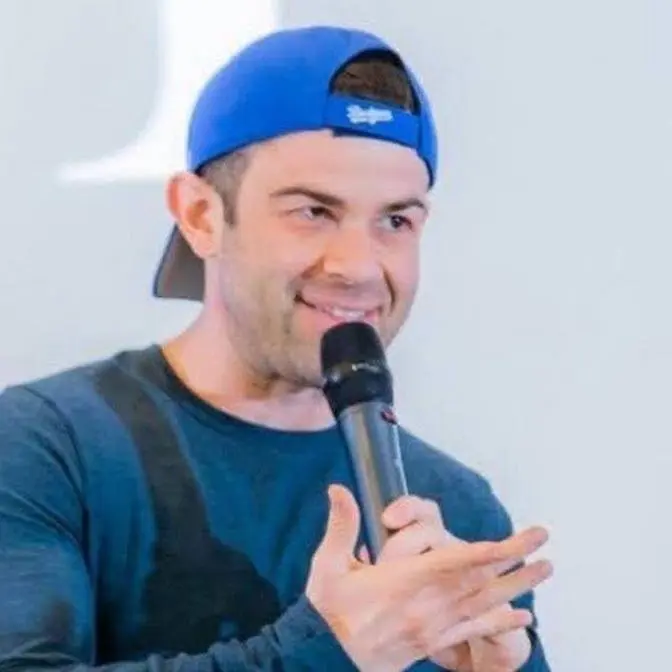
Dr. John Krystal is McNeil Professor and Chair of Psychiatry at Yale and Yale-New Haven Hospital. He studies the neurobiology and treatment of psychiatric disorders. He directs the Yale Center for Clinical Investigation, Center for the Translational Neuroscience of Alcohol, and Neuroscience Division of the National Center for PTSD.
Today on the show we discuss: The biggest risks people are overlooking with cannabis, why cannabis can be harmful for the brain and increase your risk of psychosis or schizophrenia, Dr. Krystal’s thoughts on how cannabis impacts mental health and PTSD, why maintaining a healthy lifestyle is so important for your mental health, why cannabis is so addictive, whether or not the brain can heal itself after coming off cannabis and much more.
⚠ WELLNESS DISCLAIMER ⚠ Please be advised; the topics related to health and mental health in my content are for informational, discussion, and entertainment purposes only. The content is not intended to be a substitute for professional advice, diagnosis, or treatment. Always seek the advice of your health or mental health professional or other qualified health provider with any questions you may have regarding your current condition. Never disregard professional advice or delay in seeking it because of something you have heard from your favorite creator, on social media, or shared within content you’ve consumed. If you are in crisis or you think you may have an emergency, call your doctor or 911 immediately. If you do not have a health professional who is able to assist you, use these resources to find help: Emergency Medical Services—911 If the situation is potentially life-threatening, get immediate emergency assistance by calling 911, available 24 hours a day. National Suicide Prevention Lifeline, 1-800-273-TALK (8255) or https://suicidepreventionlifeline.org. SAMHSA addiction and mental health treatment Referral Helpline, 1-877-SAMHSA7 (1-877-726-4727) and https://www.samhsa.gov
Dr. Crystal, welcome to the podcast.
Thanks so much, Doug. Great to be on.
I'm super excited to chat with you.
And I guess my first question for you is given your background,
given, given your role in your profession,
what is your overall view on cannabis specifically like marijuana right now?
Sure. Well,
my feeling about marijuana and cannabis is pretty much the way that I feel
about every powerful psychotropic substance.
Which is that there are ways that it can be used safely and that limit the risk.
And then there are ways to use it that expose people to risks that are,
can be a problem and you have to take it seriously.
What do you think are some of the biggest risks that maybe people might be often
overlooking when consuming cannabis and marijuana?
The biggest risk is probably very mundane,
which is that if you're high and you drive,
then you put yourself and people around you. In that regard,
it's really not any different than any other intoxicating substance.
And that's not really specific to the mechanism through which cannabis works.
However,
my colleagues and I have been studying cannabis effects in people and
particularly the main psychoactive alkaloid called
THC. Many people will have heard of this.
And we found that if you infuse THC into healthy people,
that they may get paranoid or, you know,
have altered sensory experiences, things like that.
And if you give THC to people who have schizophrenia,
then you make their psychosis worse.
So the idea that THC is completely benign is not accurate,
which is that if you smoke enough cannabis,
get enough THC into your system,
then some people are going to have problems with paranoia, psychosis,
delusions. And by psychosis, I mean hearing voices,
seeing things, having false beliefs that seem real at the time.
I think many people who have used cannabis recreationally may recognize in
themselves or others periods where they or other people seem to get,
feel very anxious and uncomfortable,
worry that the police might be out to get them or something like that.
But if you notch that up a level, it can be a real problem.
There's a lot of research from what I've read about the relationship between
cannabis and THC and their increased risks of like psychosis and stuff
specifically among men.
Like what does it do to the brain that would cause something like that?
You know, the more we study, the more we learn.
I would say that cannabis affects the ability of the brain to tune the
circuitry so that on cannabis communication,
the brain gets a little noisy.
This kind of loss of tuning of brain activity would be like having your radio
become very staticky.
The messages don't quite come through in the same way.
We see this in people who get other kinds of drugs like ketamine,
or who have schizophrenia where the brain circuits are not that well tuned.
And you know, I think for most people,
most of the time it's not that big of a problem.
You know,
where people drink alcohol or engage in other activities don't optimize the
function of the brain.
It's a problem if you try to do your schoolwork.
It's a problem if you try to drive your car.
It's a problem if you're solving really important problems.
And it may be a problem that goes beyond the time that you're using the cannabis
if you're a teenager. In other words,
if young people who have developing brains are using these substances,
there are some data that suggests that it can affect brain development data from
humans,
but also from animals where they can control all the potential confounding
factors pretty carefully.
And it turns out to be one of the few things that people who are at risk can do
that actually increase their risk for later psychosis or symptoms of
schizophrenia if they happen to be vulnerable to the disorder.
How has the makeup of cannabis like changed over the years?
Cause it seems like over recent years you're hearing so much more about the
severe negative impact specifically on the brain when it comes to marijuana.
Yeah,
this has been really interesting in a way that the older cannabis,
the cannabis of the 1960s and 1970s was really a blend of THC with other
alkaloids that mutated some of the THC effects.
And one of those alkaloids which can mute THC effects is another alkaloid that
people know a lot about,
which is cannabidiol CBD and cannabidiol.
Many people have the impression that cannabidiol is just a weaker form of
cannabis,
but it's really a very different substance.
Cannabis works in our brain through a kind of trick of nature,
which is that we have a chemical system in the brain called the endocannabinoid
system.
In other words,
our brain,
our body is making chemicals that signal through the same receptors that THC and,
you know,
cannabis signals.
And so just like our bodies don't make heroin,
but we make endogenous opiates and heroin binds to the receptors for endogenous
opiates.
So our bodies make endocannabinoids that have interesting names like anandamide
and mimics their action at the receptor,
except it doesn't exactly mimic the action because our endogenous cannabinoids
aren't designed just to ping the receptor,
go on and off very rapidly and to be very tightly regulated.
But when THC binds to the receptor,
it binds and stays in a way that's not very physiological and produces some
aberrant effects and in nervous signaling.
So anyway,
THC stimulates the cannabis receptors and cannabidiol blocks the CB1 cannabinoid
receptor one and thereby can make a cannabis more tolerable defects,
more mild.
As people have looked for more and more intense experiences from cannabis,
they've gotten strains of cannabis that have relatively more THC and relatively
less cannabidiol.
So in some ways it's not that complicated.
The strains are stronger because that's what people wanted,
but they've at the same time,
they made the cannabis a little bit more risky.
And so what are some of the risk factors in your opinion that could lead to
somebody developing some sort of psychosis or schizophrenia from excessive
cannabis or marijuana use?
First,
probably everybody has some vulnerability point.
In other words,
if you use enough cannabis,
almost everybody can get to the point where you have some symptoms of psychosis
transiently that go away after the drug effects wear off.
We know that the heritable risk for schizophrenia is very complicated.
So there are hundreds of genes that have a tiny effect on the risk of
developing schizophrenia.
And most people in the population have some of these risk genes.
Some have a lot of them or risk variant gene variants.
Some have a lot of them and are at substantial risk of developing
schizophrenia.
Other people have very few of them you might say are relatively protected.
But since we don't know,
you know,
we don't screen everybody in the population to determine what's called their
polygenic.
It means the combination of many genes.
Since we don't screen people for their polygenic risk for schizophrenia,
we really don't know who among us is at relatively more risk or relatively lower
risk.
I mean,
we know that if they have schizophrenia in their family,
maybe they're,
you know,
in that way they're a little bit higher risk.
That's only relevant for a small percentage of the population.
So without really careful genetic testing,
we don't really know who's at risk.
And that's the problem.
Cannabis for someone who's at high risk is like walking out in a field of land
mines.
You know,
everything looks fine until you have a bad experience and have some difficulty
bouncing back from it.
So I think that people who are at risk may be sensitive to lower effects,
low effects of lower doses of cannabis and,
and may have more adverse and or persisting effects of regular cannabis use.
And so I guess what you're saying is the only way to guarantee that you won't
develop that is just to be sober or abstinent from it,
correct?
Yeah.
I would say that there are things you can avoid and things you can't avoid,
right?
You can't avoid your genetic makeup.
And oftentimes you can't avoid stresses in your life that may make a little
harder.
But I would say that if you've had some bad experiences on cannabis,
that should be a warning.
It's hard to tell young people who want to try everything out in the world
that's available to them.
Never try cannabis,
never try alcohol,
never try cigarettes.
I mean,
we can say that,
but I don't think many teenagers will listen to us,
but we want them to listen to their own experience.
We want them to pay attention to themselves.
If they have trouble regulating their drinking,
have a bad experience in alcohol,
we want them to watch out for alcohol.
They had a bad experience on cannabis.
We want them to watch out and avoid cannabis,
pay attention to the signals that their own body's giving them and protect
themselves from getting into a difficulty sleep.
Any advice for parents to help their kids develop self-awareness around their,
their habits with these substances?
I think it would be great for parents to have the same kind of discussions with
their kids that we're having right now.
I don't think that they need to go into the details of the polygenic risk for
schizophrenia and the hundreds of genes that,
that may be like sleeping time bombs that you know,
and all of that. I think that just makes people upset and afraid,
but they can talk to their kids about paying attention and looking out for
themselves and for their friends who may have difficulty.
A lot of teenagers don't really want to listen to adults about, about this,
but they may listen to their classmates or friends or particularly older friends
and hear the message that they have to be careful of,
particularly if they have a bad experience with these substances.
And so would you say that kids and adolescents are more at risk to develop some
sort of psychiatric disorder from cannabis and marijuana versus say an adult
who's over 25, 30 years old?
I would say that the kind of the stimulation of these kinds of persisting
psychosis is a young person's problem.
Primarily it's not that cannabis,
regular cannabis use isn't associated with problems in older people too,
but they're a little bit different. So for example, in, in adults,
what you see more is that people who are vulnerable to anxiety may have panic
attacks triggered by cannabis use.
People who are using cannabis all the time may find that,
or when I say all the time, I mean many times a week,
that they may feel more likely to feel depressed or hopeless about,
about things or not very motivated to be engaged with their friends or colleagues
at work. That's a more subtle effect and an important one as well.
But the one that really,
I think makes people like myself who studied psychosis very concerned about the,
are these syndromes that,
psychosis that may not always go away when people stop using cannabis.
Before we get into psychosis, cause I know that's a whole nother rabbit hole.
And I definitely want to touch on that and how people can recover from that.
You hear a lot of people say that the reason they're using cannabis and marijuana
today is to help with their anxiety, is to improve their mental health.
And yet from what I've read, the research all says the opposite.
As far as the impact on mental health.
Why do you think that so many adults are coming out and saying that it's really
having this profound effect on their anxiety?
Well, I have to respect the things that people say that they find helpful.
If someone says I've used cannabis for 10 years and it's the only thing that I
found that's enabled me to sleep at night or made it possible for me to be in,
in rooms with other people because my anxiety is so high.
My question is almost always for that person,
what other kinds of treatments have you tried?
What has worked for you and what hasn't worked for you?
Because I think that it's common for people to use cannabis and alcohol,
sometimes nicotine to deal with problems that might be treated in a safer and
more effective way through psychotherapy or, or some medications.
That being said,
there is interest in the possibility that certain anxiety syndromes might be
helpful for certain kinds of conditions.
But my, my view of this area of research and, and, and there are,
there are many people who are interested in companies that are interested in
developing cannabis or cannabis derivatives as direct treatments.
I am very interested in a set of drugs that are related to cannabis,
which I think may be a little bit more physiological for the brain.
In other words,
I said earlier that the endogenous cannabinoids bind very briefly to the brain
and, and, and,
and that's the kind of way in which the brain uses these endocannabinoids to
signal. There are a family of drugs called FAA inhibitors.
FAA is an enzyme that metabolizes the endocannabinoids.
And so if you take this drug, you're juicing up the endocannabinoid signaling.
So there may be cannabis drugs that work without actually being a constituent of
cannabis.
And so would these be free of THC? Cause I feel like that's what I,
from what I understand causes a lot of the adverse side effects.
Right. So it would enhance the stimulation of the receptor.
It produces many of the same beneficial kinds of behavioral effects in animal
models. It's been tested very little in humans so far. You know,
I think it is one promising direction.
And one of the interesting complexities we have in interpreting the safety of
effectiveness of self medication with cannabinoids is that we have two kinds of
data. On the one hand,
we have the self reports from people that like you and I have heard that say
that these are medications that help them.
And then we have the large scale epidemiology data and the large scale
epidemiology data, for example, for post-traumatic stress disorder,
suggest that cannabis use in post-traumatic stress disorder is associated with
worse clinical status and worse clinical outcomes.
It may be because people who have more PTSD are more likely to seek cannabis and
that confounds the interpretation of these data.
And we don't have the kind of definitive,
what we call gold standard clinical trials data yet with cannabinoids to help us
know whether these are effective, not effective, risky, tolerable.
So it's still very early days.
And so I'd kind of for people who are already using these medications in ways
that they find very helpful,
I would give them the same message that I would gave to the teenagers,
which is you need to really pay attention to not only the parts of the cannabis
effects that make you feel good, but whether it's coming at a cost for you.
Are you having trouble during the day? If you're using it for sleep,
are you having problems with anxiety that are only partly controlled by the
cannabis?
Are you feeling depressed and do you need treatment for depression?
Because even if the cannabis is somewhat helpful,
there may be a burden of anxiety or depression symptoms in their life that could
be helped if they get a more traditional kind of treatment.
You'll hear some people that are using cannabis and marijuana for anxiety say
things like, well, it's natural. I don't want to take medication.
Like what I'm doing is at least natural, blah, blah, blah.
And along those same lines for somebody who maybe is not convinced to go down
the medication route, but they're like, all right,
after hearing Dr. Crystal talk,
maybe I'll try to find some better alternatives to deal with this stuff.
Have you found anything that's on the more holistic, natural side,
whether it be exercise, meditation, et cetera,
that could help give people the same type of effect that the cannabis might be
giving them?
I'm really glad you raised this point because I think a healthy lifestyle is
good for you no matter what you're struggling with, whether it's heart disease,
whether it's depression, whether it's diabetes,
the kinds of things you might say that in a way,
depression is a whole body disorder.
Anxiety can be a whole body disorder because there are disease related
processes in your body often called inflammation.
The same thing that contributes to your coronary artery disease might be
contributing in your brain to depression, healthy diet, exercise,
good sleep and active as opposed to a sedentary life.
All of these things are helpful as people deal with anxiety and depression.
You know,
sometimes cannabis use can make things worse because it can be a part of a
sedentary lifestyle.
So hanging around sitting on the couch using a lot of cannabis,
spending your day that way doesn't get you to exercise,
doesn't get you out with people, doesn't get you to, you know,
everybody knows about the munchies.
It may not get you to a healthy diet and all of,
you know.
So I think overall the treatment of anxiety and depression probably begins with
a healthy lifestyle that's augmented with psychotherapy and maybe medications
if needed.
And going into some more alternative solutions for depression,
I know like you've been a pioneer in using, you know,
finding ketamine to help as with,
with depression and people might maybe read your background and be like,
wait a second, like he's promoting ketamine.
And yet we're talking about some of the negative side effects of marijuana.
And obviously ketamine has become very popular as of late from the medicinal
and clinical benefits.
Talk about the differences between ketamine and cannabis and why ketamine seems
to be much more effective from a, from a clinical point of view.
First, I feel the same way about ketamine that I do about cannabis,
which is it's a drug with powerful behavioral effects.
It has to be treated with a lot of respect.
That's why we only administer a ketamine in the clinic and at a kind of very
specific dose.
If you give a dose of ketamine that's too low, it doesn't work.
And if you get, give a dose that's too high, it doesn't work.
And if you take it every day like recreational ketamine users do,
it may increase your likelihood of feeling depressed rather than working for
depression.
But the bottom line is,
is that it's now over 25 years of research on,
on the antidepressant effects of ketamine so that we are pretty confident that we
have some understanding about how ketamine can work for depression.
The first thing is that the placebo controlled research shows that it's,
it can be very effective for people who have a severe depression that has not
responded to other antidepressant medications.
And that's really important because a lot of people get discouraged about the
possibility of getting effective depression treatment and look to other kinds of
substances like cannabis to deal with the lack of effectiveness of the
medications that they receive for their depression.
And we don't know whether cannabis works for treatment resistant depression,
but we do know that for many people with treatment resistant depression,
ketamine can be effective.
The second thing is that we don't give ketamine every day.
What we do is give a dose,
start twice a week and then we give it less and less frequently over time so that
people who are on it longterm are likely to get it every three weeks,
once a month.
And the goal of the treatment is not to keep the ketamine in the system.
It's a very short acting drug.
You might say one of the things that ketamine does is help to recruit the
brain's own resilience mechanisms to alleviate the symptoms of depression.
What I mean by that is that people who have chronic severe depression,
they lose some of the synaptic connections in the brain.
Their networks work less efficiently.
Their emotion circuits not functioning so well.
And we can show within 24 hours of a single dose of ketamine in animals.
And we've recently collected some pilot data,
Irina Esterlis and Sophie Holmes collected some pilot data in people that
indicate that ketamine can rapidly regrow the synaptic connections of the brain.
And it's building on the brain's own resilience mechanism to do that by
increasing the levels of a substance called brain derived neurotrophic factor.
But it's really a kind of a nerve growth factor that your brain makes that is a
resilience mechanism in the brain. This is one of the ironies,
which is here you have a drug, clearly a chemical entity, not present in nature.
But if you take it, it recruits your brain's own natural resilience mechanism.
And so you, it's kind of the paradox there that seems to be how ketamine works.
And then I guess just to provide a little bit more context,
how is the structure of ketamine as far as how it's classified as a drug,
et cetera, different than, than cannabis?
Cannabis is a, it binds to the cannabis receptor.
It's got its own chemical structure. Tetra hydro cannabinol is the,
is THC and ketamine is a dissociative anesthetic.
Which works predominantly by blocking signaling for the main information highway
in the brain, which is the glutamate system.
Like 90% of the synapses in the cerebral cortex use glutamate as the chemical
messenger.
And one subtype of the glutamate receptor is called the NMDA receptor and
ketamine blocks that receptor.
And then you mentioned that in many ways when you're doing kind of ketamine in
a clinical setting, it's very short term.
And then like after that people kind of go on, on, on their way.
And I'm sure there's some sort of like long-term care treatment plan to help
them make sure that their depression continues to get better and their mental
health continues to get better.
What types of things are you advocating for these people to do?
Like after they receive a ketamine treatment?
I think it's really important to think of something like ketamine or if they
eventually get approved MDMA and psilocybin as interventions,
but not necessarily the whole treatment.
It's important for people who are getting treatment for mental illness to have
somebody looking out for their overall care,
integrating the psychotherapy and the medications and whatever kinds of
treatments they're getting.
Just like you have a family doctor who looks out for your overall medical
health and who sends you to a surgeon if you need a surgeon,
sends you to a heart doctor if you need a heart doctor, et cetera.
So I think of the ketamine as one of those procedures that you get if you need
it.
And oftentimes it's given by a specialist who collaborate with the primary
mental health clinicians around the long-term care.
Some people will only need a month or two,
few months of ketamine treatment and they'll be back on their way,
often continuing some kind of antidepressant and psychotherapy.
It turns out really need some kind of intermittent exposure to ketamine to keep
the depression at bay.
We'd like to have a treatment that didn't need that.
It works that way for some people,
but many people need some kind of longer term treatment.
Another thing that people will say when it comes to cannabis and comparing it to
other substances and being like, well, at least I'm not drinking alcohol.
Alcohol is legal. It's a far more dangerous substance, blah, blah, blah.
And they'll often like use it as an excuse because they're like, well,
everybody else around me is drinking. I'm at least doing this.
What are your thoughts on cannabis as it compares to and relates to alcohol and
the negative and positive effects?
Well,
the first thing is that the most dangerous thing that people do with alcohol is
drive while intoxicated and probably the most dangerous thing that people do with
cannabis is drive while intoxicated.
And that way the most serious risk may not be that different.
What gets people into trouble with alcohol is compulsive heavy alcohol use.
And that's because if you, if you're a heavy drinker, in other words,
you drink more than four or five glasses of alcohol multiple times a week,
you start to take a toll on your body, your liver, your heart,
your lungs, even your brain.
That adds up over years of heavy drinking.
Many of us know somebody who became seriously ill as a result of long term
heavy drinking.
It's true that cannabis is not as toxic in that way as alcohol,
long term alcohol, heavy drinking.
But for most people who use alcohol, they're not using it in that way.
We have very powerful social conventions that help people to regulate their
alcohol use and keep it in the low social range.
And when alcohol is used in that range,
it seems to be relatively safe and well tolerated on a lifelong basis.
As most of us know, most of the people we know have used it in that way.
And so there's probably a parallel there for cannabis too,
which is the person who's having a little bit of cannabis recreationally,
socially and not driving while intoxicated is probably not having that much
risk.
The problems, uh, heavy use, repeated use.
And then of course,
people who are smoking cannabis and smoking all the time are exposed to the
respiratory effects of smoking, which everybody knows.
And again, when we're talking about cannabis use,
we're obviously talking about in the context and making sure that it's,
it's legal and that you're at the proper age and et cetera, et cetera, et cetera.
Going back to psychosis as it relates to marijuana and,
and cannabis, like,
let's just say like that somebody is in a state of psychosis,
maybe they're receiving psychiatric care.
They're in some sort of medical setting.
What does the healing process look like from there? I mean, or is it,
is it not reversible?
Well, for most people it's reversible. I mean, for most people,
it's probably every big city in the United States.
Every weekend you have people in the emergency room who are having a psychotic
or severe anxiety episode on cannabis.
And for most people just letting them sober up isn't is enough.
But for the people who have persisting psychosis, they need more support.
I mean,
there are many reasons that a person might have a more pronounced psychotic
response.
Maybe they don't have schizophrenia.
Maybe they have a vulnerability to manic depressive illness or bipolar disorder,
or maybe they have a history of severe trauma and had a psychotic episode
related to re reliving their traumatic experience during cannabis exposure.
So there are a lot of ways that people can become more psychotic on cannabis or
have a more persisting psychosis.
So most of these problems are just handled at home, right?
So most people who have a bad experience in cannabis,
the family will stay up with them until they settle down.
But the main thing is to make sure that there's followup.
So if a person has a really bad experience,
particularly if they're having persisting unusual experiences,
unusual thoughts,
that somebody is looking out to make sure that they can get connected for more
support. You know,
for many people that may involve starting a antipsychotic medication if they
really having persisting psychosis.
So have you found that excessive cannabis use and getting into a state of
psychosis can lead to developing things like bipolar disorder?
Well, these are more epidemiologic data. I mean, so,
so what happens is that when we work at the, the personal level,
the individual level, yes, I've, I've seen many,
many people who had a first episode of a psychiatric problem,
severe anxiety, bipolar disorder, schizophrenia.
And in that context, I can't,
I can't really tell whether the cannabis is causing the problem or making it,
just making it worse.
But the large scale epidemiologic data are the data that we rely on that
suggests that there is some increased risk for,
for psychosis among people,
persisting psychosis among people who use cannabis extensively.
And it's one of the few things that does it.
Would you like to see more like awareness and messaging around some of the stuff
that we're talking about as cannabis relates to psychosis and schizophrenia at
some of these, you know, when people are talking about like cannabis, I mean,
because I feel like there's tons of risks that people know about with cigarettes,
but I feel like what we're talking about maybe isn't as known to the average
person.
Yes, I would.
I think that that this is a really important part of the public discussion about
legalized cannabis.
And it's a part that often is not well represented in the public discussion.
Clearly cannabis has been historically demonized.
And so the credibility of medical science is probably not been helped by being
overly negative about the risks of cannabis and,
and scaring people in ways that didn't resonate with their own experiences of
cannabis use. But on the other hand,
it's really important not to overlook these risks and not to take them
seriously.
We're,
we're trying to help people protect themselves from bad things that could
happen to them.
And the best way that we can protect them is that they,
their family and friends know about the risks so that they can avoid them in
some cases, but so that they can get the appropriate help on the other.
Why is a marijuana seem to be so psychologically addictive for people?
I think that there are a couple of reasons.
One is that people are stressed.
People are under just amazing amounts of stress.
It's hard for a lot of people just to get through the day.
And some people make it through the day,
but are so riled up from their day that they can't relax when they get home.
And so cannabis has become one of the ways that people relax.
It can be more of a problem if the anxiety about going to work or the,
or the tensions of work make people get high before they go to work because
sometimes particularly if they used a lot of cannabis,
they won't perform very well at work and they can get themselves into a negative
cycle.
But I think number one,
we're becoming more and more aware of the impact of anxiety and depression of
the lives inadequately treated anxiety and depression.
That's just a natural setup under times when we're under so much stress for
people to compulsively use cannabis.
The second thing,
and this I think is true about almost every addictive drug,
which is people may start using cannabis for all kinds of good reasons.
I can't sleep.
I can sleep on cannabis.
I feel tense around people.
I can relax with cannabis.
They have all kinds of great reasons why they started using it.
And then when they use it very regularly,
it's basically one thing,
which is it's a habit when they anticipate being under a stressful situation.
Instead of taking a deep breath and going for a walk,
they look to the cannabis when they don't,
when they can't sleep at night,
instead of counting to 10 or deep breathing or instead of turning off their
cell phone,
the mobile phone a half hour before I go to sleep,
turning off the TV,
giving themselves time to relax.
They use cannabis.
They're sometimes using cannabis habitually and short circuiting their own
natural capacity for resilience cannabis addiction.
Like any addiction,
there's just the pure addiction part to it,
which is it becomes an automatic part of your life and you use it in ways that
may not be adapted.
We talked about some better alternatives when it comes to dealing with
like longterm anxiety and other mental health issues,
whether it be psychotherapy,
medication making sure you're taking care of your health and having healthy
lifestyle in the short term.
Like you just alluded to a few minutes ago that people are feeling stressed.
They are feeling anxious and in the moment it's just become sometimes a habit
to do something like cannabis.
Have you found anything in either in research or in your clinical experience
that's been effective for people when they're having a stressful day and they
need to do something in that moment to help them self regulate?
Yeah. I mean, I think there's,
there's a whole field of psychology that helps people get in touch with
themselves and learn how to relax and practice that yoga,
meditation, mindfulness.
These are our examples of strategies going out for a walk,
getting a cup of coffee just to talk to other people.
There's so many ways that people can adaptively cope with the stress.
And since we're, you know, coming out of the pandemic,
one of the great stressors,
one of the great things that makes life so much more stressful is feeling
isolated and cut off for other people and getting together and being around
other people is really important part of this resilience process as well.
And I know, you know, you do,
you work a lot with like PTSD and we talked about it earlier in that cannabis,
sometimes people might think of it as an effective treatment for that,
but it's reality. It's, it's likely not an effective treatment.
And for people who are dealing with some severe PTSD and they've tried therapy,
they've tried different things.
They haven't seemed to find anything that works for them.
Any recommendations on some things that they could look into before trying
cannabis?
The first thing I'd say is that we,
we really don't know whether cannabis is effective for PTSD because we don't
have the kinds of clinical trials that would tell us one way or the other.
But what we do see are the casualties.
We hear the reports from people who say it helps.
And we see the casualties when it, when it makes things worse. You know, I,
the, what I would say is it's really important for folks to be engaged in
treatment. Oftentimes that's some kind of psychotherapy.
And there are some pretty good evidence-based psychotherapies for PTSD now.
And these have been rolled out throughout the VA system.
And there are training materials for therapists who are outside of the VA because
there's a lot of PTSD that's not in the VA, right? There's sexual assault,
there's physical assault, exposure to violence,
the kinds of things that sadly in our country,
people may be exposed to in their everyday lives.
You don't have to be a warrior to see violence in this world sadly,
but there's a lot of good kinds of supportive techniques.
And there are some medications that can be helpful, both depression,
anxiety parts of it, as well as the insomnia.
Based on your knowledge and expertise. I mean,
I heard a lot as a kid that, you know,
pot rots your brain and pot destroys your brain and kills brain cells and stuff
like that.
Do you think that for the most part people's brains can heal back to some level
of, of normalcy after they're in recovery from cannabis use?
I think so. You know, there's, there are data about,
about long-term sobriety and many people who use cannabis compulsively and,
and it seems to be, you know, a lot of good outcomes.
But the reality is that we don't yet have an effective medication for cannabis
addiction. And there've been very few treatments tested.
So this is a really an area of important public health priority to get more
research about the optimal treatment of cannabis use disorder to help people get
off the bandwagon of compulsive use of, of cannabis.
I think that's really very important.
So is what you're saying? We need something like Suboxone,
which is used to getting, getting off opiates, something like that for cannabis,
something like Suboxone or Vivitrol,
Vivitrol, something like that. Exactly.
Last question I have for you is we've talked a lot about cannabis.
You've mentioned a few things that you're like, we need more research here.
We need more clinical trials there. If you were to pick like one area of research,
if you could pick something to do a clinical trial on tomorrow regarding
cannabis, what would you want to do?
Well, I'd like to follow up on,
on a finding from one of my colleagues here at Yale,
Dr. Cyril Deepak D'Souza.
And he conducted the first major trial that I'm aware of,
of this FAA inhibitor as a potential treatment for cannabis use disorder.
I think that's a very promising treatment, as I said,
because it recruits your, your endogenous cannabis system,
your internal cannabis system to try to suppress the urge to,
to use cannabis. So I think to me, that seems like a promising direction.
Dr. Crystal, I wanted to thank you so much for your time.
I think the audience is going to get a lot out of this conversation.
Wonderful. It's been a real pleasure to talk.
Likewise. And thanks again.
And hope you all enjoyed this conversation with me and Dr. John Crystal.
Thank you so much for watching. If you liked this video,
I really think you're going to like this video as well. I'll see you there.